How B2B App Development Drives Operational Efficiency and Revenue Growth
Business leaders across the United States are constantly searching for levers to pull that will simultaneously cut costs and boost earnings. It’s a delicate balance. Cut too much, and quality suffers. Push too hard for sales, and overhead spirals. However, one strategic investment consistently delivers on both fronts: custom software tailored for business-to-business interactions. In a marketplace defined by speed and data, manual processes are the enemy of growth. Companies relying on spreadsheets, legacy systems, and disjointed communication tools are finding themselves outpaced by competitors who have embraced digital transformation. This is where the strategic implementation of purpose-built applications changes the game. This guide explores exactly how b2b app development acts as a catalyst for operational excellence and significant revenue growth. We will dissect the mechanisms behind efficiency gains, look at how these tools open new income streams, and explain why partnering with an expert like MyFluiditi-specializing in web app and AI development is the smartest move for US-based enterprises. The Current Landscape of B2B Operations in the USA The American business environment is uniquely competitive. Labor costs are high, customer expectations for speed are immediate, and the regulatory landscape is complex. For decades, B2B transactions were relationship-heavy and technology-light. Deals were made on golf courses; orders were faxed or emailed; inventory was checked manually. That model is collapsing. Today, B2B buyers expect the same seamless, intuitive experience they get from consumer apps like Amazon or Uber. They want real-time inventory visibility, instant quoting, self-service portals, and automated invoicing. When internal teams are bogged down by administrative friction, they cannot provide this level of service. The solution lies in modernizing the digital infrastructure. This isn’t just about buying off-the-shelf software. While SaaS products have their place, they often force businesses to change their processes to fit the tool. Custom b2b app development allows companies to build technology around their unique workflows, creating a glove-fit solution that eliminates waste and accelerates throughput. Defining Operational Efficiency in the Digital Age Operational efficiency is often misunderstood as simply “working faster.” In reality, it is about the ratio of output to input. It is about maximizing the value generated from every hour of labor and every dollar of capital. For a logistics company in Chicago, efficiency might mean reducing the time it takes to route a fleet of trucks by 15%. For a manufacturing firm in Ohio, it might mean automating the reordering of raw materials to prevent downtime. For a financial services group in New York, it could be streamlining client onboarding compliance checks. The Role of Automation Automation is the heavy lifter of efficiency. Custom B2B apps can handle repetitive tasks that human workers dread and often botch due to fatigue. Data entry, invoice reconciliation, appointment scheduling, and basic customer support inquiries can all be automated. This frees up your human talent to focus on high-value activities like strategy, relationship building, and complex problem-solving. Breaking Down Silos One of the biggest killers of efficiency is the data silo. Sales has one database, marketing has another, and operations uses a third. None of them talk to each other. A unified B2B application acts as a central nervous system, ensuring that when a deal is closed, operations is notified immediately, accounting prepares the invoice, and inventory is adjusted all without a single email being sent. 1. Streamlining Internal Workflows The most immediate impact of b2b app development is felt internally. Before you can effectively serve clients, your own house must be in order. Project Management and Collaboration Consider a construction firm managing multiple sites. Relying on paper blueprints and phone calls leads to costly errors and delays. A custom B2B app allows site managers to upload photos, update progress in real-time, and request materials instantly. The back office sees this data immediately and can adjust billing or procurement schedules. At MyFluiditi, we see this constantly. By integrating AI-driven insights into these workflows, we can even predict delays before they happen, allowing managers to intervene proactively. Inventory and Supply Chain Management For distributors and manufacturers, inventory is cash sitting on a shelf. Too much inventory ties up capital; too little leads to missed sales. Custom apps can integrate with IoT sensors in warehouses to track stock levels in real-time. When a retailer places a bulk order through your B2B portal, the app can instantly allocate that stock, trigger a replenishment order from suppliers if necessary, and generate shipping labels. This seamless flow reduces the “cash conversion cycle,” meaning you get paid faster. Human Resources and Onboarding Scaling a team is expensive. B2B apps can streamline the onboarding process for new employees or contractors. Instead of drowning in paperwork, new hires can use a dedicated portal to sign documents, watch training modules, and access benefits information. This reduces the burden on HR staff and gets new team members productive much faster. 2. Enhancing the Customer Experience (CX) In the B2B world, CX is the new battlefield. If your ordering process is cumbersome, your clients will find a supplier who makes it easy. Self-Service Portals The modern B2B buyer prefers self-service. They don’t want to call a sales rep to check the status of an order or to get a copy of an old invoice. They want to log in, click a button, and get the information. Custom b2b app development enables you to build robust client portals. These portals can offer personalized pricing (a nightmare to manage manually), order history, and reorder capabilities. By empowering customers to help themselves, you reduce the support ticket volume and increase customer satisfaction. Personalized Recommendations Leveraging the power of AI a core competency at MyFluiditi your B2B app can analyze a client’s purchasing history and suggest relevant add-ons or upgrades. If a dental supply company sees a clinic buying a specific composite material, the app can suggest the bonding agent that typically goes with it. This isn’t just helpful; it directly increases average order value. Real-Time Communication Apps facilitate better communication. Instead of playing phone tag, clients can use
Why Digital Innovation Solutions Is the Key to Long-Term Business Success
Staying ahead in business is no longer about simply keeping up; it’s about leading the charge. Market dynamics shift rapidly, customer expectations evolve, and new technologies emerge at a breakneck pace. For companies aiming not just for survival but for sustained, long-term success, the answer lies in a proactive and strategic approach. This approach is centered around the implementation of digital innovation solutions. These solutions are not just trendy add-ons; they represent a fundamental shift in how businesses operate, compete, and create value. Embracing digital innovation means rethinking everything from customer interactions and internal processes to the very products and services a company offers. It involves leveraging technology to unlock new efficiencies, discover untapped revenue streams, and build deeper, more meaningful relationships with customers. For many, this transformation is powered by cutting-edge tools like artificial intelligence (AI) and custom web applications that redefine what’s possible. This article will explore why digital innovation solutions are the undisputed key to long-term business success, how they manifest in the real world, and what steps you can take to harness their power for your own organization. What Are Digital Innovation Solutions? Before diving into their impact, it’s crucial to understand what we mean by digital innovation solutions. The term refers to the use of digital technology to create new or modify existing business processes, culture, and customer experiences to meet changing business and market requirements. This goes far beyond simply having a website or a social media presence. It’s about a holistic integration of digital tools into all areas of a business, fundamentally changing how you deliver value to your customers. These solutions can take many forms: Artificial Intelligence and Machine Learning: Using algorithms to analyze data, automate tasks, predict outcomes, and personalize experiences. Custom Web and Mobile Applications: Developing tailored software that solves specific business problems or provides unique customer services. Cloud Computing: Leveraging scalable, on-demand computing services to improve flexibility and reduce infrastructure costs. Internet of Things (IoT): Connecting physical devices to the internet to gather data and automate actions. Data Analytics and Business Intelligence: Turning raw data into actionable insights that inform strategic decision-making. At its core, the goal is to use technology not just to replicate an existing service in a digital format, but to re-imagine and improve it. It’s about creating processes that are faster, smarter, and more efficient than what was previously possible. Driving Unprecedented Business Growth One of the most compelling reasons to invest in digital innovation solutions is their proven ability to fuel significant business growth. This growth isn’t just about incremental gains; it’s about unlocking new markets, creating new revenue streams, and scaling operations in ways that were once unimaginable. Accessing New Markets and Customer Segments Digital platforms erase geographical boundaries. A local business can transform into a national or even global competitor through a well-designed e-commerce web app. Consider a boutique retailer that traditionally served only its local community. By implementing a sophisticated e-commerce platform with personalized recommendations powered by AI, it can suddenly reach customers across the country. The platform can analyze browsing history and purchase data to suggest products a customer is likely to love, creating a “personal shopper” experience online. This not only expands the customer base but also builds loyalty with a geographically diverse audience. Furthermore, digital tools allow businesses to identify and serve niche markets that were previously unprofitable to target. Advanced data analytics can reveal small but highly engaged customer segments with specific needs. A company can then develop a specialized web app or a targeted digital marketing campaign to cater directly to this group, capturing a market that larger, less agile competitors overlook. Creating New Revenue Streams Digital innovation isn’t just about selling existing products to more people; it’s about creating entirely new products and services. Many companies have successfully pivoted or expanded their business models by leveraging technology. A classic example is the transition from one-time product sales to subscription-based services. Software companies led this charge, but it has now expanded to countless industries. A manufacturing company that sells industrial equipment can use IoT sensors to monitor the health of its machines in the field. This data can be analyzed in real-time through a custom web app provided to the customer. Instead of just selling the machine, the company can now sell a “predictive maintenance” subscription service, alerting customers to potential failures before they happen. This creates a recurring, high-margin revenue stream while providing immense value to the customer by preventing costly downtime. This entire business model is a direct result of implementing digital innovation solutions. Boosting Operational Efficiency and Productivity While top-line growth is exciting, long-term success also depends on a lean, efficient, and productive operation. This is where digital innovation solutions deliver some of their most significant returns on investment. By automating repetitive tasks, streamlining workflows, and empowering employees with better tools, businesses can dramatically reduce costs and improve output. Automation of Repetitive Tasks In any organization, employees spend a significant amount of time on manual, repetitive tasks: data entry, report generation, processing invoices, and responding to standard customer inquiries. These tasks are not only time-consuming but also prone to human error. AI-powered automation can handle these responsibilities with greater speed and accuracy. For instance, an AI-driven web app can be developed to manage a company’s entire accounts payable process. The system can scan invoices, extract relevant information, match it against purchase orders, and schedule payments, flagging only the exceptions that require human review. This frees up the finance team to focus on more strategic activities like financial analysis and forecasting. Similarly, AI-powered chatbots integrated into a company website or app can handle a large volume of customer service queries 24/7. They can answer frequently asked questions, guide users through processes, and even process simple transactions. This reduces the burden on human agents, allowing them to focus on complex or high-value customer interactions. Streamlining Workflows and Collaboration Disconnected systems and information silos are major barriers to efficiency. Employees waste valuable time searching for
Affordable Location Intelligence Solutions for Small and Medium Businesses

Location data used to be the secret weapon of giant corporations. Retail behemoths and logistics titans spent millions analyzing foot traffic, demographic shifts, and spatial patterns to dominate the market. For everyone else, this level of insight felt like science fiction or at least, prohibitively expensive science fiction. That era is over. We are witnessing a democratization of data that levels the playing field. Today, affordable location intelligence solutions for small and medium businesses are not just available; they are becoming essential for survival and growth. Whether you run a chain of local coffee shops in Seattle or a delivery service in Austin, understanding the “where” of your business is just as critical as understanding the “what” or the “who.” In this comprehensive guide, we will explore how location intelligence (LI) works, why it is no longer out of reach for smaller budgets, and how MyFluiditi can help you harness this power through custom AI and web app development. The New Reality of Spatial Data It is easy to assume that location intelligence is just about putting pins on a map. While mapping is a visual component, true intelligence goes much deeper. It involves analyzing geospatial data to uncover relationships and trends that spreadsheets simply cannot show. For years, the high cost of data acquisition, specialized software licenses, and the need for expert data scientists kept SMBs on the sidelines. However, the rise of open-source data, cloud computing, and AI-driven development has changed the game. Now, affordable location intelligence solutions for small and medium businesses allow you to visualize where your customers live, how far they drive to reach you, and where your competitors are gaining ground. This shift means you can stop guessing. You no longer need to rely on gut feelings about where to open your next branch or which zip codes to target with your marketing flyers. Data-driven decision-making is now within your grasp. Why Location Intelligence Matters for SMBs You might be asking, “Do I really need this?” If your business involves physical goods, services, or locations, the answer is an emphatic yes. 1. Smarter Site Selection Choosing a location is often the single biggest financial commitment an SMB makes. A bad location can doom a great business model. Large chains use predictive modeling to estimate revenue before they even sign a lease. With affordable location intelligence solutions for small and medium businesses, you can access similar insights. You can analyze foot traffic patterns, competitor density, and complementary businesses nearby to reduce the risk of your investment. 2. Hyper-Targeted Marketing Blanket marketing is expensive and inefficient. Why pay to advertise to the whole city when 80% of your customers come from three specific neighborhoods? Location intelligence allows you to define trade areas based on actual customer behavior, not just arbitrary radii. You can direct your ad spend exactly where it yields the highest return on investment (ROI). 3. Optimized Supply Chain and Logistics If you deliver products, every mile costs money. Routing isn’t just about getting from point A to point B; it’s about avoiding traffic, clustering deliveries, and minimizing fuel consumption. Spatial analysis tools can optimize these routes in real-time, saving thousands of dollars annually for small fleets. 4. Understanding Customer Behavior Where do your customers go before they visit you? Where do they go after? Do they visit your competitors? Mobile location data (anonymized and aggregated) can reveal these patterns, helping you adjust your hours, your inventory, or your promotions to match their lifestyles. Breaking Down the Cost Barrier Historically, the barrier to entry was the “full stack” problem. To get insights, you needed raw data, a storage database, a processing engine, visualization software, and an analyst to explain it all. That is a heavy lift for a 50-person company. The modern approach is different. We now see modular, API-driven architectures that allow businesses to pay only for what they use. The Role of Custom Web Apps This is where MyFluiditi shines. Instead of buying a bloated, million-dollar enterprise software suite, SMBs are increasingly turning to custom web applications. We build tailored tools that pull in specific location data relevant to your unique needs. By integrating affordable location intelligence solutions for small and medium businesses directly into your operational dashboard, we remove the complexity. You don’t see the raw data processing; you just see the actionable answer. Open Source and Open Data The US government and various municipalities release massive amounts of data for free. Census data, traffic counts, zoning maps, and flood risk zones are public domain. The challenge isn’t buying this data; it’s cleaning and using it. Our AI-driven development processes automate the ingestion of this free data, significantly lowering the cost of insights. Core Applications Across Industries Let’s look at how specific industries are utilizing affordable location intelligence solutions for small and medium businesses to disrupt their local markets. Retail and Hospitality Imagine a boutique clothing store looking to expand. By analyzing credit card transaction data aggregated by zip code, they can see where their high-spending customers live. They might discover that while their store is downtown, their best customers actually live in a specific suburb 15 miles away. Opening a pop-up shop in that suburb becomes a low-risk, high-reward strategy. Restaurants use similar data to optimize delivery zones. If food gets cold after 20 minutes, drawing a simple circle on a map isn’t accurate because of traffic patterns. Isocrones (maps based on travel time rather than distance) help pizzerias define delivery zones that ensure quality and customer satisfaction. Real Estate and Property Management For small real estate investment firms, speed is everything. When a property hits the market, you need to assess its potential immediately. Affordable location intelligence solutions for small and medium businesses can instantly overlay school ratings, crime statistics, proximity to public transit, and recent property value trends onto a map. MyFluiditi can build automated valuation models that alert investors the second a property meeting their spatial criteria becomes available. Field Services and Home Improvement Plumbers, electricians,
SaaS Pricing News and Revenue Strategy Updates
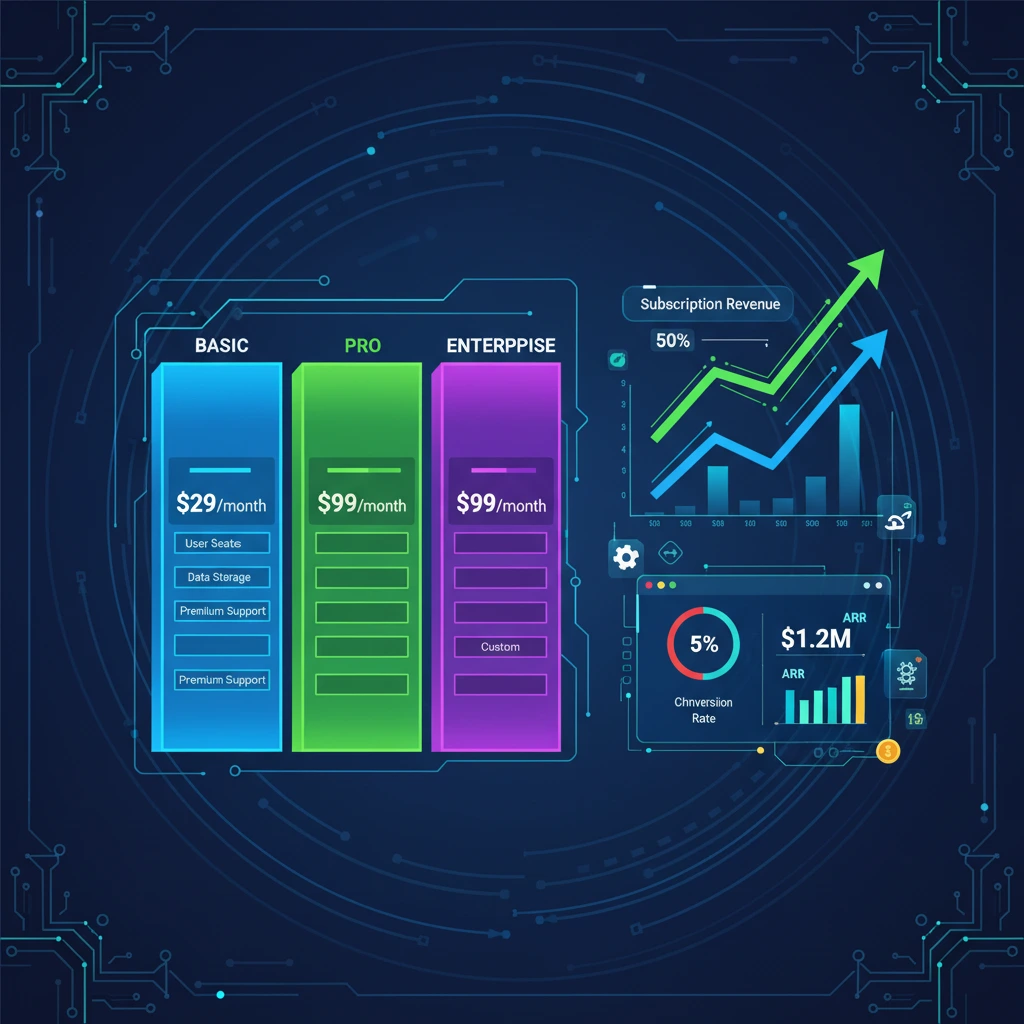
Pricing is the single most powerful lever you have in a subscription business. Yet, so many founders treat it like a “set it and forget it” task. They pick a number that sounds good, maybe copy a competitor, and then never touch it again until they are desperate for cash. That is a mistake. The landscape of software is shifting constantly, and keeping up with the latest SaaS Pricing News isn’t just about reading headlines-it’s about survival. At MyFluiditi, we build AI-driven web applications that help businesses adapt. We see firsthand how intelligent algorithms and data analysis can transform a stagnant pricing page into a dynamic revenue engine. In this deep dive, we are going to explore the current state of SaaS economics, the psychology behind price increases, and how you can use AI to stop leaving money on the table. The State of SaaS Economics in 2026 The era of “growth at all costs” is firmly in the rearview mirror. Investors and stakeholders in the US market are demanding profitability, efficiency, and sustainable revenue models. This shift has put immense pressure on pricing strategies. You can no longer rely solely on acquiring new logos to hit your numbers. You need to expand the revenue you get from existing customers, and that requires a sophisticated approach to monetization. Recent SaaS Pricing News indicates a trend toward consumption-based models and hybrid pricing tiers. The old model of simple per-seat pricing is becoming less attractive for enterprise buyers who want to align their spending with value realized. Companies like Snowflake and AWS pioneered this usage-based approach, but we are now seeing it trickle down into vertical SaaS and productivity tools. Why is this happening? Because buyers are scrutiny-heavy. CFOs are cutting bloat. If your tool costs $50 per user but only three people use it heavily, you are at risk of churn. If you charge based on usage, you align your success with your customer’s success. This alignment is crucial for long-term retention. Inflation and the Necessity of Price Increases Let’s address the elephant in the room: inflation. Costs for talent, cloud infrastructure, and customer acquisition have all risen. If your prices have remained flat for the last three years, you are effectively cheaper today than you were then, despite your costs being higher. That is a recipe for margin compression. Many founders fear that raising prices will cause a mass exodus of customers. However, data often suggests otherwise. If your product is sticky and provides genuine value, customers will absorb a reasonable increase. The key is communication. You cannot simply quietly change the number on the invoice. You need to frame the increase in the context of added value. What features have you shipped? How much faster is the platform? Remind them why they bought from you in the first place. Following SaaS Pricing News helps you understand how other market leaders are handling these communications. Are they grandfathering old users in forever? Or are they setting a deadline for legacy pricing to end? Seeing how the big players navigate these waters gives you a template for your own strategy. Usage-Based vs. Seat-Based Pricing The debate between seat-based and usage-based pricing is heating up. Traditionally, seat-based was the gold standard. It’s predictable. You know exactly what your recurring revenue looks like. But it creates friction. Every time a customer wants to add a team member, they have to make a purchasing decision. That friction slows down adoption within an organization. Usage-based pricing removes that cap on adoption. Everyone can join, but the bill goes up as they do more work. This sounds great, but it makes revenue unpredictable. One month you might have a huge spike; the next, a dip because of a holiday season. Hybrid models are emerging as the winner. You might charge a platform fee (predictability) plus a usage fee (upside). Or you charge per seat, but have overage charges for heavy storage or API calls. At MyFluiditi, we use AI to help clients model these scenarios. Before you switch from seats to usage, you need to run simulations. What would your current customer base pay under the new model? Who would see a 500% increase (and likely churn)? Who would see a 90% decrease (killing your revenue)? AI modeling can predict these outcomes with high accuracy, allowing you to design a transition plan that minimizes risk. The Role of Packaging in Revenue Strategy Pricing is just a number. Packaging is what you get for that number. You can raise your effective price without changing the headline number simply by moving features around. This is often called “feature gating.” Maybe your advanced analytics dashboard was available on the ‘Pro’ plan. By moving it to the ‘Enterprise’ plan, you force power users to upgrade. This increases your Average Revenue Per User (ARPU) without technically raising your prices. However, you have to be careful. If you gate core features that are essential to the basic utility of the product, you will frustrate users. The features you gate must be value-add features-things that solve specific, high-value problems for a subset of users who have a higher willingness to pay. Regularly reviewing SaaS Pricing News will show you which features are becoming “table stakes” and which are still considered premium. For example, Single Sign-On (SSO) used to be an Enterprise-only feature. Now, with security becoming a top priority for even small businesses, keeping SSO behind a $2,000/month paywall is seen as hostile. Many companies are moving security features down-market to the Pro tiers. The “Good-Better-Best” Psychology The three-tier pricing page is a classic for a reason. It anchors the buyer. The “Best” option (usually Enterprise) is expensive and anchors the price high. The “Good” option (Basic) seems a bit too limited. The “Better” option (Pro) is highlighted as the “Most Popular.” It feels like the smart choice. But psychology goes deeper than just layout. It’s about naming. Calling a plan “Enterprise” scares away small businesses who think, “I’m not an enterprise.”
Full-Stack Development Services for Scalable US Web Apps USA
Full-Stack Development Custom full-stack development by MyFluiditi for US businesses, delivering secure, scalable web and mobile apps built for growth nationwide across US markets AI. Today’s US businesses rely heavily on strong digital products. Websites and applications serve as the primary drivers of revenues, client interaction, and day-to-day business operations. Businesses must also have access to reliable and scalable technology to succeed in today’s environment, making full-stack development an integral part of the solution. MyFluiditi delivers professional full-stack development services for US-based web and app projects. Our service assists businesses to design, build and scale digital solutions that perform well in real-world scenarios. We assist US start-ups, growth-oriented firms, and large corporations. Our focus is on delivering clean code and a simple design, producing measurable results. Each solution we provide is designed to meet the needs of the US marketplace and the expectations of US users. The Definition of Full-stack Development Full-stack development combines both front-end and back-end technologies to create an integrated system that connects what users see on the front-end of an application with how the back-end technology supports the front-end. Front-end development includes the design (graphics, layout, and how a user interacts with the application); back-end development includes server-side. This includes the databases, servers, and business logic that are necessary to support the front-end functionality of the application. With MyFluiditi’s full-stack development model, developers at MyFluiditi work on both the front-end and back-end. The use of MyFluiditi’s full-stack development services will provide US businesses with more efficient development, improved product integration, and fewer gaps in technology. Why Companies in the United States Opt for Full Stack Development The speed of the market dictates how quickly US companies must work with agile teams and streamlined processes. The use of full-stack development helps to eliminate the communication bottlenecks between teams because one team has a complete understanding of how the overall system functions. Therefore, systems are updated faster, and launches will be smoother. By using myFluiditi as a full stack development partner, US companies will save both time and money due to the advantages of our full-stack knowledge and experience in building systems that can scale as businesses evolve. The US Market Requirements for Web/Application Development Projects American consumers expect websites/applications to be fast, simple and reliable, and will leave a product or service that is not satisfying to meet these needs in a timely manner. In addition, US companies must ensure that they meet local security and regulatory compliance standards when it comes to the development of web/program products. Data security and product performance should always be considered. myFluiditi focuses on providing web/app products that meet the standards and guidelines of the US government and to provide our customers with a product that meets both their employees’ and customers’ trust and longevity. Front-End Development Services The front end is the first opportunity to make a strong impression. A strong front-end design will improve engagement levels and increase conversion rates. myFluiditi design and develop websites and applications that offer responsive and clean user-interface experiences. We strive to ensure that our websites and applications look exceptional when using any device (desktop/laptop/tablet/smartphone). Our team is experienced in developing websites and applications using the latest modern frameworks of development (e.g. React, Angular, vs.net) which aid in providing US customers with a rich and interactive experience. We strive to build websites and applications that have simple functionality, readable layouts, and smooth animations throughout the site/application. Back-End Development Solutions The Back-End Development provides functionality (features) and performance (speed, efficiency, etc.) by managing all aspects of data, users, and the business logic. MyFluiditi is committed to developing secure and scalable Back-End Development solutions utilizing technologies including but not limited to Node.js, Python, Java, and .NET. Our Back-End Development solution serves as the infrastructure to manage high-levels of traffic and complex flow processing, which is vital for companies throughout the U.S. and is the backbone of the day-to-day operations of businesses. Database Design & Management Data is the engine that powers most digital platforms today. The failure to design, store and manage data effectively results in delays, inaccuracies and other problems. At MyFluiditi, we are skilled at creating effective database designs for both web and app projects (MySQL, PostgreSQL, MongoDB, Cloud), resulting in databases that will allow for fast querying processes while ensuring data is secure from outside intrusions. All of this works together to improve the performance and reliability of the platform. API Development & Integration Most modern digital platforms rely on using APIs (application programming interfaces) as they are used to securely communicate with other systems and services. MyFluiditi builds secure and fully documented APIs, as well as integrates third-party solutions (i.e., payment gateways, CRM systems, analytics tools) utilized in today’s US marketplace. When those integrations are strong, it leads to greater automation of tasks and improved flow of data. Creating Mobile Applications for US Companies Mobile Devices are now dominating the online world in America. Companies require apps that work well on smartphones, since almost all people access the internet via their mobile devices. MyFluiditi designs mobile applications compatible for both iOS and Android devices; whether using native or cross-platform technology. MyFluiditi app designs focus on user friendliness, fast access time, and reliability so that US companies can connect with their users on-the-go. Mobile Application Development Companies in the USA Businesses need mobile applications to provide positive experiences to their customers while using them on smartphones, which accounts for a majority of the traffic in the American digital space. At MyFluiditi, we create iOS and Android mobile solutions using both native and cross-platform technologies. MyFluiditi focuses on developing mobile applications that provide an excellent user experience, fast performance, and stable solutions to help brands in the USA connect with their end users while they are on-the-go. Full-Stack Cloud Solutions Cloud infrastructure forms the backbone of the modern development lifecycle. A majority of companies within the United States utilize cloud-based platforms for their operations. MyFluiditi provides cloud-based solutions on AWS, Microsoft Azure, and