SaaS Pricing News and Revenue Strategy Updates
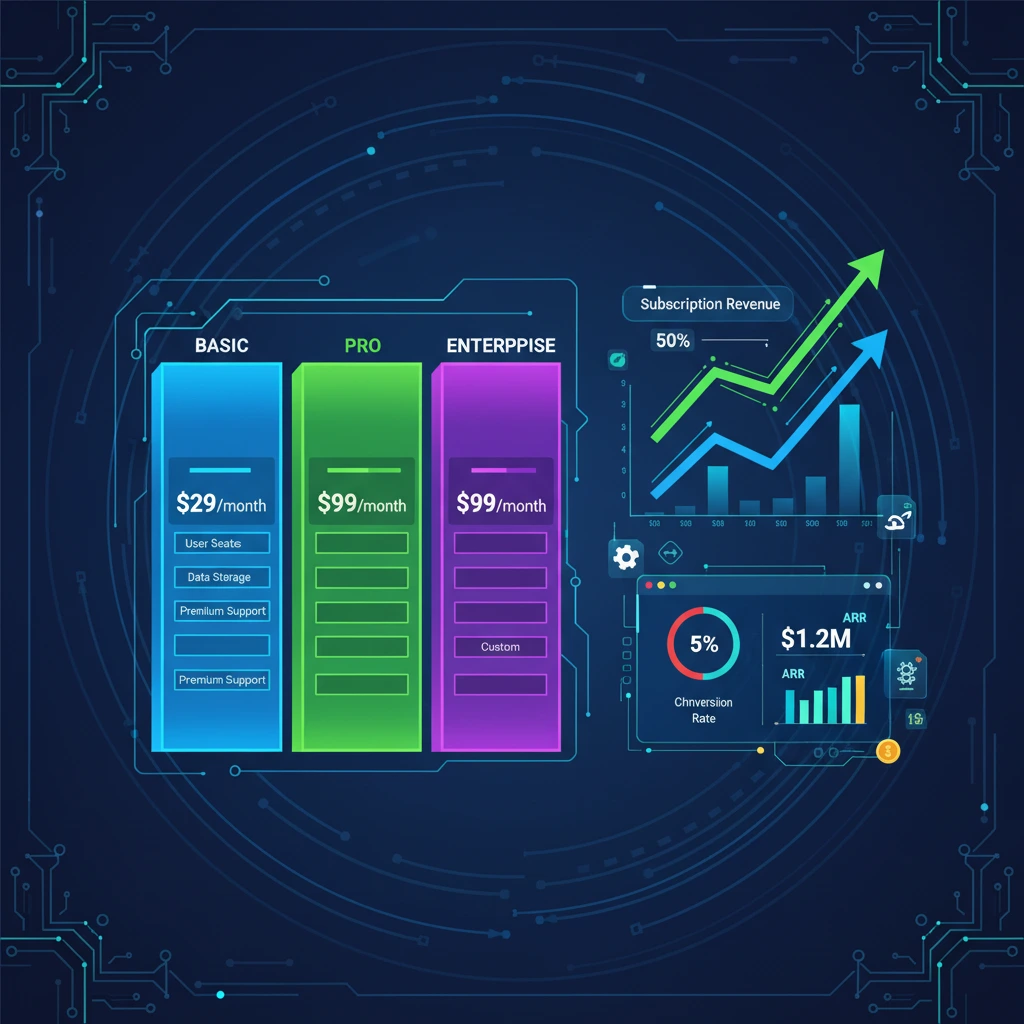
Pricing is the single most powerful lever you have in a subscription business. Yet, so many founders treat it like a “set it and forget it” task. They pick a number that sounds good, maybe copy a competitor, and then never touch it again until they are desperate for cash. That is a mistake. The landscape of software is shifting constantly, and keeping up with the latest SaaS Pricing News isn’t just about reading headlines-it’s about survival. At MyFluiditi, we build AI-driven web applications that help businesses adapt. We see firsthand how intelligent algorithms and data analysis can transform a stagnant pricing page into a dynamic revenue engine. In this deep dive, we are going to explore the current state of SaaS economics, the psychology behind price increases, and how you can use AI to stop leaving money on the table. The State of SaaS Economics in 2026 The era of “growth at all costs” is firmly in the rearview mirror. Investors and stakeholders in the US market are demanding profitability, efficiency, and sustainable revenue models. This shift has put immense pressure on pricing strategies. You can no longer rely solely on acquiring new logos to hit your numbers. You need to expand the revenue you get from existing customers, and that requires a sophisticated approach to monetization. Recent SaaS Pricing News indicates a trend toward consumption-based models and hybrid pricing tiers. The old model of simple per-seat pricing is becoming less attractive for enterprise buyers who want to align their spending with value realized. Companies like Snowflake and AWS pioneered this usage-based approach, but we are now seeing it trickle down into vertical SaaS and productivity tools. Why is this happening? Because buyers are scrutiny-heavy. CFOs are cutting bloat. If your tool costs $50 per user but only three people use it heavily, you are at risk of churn. If you charge based on usage, you align your success with your customer’s success. This alignment is crucial for long-term retention. Inflation and the Necessity of Price Increases Let’s address the elephant in the room: inflation. Costs for talent, cloud infrastructure, and customer acquisition have all risen. If your prices have remained flat for the last three years, you are effectively cheaper today than you were then, despite your costs being higher. That is a recipe for margin compression. Many founders fear that raising prices will cause a mass exodus of customers. However, data often suggests otherwise. If your product is sticky and provides genuine value, customers will absorb a reasonable increase. The key is communication. You cannot simply quietly change the number on the invoice. You need to frame the increase in the context of added value. What features have you shipped? How much faster is the platform? Remind them why they bought from you in the first place. Following SaaS Pricing News helps you understand how other market leaders are handling these communications. Are they grandfathering old users in forever? Or are they setting a deadline for legacy pricing to end? Seeing how the big players navigate these waters gives you a template for your own strategy. Usage-Based vs. Seat-Based Pricing The debate between seat-based and usage-based pricing is heating up. Traditionally, seat-based was the gold standard. It’s predictable. You know exactly what your recurring revenue looks like. But it creates friction. Every time a customer wants to add a team member, they have to make a purchasing decision. That friction slows down adoption within an organization. Usage-based pricing removes that cap on adoption. Everyone can join, but the bill goes up as they do more work. This sounds great, but it makes revenue unpredictable. One month you might have a huge spike; the next, a dip because of a holiday season. Hybrid models are emerging as the winner. You might charge a platform fee (predictability) plus a usage fee (upside). Or you charge per seat, but have overage charges for heavy storage or API calls. At MyFluiditi, we use AI to help clients model these scenarios. Before you switch from seats to usage, you need to run simulations. What would your current customer base pay under the new model? Who would see a 500% increase (and likely churn)? Who would see a 90% decrease (killing your revenue)? AI modeling can predict these outcomes with high accuracy, allowing you to design a transition plan that minimizes risk. The Role of Packaging in Revenue Strategy Pricing is just a number. Packaging is what you get for that number. You can raise your effective price without changing the headline number simply by moving features around. This is often called “feature gating.” Maybe your advanced analytics dashboard was available on the ‘Pro’ plan. By moving it to the ‘Enterprise’ plan, you force power users to upgrade. This increases your Average Revenue Per User (ARPU) without technically raising your prices. However, you have to be careful. If you gate core features that are essential to the basic utility of the product, you will frustrate users. The features you gate must be value-add features-things that solve specific, high-value problems for a subset of users who have a higher willingness to pay. Regularly reviewing SaaS Pricing News will show you which features are becoming “table stakes” and which are still considered premium. For example, Single Sign-On (SSO) used to be an Enterprise-only feature. Now, with security becoming a top priority for even small businesses, keeping SSO behind a $2,000/month paywall is seen as hostile. Many companies are moving security features down-market to the Pro tiers. The “Good-Better-Best” Psychology The three-tier pricing page is a classic for a reason. It anchors the buyer. The “Best” option (usually Enterprise) is expensive and anchors the price high. The “Good” option (Basic) seems a bit too limited. The “Better” option (Pro) is highlighted as the “Most Popular.” It feels like the smart choice. But psychology goes deeper than just layout. It’s about naming. Calling a plan “Enterprise” scares away small businesses who think, “I’m not an enterprise.”
Full-Stack Development Services for Scalable US Web Apps USA
Full-Stack Development Custom full-stack development by MyFluiditi for US businesses, delivering secure, scalable web and mobile apps built for growth nationwide across US markets AI. Today’s US businesses rely heavily on strong digital products. Websites and applications serve as the primary drivers of revenues, client interaction, and day-to-day business operations. Businesses must also have access to reliable and scalable technology to succeed in today’s environment, making full-stack development an integral part of the solution. MyFluiditi delivers professional full-stack development services for US-based web and app projects. Our service assists businesses to design, build and scale digital solutions that perform well in real-world scenarios. We assist US start-ups, growth-oriented firms, and large corporations. Our focus is on delivering clean code and a simple design, producing measurable results. Each solution we provide is designed to meet the needs of the US marketplace and the expectations of US users. The Definition of Full-stack Development Full-stack development combines both front-end and back-end technologies to create an integrated system that connects what users see on the front-end of an application with how the back-end technology supports the front-end. Front-end development includes the design (graphics, layout, and how a user interacts with the application); back-end development includes server-side. This includes the databases, servers, and business logic that are necessary to support the front-end functionality of the application. With MyFluiditi’s full-stack development model, developers at MyFluiditi work on both the front-end and back-end. The use of MyFluiditi’s full-stack development services will provide US businesses with more efficient development, improved product integration, and fewer gaps in technology. Why Companies in the United States Opt for Full Stack Development The speed of the market dictates how quickly US companies must work with agile teams and streamlined processes. The use of full-stack development helps to eliminate the communication bottlenecks between teams because one team has a complete understanding of how the overall system functions. Therefore, systems are updated faster, and launches will be smoother. By using myFluiditi as a full stack development partner, US companies will save both time and money due to the advantages of our full-stack knowledge and experience in building systems that can scale as businesses evolve. The US Market Requirements for Web/Application Development Projects American consumers expect websites/applications to be fast, simple and reliable, and will leave a product or service that is not satisfying to meet these needs in a timely manner. In addition, US companies must ensure that they meet local security and regulatory compliance standards when it comes to the development of web/program products. Data security and product performance should always be considered. myFluiditi focuses on providing web/app products that meet the standards and guidelines of the US government and to provide our customers with a product that meets both their employees’ and customers’ trust and longevity. Front-End Development Services The front end is the first opportunity to make a strong impression. A strong front-end design will improve engagement levels and increase conversion rates. myFluiditi design and develop websites and applications that offer responsive and clean user-interface experiences. We strive to ensure that our websites and applications look exceptional when using any device (desktop/laptop/tablet/smartphone). Our team is experienced in developing websites and applications using the latest modern frameworks of development (e.g. React, Angular, vs.net) which aid in providing US customers with a rich and interactive experience. We strive to build websites and applications that have simple functionality, readable layouts, and smooth animations throughout the site/application. Back-End Development Solutions The Back-End Development provides functionality (features) and performance (speed, efficiency, etc.) by managing all aspects of data, users, and the business logic. MyFluiditi is committed to developing secure and scalable Back-End Development solutions utilizing technologies including but not limited to Node.js, Python, Java, and .NET. Our Back-End Development solution serves as the infrastructure to manage high-levels of traffic and complex flow processing, which is vital for companies throughout the U.S. and is the backbone of the day-to-day operations of businesses. Database Design & Management Data is the engine that powers most digital platforms today. The failure to design, store and manage data effectively results in delays, inaccuracies and other problems. At MyFluiditi, we are skilled at creating effective database designs for both web and app projects (MySQL, PostgreSQL, MongoDB, Cloud), resulting in databases that will allow for fast querying processes while ensuring data is secure from outside intrusions. All of this works together to improve the performance and reliability of the platform. API Development & Integration Most modern digital platforms rely on using APIs (application programming interfaces) as they are used to securely communicate with other systems and services. MyFluiditi builds secure and fully documented APIs, as well as integrates third-party solutions (i.e., payment gateways, CRM systems, analytics tools) utilized in today’s US marketplace. When those integrations are strong, it leads to greater automation of tasks and improved flow of data. Creating Mobile Applications for US Companies Mobile Devices are now dominating the online world in America. Companies require apps that work well on smartphones, since almost all people access the internet via their mobile devices. MyFluiditi designs mobile applications compatible for both iOS and Android devices; whether using native or cross-platform technology. MyFluiditi app designs focus on user friendliness, fast access time, and reliability so that US companies can connect with their users on-the-go. Mobile Application Development Companies in the USA Businesses need mobile applications to provide positive experiences to their customers while using them on smartphones, which accounts for a majority of the traffic in the American digital space. At MyFluiditi, we create iOS and Android mobile solutions using both native and cross-platform technologies. MyFluiditi focuses on developing mobile applications that provide an excellent user experience, fast performance, and stable solutions to help brands in the USA connect with their end users while they are on-the-go. Full-Stack Cloud Solutions Cloud infrastructure forms the backbone of the modern development lifecycle. A majority of companies within the United States utilize cloud-based platforms for their operations. MyFluiditi provides cloud-based solutions on AWS, Microsoft Azure, and
Legacy System Modernization Services for US Enterprises
Legacy system modernization services for US enterprises to improve security, scalability, and performance with expert solutions from MyFluiditi. Legacy systems continue to run in many large corporations in the US. These include banking, healthcare, manufacturers, insurance companies, and government contractors. They were developed many years ago, but currently, they impede the progress of these businesses. They were instrumental in making these businesses successful. This is because US companies today are being pushed to digitalize and are threatened by expectations to deliver digital-first customer experiences, regulatory demands to deliver better security and compliance, and by competitors building digital, cloud-based, and agile-based solutions. And so, companies that do not use updated solutions will face major drawbacks. Legacy system modernization services facilitate the modernization of inflexible, insecure, and/or unscaleable legacy systems to a flexible, secure, and scalable system. MyFluiditi, being a legacy system modernization company, helps enterprises navigate the complex process of the service. The article discusses the importance of modernization, challenges in legacies, approaches taken in modernization, and how US businesses can succeed in their process. What are Legacy Systems in US Enterprises? Legacy systems define older software platforms or applications that continue to be actively used. Many organizations within the US continue to employ systems implemented through COBOL, Fortran, or the older Java frameworks. Other organizations use on-premise databasing and other hardware solutions. Many such systems run mission-critical operations. For example, payroll systems, billing systems, inventory control systems, patient records, transaction processing, and so on are mission-critical operations that depend on such systems. Because of these, organizations often delay change However, age creates problems. “Legacy systems tend to be inflexible and do not adapt to integration with other systems. They require scarce skills that are expensive to maintain. Ultimately, these issues increase in severity,” explains David Norfolk, partner and head of software implementation services group at P Why Legacy Systems Remain Prevalent in the US Market US enterprises are ahead in embracing digital technology compared to many global markets. US banking and insurance organizations developed their own technology platforms in the 1980s and 1990s. The platforms were able to process millions of transactions flawlessly. The leaders did not think it was a reason to replace this technology. However, over time, the requirements of the business changed. Channels were expanding, digital channels were expanding, data volumes were exploding, security threats were rising, but still, most businesses did not modernize. The Hidden Costs of Maintaining Legacy Systems Legacy systems, while they may look stable, have a high degree of hidden costs. Much of the money in large IT budgets is spent. Knowledgeable developers retire or stop working. Patches get harder to apply. Code integration takes custom coding. Downtime itself appears more often as well. “If our systems have failed, it takes longer to bring them back up.” The customers notice these failures immediately US enterprises face risks too, but they have specific regulations such as HIPAA, PCI-DSS, and SOX. Legacy systems cannot satisfy these regulations. Legacy system modernization services reduce these costs, yet maintaining an important business function. What are Legacy System Modernization Services? Legacy system modernization services allow organizations to update, change, or replace old systems. Legacy system modernization services are provided through a structure. They allow organizations to minimize risks while enhancing system efficiency and flexibility. Modernization, however, does not always result in replacement, as in many scenarios, enterprises tend to modernize in steps, keeping appropriate logic while changing the interfaces and infrastructures. MyFluiditi provides innovative services in the US business environment, which are tailored in a way that combines business with innovation. Important Factors Driving Modernization in American Enterprises There are several drivers of modernization for US organizations. Digital transformation tops the list. Customers demand a fast and seamless experience across devices. Legacy systems cannot provide this experience. Another driver of change in the cybersecurity arena are cybersecurity threats. Ransomware attacks are the prime concern for outdated systems, and even that has been taken care of with new systems in Scalability is another factor to consider. Cloud-native infrastructure scales. Legacy infrastructure does not. Finally, data analytics and AI require modern architecture. Legacy systems tend to compartmentalize data and stifle understanding. Common Challenges Faced by US Enterprises Modernization projects generally fail without proper planning. US enterprises have particular challenges. Risk of Business Disruption Mission-critical systems are those systems that cannot stop, as even a brief stoppage can result in business losses and damage to reputation. Enterprises are afraid of breaking systems that Data Complexity Legacy systems maintain vast data repositories of several decades. The format varies, and documentation might be ambiguous. The data migration process demands precision. Regulatory Requirements US industries have strict regulations. The healthcare, finance, and government sectors often come under audit and compliance checks. Organizational Resistance Teams feel comfortable with existing systems. Change causes fear. Leaders must engage stakeholders with clear goals. The challenges of legacy system modernization services are addressed. Modernization Approaches Used by US Enterprises There is no single modernization path. Every enterprise decides its own based on its needs, cost, and risks. Rehosting (Lift and Shift Rehosting involves existing applications running on new infrastructure. In this case, code is left unchanged. This approach enables faster results. US enterprises use rehosting as a means of cutting hardware costs and enhancing reliability. This option brings limited innovation and low risks. Refactoring Refactoring involves improving the application code to make it perform optimally in terms of scalability. The application code does not change. The architecture of the application This method enables cloud native feature support/integration. This approach needs greater technical effort. Replatform Replatforming involves replacing underlying platforms, whereas application behavior is preserved. Databases and middleware may be changed. This choice is adopted by US enterprises for better performance and security in the context of the enterprise. Rebuilding Create new applications using new frameworks. Core functions are created from scratch. Replacing with SaaS Some enterprises replace legacy systems with commercial SaaS products, and this is the path often followed by CRM and ERP platforms. MyFluiditi helps the enterprises
Custom Web Portal Development for US Businesses | MyFluidit

Web portals MyFluiditi delivers custom web portal development services for US businesses to improve workflows, security, scalability and digital user experiences today US!! In today’s world of rapid digital transformation, businesses in the United States have become increasingly reliant on digital platforms to conduct business. This is reflected in consumers, as well as employees and partners, who are looking for quick access to information and an effortless online experience. One way for organizations to ensure they meet the needs of their customers, employees and partners with respect to fast access to information and an effortless online experience is to centralize data, workflows, and communications, and provide for a single secure resource, by using custom web portals. For companies throughout the US, web portals have become essential systems of doing business, rather than optional tools. The primary focus of custom web portal development is to build custom platforms that are uniquely designed to support specific business objectives and processes. Custom web portals are customized to the internal processes and user role requirements of the business, and to accommodate the growth plans of the business, unlike bundled software/hardware solutions and/or third party vendor created and maintained web portals. MyFluiditi provides custom web portal development services that enable businesses in the US to gain efficiencies, enhance collaboration and improve customer engagement through custom web portals. From enterprise dashboards, to customer self-service web portals, the daily operations of businesses within every industry in the US will include the use of web portals to manage users, automate workflows and ultimately deliver personalized digital experiences to their customers at scale. Why US Businesses Need Custom Web Portals In the US, businesses face fierce competition in the marketplace and operate in quickly-evolving business environments. Businesses frequently encounter problems when they attempt to implement generic software solutions, as they are not designed to the specific workflows or operational needs of the business, nor for a specific industry. To resolve this issue, custom web portals align technology with the business’ actual operational activity. As such, when a US business utilizes a custom portal for its operations, it maintains complete control of the portal’s features, integration points, and security controls. When the various teams access the portal to obtain their requisite tools, they will not encounter additional hurdles or unnecessary complexity in order to effectively perform their duties. The result is a consistent, branded experience for all clients, which will increase their overall trust in the respective business. MyFluiditi collaborates with its clients to develop a portal that will enable their growth and to build a custom portal that encompasses its client’s [target] business objectives, employee and client requirements and long-term scalability strategies. What is Custom Web Portal? A custom web portal is a secure online platform for use by a specific user for a specific purpose, such as the employee, customer, vendor or partner. Each user type will view the specific user interface based on his or her role (e.g., There are separate portals for your employees and your customers). Custom web portals typically have a variety of feature sets such as dashboards, document management, messaging, reporting and workflow automation, as well as integrations with existing enterprise systems (for example, CRM, ERP application, and cloud storage providers). MyFluiditi will build a custom portal for each of its clients that will create clarity, speed and usability (i.e., make it easy for its users to use) by simplifying their business’s complex operational activities. Types of Web Portals Available to US Organizations Organizations in America utilize a broad range of web portal types based on their specific requirements or desires. Employee portals allow internal teams to manage tasks, HR processes and collaborate with one another. Customer portals enable customers to self-service access to their accounts, orders and support. Partner/vendor portals enhance communication and visibility within the supply chain. Enterprise portals provide a consolidated view of all data across departments and systems. MyFluiditi builds all of the major types of portals while ensuring each has consistent performance and security. Custom Web Portals for Enterprise Organizations Large enterprises in America are frequently managing complex workflows and multiple large volumes of data. Through the use of custom web portals, it is possible to integrate numerous disparate systems that would otherwise have to function as separate silos. A centralized portal increases the level of visibility in business processes, thereby improving decision-making. MyFluiditi specializes in developing enterprise portals that can scale across multiple departments and locations. These types of portals provide role-based access, advanced reporting capabilities, as well as secure integration where they should otherwise provide limited levels of control over the various business activities taking place. Supporting SMBs in the United States. Custom web portals are also a benefit for small and medium-sized businesses in the US. Many smaller and medium-sized companies are currently using manual processes that significantly slow down their growth potential. Developers can automate routine activities and reduce friction in their operations using a custom portal. MyFluiditi assists small and medium (SME) growing business owners build portals that can change over time. Businesses can expand their portals to add new features as new needs arise. This helps to avoid larger costs of having to re-platform later. User experience (UX) will play a critical role in the ability for a users to adopt the use of a portal. If it is difficult for someone to use a portal because it is difficult to navigate, productivity will be negatively impacted. MyFluiditi places a heavy emphasis on clean design and an intuitive workflow for a user experience. All portals are created with clarity and speed. Dashboards are set up to surface key information. All navigation in a portal will be simple and consistent. By creating portals in this manner, there will be greater engagement from all US-based users of the portal. Security and Compliance for the US Market. Security is one of the primary concerns for businesses in the US today. Portals will often contain sensitive data including customer records & internal documents. As a
Next-Gen Logistics | Why You Need a Top-Tier Courier App Development Company
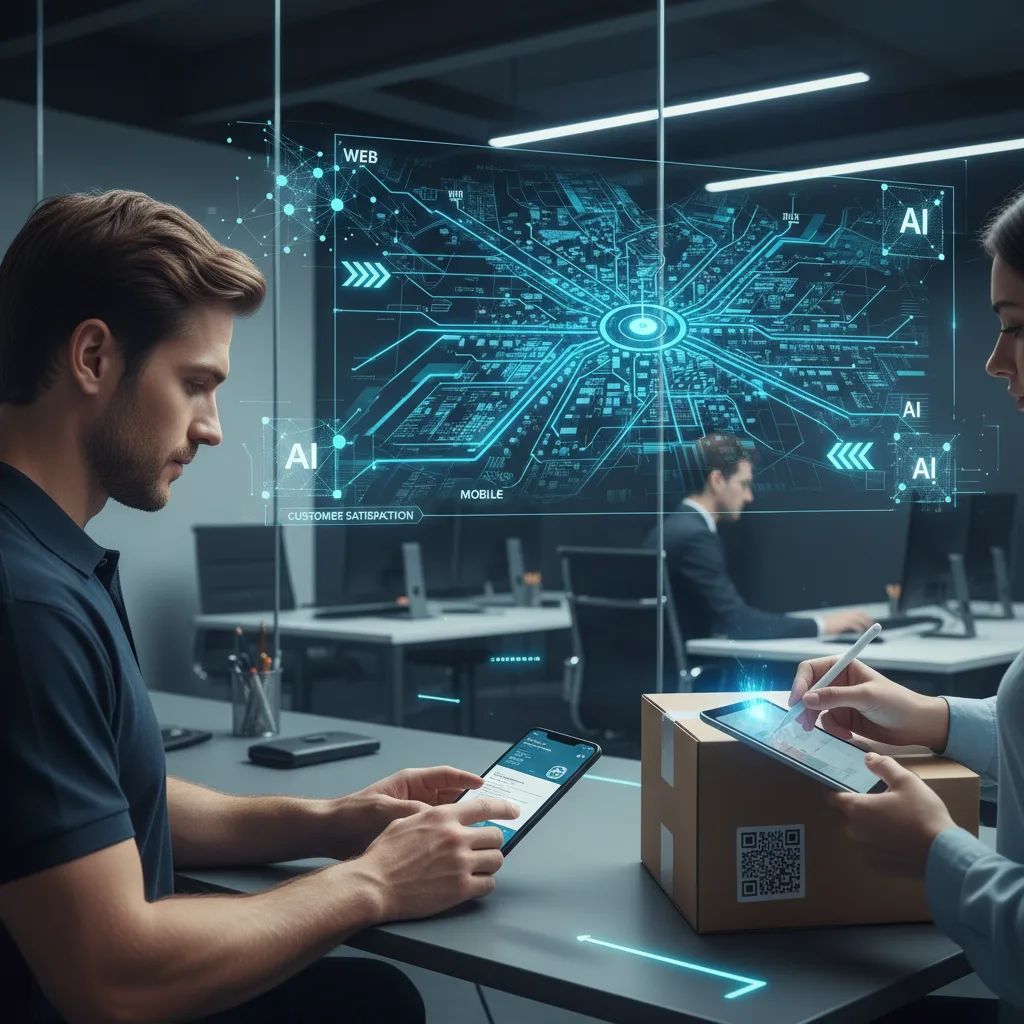
In the logistics sector, the margin between success and failure can often be measured in minutes. Delayed packages, missed pickups, and lost drivers can quickly become lost revenue and damaged reputations. One of my most recent partnerships was with a mid-sized logistics firm in the USA. For the purpose of this case study, we will call them “SpeedLine Deliveries.” SpeedLine Deliveries was in danger of all of the issues previously mentioned. They had a solid fleet as well as a loyal local customer base. However, their technological infrastructure was antiquated. They were running their business with a website that had little more than basic information. They were using a chaotic backend system that was dependent on spreadsheets, a whiteboard, and phone calls. They approached MyFluiditi with the hope of only getting their website updated. However, what they received was a complete revolution of their operations. In this case study, we will demonstrate the importance of selecting the right courier app development company and what it brought to this business beyond the basics. This will take us on a journey of the most pressing issues to complexities of the solutions and the delta of the results. Part 1: The Pre-Digital Era – Anatomy of a Bottleneck When we first partnered with SpeedLine, they were struggling with an interesting challenge; they were ‘drowning’ in success. Business was booming, but they hit an operational capacity wall. To unpack the enormity of their transformation, we must first dissect the state of their business before MyFluiditi began to work with them. An Example of a “Brochure” Website For starters, their digital footprint was non-existent. They had a ‘basic’ website that was nothing more than a digital brochure. The site listed their services and had a stock photo of a delivery van, and that was it. There was no interactivity; and customers were unable to place orders. There was no package tracking; customers had to call the office and ask, ‘Where is my package?’ There were no online payments, and invoices were manually generated at the end of the month, resulting in cash flow bottlenecks. It is now 2024 and for a logistics company to operate with only a website that is a static brochure, it is a liability. It means that all interactions with the company must be done offline. The Dispatch Nightmare The dispatch team was the nerve center of the company, but their tools were primitive. Engaging with the dispatch team was an even more critical challenge. Manual Order Entry: Orders were received through phone calls and emails. A dispatcher entered the information into a spreadsheet, leading to errors such as incorrect addresses, phone numbers, and package weights. The Phone Tag Game: To assign a job, a dispatcher calls drivers individually. “Hey, are you near downtown? Can you take a pickup on 5th Street?” This costs hours every day. Blind Spots: Once a driver leaves the depot, they become invisible. The office lacks real-time visibility into vehicles and relies on drivers to answer their phone, which is dangerous, and inefficient. The Financial Drain: The lack of automation also had an effect on finances. Invoicing Lags: Since drivers submit paper waybills at the end of the week, invoicing is routinely delayed by 7-10 days. Lost Revenue: They were frequently undercharging for long trips because they lacked precise mileage calculations. Fuel Waste: With no route optimization and inefficient driving, the drivers were wasting a lot of fuel. They understood that for scaling purposes, there needed to be more than just a website update; they needed a partner that functions as an all-in-one dedicated courier app development company. They needed a digital ecosystem. That is precisely what MyFluiditi specializes in. Part 2: The Strategic Pivot – More than Just Code SpeedLine initially asked for a “better website.” We sat down with their leadership team and explained that a better website would only dress up the problem, not solve it. We proposed a more holistic digital transformation strategy. We take pride in being a multifunctional tech partner at MyFluiditi. We do not just write code; we solve business challenges. We defined three key pillars that needed to be built in unison; • A Custom Web Application: To function as the central command center for dispatchers and the self-service portal for customers. • A Native Mobile Application: To empower drivers with tools in real time. • Artificial Intelligence: To streamline and optimize the resource allocations and automate the decision-making process. This was a huge endeavor, and it called for a partner capable of managing the whole tech stack. As a top-tier courier app development company, we were always prepared to use our complete arsenal of skills. Part 3: Solution Development – Phase By Phase Phase 1: The Web-Based Application (The Brain) We started with the retirement of spreadsheets. We created a custom web-based solution designed specifically for SpeedLine’s workflow. For Customers: We replaced the “Call Us” button with a “Book Now” button. Instant Quotes: Customers were able to enter zip codes for pickup and drop-off and receive an instant quote for the cost of the shipment based on distance and weight. Self-Service Booking: Customers could schedule a pickup, pay by credit card, and print a shipping label. Live Dashboard: Corporate clients received a dashboard where they could view shipping history, track active shipments, and download invoices. For the Admin and Dispatcher: We created what was called a “God-View” dashboard. Real-Time Google Maps Integration: We used the Google Maps API to show the active location of all drivers. Dispatchers could view traffic and the driver’s status (Idle, En Route, Delivering) for all drivers at a glance. Drag-and-Drop Dispatching: Orders that were not assigned to a driver appeared in a queue. Dispatchers could drag an order to a driver’s timeline to assign it. Automated Alerts: The system predicted delays before they occurred. If a driver was in traffic and was likely to miss a delivery time, the system notified the dispatcher, so they could contact the customer in advance.