How We Helped a Startup Launch an AI Product in 90 Days
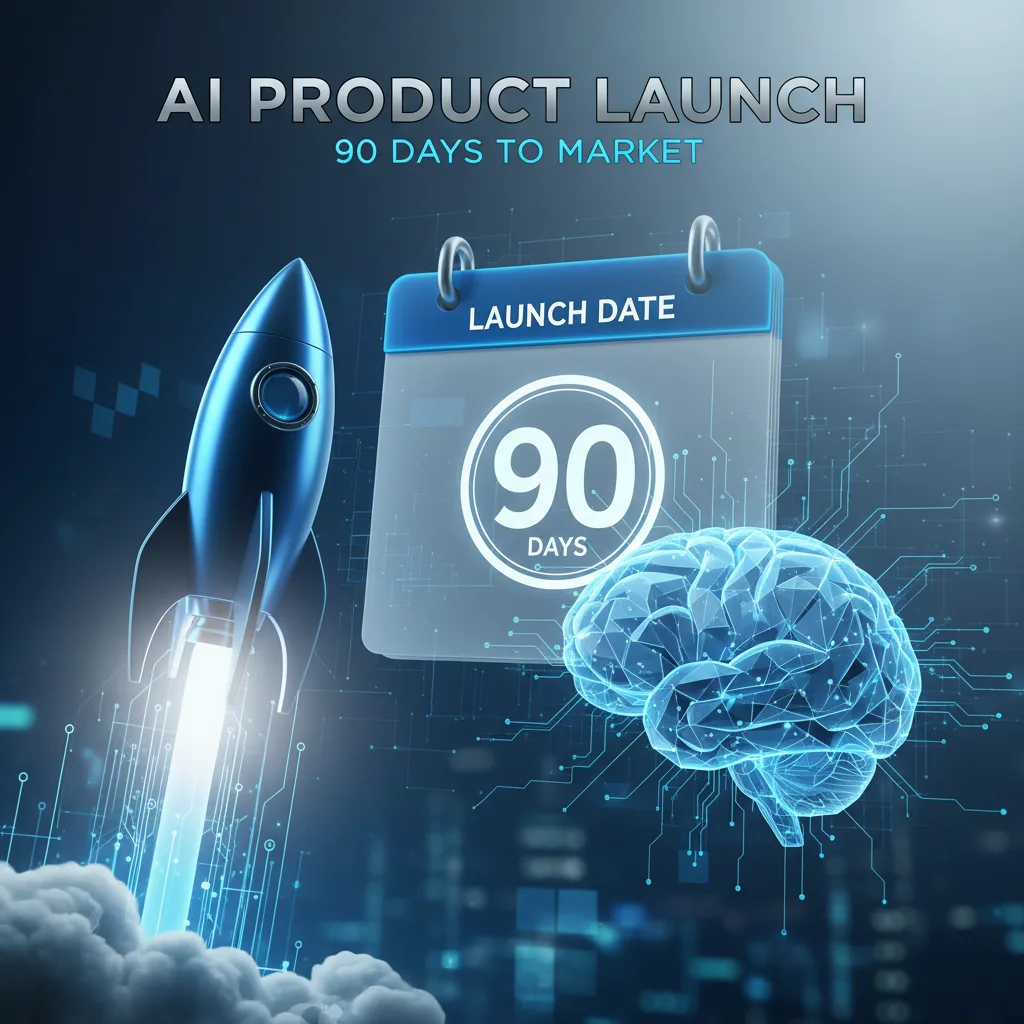
The journey from a brilliant idea to a market-ready AI product is often a long and winding road. Startups, in particular, face immense pressure to innovate quickly, secure funding, and capture market share before a competitor does. The challenge is amplified when dealing with the complexities of artificial intelligence. It requires specialized expertise, robust infrastructure, and a streamlined development process. So, how can a startup navigate this landscape and turn a concept into a tangible AI product in a matter of months? This is the story of how we, at myfluiditi, partnered with an ambitious startup to do just that. We took on the challenge of building and launching a sophisticated AI product from the ground up in just 90 days. This case study breaks down our accelerated process, from initial strategy sessions to final deployment. We will explore the hurdles we faced, the solutions we engineered, and the methodologies that made this rapid launch possible. For any entrepreneur or business leader looking to build their own AI product, this journey offers a detailed blueprint for success. The Challenge: A Vision on a Tight Timeline Our client, a forward-thinking startup we’ll call “InnovateHealth,” came to us with a powerful vision. They wanted to create a platform that used artificial intelligence to help healthcare providers predict patient readmission rates. The goal was to provide hospitals with actionable insights, allowing them to allocate resources more effectively and improve patient outcomes. Their core idea was solid, backed by market research, and had the potential to make a significant impact on the healthcare industry. However, they faced a critical obstacle: time. They had secured a narrow window of opportunity to present a functional prototype to a group of investors and early-adopter hospitals. This deadline was non-negotiable. They needed to launch a minimum viable product (MVP) in just three months. The startup team consisted of brilliant healthcare experts and business strategists, but they lacked the in-house technical team to build the complex AI product they envisioned. They needed a partner with deep expertise in AI, machine learning, and rapid application development. They needed to not only build the software but also ensure it was scalable, secure, and compliant with healthcare regulations like HIPAA. The core challenge was clear: deliver a high-quality, fully functional AI product within a 90-day sprint. Laying the Foundation: The First 30 Days The first month of any project is critical, but in an accelerated timeline, it sets the pace for everything that follows. Our initial 30 days were dedicated to intensive planning, strategy, and architectural design. We call this Phase 1: Discovery and Design. The objective was to create a comprehensive, unshakeable blueprint before a single line of code was written. Week 1: Deep Dive and Strategy Alignment Our collaboration began with a series of deep-dive workshops. We brought together our top AI strategists, solution architects, and project managers with the InnovateHealth team. The primary goal was to move beyond the high-level vision and define the precise scope of the MVP. We couldn’t build every feature they dreamed of in 90 days, so we had to be ruthless in our prioritization. We used the MoSCoW method (Must-have, Should-have, Could-have, Won’t-have) to categorize features. Must-haves: These were the absolute core functionalities required for the MVP to be viable. This included the data ingestion module for patient records, the core machine learning model for readmission prediction, and a basic dashboard for hospital administrators to view the risk scores. Should-haves: Important features that would add significant value but could be deferred to a later release if time ran short. This included advanced data visualization tools and automated report generation. Could-haves: Desirable but non-essential features, like user role customization or integration with secondary hospital systems. Won’t-haves: Features explicitly excluded from the 90-day scope, such as a patient-facing portal or predictive analytics for other health outcomes. This process ensured everyone was aligned on what “done” looked like for the MVP. It eliminated ambiguity and gave our development team a crystal-clear target. A well-defined scope is the first defense against project delays and the cornerstone of building a successful AI product under pressure. Week 2-3: Technical Architecture and Data Strategy With the scope defined, our solution architects got to work designing the technical backbone of the platform. Building a robust AI product requires more than just a good algorithm; it demands a scalable and secure infrastructure. Key architectural decisions included: Cloud Platform: We chose Amazon Web Services (AWS) for its robust suite of AI/ML services, scalability, and strong compliance offerings for healthcare. Services like Amazon S3 for data storage, SageMaker for model training and deployment, and EC2 for compute power were central to our plan. Data Pipeline: The effectiveness of any AI model depends on the quality of the data it’s trained on. We designed an automated data ingestion and preprocessing pipeline. This system would securely pull anonymized data from hospital databases, clean it, transform it into a usable format, and feed it into the machine learning model. We built in extensive data validation checks to flag inconsistencies or missing values early. Microservices Architecture: We opted for a microservices approach. This meant breaking the application down into smaller, independent services (e.g., user authentication, data processing, prediction API, dashboard). This architecture provided several advantages: it allowed different teams to work on different components in parallel, made the system easier to test and debug, and ensured the platform would be scalable in the future. If one service failed, it wouldn’t bring down the entire AI product. Simultaneously, our data science team focused on the data itself. They worked closely with InnovateHealth’s subject matter experts to understand the nuances of healthcare data. What features were most predictive of readmission? How should we handle missing data points? What ethical considerations and biases did we need to account for? This collaborative data strategy was crucial for ensuring the model would be both accurate and fair. Week 4: Prototyping and Final Blueprint The final week of the first month was dedicated to
Hire LLM Developers for Your Project Easily

Artificial intelligence is changing faster than ever before. Large Language Models (LLMs) are at the heart of this change. They are advanced AI systems that can understand, create, and change human language. LLMs are opening up new opportunities for businesses in every field, from making smart chatbots to making complicated content. But using this power requires a certain level of knowledge. At this point, hiring LLM developers is not just a good idea; it’s a must for staying ahead of the competition and coming up with new ideas. It can be hard to figure out how to use AI, and the hardest part is often finding the right people to work with. You need experts who can not only explain how models like GPT-4 or LLaMA work in theory, but also use them in real-world, scalable, and secure apps. This guide will show you everything you need to know about hiring this kind of expert for your team. We’ll talk about what LLM developers do, how much value they add to your projects, and how companies like MyFluiditi are making it easier than ever for US businesses to get top-notch AI help. What does a developer of an LLM do? It’s important to know what LLM developers do before you can hire them. A specialized software engineer or data scientist who works on building applications and systems that use Large Language Models is called an LLM developer. Their job is much more than just connecting to an API. They are the architects who plan, build, and improve the whole ecosystem around an LLM to help businesses solve certain problems. They have a lot of different and very technical tasks, such as: Model Integration and API Management: The most common job is to add pre-trained LLMs (like those from OpenAI, Google, or Anthropic) to new or existing apps. To do this, you need to know a lot about APIs, data transfer protocols, and how to keep credentials safe.Fine-Tuning and Customization: Off-the-shelf LLMs are powerful, but they don’t always fit perfectly. LLM developers make these general-purpose models better by using their own datasets. This process makes the model better suited to a certain domain, brand voice, or task, which greatly improves its performance and usefulness for that use case.Prompt Engineering is the art and science of making inputs (prompts) that get the most accurate, relevant, and desired outputs from an LLM. A good developer knows the ins and outs of different models and can make complicated prompt chains and templates that will help the AI behave the way you want it to.Building Retrieval-Augmented Generation (RAG) Systems: Developers build RAG systems to make LLMs stronger and more accurate. Before giving an answer, these systems let the model get information from outside sources (like your company’s internal documents or a specific database). This gives the AI’s output a basis in data that can be checked, which lowers the number of hallucinations and raises trust.Backend and Infrastructure Development: LLM-powered apps need a strong backend to handle user requests, process data, and manage interactions with the model. Developers build this infrastructure so that it can grow, work well, and handle the heavy computing needs of AI processing.Performance Monitoring and Evaluation: How can you tell if your LLM app is doing its job? To check the quality of the model’s outputs, developers make frameworks and metrics. They keep an eye on performance, keep track of costs, and look for ways to make things better.In short, an LLM developer is the link between the untapped power of a Large Language Model and a business application that works and makes money. Why Your Company Should Hire LLM Developers Hiring LLM developers is a smart move for the future of your business. The things they can do can completely change how you do business, interact with customers, and make money. The benefits are clear and strong for US businesses that want to stay ahead of the curve. Push for new levels of innovation LLMs are more than just a small step forward; they change the way we think about what software can do. You can make products and services that were impossible before by hiring developers who are experts in this technology. Hyper-Personalized Customer Experiences: Picture a customer service chatbot that not only answers questions but also understands how users feel, remembers past conversations, and offers solutions based on their specific history. These smart agents can be made by LLM developers.Automated Content Creation: LLMs can automate the creation of large amounts of content, such as marketing copy and social media posts, as well as detailed reports and technical documentation. This frees up your human teams to do more strategic work.Advanced Data Analysis and Insights: LLMs can process and summarize huge amounts of unstructured text data, such as customer reviews, support tickets, and market research reports. They can find hidden trends, feelings, and useful information that would take people weeks to find. Get a Big Edge Over Your Competitors Speed and new ideas are very important in today’s market. People who are the first to use LLM technology are already getting ahead of their competitors. If you have in-house or dedicated LLM development skills, you can: Create Your Own AI Tools: Instead of using generic, off-the-shelf software, you can make your own AI tools that are made just for your business’s data and processes. This makes a strong moat that is hard for other businesses to copy.Improve operational efficiency: One of the most obvious benefits is that you can automate tasks that need to be done over and over again. With LLM-powered tools, you can do everything from writing code and analyzing legal documents to summarizing meetings and writing emails. This will greatly increase the productivity of your whole company.Start New Sources of Income: The apps you make can turn into new products or services. A lot of businesses are making money off of custom AI tools, which is giving them new ways to make money.Get past the implementation problemLLMs
Top 10 Benefits of full stack development outsourcing to a US-Focused Tech Partner
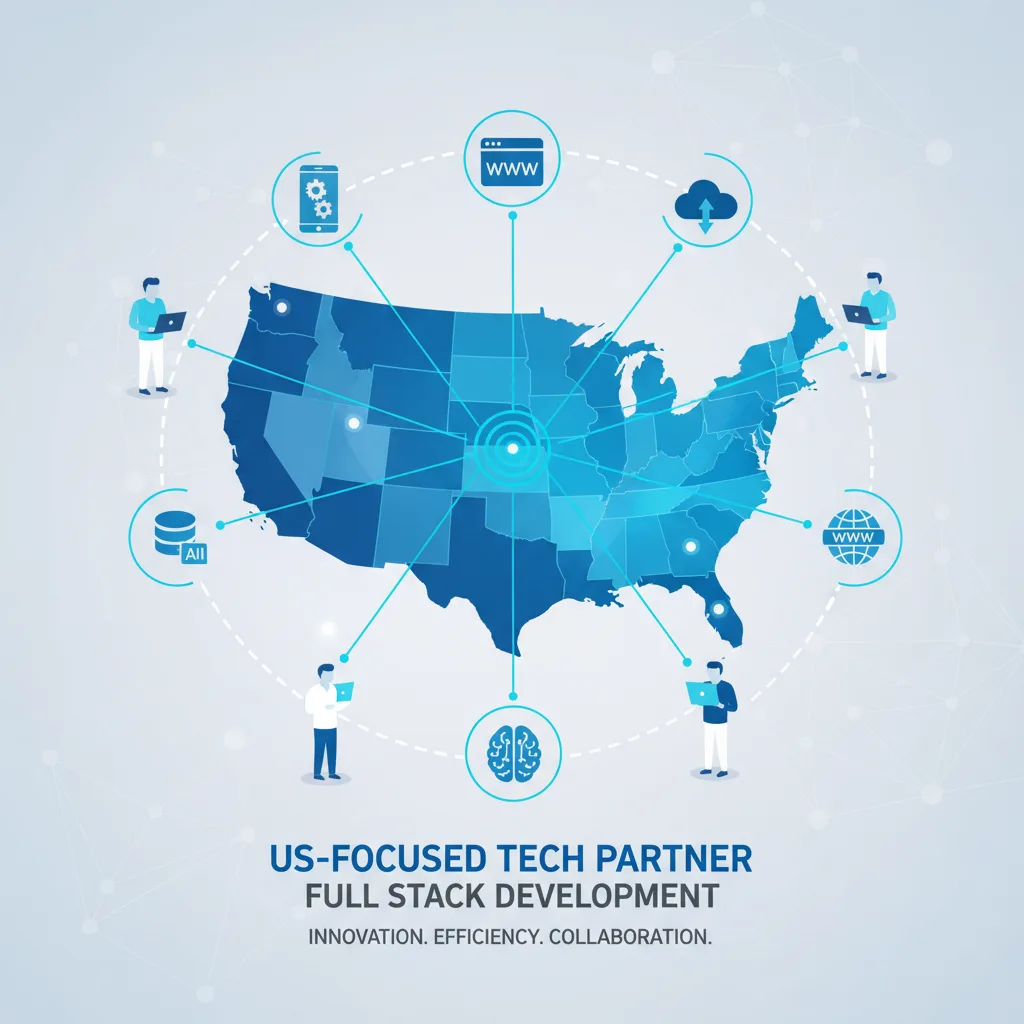
To get your project from idea to launch, you need a team with the right skills, experience, and commitment. Building an in-house development team is hard for a lot of businesses because they have to compete with each other for skilled workers, pay for overhead and benefits, and keep up with new technologies. This is where outsourcing full stack development can make a big difference. When you work with a US-based tech company like MyFluiditi, you get access to a lot of resources, knowledge, and processes that are specifically designed to help your business reach its digital goals quickly and on a large scale. This full guide will look at the top 10 reasons why you should hire a US-based partner to handle your development needs. We’ll go into more detail about each benefit, giving you real-life examples, useful tips, and a behind-the-scenes look at how MyFluiditi provides great value in the constantly changing world of app, web, and AI development for US businesses. 1. Access to a pool of skilled and experienced workers One of the best reasons to hire a US-based development partner is that you can get access to a large number of skilled professionals right away and on an ongoing basis. Technology is the backbone of business, trade, and entertainment in the United States. This means that technical skills are always being developed and improved. For example, building a modern, scalable ecommerce platform is a big challenge. It can take months for most companies to find full stack developers who are equally skilled in front-end technologies (like React or Angular), back-end frameworks (like Node.js or Django), and cloud infrastructure (like AWS or Azure). When you work with MyFluiditi, those features are easy to get. Our diverse team has decades of experience building strong digital solutions, from custom mobile apps to advanced AI-driven automation platforms. Talent and knowledge of the field go hand in hand. Let’s say you’re starting a fintech app in the US. When you outsource to a partner who knows US regulatory requirements, you not only get direct access to software engineers, but also to compliance specialists, UI/UX experts who know what American consumers want, and QA professionals who are good at working with US-based payment systems. This all-encompassing method lowers risk and encourages new ideas. Case Study: MyFluiditi’s Part in a Nationwide Retail Rollout A clothing store that was growing asked MyFluiditi for help with quickly setting up their online shopping platform. We used our US-based talent to not only do the technical work, but also help them with localisation, digital marketing integration, and post-launch analytics that were specific to the American market. Sales doubled in six months, and customers were more interested than ever. 2. Cost-effective without sacrificing quality Cutting costs is always a reason to outsource, but it shouldn’t mean giving up quality. In fact, working with a US-based partner like MyFluiditi often helps companies get more done with their budget, avoiding the problems that come with cheap, offshore outsourcing. Budget Control: When you build an in-house team, you have to pay for things like hiring, salaries, benefits, hardware/software, and ongoing training. But with MyFluiditi’s outsourcing model, you only pay for what your project needs. We give clear, upfront prices so there are no hidden costs or extra work. Flexibility: What if the scope of your project changes or you need to scale up quickly? MyFluiditi lets you change the size and expertise of your team on the fly as needs change, so you don’t have to rehire or pay for resources that aren’t being used. Quality Assurance: Companies based in the US have to follow strict rules about quality and performance. For example, MyFluiditi hires senior developers, certified project managers, and experienced UI/UX designers who always act professionally and ethically. We promise to review your code, test it, and keep making it better. This means that your product is strong, stable, and ready for the US market. For example, a tech startup wanted to start an AI-driven logistics platform but didn’t have enough money to do so. They saved more than 40% by hiring MyFluiditi to do the work instead of building a team in-house. We delivered a reliable solution on time and continued to support it with very little extra cost. 3. Aligning Time Zones for Smooth Communication Time zones that are far apart are one of the biggest problems with outsourcing. With a US-based partner like MyFluiditi, you won’t have to deal with the annoyance of delays that happen overnight, limited times to talk, and schedules that don’t match up. Meetings, sprint reviews, and quick feedback loops all happen during normal working hours, so people can work together in real time. This cuts down on long waits for answers and makes development processes more flexible. Cultural and Linguistic Affinity: Having a common language and knowing how business is done in the US makes it easier to gather requirements, write documentation, and even come up with new ideas. There are fewer misunderstandings, and expectations are clearer. Client Example: A healthcare provider needed a mobile app that followed HIPAA rules for the US market. Because medical rules are complicated and need to be followed quickly, project stakeholders had to talk to each other often. The client worked with MyFluiditi every day without any problems, which reduced bottlenecks and made it easier to make quick, informed decisions. Pro Tip: When choosing an outsourcing partner, make sure they have not only overlapping hours but also dedicated account managers and clear ways to escalate urgent issues. We make sure that senior leadership is available for strategic talks and that there is only one point of contact at MyFluiditi. 4. Faster times to finish projects In today’s digital world, speed is a very important difference. Getting to market before your competitors is important whether you’re starting a new direct-to-consumer brand or rolling out AI automation for your business. Streamlined Workflows: MyFluiditi uses agile methods, continuous integration, and strict project management rules to make
Enterprise Software Development Services for US Companies AI
Custom enterprise software development services for US organizations, delivering secure, scalable, and high-performance solutions tailored to complex business needs.Organizations in the United States face an ongoing storm to innovate, grow successfully, and be on top of their game in today’s dynamic digital environment. The problem is that most off-the-shelf applications do not quite meet the needs of enterprises because they cannot provide complex solutions including system integration, security compliance, performance when scaled up, and the ability to support industry-specific workflows. Therefore, the need to develop Enterprise Software Development Services for organizations across North America are critical. The design, development, and maintenance of customized, large-scale software solutions used by companies as part of their mission-critical business operations is referred to as Enterprise Software Development. In order to provide the support required by an organization’s business processes and objectives; provide the strategy for compliance; offer the ability to scale over the long term; and, provide the framework for transformation to digital; organizations will utilize enterprise software development services as part of achieving their goals. What Are Enterprise Software Development Services? The end-to-end development of robust and secure applications that can be utilized by large organizations is referred to as Enterprise Software Development Services. Unlike consumer applications, Enterprise software solutions must be able to manage high volumes of data, accommodate thousands of users, integrate with existing environments, and adhere to strict regulatory compliance. Enterprise software systems typically provide the ability to support the core functions of an organization; including finance, human resources, supply chain management, client relationship management (CRM), enterprise resource planning (ERP), data analysis and decision-making systems. Here’s an example rewritten using a different tone of voice: Types of Services Why do US businesses need Custom Enterprise Applications? The competitiveness and regulation of the US business climate make it one of the most complicated and competitive environments in the world. Many industries, such as healthcare, finance, manufacturing, logistics, retail, and government, have very specific requirements regarding compliance and how they operate. Custom Enterprise Applications have many advantages over generic solutions. By investing in custom enterprise application development, the US-based organizations will gain long-term control, flexibility, and performance. Key Features of Enterprise Software Applications Enterprise software applications are characterized by the ability to perform at the highest levels while remaining reliable and secure. These include: Enterprise applications are designed to handle thousands of concurrent users and large amounts of data. Performance optimization ensures consistent performance levels, regardless of whether the system is being used at peak capacity.Here’s an example rewritten using a different tone of voice: Enterprise SoftwareEnterprise Software Includes: Enterprise Software Development Process Integration CapabilityEnterprise applications should have the ability to integrate with customer relationship management (CRM) systems, enterprise resource planning (ERP) systems, third-party application programming interface (API’s), payment gateways, analytic tools, and legacy systems in order to minimize disruption to existing data flows within an organization. Customizable WorkflowsEnterprise software applications are designed to be customizable Where suitable for the business processes to facilitate automation and efficiency while minimising the need for organisations to change their business processes. Data Analysis & ReportingData Analytics and Reporting provides senior management with quantitative and qualitative data so that they can make informed decisions based on what has been observed throughout the business. Enterprise Software Development ProcessThe process of developing enterprise enterprise software has a structured process that ensures that the developed software meets the organisations business objectives, time frames and specified levels of quality written for organisations in the USA. Developing enterprise software for organisations in the US) typically involves the following components: Discovery and Requirement Analysis This stage includes business objectives, technical wants, user roles, compliance needs, current systems, and most importantly documenting everything to make sure there is alignment between the different parties associated with market vendors and development teams. Solution Architecture and Solution Design Architects decide on building a scalable and secure solution architecture, with an appropriate technology stack to help facilitate the deployment of the end-user application (UIs/.UIs UXs) and how they are going to ease the users of the solution to perform their job. Development Implementation The developer provides the end-user application through modern programming languages, frameworks, and enterprise tools. Commonly, we will follow Agile or Hybrid methodologies so that we can work in a flexible and transparent manner. Quality Assurance Testing Testing is an area where a lot of time and effort is spent. Examples of examples of functional, integration, performance, and security are variables that we look for during testing. Deployment Integration The deployment of the solution can take place in the cloud, onsite, or hybrid. The process of ensuring that the newly deployed solution is integrated with other enterprise systems has to be managed carefully so as not to interfere with use of the system. Hence downtime will need to be worked through. Ongoing Maintenance & Continuous Improvement In addition to supporting the solution on an ongoing basis (post-deployment), ongoing monitoring for performance, updates, and new feature sets are necessary for the long-term success of your efforts. Cloud-Based Enterprise Software for US Businesses The adoption of the cloud is becoming a major driver for enterprise software development in the USA via cloud solutions provide flexibility, scalability, and significant cost reduction while allowing companies the opportunity to support remote and hybrid working environments. There are advantages to cloud enterprise software. Decreased operational cost due to not having to invest in infrastructure; a shorter period for deploying and updating software; improved disaster recovery and business continuity functions; elasticity, or the ability to scale up and down based on a business’s needs; a secure way to access data from multiple locations. Many organizations across the U.S. use Hybrid and/or Multiple Cloud strategies so that they maintain a balance between Security, Compliance, and Performance needs. Examples of these types of companies are the Financial Services industry (Banking, Finance, and Insurance), Manufacturing and Logistics, Retail & E-Commerce, and Government & Public Sector. A significant portion of U.S. organizations operate their business and provide service with the aid of outdated, or “legacy”,
Launch Your StartUp Dreams With Yangoos Technologies

Launch Your Startup Dream with Yangoos Technologies Starting a business is more than just a dream; it’s a journey that requires determination, the right tools, and expert guidance. At Yangoos Technologies, we specialize in empowering startups to overcome technological challenges and thrive in today’s competitive landscape. What Makes Yangoos Your Ideal Startup Partner? Tailored Technology Solutions:Every startup is unique, and so are its needs. We take the time to understand your vision, identify your challenges, and deliver customized solutions that align perfectly with your goals. Whether it’s building a website, streamlining operations, or crafting a marketing strategy, we’ve got you covered. Expert Technology Consultation:With years of experience in the tech industry, our team offers actionable insights and practical solutions to help you avoid pitfalls and accelerate growth. From concept to execution, we’ll guide you every step of the way. FREE Business Website:Your online presence is critical in today’s digital-first world. When you enroll with Yangoos, we’ll provide you with a professionally designed, feature-rich website to give your brand the perfect launchpad. Showcase your services, attract customers, and build credibility—all at no cost to you! Comprehensive Support for Startups:We don’t just stop at technology. Yangoos offers end-to-end support, including business planning, marketing strategies, and scaling solutions. Our goal is to enable your startup to achieve sustainable success. Why Choose Yangoos Technologies? Proven track record in empowering startups across industries. Dedicated team of experts passionate about innovation and growth. Affordable and reliable solutions tailored to meet your budget and timelines. The Free Website AdvantageYour business deserves to shine online! By partnering with us, you’ll receive a free, fully functional website designed to: Highlight your brand and services. Enhance customer engagement. Drive more leads and sales. The Yangoos Startup Enablement Process Consultation to understand your business idea and challenges. Development of a customized roadmap for your success. Delivery of a professional website and actionable strategies. Ongoing support to ensure continuous growth. Let’s Build Your Success Story Together At Yangoos Technologies, we’re passionate about helping entrepreneurs achieve their dreams. Whether you’re starting small or dreaming big, we are here to turn your ideas into reality. Take the first step towards your success today! 📞 Contact Us Now: +91 99592 00257📧 Email: charen@yangoos.com Let’s make your startup the next big thing!