MyFluiditi: App Development & Digital Marketing Company in Chennai | Website | Mobile App | Android | IOS | React.js | Angular | Flutter

Navbar

Staff Augmentation vs In-House Hiring: Which Model Helps Businesses Scale Faster in 2026?

3D blue-themed illustration comparing staff augmentation and in-house hiring with MyFluiditi branding, remote developers, office workspace, and futuristic business elements.

In today’s fast-moving digital economy, businesses are under constant pressure to innovate faster, launch products quicker, and optimize operational costs without compromising quality. Whether it’s a startup building its first SaaS platform or an enterprise scaling cloud infrastructure, one challenge remains the same: finding the right technology talent at the right time. This is where the debate between staff augmentation and in-house hiring becomes critical. Many businesses initially prefer building internal teams because it offers direct control and long-term stability. However, as competition increases and technology evolves rapidly, companies are discovering that traditional hiring models often slow down innovation due to recruitment delays, rising salaries, infrastructure expenses, and talent shortages. On the other hand, staff augmentation has emerged as a flexible and scalable alternative that allows businesses to quickly access experienced developers, cloud engineers, AI specialists, and software professionals without the overhead of permanent hiring. At MyFluiditi, businesses across the USA leverage modern staff augmentation services to accelerate software development, reduce hiring risks, and scale engineering operations efficiently. Understanding Staff Augmentation Staff augmentation is a hiring strategy where companies extend their internal team with external technology professionals on a temporary or project-based basis. Instead of spending months recruiting full-time employees, businesses can quickly onboard skilled developers and specialists based on project requirements. This model is especially popular in software development, AI engineering, cloud migration, DevOps, SaaS product development, and enterprise application modernization. Unlike outsourcing entire projects, staff augmentation gives businesses complete control over workflows, project management, and delivery processes while gaining access to specialized technical expertise. For growing companies, this creates a balance between flexibility and operational control. What Is In-House Hiring? In-house hiring refers to recruiting full-time employees who work directly under the company’s internal structure. These employees become part of the organization’s long-term workforce and contribute to ongoing business operations. Building an internal team can strengthen company culture, improve long-term collaboration, and create deeper organizational alignment. However, hiring internally often involves significant costs and long recruitment cycles. Businesses must invest in salaries, employee benefits, office infrastructure, training, HR operations, and retention strategies. In competitive technology markets like the United States, hiring experienced developers has become increasingly expensive and time-consuming. For startups and scaling businesses, this can slow down product launches and reduce operational agility. The Growing Challenges of In-House Hiring Technology recruitment in 2026 is more competitive than ever. Skilled software engineers, AI developers, and cloud architects are in high demand, making it difficult for companies to hire quickly. One major issue businesses face is the lengthy recruitment cycle. Hiring a qualified software engineer can take several weeks or even months. During this time, product roadmaps slow down, development timelines extend, and market opportunities may be lost. Another challenge is cost. Beyond salaries, companies must consider recruitment expenses, onboarding, training, employee benefits, taxes, hardware, software licenses, and workspace costs. For startups operating with limited budgets, these expenses can significantly impact scalability. Retention is another growing concern. Many businesses invest heavily in hiring and training employees only to lose them to competitors within a short period. As a result, companies are increasingly adopting flexible workforce models like staff augmentation to reduce hiring pressure and maintain development momentum. Why Businesses Are Choosing Staff Augmentation The biggest advantage of staff augmentation is speed. Instead of waiting months to build an internal team, businesses can onboard experienced developers within days or weeks. This allows companies to accelerate product development, meet tight deadlines, and respond quickly to market demands. Another major benefit is cost efficiency. Businesses only pay for the resources they need, when they need them. There are no long-term salary commitments, infrastructure investments, or recruitment overheads. This model also provides access to a global talent pool. Companies are no longer restricted to local hiring markets. They can work with experienced developers, cloud engineers, UI/UX designers, and AI specialists from across the world. At MyFluiditi, businesses gain access to highly skilled offshore development teams that integrate seamlessly with internal operations. This helps organizations scale engineering capacity while maintaining project transparency and delivery quality. Staff Augmentation vs In-House Hiring: Key Differences While both models aim to strengthen business operations, their approach and impact differ significantly. In-house hiring focuses on long-term workforce development. It is ideal for companies building permanent teams for ongoing operations and organizational growth. Staff augmentation, however, is designed for flexibility and scalability. It allows businesses to quickly fill skill gaps, handle temporary workloads, or accelerate product delivery without long-term commitments. In-house teams require substantial investments in recruitment, infrastructure, and employee management. Staff augmentation reduces these operational burdens while enabling faster execution. For businesses operating in fast-changing industries such as SaaS, AI, FinTech, healthcare technology, and cloud computing, agility has become more valuable than traditional hiring structures. When In-House Hiring Makes Sense Despite the advantages of staff augmentation, in-house hiring still plays an important role for many organizations. Companies building core leadership teams, managing sensitive intellectual property, or developing long-term internal operations often benefit from permanent employees. Internal teams can create stronger cultural alignment and provide continuity for ongoing business functions. However, even companies with strong internal engineering departments frequently use staff augmentation to support rapid scaling initiatives or specialized technology requirements. When Staff Augmentation Is the Better Choice Staff augmentation is particularly effective when businesses need: Startups often use staff augmentation to launch products quickly without building large internal teams. Enterprises use it to support digital transformation initiatives and accelerate software modernization projects. This model has become especially valuable for companies adopting AI automation, cloud infrastructure, and enterprise SaaS solutions. How MyFluiditi Helps Businesses Scale Efficiently At MyFluiditi, businesses gain access to scalable staff augmentation solutions tailored to modern software development needs. From dedicated software developers and AI engineers to cloud specialists and DevOps professionals, MyFluiditi helps companies expand their technical capabilities without the complexity of traditional hiring. The focus is not just on providing developers but on building high-performing engineering partnerships that align with business goals, delivery timelines, and scalability requirements. Whether a company needs a single developer,

Why MyFluiditi Is a Great Place to Work – And Why People Choose to Stay

Dark-themed 3D illustration featuring the MyFluiditi logo at the center, surrounded by symbolic elements representing teamwork, growth, innovation, security, and collaboration in a modern workplace

Introduction Workplaces are often evaluated through surface-level metrics, such as salary, perks, and flexibility. While these factors matter, they rarely determine long-term satisfaction. What truly defines a great workplace is how consistently it enables people to do meaningful work, grow in capability, and operate without unnecessary friction. Many organizations struggle with this alignment. Teams operate in silos, decision-making lacks clarity, and employees spend more time navigating internal complexity than solving real problems. At MyFluiditi, the approach is different. The focus is not on creating an environment that looks appealing from the outside, but on building systems that function effectively from within. This distinction is what shapes the employee experience and why people tend to stay. Clarity Over Chaos One of the most common sources of frustration in organizations is ambiguity. Unclear expectations, shifting priorities, and inconsistent direction create inefficiencies that compound over time. At MyFluiditi, clarity is treated as an operational requirement. Roles are well-defined, expectations are explicit, and objectives are aligned with business outcomes. This reduces cognitive overhead. Employees are not forced to interpret vague instructions or constantly recalibrate priorities. Instead, they can focus on execution and problem-solving. The result is a work environment where progress is measurable and direction is stable. Ownership Without Micromanagement Autonomy is often misunderstood. Many companies claim to offer ownership but retain control through excessive oversight. At MyFluiditi, ownership is structured, not superficial. Teams are given responsibility along with the context required to make decisions. This includes access to information, clear goals, and defined constraints. Managers operate as enablers rather than controllers. The emphasis is on outcomes, not activity tracking. This creates a balance where employees have the freedom to execute, while accountability remains intact. Work That Has Real Impact A recurring issue in many workplaces is the disconnect between effort and impact. Employees complete tasks without understanding how their work contributes to broader objectives. MyFluiditi addresses this by aligning individual contributions with system-level outcomes. Whether it is product development, design, or marketing, the connection between work and business value is explicit. This clarity changes how work is perceived. Tasks are not isolated deliverables; they are part of a larger system that drives measurable results. Employees experience a stronger sense of purpose because their work has a visible impact. Continuous Learning as a System Learning is often positioned as an optional benefit rather than a core function of the organization. At MyFluiditi, learning is embedded into the workflow. Projects are structured to expose teams to new challenges, technologies, and problem spaces. There is a strong emphasis on practical learning, understanding systems, solving real-world constraints, and improving decision-making capabilities. Instead of isolated training sessions, growth happens through execution. This approach ensures that learning is both relevant and immediately applicable. A Culture That Prioritizes Problem-Solving Many organizations fall into the pattern of prioritizing process over outcomes. Teams follow predefined steps without questioning whether those steps are effective. MyFluiditi operates with a problem-solving mindset. The focus is on identifying root causes and designing solutions that scale. This culture encourages analytical thinking. Employees are expected to question assumptions, propose alternatives, and improve existing systems. It is not about following instructions, it is about improving how work gets done. Minimal Bureaucracy, Maximum Efficiency As organizations grow, complexity often increases. Layers of approval, redundant processes, and communication gaps slow down execution. At MyFluiditi, unnecessary bureaucracy is actively avoided. Processes exist to support efficiency, not to create friction. Decision-making is streamlined. Communication is direct. Teams are structured to reduce dependencies and enable faster execution. This operational efficiency is a significant factor in employee satisfaction. Less friction means more time spent on meaningful work. Strong Alignment Between Teams Misalignment between teams is a common issue in growing companies. Different departments operate with conflicting priorities, leading to delays and rework. MyFluiditi addresses this through structured alignment. Teams operate within a shared framework, with clearly defined interfaces and responsibilities. This reduces conflicts and improves collaboration. Work flows more predictably, and dependencies are managed effectively. Employees benefit from a more cohesive work environment where coordination is straightforward. Leadership That Understands Systems Leadership plays a critical role in shaping workplace experience. In many organizations, decisions are made without a clear understanding of how systems interact. At MyFluiditi, leadership is closely involved in system design, how teams operate, how workflows are structured, and how decisions are made. This ensures that organizational design supports execution rather than hindering it. Employees experience fewer bottlenecks and more consistent direction because leadership decisions are grounded in operational reality. Recognition Based on Contribution Recognition systems often focus on visibility rather than actual contribution. This creates imbalance and reduces motivation. At MyFluiditi, recognition is tied to impact. Contributions that improve systems, solve complex problems, or drive measurable results are acknowledged. This creates a merit-based environment where effort and outcomes are aligned. Employees are incentivized to focus on meaningful work rather than performative activity. Stability With Growth Rapid growth can create instability if not managed correctly. Processes break down, priorities shift, and teams struggle to adapt. MyFluiditi approaches growth with structure. Systems are designed to scale, and changes are introduced in a controlled manner. This provides stability while still enabling expansion. Employees can grow within the organization without experiencing constant disruption. Why Employees Choose to Stay Employee retention is often a reflection of deeper organizational health. At MyFluiditi, people stay because the environment supports effective work. There is clarity in direction, ownership in execution, and consistency in how systems operate. The absence of unnecessary friction allows employees to focus on what matters solving problems, building systems, and delivering results. This creates a workplace that is not only productive but also sustainable. Conclusion A great workplace is not defined by isolated benefits or short-term incentives. It is defined by how well the organization functions as a system. MyFluiditi’s approach is grounded in this principle. By prioritizing clarity, ownership, efficiency, and continuous improvement, it creates an environment where employees can perform at their best. The result is a workplace where people do not just work

UX Mistakes in Regulated Software – And How MyFluiditi Solves Them

Dark-themed 3D illustration showing a regulated software interface with security, compliance, and audit elements, featuring the MyFluiditi logo and the title “UX Mistakes in Regulated Software”

Introduction Designing software for regulated industries is not a conventional UX challenge. It operates under constraints that fundamentally reshape how products are built, used, and evolved. In environments such as healthcare, fintech, or compliance-heavy enterprise systems, every interaction carries implications beyond usability, impacting auditability, governance, and legal accountability. Many teams approach UX in these domains as a secondary layer, something to refine after compliance requirements are met. This assumption creates structural problems. As seen across regulated product design, treating regulation as an afterthought leads to brittle systems that are difficult to scale and maintain. At MyFluiditi, UX is not layered on top of compliance it is engineered alongside it. The difference is critical. Instead of designing interfaces that merely “work,” the focus shifts toward building systems that guide users toward correct, compliant behavior by design. This article examines the most common UX mistakes in regulated software and how a system-first, regulation-aware approach resolves them. Regulation Changes the Shape of UX One of the most fundamental mistakes teams make is assuming that UX principles remain unchanged across industries. In reality, regulation alters the nature of interaction design itself. Regulated software must support audit trails, enforce strict role-based actions, and preserve data lineage. These are not backend concerns alone; they directly influence how users interact with the system. When UX is designed without these constraints in mind, the result is often a mismatch between user flows and compliance requirements. Teams then attempt to retrofit controls, creating friction-heavy experiences. At MyFluiditi, UX architecture begins with regulatory constraints as primary inputs. Instead of adapting later, workflows are designed so that compliance becomes a natural outcome of user interaction. This reduces cognitive load while maintaining strict governance. The Failure of Compliance-First UX Another common mistake is overcorrecting in the opposite direction, designing purely for compliance. Compliance-first UX typically introduces excessive approvals, fragmented workflows, and rigid interfaces. While it satisfies regulatory checklists, it often degrades usability and slows down operations. This approach creates systems where users must constantly work around the interface rather than with it. Complexity shifts to the user, increasing the risk of errors. Effective UX in regulated systems does not prioritize compliance over usability. Instead, it integrates both. Research consistently shows that poor UX leads to inefficiencies and user frustration, even when systems technically meet requirements. MyFluiditi addresses this by embedding compliance into interaction logic. Rather than adding layers of control, we design flows where the correct action is the easiest action. This reduces friction while maintaining regulatory integrity. Lack of Decision Traceability In regulated environments, understanding what happened is not enough. Systems must also explain why it happened. A common UX failure is the absence of decision traceability. Users complete actions, but the system does not clearly record intent, context, or reasoning. This becomes a major issue during audits or investigations. Without clear traceability, organizations struggle to justify decisions. At MyFluiditi, traceability is treated as a UX problem, not just a data problem. Interfaces are designed to capture intent at the moment of action. Contextual metadata, decision logs, and structured workflows ensure that every action is explainable. This approach transforms audit readiness from a reactive process into a built-in capability. Poor Role and Permission Design Another recurring issue is overly flexible or poorly defined permission systems. In early-stage products, teams often prioritize speed and convenience, allowing broad access across users. While this simplifies development, it introduces risk as the system scales. Regulated software requires precise alignment between roles and responsibilities. Ambiguity in permissions leads to compliance violations and operational confusion. At MyFluiditi, role-based UX is tightly mapped to real-world responsibilities. Interfaces adapt based on user roles, exposing only relevant actions and data. This reduces error probability and reinforces accountability. The result is not just a safer system, but a clearer and more intuitive user experience. Ignoring Data Integrity and Context Data in regulated systems is not static it carries history, transformation, and intent. A common UX mistake is treating data as isolated values without context. Users see information, but lack visibility into where it came from or how it has changed. This undermines trust and creates operational risk. MyFluiditi solves this by designing for data lineage visibility. Interfaces provide contextual layers that show origin, transformations, and dependencies. Users can make informed decisions without leaving their workflow. This approach aligns UX with the fundamental requirement of regulated systems: preserving data integrity. UX That Allows Incorrect Behavior In many systems, incorrect actions are technically possible but discouraged through guidelines or training. This is a critical flaw. Regulated software should not rely on user discipline alone. The system itself must enforce correct behavior. Poor UX design often exposes too many options, unclear pathways, or ambiguous actions. This increases the likelihood of mistakes. At MyFluiditi, constraint-driven UX is applied. Interfaces are intentionally designed to limit invalid actions. Instead of relying on warnings, the system prevents incorrect paths altogether. This reduces error rates and improves overall system reliability. Weak Product Governance UX failures in regulated software are often symptoms of deeper governance issues. Without clear ownership, decision-making becomes fragmented. Teams introduce exceptions, workflows diverge, and inconsistencies accumulate over time. This leads to systems that are difficult to manage and even harder to scale. Strong governance ensures continuity across design, development, and compliance. It aligns teams around consistent principles and prevents drift. MyFluiditi integrates governance into the product lifecycle. From design systems to workflow definitions, every component is structured to maintain consistency across iterations. This allows organizations to evolve without losing control. Systems That Cannot Evolve A widespread misconception is that regulated software must sacrifice flexibility for safety. In practice, the opposite is true. Regulations change. Business models evolve. User expectations shift. Systems that are not designed for adaptability quickly become obsolete. Rigid UX architectures make it difficult to introduce updates without breaking compliance or usability. MyFluiditi addresses this through modular design and scalable architecture. Workflows are versioned, changes are controlled, and systems are built to evolve under constraint. This ensures long-term viability without compromising regulatory alignment.

How Electronic Voting Machines (EVM) Work – Explained by MyFluiditi

Futuristic blue 3D infographic showing the working of Electronic Voting Machines with ballot unit, control unit, VVPAT module, system flow steps, hardware architecture, and security elements, styled with glowing neon lines and MyFluiditi branding.

Introduction In the evolution of electoral systems, Electronic Voting Machines (EVMs) represent a shift from manual, error-prone ballot methods to deterministic, embedded-system-driven voting infrastructure. Designed for accuracy, speed, and operational efficiency, EVMs are widely used in India to ensure reliable vote capture and counting. At MyFluiditi, we studied the architecture and working principles of EVMs from both a hardware engineering and software systems standpoint to understand how such a critical, trust-sensitive system is built and validated. What is an EVM? An Electronic Voting Machine is a standalone embedded system designed specifically to record votes securely without relying on network connectivity. It primarily consists of two tightly coupled modules: These units are connected via a secure cable, ensuring controlled communication between input (voter action) and storage (vote recording). How EVMs Actually Work (System Flow) From a systems engineering perspective, the EVM follows a controlled event-driven workflow: This process ensures one vote per activation cycle, eliminating duplication or invalid entries. At MyFluiditi, our analysis highlights that this is essentially a finite state machine (FSM) implementation, where transitions are strictly controlled and externally gated by the polling officer. Hardware Architecture: How the Board is Built EVM hardware is not a general-purpose computing system. It is a purpose-built embedded device, optimized for reliability and tamper resistance. Core hardware components include: Key engineering decisions observed by MyFluiditi: Additionally, EVMs are designed to function without electricity using battery power, increasing deployment flexibility in remote regions. Software & Firmware Design Unlike modern applications, EVMs do not run complex operating systems. Instead, they operate on firmware-level logic embedded into microcontrollers. Software characteristics: From MyFluiditi’s research perspective, this resembles safety-critical systems design (similar to avionics or industrial controllers), where: Security Model and Safeguards Security in EVMs is not purely software-based; it is multi-layered across hardware, process, and governance. Key safeguards include: These mechanisms collectively reduce risks such as unauthorized access, duplication of votes, or external manipulation. MyFluiditi’s evaluation suggests that EVM security relies heavily on “air-gapped architecture + procedural integrity”, rather than cryptographic complexity alone. Engineering Constraints and Design Trade-offs Electronic Voting Machines are intentionally designed with strict constraints to maximize reliability and security, which naturally introduces several trade-offs. Instead of using connected or feature-rich systems, EVMs operate as isolated, purpose-built devices. This lack of connectivity significantly enhances security by eliminating remote attack surfaces, but it also means there is no capability for real-time monitoring or remote diagnostics. Similarly, the use of simple, deterministic firmware ensures consistent and predictable behavior, reducing the chances of software failure; however, it limits flexibility for upgrades or feature expansion. From a hardware and operational standpoint, EVMs rely heavily on physical control mechanisms such as manual activation by polling officers and sealed units to enforce trust. While this strengthens procedural integrity and reduces digital vulnerabilities, it introduces dependency on human processes and strict administrative handling. In summary, the design philosophy reflects a clear prioritization: This balance ensures that the system remains robust and trustworthy, even if it sacrifices modern capabilities commonly seen in connected digital systems. MyFluiditi Insight: Why This Design Still Works During our research, MyFluiditi observed that EVMs follow a “closed system architecture” model. Unlike modern cloud or distributed systems, they prioritize: This makes them uniquely robust in environments where trust, auditability, and simplicity are more critical than speed or connectivity. Conclusion Electronic Voting Machines are not just devices, they are carefully engineered embedded systems built to operate under strict constraints of security, reliability, and transparency. From hardware-level isolation to firmware-driven control logic, every component is optimized to ensure that each vote is captured accurately and cannot be altered post-casting. From MyFluiditi’s research standpoint, EVMs demonstrate how well-designed minimal systems can outperform complex architectures in high-stakes environments. As digital systems continue to evolve, the principles behind EVM design simplicity, determinism, and controlled execution remain highly relevant for building secure and trustworthy technology solutions.

How We Helped a Startup Launch an AI Product in 90 Days

Illustration of an AI product launch, featuring a rocket, a calendar with '90 DAYS', and a glowing brain, symbolizing rapid, intelligent market entry.

The journey from a brilliant idea to a market-ready AI product is often a long and winding road. Startups, in particular, face immense pressure to innovate quickly, secure funding, and capture market share before a competitor does. The challenge is amplified when dealing with the complexities of artificial intelligence. It requires specialized expertise, robust infrastructure, and a streamlined development process. So, how can a startup navigate this landscape and turn a concept into a tangible AI product in a matter of months? This is the story of how we, at myfluiditi, partnered with an ambitious startup to do just that. We took on the challenge of building and launching a sophisticated AI product from the ground up in just 90 days. This case study breaks down our accelerated process, from initial strategy sessions to final deployment. We will explore the hurdles we faced, the solutions we engineered, and the methodologies that made this rapid launch possible. For any entrepreneur or business leader looking to build their own AI product, this journey offers a detailed blueprint for success. The Challenge: A Vision on a Tight Timeline Our client, a forward-thinking startup we’ll call “InnovateHealth,” came to us with a powerful vision. They wanted to create a platform that used artificial intelligence to help healthcare providers predict patient readmission rates. The goal was to provide hospitals with actionable insights, allowing them to allocate resources more effectively and improve patient outcomes. Their core idea was solid, backed by market research, and had the potential to make a significant impact on the healthcare industry. However, they faced a critical obstacle: time. They had secured a narrow window of opportunity to present a functional prototype to a group of investors and early-adopter hospitals. This deadline was non-negotiable. They needed to launch a minimum viable product (MVP) in just three months. The startup team consisted of brilliant healthcare experts and business strategists, but they lacked the in-house technical team to build the complex AI product they envisioned. They needed a partner with deep expertise in AI, machine learning, and rapid application development. They needed to not only build the software but also ensure it was scalable, secure, and compliant with healthcare regulations like HIPAA. The core challenge was clear: deliver a high-quality, fully functional AI product within a 90-day sprint. Laying the Foundation: The First 30 Days The first month of any project is critical, but in an accelerated timeline, it sets the pace for everything that follows. Our initial 30 days were dedicated to intensive planning, strategy, and architectural design. We call this Phase 1: Discovery and Design. The objective was to create a comprehensive, unshakeable blueprint before a single line of code was written. Week 1: Deep Dive and Strategy Alignment Our collaboration began with a series of deep-dive workshops. We brought together our top AI strategists, solution architects, and project managers with the InnovateHealth team. The primary goal was to move beyond the high-level vision and define the precise scope of the MVP. We couldn’t build every feature they dreamed of in 90 days, so we had to be ruthless in our prioritization. We used the MoSCoW method (Must-have, Should-have, Could-have, Won’t-have) to categorize features. Must-haves: These were the absolute core functionalities required for the MVP to be viable. This included the data ingestion module for patient records, the core machine learning model for readmission prediction, and a basic dashboard for hospital administrators to view the risk scores. Should-haves: Important features that would add significant value but could be deferred to a later release if time ran short. This included advanced data visualization tools and automated report generation. Could-haves: Desirable but non-essential features, like user role customization or integration with secondary hospital systems. Won’t-haves: Features explicitly excluded from the 90-day scope, such as a patient-facing portal or predictive analytics for other health outcomes. This process ensured everyone was aligned on what “done” looked like for the MVP. It eliminated ambiguity and gave our development team a crystal-clear target. A well-defined scope is the first defense against project delays and the cornerstone of building a successful AI product under pressure. Week 2-3: Technical Architecture and Data Strategy With the scope defined, our solution architects got to work designing the technical backbone of the platform. Building a robust AI product requires more than just a good algorithm; it demands a scalable and secure infrastructure. Key architectural decisions included: Cloud Platform: We chose Amazon Web Services (AWS) for its robust suite of AI/ML services, scalability, and strong compliance offerings for healthcare. Services like Amazon S3 for data storage, SageMaker for model training and deployment, and EC2 for compute power were central to our plan. Data Pipeline: The effectiveness of any AI model depends on the quality of the data it’s trained on. We designed an automated data ingestion and preprocessing pipeline. This system would securely pull anonymized data from hospital databases, clean it, transform it into a usable format, and feed it into the machine learning model. We built in extensive data validation checks to flag inconsistencies or missing values early. Microservices Architecture: We opted for a microservices approach. This meant breaking the application down into smaller, independent services (e.g., user authentication, data processing, prediction API, dashboard). This architecture provided several advantages: it allowed different teams to work on different components in parallel, made the system easier to test and debug, and ensured the platform would be scalable in the future. If one service failed, it wouldn’t bring down the entire AI product. Simultaneously, our data science team focused on the data itself. They worked closely with InnovateHealth’s subject matter experts to understand the nuances of healthcare data. What features were most predictive of readmission? How should we handle missing data points? What ethical considerations and biases did we need to account for? This collaborative data strategy was crucial for ensuring the model would be both accurate and fair. Week 4: Prototyping and Final Blueprint The final week of the first month was dedicated to

Hire LLM Developers for Your Project Easily

A team of developers collaborating on AI projects, focusing on Large Language Models (LLMs), showcasing innovation and expertise.

Artificial intelligence is changing faster than ever before. Large Language Models (LLMs) are at the heart of this change. They are advanced AI systems that can understand, create, and change human language. LLMs are opening up new opportunities for businesses in every field, from making smart chatbots to making complicated content. But using this power requires a certain level of knowledge. At this point, hiring LLM developers is not just a good idea; it’s a must for staying ahead of the competition and coming up with new ideas. It can be hard to figure out how to use AI, and the hardest part is often finding the right people to work with. You need experts who can not only explain how models like GPT-4 or LLaMA work in theory, but also use them in real-world, scalable, and secure apps. This guide will show you everything you need to know about hiring this kind of expert for your team. We’ll talk about what LLM developers do, how much value they add to your projects, and how companies like MyFluiditi are making it easier than ever for US businesses to get top-notch AI help. What does a developer of an LLM do? It’s important to know what LLM developers do before you can hire them. A specialized software engineer or data scientist who works on building applications and systems that use Large Language Models is called an LLM developer. Their job is much more than just connecting to an API. They are the architects who plan, build, and improve the whole ecosystem around an LLM to help businesses solve certain problems. They have a lot of different and very technical tasks, such as: Model Integration and API Management: The most common job is to add pre-trained LLMs (like those from OpenAI, Google, or Anthropic) to new or existing apps. To do this, you need to know a lot about APIs, data transfer protocols, and how to keep credentials safe.Fine-Tuning and Customization: Off-the-shelf LLMs are powerful, but they don’t always fit perfectly. LLM developers make these general-purpose models better by using their own datasets. This process makes the model better suited to a certain domain, brand voice, or task, which greatly improves its performance and usefulness for that use case.Prompt Engineering is the art and science of making inputs (prompts) that get the most accurate, relevant, and desired outputs from an LLM. A good developer knows the ins and outs of different models and can make complicated prompt chains and templates that will help the AI behave the way you want it to.Building Retrieval-Augmented Generation (RAG) Systems: Developers build RAG systems to make LLMs stronger and more accurate. Before giving an answer, these systems let the model get information from outside sources (like your company’s internal documents or a specific database). This gives the AI’s output a basis in data that can be checked, which lowers the number of hallucinations and raises trust.Backend and Infrastructure Development: LLM-powered apps need a strong backend to handle user requests, process data, and manage interactions with the model. Developers build this infrastructure so that it can grow, work well, and handle the heavy computing needs of AI processing.Performance Monitoring and Evaluation: How can you tell if your LLM app is doing its job? To check the quality of the model’s outputs, developers make frameworks and metrics. They keep an eye on performance, keep track of costs, and look for ways to make things better.In short, an LLM developer is the link between the untapped power of a Large Language Model and a business application that works and makes money. Why Your Company Should Hire LLM Developers Hiring LLM developers is a smart move for the future of your business. The things they can do can completely change how you do business, interact with customers, and make money. The benefits are clear and strong for US businesses that want to stay ahead of the curve. Push for new levels of innovation LLMs are more than just a small step forward; they change the way we think about what software can do. You can make products and services that were impossible before by hiring developers who are experts in this technology. Hyper-Personalized Customer Experiences: Picture a customer service chatbot that not only answers questions but also understands how users feel, remembers past conversations, and offers solutions based on their specific history. These smart agents can be made by LLM developers.Automated Content Creation: LLMs can automate the creation of large amounts of content, such as marketing copy and social media posts, as well as detailed reports and technical documentation. This frees up your human teams to do more strategic work.Advanced Data Analysis and Insights: LLMs can process and summarize huge amounts of unstructured text data, such as customer reviews, support tickets, and market research reports. They can find hidden trends, feelings, and useful information that would take people weeks to find. Get a Big Edge Over Your Competitors Speed and new ideas are very important in today’s market. People who are the first to use LLM technology are already getting ahead of their competitors. If you have in-house or dedicated LLM development skills, you can: Create Your Own AI Tools: Instead of using generic, off-the-shelf software, you can make your own AI tools that are made just for your business’s data and processes. This makes a strong moat that is hard for other businesses to copy.Improve operational efficiency: One of the most obvious benefits is that you can automate tasks that need to be done over and over again. With LLM-powered tools, you can do everything from writing code and analyzing legal documents to summarizing meetings and writing emails. This will greatly increase the productivity of your whole company.Start New Sources of Income: The apps you make can turn into new products or services. A lot of businesses are making money off of custom AI tools, which is giving them new ways to make money.Get past the implementation problemLLMs

Top 10 Benefits of full stack development outsourcing to a US-Focused Tech Partner
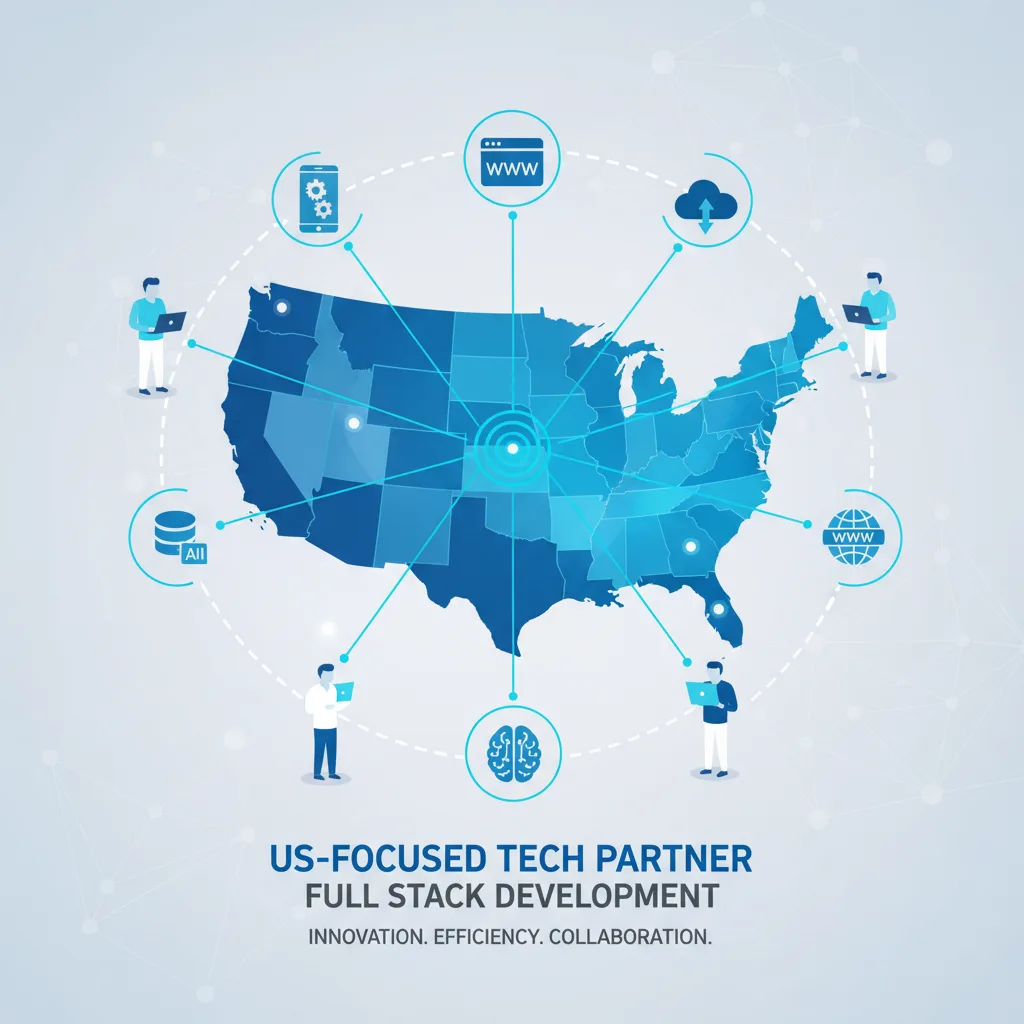
full stack development outsourcing with a US-focused tech partner, featuring remote developers collaborating and icons for app, web, and AI development.

To get your project from idea to launch, you need a team with the right skills, experience, and commitment. Building an in-house development team is hard for a lot of businesses because they have to compete with each other for skilled workers, pay for overhead and benefits, and keep up with new technologies. This is where outsourcing full stack development can make a big difference. When you work with a US-based tech company like MyFluiditi, you get access to a lot of resources, knowledge, and processes that are specifically designed to help your business reach its digital goals quickly and on a large scale. This full guide will look at the top 10 reasons why you should hire a US-based partner to handle your development needs. We’ll go into more detail about each benefit, giving you real-life examples, useful tips, and a behind-the-scenes look at how MyFluiditi provides great value in the constantly changing world of app, web, and AI development for US businesses. 1. Access to a pool of skilled and experienced workers One of the best reasons to hire a US-based development partner is that you can get access to a large number of skilled professionals right away and on an ongoing basis. Technology is the backbone of business, trade, and entertainment in the United States. This means that technical skills are always being developed and improved. For example, building a modern, scalable ecommerce platform is a big challenge. It can take months for most companies to find full stack developers who are equally skilled in front-end technologies (like React or Angular), back-end frameworks (like Node.js or Django), and cloud infrastructure (like AWS or Azure). When you work with MyFluiditi, those features are easy to get. Our diverse team has decades of experience building strong digital solutions, from custom mobile apps to advanced AI-driven automation platforms. Talent and knowledge of the field go hand in hand. Let’s say you’re starting a fintech app in the US. When you outsource to a partner who knows US regulatory requirements, you not only get direct access to software engineers, but also to compliance specialists, UI/UX experts who know what American consumers want, and QA professionals who are good at working with US-based payment systems. This all-encompassing method lowers risk and encourages new ideas. Case Study: MyFluiditi’s Part in a Nationwide Retail Rollout A clothing store that was growing asked MyFluiditi for help with quickly setting up their online shopping platform. We used our US-based talent to not only do the technical work, but also help them with localisation, digital marketing integration, and post-launch analytics that were specific to the American market. Sales doubled in six months, and customers were more interested than ever. 2. Cost-effective without sacrificing quality Cutting costs is always a reason to outsource, but it shouldn’t mean giving up quality. In fact, working with a US-based partner like MyFluiditi often helps companies get more done with their budget, avoiding the problems that come with cheap, offshore outsourcing. Budget Control: When you build an in-house team, you have to pay for things like hiring, salaries, benefits, hardware/software, and ongoing training. But with MyFluiditi’s outsourcing model, you only pay for what your project needs. We give clear, upfront prices so there are no hidden costs or extra work. Flexibility: What if the scope of your project changes or you need to scale up quickly? MyFluiditi lets you change the size and expertise of your team on the fly as needs change, so you don’t have to rehire or pay for resources that aren’t being used. Quality Assurance: Companies based in the US have to follow strict rules about quality and performance. For example, MyFluiditi hires senior developers, certified project managers, and experienced UI/UX designers who always act professionally and ethically. We promise to review your code, test it, and keep making it better. This means that your product is strong, stable, and ready for the US market. For example, a tech startup wanted to start an AI-driven logistics platform but didn’t have enough money to do so. They saved more than 40% by hiring MyFluiditi to do the work instead of building a team in-house. We delivered a reliable solution on time and continued to support it with very little extra cost. 3. Aligning Time Zones for Smooth Communication Time zones that are far apart are one of the biggest problems with outsourcing. With a US-based partner like MyFluiditi, you won’t have to deal with the annoyance of delays that happen overnight, limited times to talk, and schedules that don’t match up. Meetings, sprint reviews, and quick feedback loops all happen during normal working hours, so people can work together in real time. This cuts down on long waits for answers and makes development processes more flexible. Cultural and Linguistic Affinity: Having a common language and knowing how business is done in the US makes it easier to gather requirements, write documentation, and even come up with new ideas. There are fewer misunderstandings, and expectations are clearer. Client Example: A healthcare provider needed a mobile app that followed HIPAA rules for the US market. Because medical rules are complicated and need to be followed quickly, project stakeholders had to talk to each other often. The client worked with MyFluiditi every day without any problems, which reduced bottlenecks and made it easier to make quick, informed decisions. Pro Tip: When choosing an outsourcing partner, make sure they have not only overlapping hours but also dedicated account managers and clear ways to escalate urgent issues. We make sure that senior leadership is available for strategic talks and that there is only one point of contact at MyFluiditi. 4. Faster times to finish projects In today’s digital world, speed is a very important difference. Getting to market before your competitors is important whether you’re starting a new direct-to-consumer brand or rolling out AI automation for your business. Streamlined Workflows: MyFluiditi uses agile methods, continuous integration, and strict project management rules to make

Enterprise Software Development Services for US Companies AI
Custom enterprise software development services for US organizations, delivering secure, scalable, and high-performance solutions tailored to complex business needs.Organizations in the United States face an ongoing storm to innovate, grow successfully, and be on top of their game in today’s dynamic digital environment. The problem is that most off-the-shelf applications do not quite meet the needs of enterprises because they cannot provide complex solutions including system integration, security compliance, performance when scaled up, and the ability to support industry-specific workflows. Therefore, the need to develop Enterprise Software Development Services for organizations across North America are critical. The design, development, and maintenance of customized, large-scale software solutions used by companies as part of their mission-critical business operations is referred to as Enterprise Software Development. In order to provide the support required by an organization’s business processes and objectives; provide the strategy for compliance; offer the ability to scale over the long term; and, provide the framework for transformation to digital; organizations will utilize enterprise software development services as part of achieving their goals. What Are Enterprise Software Development Services? The end-to-end development of robust and secure applications that can be utilized by large organizations is referred to as Enterprise Software Development Services. Unlike consumer applications, Enterprise software solutions must be able to manage high volumes of data, accommodate thousands of users, integrate with existing environments, and adhere to strict regulatory compliance. Enterprise software systems typically provide the ability to support the core functions of an organization; including finance, human resources, supply chain management, client relationship management (CRM), enterprise resource planning (ERP), data analysis and decision-making systems. Here’s an example rewritten using a different tone of voice: Types of Services Why do US businesses need Custom Enterprise Applications? The competitiveness and regulation of the US business climate make it one of the most complicated and competitive environments in the world. Many industries, such as healthcare, finance, manufacturing, logistics, retail, and government, have very specific requirements regarding compliance and how they operate. Custom Enterprise Applications have many advantages over generic solutions. By investing in custom enterprise application development, the US-based organizations will gain long-term control, flexibility, and performance. Key Features of Enterprise Software Applications Enterprise software applications are characterized by the ability to perform at the highest levels while remaining reliable and secure. These include: Enterprise applications are designed to handle thousands of concurrent users and large amounts of data. Performance optimization ensures consistent performance levels, regardless of whether the system is being used at peak capacity.Here’s an example rewritten using a different tone of voice: Enterprise SoftwareEnterprise Software Includes: Enterprise Software Development Process Integration CapabilityEnterprise applications should have the ability to integrate with customer relationship management (CRM) systems, enterprise resource planning (ERP) systems, third-party application programming interface (API’s), payment gateways, analytic tools, and legacy systems in order to minimize disruption to existing data flows within an organization. Customizable WorkflowsEnterprise software applications are designed to be customizable Where suitable for the business processes to facilitate automation and efficiency while minimising the need for organisations to change their business processes. Data Analysis & ReportingData Analytics and Reporting provides senior management with quantitative and qualitative data so that they can make informed decisions based on what has been observed throughout the business. Enterprise Software Development ProcessThe process of developing enterprise enterprise software has a structured process that ensures that the developed software meets the organisations business objectives, time frames and specified levels of quality written for organisations in the USA. Developing enterprise software for organisations in the US) typically involves the following components: Discovery and Requirement Analysis This stage includes business objectives, technical wants, user roles, compliance needs, current systems, and most importantly documenting everything to make sure there is alignment between the different parties associated with market vendors and development teams. Solution Architecture and Solution Design Architects decide on building a scalable and secure solution architecture, with an appropriate technology stack to help facilitate the deployment of the end-user application (UIs/.UIs UXs) and how they are going to ease the users of the solution to perform their job. Development Implementation The developer provides the end-user application through modern programming languages, frameworks, and enterprise tools. Commonly, we will follow Agile or Hybrid methodologies so that we can work in a flexible and transparent manner. Quality Assurance Testing Testing is an area where a lot of time and effort is spent. Examples of examples of functional, integration, performance, and security are variables that we look for during testing. Deployment Integration The deployment of the solution can take place in the cloud, onsite, or hybrid. The process of ensuring that the newly deployed solution is integrated with other enterprise systems has to be managed carefully so as not to interfere with use of the system. Hence downtime will need to be worked through. Ongoing Maintenance & Continuous Improvement In addition to supporting the solution on an ongoing basis (post-deployment), ongoing monitoring for performance, updates, and new feature sets are necessary for the long-term success of your efforts. Cloud-Based Enterprise Software for US Businesses The adoption of the cloud is becoming a major driver for enterprise software development in the USA via cloud solutions provide flexibility, scalability, and significant cost reduction while allowing companies the opportunity to support remote and hybrid working environments. There are advantages to cloud enterprise software. Decreased operational cost due to not having to invest in infrastructure; a shorter period for deploying and updating software; improved disaster recovery and business continuity functions; elasticity, or the ability to scale up and down based on a business’s needs; a secure way to access data from multiple locations. Many organizations across the U.S. use Hybrid and/or Multiple Cloud strategies so that they maintain a balance between Security, Compliance, and Performance needs. Examples of these types of companies are the Financial Services industry (Banking, Finance, and Insurance), Manufacturing and Logistics, Retail & E-Commerce, and Government & Public Sector. A significant portion of U.S. organizations operate their business and provide service with the aid of outdated, or “legacy”,

Launch Your StartUp Dreams With Yangoos Technologies

Launch Your Startup Dream with Yangoos Technologies Starting a business is more than just a dream; it’s a journey that requires determination, the right tools, and expert guidance. At Yangoos Technologies, we specialize in empowering startups to overcome technological challenges and thrive in today’s competitive landscape. What Makes Yangoos Your Ideal Startup Partner? Tailored Technology Solutions:Every startup is unique, and so are its needs. We take the time to understand your vision, identify your challenges, and deliver customized solutions that align perfectly with your goals. Whether it’s building a website, streamlining operations, or crafting a marketing strategy, we’ve got you covered. Expert Technology Consultation:With years of experience in the tech industry, our team offers actionable insights and practical solutions to help you avoid pitfalls and accelerate growth. From concept to execution, we’ll guide you every step of the way. FREE Business Website:Your online presence is critical in today’s digital-first world. When you enroll with Yangoos, we’ll provide you with a professionally designed, feature-rich website to give your brand the perfect launchpad. Showcase your services, attract customers, and build credibility—all at no cost to you! Comprehensive Support for Startups:We don’t just stop at technology. Yangoos offers end-to-end support, including business planning, marketing strategies, and scaling solutions. Our goal is to enable your startup to achieve sustainable success. Why Choose Yangoos Technologies? Proven track record in empowering startups across industries. Dedicated team of experts passionate about innovation and growth. Affordable and reliable solutions tailored to meet your budget and timelines. The Free Website AdvantageYour business deserves to shine online! By partnering with us, you’ll receive a free, fully functional website designed to: Highlight your brand and services. Enhance customer engagement. Drive more leads and sales. The Yangoos Startup Enablement Process Consultation to understand your business idea and challenges. Development of a customized roadmap for your success. Delivery of a professional website and actionable strategies. Ongoing support to ensure continuous growth. Let’s Build Your Success Story Together At Yangoos Technologies, we’re passionate about helping entrepreneurs achieve their dreams. Whether you’re starting small or dreaming big, we are here to turn your ideas into reality. Take the first step towards your success today! 📞 Contact Us Now: +91 99592 00257📧 Email: charen@yangoos.com Let’s make your startup the next big thing!