US ai Market Trends: The Convergence of Web and App Development

Artificial intelligence is reshaping the American technological landscape. Business leaders across the United States are moving past the experimental phases of intelligent systems. They now demand practical, scalable integrations that directly impact their bottom line. The conversation no longer centers on what these systems might do tomorrow. Instead, it focuses on how they operate today. At the core of this transformation is a distinct shift in software engineering. Standalone web platforms and mobile applications are no longer sufficient to maintain a competitive edge. The most successful organizations understand that web, app, and ai development must merge into a unified ecosystem. This convergence creates dynamic, self-improving digital products that learn from user interactions and optimize business operations in real-time. This guide breaks down the current ai trends dominating the US market. We will explore the rapid adoption of generative models in enterprise workflows and the crucial shift toward edge computing for mobile applications. We will also examine how hyper-personalization drives modern e-commerce and why ethical implementation and data privacy define the next era of custom software engineering. By understanding these trends, you will see exactly how myfluiditi helps businesses leverage technology for sustainable growth. The Convergence of Web, App, and ai Development Historically, software development occurred in distinct silos. Teams built web platforms, engineered mobile applications, and trained data models entirely separate from one another. This fragmented approach often resulted in disjointed user experiences and inefficient data utilization. American enterprises can no longer afford such inefficiencies. Today, custom software engineering requires a holistic approach. Intelligent algorithms form the central nervous system of modern digital products. They process data gathered from mobile sensors and web interactions, returning actionable insights instantly. This seamless data loop empowers applications to adapt to individual user preferences dynamically. Myfluiditi specializes in this exact convergence. We recognize that an intelligent algorithm provides zero value if users cannot interact with it intuitively. By embedding sophisticated models directly into the architecture of web and mobile applications, we create cohesive digital ecosystems. These platforms do not just display information; they anticipate needs, automate responses, and drive measurable business outcomes. Generative ai Revolutionizes Enterprise Workflows The rise of generative ai marks a pivotal moment in corporate efficiency. For years, businesses relied on analytical models to interpret existing data. Generative models push these boundaries by creating entirely new content, code, and structural designs. This capability is fundamentally altering how American enterprises structure their daily workflows. Automating Complex and Routine Tasks Enterprise teams spend countless hours on routine administrative tasks. Drafting internal reports, summarizing long meetings, and structuring project outlines consume valuable resources. Generative models eliminate this bottleneck. By integrating these tools into internal web portals and employee applications, companies automate content generation at scale. This automation extends far beyond basic text generation. Financial institutions use these systems to draft initial compliance reports based on vast datasets. Healthcare administrators deploy them to synthesize patient histories into easily digestible summaries for attending physicians. The result is a massive reduction in administrative overhead. Employees reclaim their time, redirecting their focus toward strategic initiatives that require human ingenuity and critical thinking. Enhancing Creative and Coding Output The impact of generative technology on software engineering itself is profound. Development teams across the US utilize these tools to accelerate their coding cycles. By analyzing vast repositories of open-source code, generative models suggest optimal syntax, identify potential vulnerabilities, and write boilerplate code instantly. This acceleration allows custom software engineering firms like myfluiditi to deliver complex projects faster. Our developers leverage these tools as collaborative assistants. We offload repetitive coding tasks to the algorithm, allowing our human engineers to focus on architectural design, system security, and custom business logic. This synergy between human expertise and machine efficiency translates directly to faster time-to-market for our clients. Furthermore, marketing and design teams use generative tools to rapidly prototype visual assets and promotional copy. By inputting specific brand parameters, designers generate hundreds of viable layouts in minutes. This rapid iteration process enables companies to test multiple campaigns simultaneously, optimizing their messaging based on real-time performance metrics. Transforming Customer Support Channels Customer support represents a significant operational cost for US businesses. Traditional chatbots often frustrate users with rigid, scripted responses. Generative ai transforms these support channels completely. Modern conversational interfaces understand nuance, context, and customer sentiment. When integrated into a company’s web and mobile applications, these intelligent assistants provide immediate, accurate resolutions to complex inquiries. They pull information seamlessly from internal knowledge bases, adapting their tone to match the user’s emotional state. This level of sophisticated automation improves customer satisfaction scores while drastically reducing the burden on human support agents. The Shift Toward Edge Computing in Mobile Apps As mobile applications become more complex, their reliance on centralized cloud servers creates distinct challenges. Sending massive amounts of data back and forth between a device and a distant server introduces latency. It also requires constant internet connectivity and raises significant data privacy concerns. The solution to these challenges lies in edge computing. Reducing Latency for Real-Time Processing Edge computing shifts the processing power from centralized servers directly to the “edge” of the network—in this case, the user’s mobile device. By running ai models locally on smartphones and tablets, applications process data instantly. This eliminates the latency associated with cloud computing. For many industries, this real-time processing is critical. Consider augmented reality (AR) applications used in manufacturing or retail. If an AR app must send video feeds to the cloud for analysis, the resulting delay disrupts the user experience. Edge computing allows the device’s local processor to analyze the video feed and overlay digital information instantly. Myfluiditi engineers mobile applications that maximize this local processing power. We optimize complex algorithms to run efficiently on mobile hardware without draining battery life. This ensures that our clients’ applications remain lightning-fast and highly responsive, regardless of network conditions. Guaranteeing Offline Functionality American workers operate in diverse environments, many of which lack reliable internet access. Field technicians, agricultural workers, and logistics personnel require applications that function seamlessly offline. Edge computing
The Future of Data Analytics – Trends Shaping Tomorrow

Every minute, we generate massive volumes of information. From every click on a website to every transaction processed globally, information flows endlessly. But raw information holds no real value until you extract the hidden patterns within it. For startup founders and business owners, understanding this flow is no longer optional. It determines whether a company leads the market or falls behind. Artificial intelligence is rapidly shifting how we interact with this information. We are moving away from manual data pulling and stepping into an era where machines actively interpret, forecast, and recommend actions. The future of data analytics promises systems that not only report what happened yesterday but also predict what will happen tomorrow. If you want to build a resilient, competitive organization, you need to understand where this technology is heading. Let us explore the key shifts, emerging trends, and massive opportunities defining the future of data analytics. What Does Data Analytics Look Like Today? Before we look forward, we must understand our current baseline. Over the past decade, business intelligence (BI) tools became the standard for modern companies. Dashboards, automated reports, and interactive charts replaced clunky spreadsheets. Currently, most organizations rely on descriptive analytics. This means they look at historical information to understand past performance. You check your monthly dashboard to see how many units you sold, what your customer acquisition cost was, and where your traffic originated. While these tools provide incredible value, they still require heavy human intervention. Data analysts must clean the inputs, build the models, configure the dashboards, and interpret the charts. If a business leader has a complex question, they submit a ticket to the data team and wait days for an answer. The current state is functional, but it is often reactive and slow. Key Data Analytics Trends Driving the Future The limitations of traditional reporting are fueling massive innovation. The future of data analytics relies on speed, accessibility, and foresight. Here are the major data analytics trends reshaping the corporate landscape. The Rise of AI in Analytics Artificial intelligence completely redefines how we extract insights. AI in analytics moves the heavy lifting from human analysts to machine learning algorithms. Instead of building complex SQL queries, business owners can soon type natural language questions into their platforms. You might ask, “Why did our customer retention drop in the third quarter?” The AI will instantly analyze millions of data points, identify the root causes, and present a clear summary. This capability reduces the time from question to insight from days to mere seconds. The Shift to Real-Time Data Processing Looking at week-old reports no longer works when consumer behavior shifts overnight. Real-time data processing allows companies to analyze information the exact moment it generates. E-commerce platforms can adjust pricing instantly based on live inventory and competitor changes. Financial institutions can detect and block fraudulent transactions before the money leaves an account. Logistics companies can reroute shipments instantly to avoid unexpected weather patterns. Empowering Growth with Predictive and Prescriptive Analytics Descriptive analytics tells you what happened. Predictive analytics tells you what will likely happen next. By feeding historical patterns into advanced models, businesses can forecast demand, anticipate equipment failures, and predict customer churn. But the next frontier is prescriptive analytics. This technology does not just predict the future; it tells you exactly what to do about it. If predictive models indicate a 20% drop in sales next month, prescriptive analytics will recommend a specific marketing campaign, budget allocation, and target audience to offset that drop. Data Democratization and No-Code Tools Historically, data belonged to the IT department. If marketing or sales needed insights, they waited in line. The future relies on data democratization. We are seeing a massive surge in low-code and no-code analytics platforms. These intuitive tools empower non-technical employees to build their own models, create custom dashboards, and find their own answers. When everyone in a company can access and understand insights, the entire organization moves faster. Heightened Focus on Data Privacy and Governance As data collection grows, so does the scrutiny surrounding it. Governments worldwide are implementing stricter privacy regulations. Consumers demand transparency regarding how companies use their personal details. Consequently, the future of analytics features robust privacy by design. Organizations will invest heavily in data governance frameworks. Technologies like differential privacy and synthetic data generation will allow companies to extract valuable insights without compromising individual user identities. The Rise of Edge Analytics Traditionally, devices sent information back to a central cloud server for processing. However, the explosion of Internet of Things (IoT) devices creates too much traffic for this model. Edge analytics solves this by processing information right where it is generated—at the “edge” of the network. A smart factory machine will analyze its own performance metrics locally and only send critical alerts to the main server. This drastically reduces bandwidth costs and enables instantaneous responses to local problems. The Impact on Data-Driven Business Models These technological shifts directly translate to business growth. Building a data-driven business creates a massive competitive advantage. When startup founders harness predictive analytics and real-time processing, they achieve incredible agility. You can pivot marketing strategies the moment you detect a shift in customer sentiment. You can optimize your supply chain to eliminate waste and reduce overhead costs. Furthermore, deep insights allow you to hyper-personalize the customer experience. Consumers now expect brands to understand their specific needs. By analyzing individual behaviors and preferences, you can deliver tailored product recommendations and personalized communications. This level of service builds intense customer loyalty and significantly increases lifetime value. Businesses that refuse to adopt these advanced capabilities will simply lack the speed and precision to compete. Overcoming the Challenges Ahead While the future holds incredible promise, the path forward presents real obstacles. Business owners must prepare to navigate several major challenges. Data Overload and “Data Swamps” More data does not automatically equal better decisions. Many organizations currently hoard every piece of information they can capture. Without proper structure and architecture, a data lake quickly turns into a murky “data
Digital Transformation News 2026: Trends & Insights

Over the past two decades of architecting enterprise technology systems, I have watched the corporate digital landscape shift from basic monolithic software deployments to the hyper-connected, artificially intelligent ecosystems we operate in today. Tracking the right digital transformation news is no longer a passive exercise for US business leaders. It is an active requirement for survival. By 2026, the technological baseline for American enterprises has moved aggressively forward. Companies are no longer asking if they should adopt artificial intelligence or decouple their web architectures. They are asking how to integrate these massive systems securely, efficiently, and at unprecedented scale. This guide breaks down the critical shifts defining the 2026 technology sector. We will analyze the deep systemic changes impacting AI governance, headless web architecture, and enterprise-scale mobile ecosystems. Myfluiditi stands at the forefront of this evolution, engineering the web, app, and AI solutions that power industry leaders. Through this detailed examination, you will gain the actionable intelligence needed to future-proof your infrastructure and drive measurable revenue growth. The Evolution of Enterprise Technology in 2026 The contemporary US market demands absolute agility. When we analyze recent digital transformation news, a stark reality emerges. Legacy systems built even five years ago are now active liabilities. They bottleneck data flow, restrict machine learning capabilities, and create massive security vulnerabilities. Modern enterprise architecture requires a modular, API-first approach. We are seeing a massive transition away from vendor lock-in. Chief Information Officers want the freedom to select the best artificial intelligence tools, the most robust content management systems, and the fastest database solutions, weaving them together into a proprietary stack. This level of custom integration requires specialized expertise. You cannot rely on out-of-the-box software to differentiate your brand in a saturated market. Reading the latest digital transformation news reveals that companies partnering with specialized development firms, like Myfluiditi, consistently outpace their competitors in both deployment speed and system stability. Core Pillars of Modern Infrastructure To understand the trajectory of 2026, we must establish the three pillars supporting modern corporate technology: Decentralized Data Lakes: Centralizing raw data while decentralizing the access points for various AI models and analytics tools. Microservices Architecture: Breaking down large applications into smaller, independent services that communicate via APIs. Continuous Deployment Pipelines: Automating the testing and release of software to allow for daily, or even hourly, updates. AI Governance and Deep Machine Learning Integration Artificial intelligence is the undeniable focal point of almost every piece of digital transformation news published this year. However, the conversation has matured. We are no longer discussing generative AI as a novelty for writing emails. In 2026, we are dealing with autonomous agents, predictive neural networks, and deep machine learning models that directly control supply chains, financial forecasting, and user experience paradigms. The Imperative of AI Governance With great computational power comes massive regulatory and ethical responsibility. The US regulatory environment surrounding AI has tightened significantly. You cannot deploy an AI model without strict governance frameworks. AI governance dictates how data is sourced, how models are trained, and how decisions are audited. When an AI denies a loan application or alters a dynamic pricing model, you must be able to explain exactly why that decision was made. Reading enterprise-focused digital transformation news highlights the massive fines and reputational damage companies suffer when they ignore these governance protocols. At Myfluiditi, our AI development process builds governance directly into the foundation. We implement robust auditing trails, bias detection algorithms, and strict data privacy filters. This ensures your AI initiatives remain compliant, ethical, and highly effective. Hyper-Personalization at Scale Generic customer experiences are dead. Consumers expect your digital platforms to anticipate their needs before they even click. We achieve this through deep machine learning integration. By feeding real-time user interaction data into predictive models, your web and mobile applications can alter their interfaces, product recommendations, and messaging instantly. This is not simple A/B testing. This is algorithmic interface generation. Every user sees a unique version of your platform optimized specifically for their psychological profile and purchasing history. Headless Architecture and the Decentralized Web Web development has undergone a radical decoupling. If you follow digital transformation news, you know that traditional Content Management Systems are rapidly being replaced by headless architectures. Breaking the Monolith A traditional website tightly couples the back-end database with the front-end user interface. If you want to change how a product page looks, your developers often have to rewrite the underlying code that pulls the product data. This is slow, expensive, and prone to breaking. Headless architecture severs this connection. The back-end becomes a pure data repository that delivers content via APIs. The front-end is built entirely separately using modern frameworks like React, Vue, or Next.js. Omnichannel Content Delivery The true power of headless commerce lies in its omnichannel capabilities. Because the content is delivered via API, you can push the exact same product description, pricing data, and user profile information to a website, an iOS app, a smart refrigerator, and a digital billboard simultaneously. When you review technical digital transformation news, the speed metrics associated with headless builds are staggering. By pre-rendering front-end pages and delivering them via global Content Delivery Networks (CDNs), load times drop from seconds to milliseconds. Myfluiditi specializes in architecting these headless environments, giving your marketing team complete freedom without sacrificing technical performance. Enterprise-Scale Mobile Ecosystems Mobile application development has evolved past single-function utilities. The most critical digital transformation news regarding mobile strategy involves the consolidation of features into massive, interconnected ecosystems. The Transition to Super Apps US consumers suffer from app fatigue. They will not download a dedicated application for every brand they interact with. To secure real estate on a user’s device, your app must offer compounding value. We are seeing enterprises build “Super Apps” that combine e-commerce, customer support, loyalty programs, and even integrated financial services into a single interface. Building a Super App requires mastering state management, complex API routing, and extreme memory optimization. Cross-Platform Native Performance Maintaining separate codebases for iOS and Android is a massive
Best Technology PR Strategy for US Tech Brands

Launching a groundbreaking application or artificial intelligence platform is only half the battle. If nobody knows about your product, even the most elegant code will fail to generate revenue. This is where a targeted, data-driven approach to public relations becomes critical for tech founders and marketing executives. Securing top-tier media coverage, building unshakeable brand authority, and managing public perception require more than just writing a press release. You need a comprehensive plan. Crafting the perfect technology pr strategy means understanding the unique dynamics of the US tech market, knowing how journalists operate, and positioning your complex solutions as accessible, must-have innovations. In this comprehensive guide, we will break down the exact components of a winning technology pr strategy. You will learn how to position AI products, navigate media relations, establish thought leadership, handle crisis management, and ultimately tie your public relations efforts back to your core development goals. The Core of a Winning Technology PR Strategy Before pitching a single journalist, you must establish the foundation of your narrative. A solid technology pr strategy goes beyond mere product announcements. It connects what your software does with why it actually matters to human beings and businesses. For web, app, and AI development companies like MyFluiditi, the narrative often centers around efficiency, digital transformation, and future-proofing operations. Your strategy must highlight these benefits cleanly. Journalists receive hundreds of pitches daily from tech startups. To stand out, your messaging must be sharp, data-backed, and completely devoid of confusing jargon. Define Your Unique Value Proposition (UVP) What makes your AI application different from the dozen others launched this week? Your unique value proposition serves as the heartbeat of your technology pr strategy. It should clearly state the problem you solve, the specific audience you help, and the measurable results you deliver. Map Your Target Audience You cannot build an effective technology pr strategy without knowing exactly who you are talking to. Are you selling enterprise AI solutions to Fortune 500 CTOs? Are you launching a consumer-facing mobile app? Each audience consumes different media. By mapping your audience, you can identify the exact publications, podcasts, and newsletters that deserve your attention. Structuring Your Technology PR Strategy for Product Launches Product launches represent the highest-stakes moments in any tech company’s lifecycle. A failed launch can stall momentum for months. A successful one can drive massive user acquisition and investor interest. Web and App Development Launches When launching a web platform or mobile app, your technology pr strategy needs to focus on user experience and market disruption. The US market is highly saturated. To break through the noise, you must demonstrate exactly how your app saves time, saves money, or fundamentally changes a daily routine. Offer tech journalists exclusive early access. Let them test the app. Provide them with high-quality screen recordings, detailed case studies from beta testers, and direct access to your lead developers or founders for interviews. AI Product Positioning Artificial intelligence requires a highly nuanced technology pr strategy. Public perception of AI swings between awe and anxiety. Your job is to position your AI development as an empowering tool rather than a disruptive threat. Focus heavily on transparency and security. Explain how your AI models are trained, how user data is protected, and how the tool augments human intelligence. When pitching AI stories, anchor your narrative in tangible case studies. Instead of saying “Our AI is revolutionary,” say “Our AI reduced supply chain delays for our beta clients by 42% in three months.” Media Relations: Building Bridges with Tech Journalists You cannot execute a successful technology pr strategy without strong relationships with the media. Tech journalism in the US moves incredibly fast. Reporters are constantly hunting for exclusive scoops, fresh data, and contrarian opinions. Research and Personalization Never send mass press releases to a blind list of emails. A high-performing technology pr strategy relies on deep research. Read the articles written by the journalists you want to target. Understand their beats, their interests, and their writing styles. When you send a pitch, reference their previous work. Keep your email under 150 words. Clearly state what the news is, why their specific readers will care, and offer a quick interview with your CEO. The Power of Data Journalism Data is the ultimate currency in tech PR. If your app or web platform generates interesting, anonymized data about consumer behavior or industry trends, package that data into a report. Journalists love writing about fresh statistics. Using proprietary data as a hook is a highly effective technology pr strategy because it positions your company as an industry resource, not just a vendor pushing a product. Thought Leadership: Establishing Authority Media relations cover your product, but thought leadership covers your people. Investors and enterprise buyers want to know the minds behind the software. Executive Bylines and Op-Eds Encourage your founders and lead engineers to write opinion pieces for major tech publications. A robust technology pr strategy includes a calendar of bylined articles. These articles should not be promotional. Instead, they should tackle industry challenges, predict future trends, or offer contrarian takes on current tech debates. Speaking Engagements and Podcasts Getting your executives on prominent tech podcasts and industry panels is a cornerstone of modern PR. This allows your team to showcase their expertise in real-time. It builds trust and humanizes your brand, which is especially critical when dealing with complex topics like AI and enterprise web development. Crisis Management in the Tech Sector No technology pr strategy is complete without a crisis management plan. Software breaks. Data breaches happen. Algorithms make mistakes. How you handle these inevitable bumps will define your brand’s reputation in the US market. Preparation and Protocols Draft crisis communication templates before you ever need them. Outline exactly who speaks to the media during an outage or security incident. Establish a clear chain of command. In the tech industry, speed is critical. If your application goes down, you must communicate with your users and the media immediately, explaining what happened and what you are
Business Data Technology Implementation Order Guide

Transforming raw information into a competitive advantage requires more than just purchasing the latest software. For CTOs, IT managers, and business owners across the USA, the true challenge lies in sequencing. Adopting tools in the wrong sequence leads to siloed information, inflated costs, and failed AI initiatives. Understanding the correct business data technology implementation order is the foundational step toward building resilient, intelligent, and scalable systems. At MyFluiditi, we specialize in AI web app development. We see firsthand how organizations struggle when they deploy advanced artificial intelligence before establishing a solid information architecture. This guide provides a comprehensive roadmap for structuring your technology investments. We will break down the exact phases required to turn fragmented systems into cohesive, AI-ready powerhouses. The Stakes of Digital Transformation Organizations often rush to implement machine learning models or predictive analytics dashboards without preparing their underlying infrastructure. This approach almost always backfires. When you disrupt the proper business data technology implementation order, you force advanced algorithms to train on incomplete, dirty, or inaccessible information. The Cost of Disorganized Strategies Investing heavily in front-end AI web apps without backend preparation drains budgets. When applications lack a unified source of truth, employees spend countless hours manually reconciling reports. Furthermore, security vulnerabilities multiply when systems are pieced together haphazardly. By respecting a strategic sequence, US businesses can avoid these expensive missteps and ensure every new tool integrates smoothly with existing assets. Why the US Market Requires Precision The American market demands speed and compliance. With regulations varying across states and industries, your architecture must be both agile and secure. Competitors are rapidly adopting AI solutions. To stay ahead, you need a framework that supports rapid deployment while maintaining strict governance. Following the right business data technology implementation order guarantees that your company scales efficiently without compromising security or performance. Phase 1: Comprehensive Assessment and Auditing You cannot build a house without surveying the land. The first phase of any technological upgrade involves a rigorous audit of your current capabilities. Identifying Existing Assets Start by cataloging every piece of software, database, and manual process currently in use. Where does your information live? How does it move between departments? Who has access to it? Mapping these touchpoints reveals bottlenecks and redundancies. Ignoring this step disrupts the entire business data technology implementation order, leading to redundant purchases and incompatible systems down the line. Gap Analysis and Goal Setting Once you understand your current landscape, define your business objectives. Are you trying to improve customer retention, automate supply chain logistics, or personalize user experiences? Compare your current capabilities against these goals. The resulting gap analysis will dictate exactly what infrastructure you need to build next. Phase 2: Choosing the Right Infrastructure With a clear audit in hand, you must establish a secure, scalable home for your information. This foundational layer dictates the success of every subsequent phase. Cloud vs. On-Premise Solutions Modern AI web apps thrive in cloud environments. Cloud providers offer the elasticity required to process massive volumes of information dynamically. While some highly regulated industries still rely on on-premise servers, hybrid or fully cloud-based architectures provide the flexibility necessary for growth. Selecting your hosting environment is a critical milestone in the business data technology implementation order. Establishing Data Lakes and Warehouses Raw information needs a repository. Data lakes store unstructured information, while data warehouses organize processed, structured information for specific queries. Establishing these repositories ensures that when you eventually deploy business intelligence tools or AI models, they have a centralized, reliable source to pull from. Building this infrastructure early prevents the formation of isolated information silos across different departments. Phase 3: Governance and Security Protocols Before you start analyzing your centralized repositories, you must secure them. Security cannot be an afterthought; it must be baked into the architecture. Compliance in the American Market Data privacy regulations are becoming stricter. You must implement access controls, encryption, and audit trails to ensure compliance with standards like SOC 2, HIPAA, or state-specific privacy laws. Defining who can access specific types of information protects your organization from internal breaches and external threats. Building Resilient Architectures Establishing robust governance early in the business data technology implementation order ensures that your systems remain secure as they grow. This involves creating standardized naming conventions, establishing data quality rules, and implementing automated backup protocols. When information is clean, standardized, and secure, subsequent analytics and AI deployments become significantly easier to manage. Phase 4: Analytics and Business Intelligence Integration With a secure, organized foundation in place, you can begin extracting value through business intelligence (BI) tools. Moving from Raw Information to Actionable Insights BI tools connect to your warehouses to create visual representations of your operations. This phase transforms abstract numbers into readable dashboards, highlighting trends in sales, operational efficiency, and customer behavior. Deploying BI tools at this specific stage of the business data technology implementation order guarantees that executives make decisions based on accurate, real-time information rather than outdated spreadsheets. Tool Selection and Dashboarding Choose BI platforms that integrate seamlessly with your existing cloud infrastructure. Focus on creating role-specific dashboards. A CTO needs different metrics than a marketing director. By tailoring these views, you ensure that every department gains immediate value from the new architecture, building momentum for the final, most complex phase of transformation. Phase 5: Advanced AI and Machine Learning Deployment This is where MyFluiditi excels. With your infrastructure built, governed, and analyzed, your organization is finally ready to deploy advanced artificial intelligence. How MyFluiditi Approaches AI Web Apps We build intelligent web applications that leverage your newly organized ecosystem. Because you followed the correct business data technology implementation order, our AI models can access clean, centralized information. This allows us to develop custom applications that automate complex workflows, predict customer behavior, and generate deep, actionable insights. Predictive Analytics and Automation Machine learning models thrive on high-quality input. By waiting until Phase 5 to deploy these tools, you ensure the models train on accurate historical records. This leads to highly precise predictive analytics. Whether you
what are industry trends in AI development company

Artificial intelligence is transforming how businesses operate across the United States. From optimizing daily workflows to creating entirely new digital experiences, AI is no longer a futuristic concept-it is a baseline requirement for competitive web applications. For enterprise leaders and technical founders alike, staying ahead means constantly evaluating the technological landscape. When you ask, exactly what are industry trends shaping the next decade of software, the answer lies in how seamlessly AI integrates into our daily digital tools. This comprehensive guide explores the core movements defining the future of AI web app development. We will unpack the explosive growth of generative AI, the strategic shift toward edge computing, the critical importance of AI ethics, and the democratization of software through low-code and no-code platforms. Finally, we will show you how MyFluiditi partners with USA-based businesses to turn these advanced concepts into tangible, high-performing web applications. The Shifting Landscape of Artificial Intelligence The pace of innovation in artificial intelligence demands constant vigilance. Business leaders frequently gather in boardrooms to ask, what are industry trends signaling for our next product roadmap? The signals point clearly toward integration, speed, and responsibility. We are moving away from siloed AI experiments and toward embedded, invisible intelligence that anticipates user needs before they explicitly state them. As companies race to deploy these technologies, understanding the underlying currents becomes essential. You cannot simply bolt an AI feature onto an outdated application and expect market dominance. Instead, you must build with a fundamentally intelligent architecture from day one. To truly grasp what are industry trends doing to market dynamics, we must look at the specific technologies driving user adoption and operational efficiency. Generative AI: Revolutionizing Web Applications Generative AI has captured the public imagination, but its real power lies in enterprise applications. We have moved past simple text generation into complex, multimodal content creation that happens in real-time. Dynamic Content Generation Modern web applications use generative models to create highly personalized user interfaces. Instead of serving static pages, apps now analyze user behavior and generate custom dashboards, reports, and recommendations on the fly. When developers study what are industry trends in user engagement, dynamic content consistently ranks at the top. This approach significantly reduces churn rates and increases the time users spend extracting value from your software. Automated Code and Workflow Generation Generative AI also transforms how developers build the applications themselves. AI-assisted coding tools help engineering teams write boilerplate code, identify bugs, and optimize database queries much faster. This internal efficiency directly translates to faster feature releases for your end-users. Advanced Conversational Interfaces The standard chatbot is dead. Today’s AI development focuses on autonomous agents that can execute complex tasks across multiple systems. If a user wants to pull a quarterly sales report, analyze it for anomalies, and email a summary to their team, a modern AI agent can do this through a single conversational prompt. Edge Computing: Bringing AI Closer to the Source Cloud computing revolutionized software, but sending massive amounts of data back and forth to centralized servers creates latency. Edge computing solves this by processing AI models locally, closer to where the data originates. Eliminating Latency For web applications requiring real-time decision-making like financial trading platforms or remote healthcare monitoring-milliseconds matter. By moving AI processing to the edge, ge-optimized processors is the clearest indicator Enhancing Data Privacy and Security Sending sensitive user data to the cloud introduces security vulnerabilities. Edge computing allows web applications to process personal information locally on the user’s device. The application extracts the necessary insights and discards the raw data, ensuring compliance with strict data protection regulations. When privacy advocates ask what are industry trends doing to protect consumers, edge AI is the primary technical solution. Reducing Infrastructure Costs Constant cloud API calls become expensive as your application scales. By handling heavy AI computations at the edge, development companies drastically reduce cloud hosting and bandwidth expenses. This trend makes high-powered AI applications economically viable for smaller businesses. Navigating AI Ethics and Responsible Development As AI systems gain more autonomy, the ethical implications of their decisions come under intense scrutiny. Responsible AI development is no longer just a legal requirement; it is a core component of brand trust. Algorithmic Bias Mitigation AI models learn from historical data, which often contains human biases. If an AI web app helps HR departments screen resumes, it must do so fairly. AI development companies now employ rigorous testing frameworks to identify and eliminate bias before deploying models. When researchers investigate what are industry trends in compliance, algorithmic fairness is a massive focal point. Transparency and Explainability Users need to know why an AI system made a specific decision. “Black box” AI is unacceptable in industries like finance or healthcare. Modern development focuses on explainable AI (XAI), which provides clear, human-readable logic for every output. Data Governance and Consent Building ethical AI requires strict data governance. Web applications must transparently communicate what data they collect, how they use it to train models, and give users explicit control over their information. Companies that prioritize user consent build stronger, longer-lasting relationships with their target audience. The Rise of Low-Code and No-Code AI Solutions The demand for AI solutions vastly outpaces the supply of specialized machine learning engineers. Low-code and no-code AI platforms have emerged to bridge this gap, allowing business analysts and domain experts to build intelligent applications. Democratizing AI Development You no longer need a PhD in computer science to deploy a predictive model. Visual interfaces allow users to drag and drop AI components, train custom models on their own datasets, and integrate them into web apps via APIs. If you evaluate what are industry trends in workforce productivity, the democratization of software development is leading the charge. Accelerating Speed to Market Traditional AI development takes months of prototyping and testing. Low-code platforms reduce this cycle to weeks or even days. This rapid prototyping allows companies to test AI features with real users quickly, gather feedback, and iterate without exhausting their engineering budgets. Bridging the Business-IT
Need AI Tool for Create Excel Sheet Data for Inventory

Managing stock levels, tracking shipments, and predicting supply needs can feel overwhelming. If you manage a growing business in the USA, you know that manual data entry drains resources and introduces costly errors. You might find yourself searching the internet, typing the exact phrase: “I need ai tool for create excel sheet data for inventory.” You are not alone in this search. This comprehensive guide explores the importance of artificial intelligence in stock management. We will break down how these technologies simplify spreadsheet generation, outline the essential features you must look for, and explain how myfluiditi.com delivers custom web app AI solutions to solve these exact challenges. The Shift to Automated Inventory Management For decades, businesses relied on basic spreadsheets and manual counting. Workers spent countless hours walking warehouse floors, tallying items, and typing numbers into a computer. This method is slow, prone to human error, and completely disconnected from real-time sales data. As supply chains grow more complex, American businesses face pressure to fulfill orders faster than ever. A simple typo in a spreadsheet can lead to stockouts, delayed shipments, and unhappy customers. When companies hit this breaking point, they realize they need ai tool for create excel sheet data for inventory. AI removes the heavy lifting from human workers and hands it over to smart algorithms that process data instantly. Artificial intelligence does not just record numbers; it analyzes them. It looks at historical sales, seasonal trends, and current market demands to predict exactly what you will need and when you will need it. Top Benefits of AI in Inventory Management Integrating AI into your operations offers numerous advantages that go far beyond simple data entry. When executives express the thought, “We need ai tool for create excel sheet data for inventory,” they are actually looking for the broad business benefits that come with intelligent automation. 1. Drastic Reduction in Human Error Manual data entry is the leading cause of stock discrepancies. A tired employee might accidentally add an extra zero to a purchase order. AI tools pull data directly from barcodes, sales platforms, and warehouse sensors, populating your spreadsheets with perfect accuracy. 2. Real-Time Stock Visibility You never have to guess how many units remain in your warehouse. AI systems update your data instantly as sales happen. This real-time visibility allows managers to make quick decisions regarding promotions, reordering, and liquidating dead stock. 3. Predictive Restocking Traditional methods force you to wait until stock runs low before you reorder. AI anticipates the drop. By analyzing past purchasing behavior and upcoming market trends, the technology alerts you exactly when to contact suppliers, preventing costly stockouts. 4. Significant Cost Savings Labor costs add up quickly when employees spend days counting inventory. Automating these tasks frees your team to focus on high-level strategy, customer service, and business growth. Furthermore, accurate data prevents over-ordering, which ties up valuable capital in unsold goods. How AI Simplifies Creating Excel Sheet Data Excel remains a staple in business operations. It is familiar, highly customizable, and compatible with almost every major software platform. However, building these sheets from scratch requires advanced knowledge of formulas, macros, and pivot tables. This is why warehouse managers often search online for “need ai tool for create excel sheet data for inventory”. They want the familiar format of a spreadsheet without the manual labor required to build it. Automated Data Extraction Modern AI tools integrate directly with your e-commerce platforms, point-of-sale systems, and warehouse scanners. Instead of an employee typing numbers into cells, the AI extracts the data and formats it perfectly into a spreadsheet layout. Natural Language Processing (NLP) Some advanced web applications allow you to use plain English to generate reports. You can type a command like, “Generate a spreadsheet showing all electronics with less than 50 units in stock.” The AI interprets this command and instantly produces the exact Excel file you requested. Intelligent Categorization AI automatically sorts your items into logical categories. It identifies patterns in your product descriptions and groups them by size, color, vendor, or profit margin. This automatic sorting makes your Excel sheets highly organized and easy to scan. Essential Features to Look for in an AI Tool Not all software applications offer the same level of utility. When you actively address the specific “need ai tool for create excel sheet data for inventory” requirement, you must evaluate potential software against a strict set of criteria. Seamless Integration Capabilities The software must communicate effortlessly with your existing tech stack. Look for tools that offer robust APIs and native integrations with popular platforms like Shopify, Amazon, QuickBooks, and your preferred ERP systems. Custom Reporting Templates Every business tracks slightly different metrics. Your AI tool should allow you to define custom parameters for your Excel exports. Whether you need to see daily turnover rates or quarterly supplier costs, the tool should generate sheets tailored to your exact specifications. Cloud-Based Accessibility Your team needs access to inventory data whether they sit in a corporate office, stand on a warehouse floor, or travel to a supplier meeting. Web-based applications ensure that the latest Excel data is always available on any device with an internet connection. Scalability A small retail shop manages a few hundred SKUs, while a massive distributor manages millions. The AI solution you choose must handle growing data volumes without slowing down or crashing. How myfluiditi.com Stands Out in AI Web App Development Finding off-the-shelf software that fits your exact workflow is often frustrating. Generic tools force you to change your business processes to match the software. This is where myfluiditi.com changes the game. As a premier web app AI development company serving the USA, we build custom solutions for businesses who say they need ai tool for create excel sheet data for inventory. We understand that your inventory challenges are unique, and your software should reflect that. Custom-Built for Your Operations We do not sell boxed software. Our team of AI developers analyzes your specific supply chain, identifies your bottlenecks, and builds a
Digital Transformation Strategies for Small and Mid-Size Companies
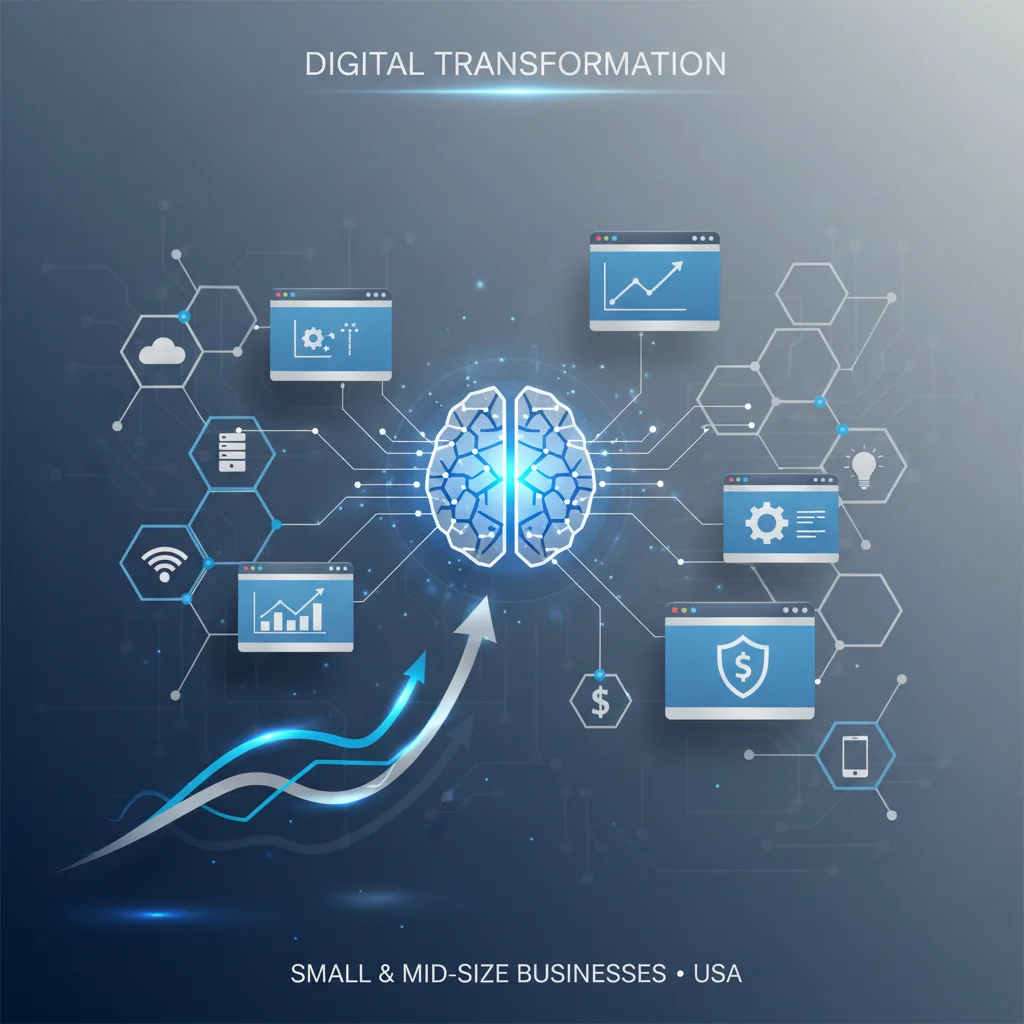
Running a small or mid-size business (SMB) in the United States requires constant adaptation. Customer expectations shift rapidly, and operational costs continue to rise. You might feel like large corporations hold all the cards when it comes to technology. However, the right approach can level the playing field. Developing effective Digital Transformation Strategies is no longer optional; it is a critical step for survival and growth. This guide breaks down how your company can leverage technology, specifically artificial intelligence and web application development, to streamline operations and boost revenue. We will explore practical steps, common hurdles, and real-world examples to help you navigate this transition smoothly. What Does Digital Transformation Mean for SMBs? For a small or mid-size company, digital transformation means integrating digital technology into all areas of your business. It changes how you operate and deliver value to your customers. It is also a cultural shift that requires your team to challenge the status quo and experiment with new methods. Many business owners think buying a new software subscription checks the box. But true transformation goes deeper. It involves rethinking your processes from the ground up. Effective Digital Transformation Strategies focus on aligning technology with your specific business goals, whether that means automating manual data entry, improving customer service through web apps, or using AI to forecast inventory needs. The Core Benefits of Modernizing Your Business Why should your company invest time and resources into upgrading its technology? The benefits extend far beyond simply having modern tools. Increased Efficiency and Productivity Manual processes drain your team’s energy and time. By implementing custom web applications, you can automate repetitive tasks. This frees your staff to focus on high-value work, like building client relationships or developing new products. Better Customer Experiences Today’s consumers expect seamless, fast, and personalized interactions. A custom web app can provide your customers with a self-service portal, allowing them to track orders, schedule appointments, or access support at any time. AI-driven chatbots can answer questions instantly, improving satisfaction rates. Data-Driven Decision Making Relying on gut feelings is risky. Modern business tools collect and analyze vast amounts of data. This gives you clear insights into customer behavior, operational bottlenecks, and financial trends. Enhanced Competitiveness The USA market is highly competitive. Implementing robust Digital Transformation Strategies allows you to move faster and offer better services than competitors who rely on outdated systems. You can scale your operations up or down quickly based on market demands. Common Challenges and How to Overcome Them Transitioning to new technology is rarely without friction. Understanding potential roadblocks helps you prepare and avoid costly mistakes. Budget Constraints SMBs often operate on tight budgets. A complete system overhaul might seem financially impossible.The Solution: Start small. You do not need to change everything at once. Identify the one process that costs you the most time and money. Build a small custom web app to solve that specific problem, prove the return on investment, and use those savings to fund the next project. Employee Resistance People naturally resist change, especially if they have done a job the same way for years.The Solution: Involve your team early in the process. Ask them about their daily frustrations and show them how the new technology will make their jobs easier, not replace them. Comprehensive training is also essential. Lack of In-House Expertise Most mid-size companies do not have a massive IT department to manage complex integrations.The Solution: Partner with a specialized technology firm. At myfluiditi.com, we help businesses design and build web apps and AI tools that fit their exact needs, acting as an extension of your team. Essential Digital Transformation Strategies Building a roadmap is crucial for success. Here are key Digital Transformation Strategies you can implement to drive meaningful change in your organization. 1. Automating Workflows with AI Artificial intelligence is not just for tech giants. SMBs can use AI to automate complex workflows. For example, AI can automatically categorize incoming customer support emails, routing them to the correct department based on the text. This reduces response times and prevents messages from getting lost. 2. Building Custom Web Applications Off-the-shelf software rarely fits a business perfectly. You end up changing your processes to fit the software, which causes frustration. Custom web app development ensures the software works exactly how you need it to. Whether you need a secure portal for vendors or an internal project management tool, a custom web app scales with your business. 3. Migrating to Cloud Infrastructure Storing data on local servers is risky and limits remote work capabilities. Moving to the cloud ensures your team can access necessary tools from anywhere securely. It also reduces hardware maintenance costs and provides automatic data backups. 4. Integrating Systems Many businesses use five or six different software programs that do not communicate with each other. This leads to duplicate data entry and errors. A core part of successful Digital Transformation Strategies involves integrating these systems so data flows seamlessly from your marketing platform to your sales CRM and into your accounting software. The Role of AI in Your Transformation Artificial intelligence acts as an accelerator for your business growth. When you integrate AI into your web applications, you unlock capabilities that were previously impossible for small teams. Consider predictive analytics. An AI model can analyze your historical sales data, factor in seasonal trends, and predict what inventory you will need next month. This prevents overstocking and reduces warehousing costs. AI can also personalize the user experience on your web app. If you run a B2B distribution company, an AI engine can recommend complementary products to buyers based on their past purchase history, directly increasing your average order value. How Web App Development Accelerates Growth A website tells people what you do, but a web application lets them interact with your business. Custom web apps are central to modern Digital Transformation Strategies because they digitize your core services. Imagine you run a mid-size logistics company in the Midwest. Your clients constantly call for status updates on
The Role of DevOps in Faster Software Delivery
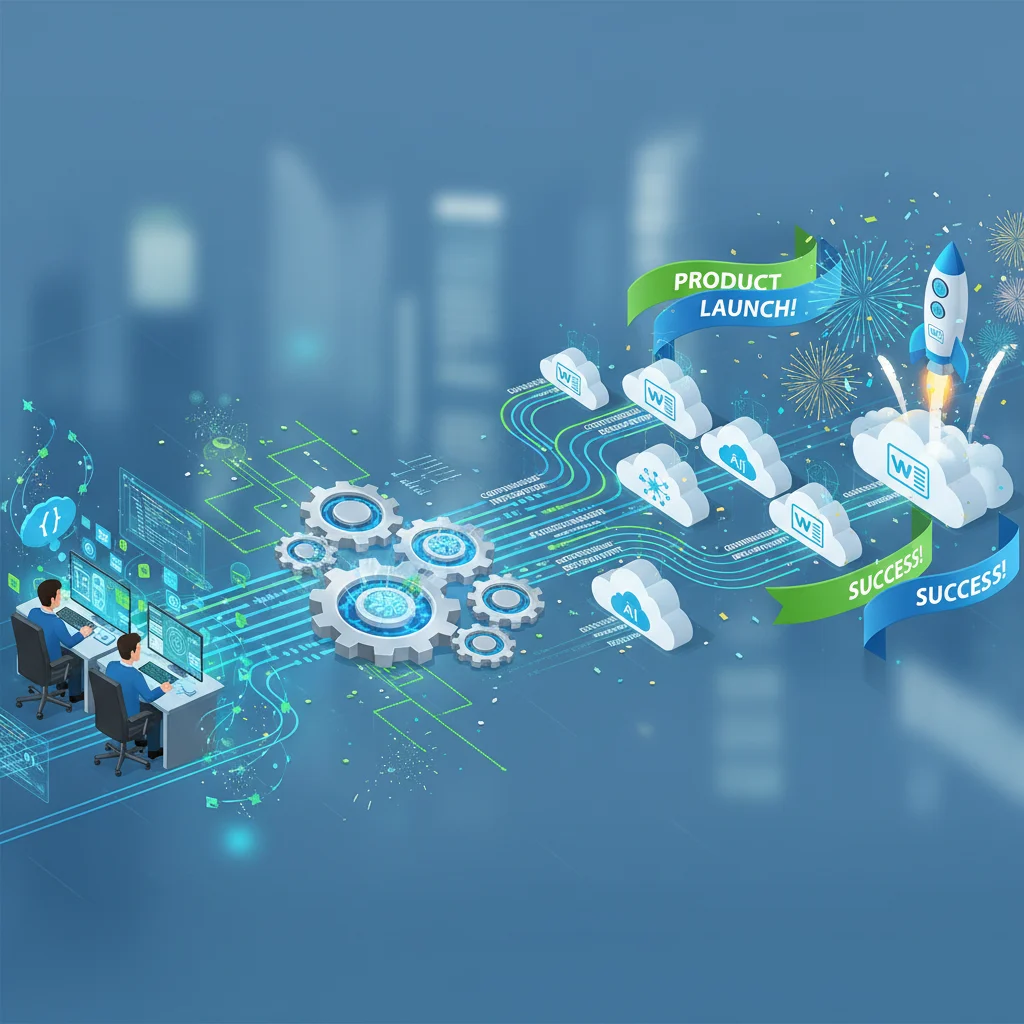
Software development moves at a relentless speed. Whether you are building an intelligent AI-driven platform or a complex web application, the time it takes to move from an idea to a deployed product matters. Delaying releases means missing market opportunities. Rushing them leads to bugs, downtime, and frustrated users. This is where modern engineering practices step in to bridge the gap between speed and stability. At MyFluiditi, an AI and web app development company based in the USA, we see firsthand how the right development culture transforms business outcomes. Bridging the gap between software development and IT operations allows teams to deploy high-quality software faster than ever before. This post explores the critical role of DevOps in accelerating software delivery. We will break down how these practices work, why they are essential for AI and web app development, the benefits and challenges of implementation, and actionable best practices you can apply to your engineering teams. Understanding the Shift to Continuous Engineering Historically, software development followed a rigid, linear path. Developers wrote code and tossed it over a metaphorical wall to the operations team, who then had the burden of figuring out how to deploy and maintain it. This siloed approach caused friction. Developers wanted to push new features rapidly, while operations teams prioritized system stability. DevOps changes this dynamic completely. By integrating development and operations into a single, cohesive lifecycle, teams share accountability for the software from end to end. This alignment eliminates bottlenecks, reduces handoff friction, and creates a culture where releasing software becomes a routine, low-stress event rather than a massive quarterly ordeal. The Core Mechanisms Driving Faster Delivery How exactly does DevOps make software delivery faster? The answer lies in replacing manual, error-prone tasks with automated, repeatable pipelines. Continuous Integration (CI) Continuous Integration requires developers to merge their code changes into a central repository frequently often multiple times a day. Each merge triggers an automated build and a series of tests. If the new code breaks an existing feature, the system flags the error immediately. Developers can fix issues while the code is still fresh in their minds, preventing massive integration conflicts just before a major release. Continuous Delivery and Deployment (CD) Continuous Delivery takes the validated code from the CI process and automatically prepares it for release to production. Continuous Deployment takes this a step further by deploying the code directly to users without manual intervention, provided it passes all automated checks. This pipeline ensures that software is always in a deployable state, allowing companies to push updates, security patches, and new features to users in minutes rather than months. Infrastructure as Code (IaC) Manually configuring servers and databases slows down deployment and introduces inconsistencies. Infrastructure as Code solves this by allowing teams to manage and provision computing infrastructure through machine-readable definition files. Need a new testing environment that mirrors production exactly? IaC spins it up automatically in seconds. This eliminates the “it works on my machine” problem and accelerates the setup required for faster software delivery. Accelerating Web App and AI Development For a web app and AI development company like MyFluiditi, speed must not compromise precision. AI development, in particular, requires handling massive datasets, training complex models, and deploying them to scalable environments. DevOps in AI and Machine Learning (MLOps) Deploying AI models introduces unique challenges. Data scientists often build incredible models in isolated notebook environments, but moving those models into a live web application takes significant engineering effort. Applying DevOps principles to machine learning-often called MLOps-automates the model training, testing, and deployment pipelines. When a model degrades over time due to new real-world data, automated pipelines can trigger a retraining process and deploy the updated model seamlessly, ensuring the AI application remains accurate and reliable. Scalable Web Applications Modern web applications in the USA demand high availability and fast load times. Using containerization technologies and orchestration platforms, DevOps teams can ensure that web apps scale automatically based on user traffic. When a new feature rolls out, automated load balancing and deployment strategies like blue-green or canary releases ensure that users experience zero downtime. Tangible Benefits for Your Business Organizations that fully embrace DevOps experience measurable advantages that extend far beyond the engineering department. Accelerated Time-to-Market: Automated pipelines cut deployment times dramatically, allowing you to deliver value to customers faster than your competitors. Higher Software Quality: Automated testing catches bugs early in the cycle. By the time code reaches production, it has survived rigorous validation. Improved Team Collaboration: Breaking down silos fosters a culture of shared responsibility. Developers and operations teams work together to solve problems rather than blaming each other for failures. Faster Recovery Times: When failures happen, automated rollbacks and comprehensive monitoring tools allow teams to identify and resolve issues rapidly, minimizing downtime. Navigating the Challenges of Implementation Transitioning to a new engineering culture does not happen overnight. Teams often face hurdles when adopting DevOps practices. Cultural Resistance: People naturally resist change. Shifting from a siloed mindset to a collaborative one requires strong leadership and clear communication. Tool Complexity: The landscape of automation tools is vast and constantly evolving. Selecting the right tools and integrating them into a cohesive pipeline can overwhelm inexperienced teams. Legacy Systems: Older, monolithic architectures resist automated deployment. Teams often need to refactor legacy applications into microservices before they can fully realize the benefits of automated pipelines. Best Practices for a Successful Transformation To achieve faster software delivery without sacrificing quality, consider these proven best practices: Start Small and Scale Do not attempt to overhaul your entire engineering process at once. Start by automating a single workflow, such as your testing suite or your deployment to a staging environment. Once the team builds confidence and sees the value, expand the practices to other areas. Prioritize Automated Testing A fast pipeline is useless if it delivers broken code. Invest heavily in unit tests, integration tests, and end-to-end testing. High test coverage gives developers the confidence to deploy frequently. Embrace Continuous Monitoring Deployment is not the end of the
Why Documentation Matters in Software Development Projects

Writing code is only half the battle. When you build a powerful application, the way you record, explain, and maintain that system is just as crucial as the underlying architecture. Teams often push documentation to the bottom of their priority list. They want to ship features faster and hit deadlines sooner. However, skipping this vital step creates massive roadblocks down the line. At myfluiditi, we build advanced AI-driven web applications for businesses across the USA. We know firsthand that excellent code needs excellent instructions. Without clear guidelines, even the smartest artificial intelligence solutions become difficult to scale and maintain. This post explores the exact reasons why comprehensive documentation is a non-negotiable asset. You will learn the core benefits, discover industry best practices, and see how to apply these strategies to your own builds. The Hidden Engine of Software Development Projects Every successful application relies on a foundation of clear communication. When you look at the most successful Software Development Projects, you will find a common thread. They all maintain strict, organized, and accessible records of their work. Documentation acts as the hidden engine that keeps everything moving forward smoothly. Without it, developers spend countless hours trying to decipher old code. They waste time reverse-engineering features that someone else built months ago. This lack of clarity drains resources and frustrates your engineering team. By maintaining a robust library of technical notes, you eliminate this friction. Your team can focus on creating new value instead of solving old mysteries. Defining Documentation in Software Development Projects Before we explore the benefits, we must define what we actually mean. Documentation in Software Development Projects covers a wide range of materials. It is not just a single manual or a read-me file. It is a living, breathing ecosystem of information that supports your entire application lifecycle. Code-Level Documentation This is the most granular level of information. It involves comments left directly inside the source code to explain complex logic. Good code-level notes help other engineers understand why a specific approach was taken. It prevents accidental breaks when someone updates a function later on. System Architecture Guidelines These documents provide a bird’s-eye view of your entire application. They map out how different microservices talk to each other. For AI-driven web apps like those we build at myfluiditi, system architecture notes are critical. They show exactly where the machine learning models sit within the broader web infrastructure. End-User Manuals Your customers need help navigating your final product. End-user materials include FAQs, tutorials, and troubleshooting guides. They bridge the gap between technical complexity and user-friendly experiences. When you invest in these resources, you drastically reduce the burden on your customer support team. Top Reasons Why Documentation Matters for Software Development Projects You might wonder if the time spent writing notes is truly worth the effort. The answer is a resounding yes. The impact on Software Development Projects is massive, affecting everything from team morale to the company bottom line. Seamless Knowledge Transfer People change jobs, take vacations, or move to different departments. If all the knowledge about your application lives inside one person’s head, you face a massive risk. Proper documentation ensures that critical information survives staff transitions. New hires can read the project history and get up to speed in days rather than weeks. Slashing Technical Debt Technical debt accumulates when teams take shortcuts to meet deadlines. Over time, these shortcuts make the codebase fragile and hard to update. Thorough records help you track these shortcuts so you can fix them later. By shining a light on technical debt, you keep your code clean and manageable over the long term. Ensuring Quality and Consistency When multiple developers work on the same application, coding styles can clash. Standardized guidelines ensure everyone follows the same rules. This consistency makes the code easier to read and test. It leads to fewer bugs and a much smoother user experience across the board. The Financial Impact on Software Development Projects Poor communication costs money. When we analyze failed Software Development Projects, a lack of documentation often plays a starring role. Developers spend roughly twenty percent of their time just looking for information. That is one full day a week wasted on avoidable searches. When you scale this inefficiency across an entire engineering department, the financial loss is staggering. Good records eliminate this wasted time. They streamline troubleshooting, making it faster to identify and fix critical bugs. This efficiency directly translates to lower operational costs and higher profit margins for your business. How AI is Changing Documentation in Software Development Projects The tech landscape is evolving rapidly, and artificial intelligence is leading the charge. At myfluiditi, we see how AI transforms the way teams handle information. The integration of AI into Software Development Projects means documentation is no longer a purely manual chore. Machine learning algorithms can now analyze your codebase and generate technical notes automatically. They can highlight missing comments and suggest better ways to explain complex logic. This automation saves developers hundreds of hours every year. It ensures your records stay up to date, even during rapid agile sprints. Best Practices for Managing Software Development Projects Knowing the value of information is one thing. Actually maintaining it is another challenge entirely. To get the most out of your Software Development Projects, you need a disciplined approach to writing and updating your materials. Treat Docs Like Code You should review your technical notes with the same rigor you apply to your source code. Require peer reviews for every major update to your manuals. Store your files in version control systems like Git. This way, you can track changes over time and roll back mistakes if necessary. Keep it Agile and Iterative Do not wait until the very end of a build to start writing. Make documentation a required part of every single sprint. When a developer finishes a feature, they must also finish the corresponding notes. This iterative approach prevents a massive backlog of writing tasks from piling up at launch
Website Redesign Strategy: When to Rebuild Your Site

Your website serves as the digital front door to your business. When customers seek your services, they expect a seamless, secure, and modern experience. If your site feels clunky, slow, or outdated, those potential customers will leave and find a competitor. Knowing exactly when to rebuild your site and how to approach the process can save your business time, money, and lost revenue. You need a clear plan. Developing a comprehensive website redesign strategy ensures that you do not just change the look of your site, but that you improve its performance, user experience, and conversion rates. In this guide, we will explore the critical signs that indicate it is time for a rebuild. We will walk through the essential phases of planning your overhaul, and we will highlight how MyFluiditi, a leading web app AI development company in the USA, can help you integrate cutting-edge artificial intelligence into your new platform. What Constitutes a Strong Website Redesign Strategy? A website redesign strategy is a detailed action plan that guides the complete overhaul of your digital presence. It goes far beyond picking a new color scheme or updating your logo. It involves analyzing your current performance metrics, understanding your target audience, and mapping out a user journey that drives results. When you build a proper website redesign strategy, you align your business goals with your digital assets. You evaluate what works on your current site and identify the bottlenecks preventing users from converting. This strategy acts as a blueprint for your web developers, designers, and content creators, ensuring everyone works toward a unified vision. Without a solid plan, a redesign can quickly become a costly disaster. You might lose your hard-earned search engine rankings, confuse your existing customers, or launch a site filled with bugs. By prioritizing strategy over aesthetics, you protect your brand and set the stage for long-term growth. Clear Signs Your Business Needs a Website Redesign Strategy How do you know it is time to tear down your old site and start fresh? You should look for specific indicators in your performance data and user feedback. High Bounce Rates and Declining Conversions If visitors arrive on your site and leave immediately without interacting, you have a problem. High bounce rates often indicate that your site does not meet user expectations. Perhaps the navigation is confusing, the layout is cluttered, or the messaging is unclear. If your lead generation forms remain empty and sales drop, you must implement a new website redesign strategy to rethink your conversion funnels. Your Brand Has Fundamentally Evolved Businesses grow and change. The products you offered five years ago might not represent your core focus now. If your current website reflects an old version of your company, it will confuse your target market. A redesign allows you to align your digital presence with your updated brand identity, values, and service offerings. The Platform Lacks Mobile Responsiveness Most users browse the internet on their smartphones. If your website forces mobile users to pinch, zoom, and scroll horizontally to read your content, you are alienating a massive segment of your audience. Search engines also penalize sites that lack mobile-friendliness. You must ensure your site provides a flawless experience across all devices. Slow Page Load Speeds Speed matters. If your site takes more than three seconds to load, a significant percentage of visitors will abandon it. Outdated code, unoptimized media, and poor server configurations drag down performance. Rebuilding your site allows you to utilize modern, lightweight frameworks that deliver blazing-fast load times. Outdated Technology and Security Vulnerabilities Cyber threats evolve rapidly. If your site runs on an old content management system or relies on unsupported plugins, you expose your business and your customers to data breaches. Upgrading your architecture enhances your security posture, protects sensitive information, and builds trust with your users. The Role of AI in Your Website Redesign Strategy Artificial intelligence is changing how we build and interact with the web. As an AI web app development company, MyFluiditi knows that integrating smart technologies into your rebuild can drastically improve user engagement. Delivering Personalization at Scale Static websites show the same content to every visitor. AI allows you to create dynamic experiences. By analyzing user behavior, location, and past interactions, your website can recommend specific products, highlight relevant blog posts, or alter the layout to suit individual preferences. Incorporating AI personalization into your website redesign strategy helps you treat every visitor like a VIP. Advanced Analytics and Predictive Modeling Standard analytics tell you what happened in the past. AI analytics can predict what will happen next. Machine learning algorithms can identify patterns in user navigation, helping you anticipate where visitors will click and what obstacles they might face. This data empowers you to make proactive design choices rather than reactive fixes. Intelligent Chatbots and Customer Support Users expect instant answers. Integrating AI-powered chatbots provides your customers with 24/7 support. These tools can answer common questions, guide users through the checkout process, and qualify leads before passing them to your human sales team. Key Components of a Successful Website Redesign Strategy To achieve your desired outcomes, your plan must include several foundational elements. Skipping any of these components can lead to project delays and subpar results. Define Clear, Measurable Goals You cannot measure success if you do not define it first. Are you trying to increase online sales by 20%? Do you want to double your email subscriber list? Do you need to reduce customer support calls by improving your FAQ section? Establish specific, measurable, achievable, relevant, and time-bound (SMART) goals to guide your decisions. Deeply Understand Your Target Audience Your website exists to serve your customers. You need to know their pain points, preferences, and browsing habits. Develop detailed buyer personas to represent your ideal customers. Use surveys, interviews, and analytics data to gather insights. Every design and content decision should cater to the needs of these personas. Conduct a Comprehensive SEO Audit Many businesses lose their search engine traffic during a redesign
Custom Web Application Development: When Businesses Should Build Instead of Buy

Every business leader eventually faces the same critical software dilemma. Your company is growing, operations are becoming more complex, and your current technology stack is straining under the pressure. You need a new solution to handle operations, manage customer data, or streamline internal workflows. The question is: do you purchase a pre-packaged software subscription, or do you invest in custom web application development? Many organizations default to buying off-the-shelf software because it seems quicker and cheaper upfront. However, as your business processes mature, forcing your operations into rigid, generalized software often creates more problems than it solves. Workarounds become standard practice. Data silos emerge. Employee productivity drops as teams switch between disconnected tools. This guide breaks down exactly when and why USA-based business decision-makers should choose to build rather than buy. We will explore common operational pain points, compare the long-term value of both approaches, and demonstrate how custom web application development delivers superior ROI, unmatched scalability, and seamless AI integration. The Software Dilemma: The Limits of Off-the-Shelf Solutions Pre-packaged software serves a massive, generalized market. To appeal to thousands of different companies across various industries, vendors must build broad, generic features. They aim for the middle of the bell curve. If your business processes fall outside that average, you are out of luck. When you buy off-the-shelf software, you rarely get exactly what you need. You might pay for dozens of features you never use. Conversely, you might find that the software lacks the one specific feature critical to your daily operations. This forces your team to develop manual workarounds, defeating the purpose of adopting new technology in the first place. Furthermore, you do not own the software. You rent it. You are entirely at the mercy of the vendor’s roadmap, pricing model, and server stability. If the vendor decides to deprecate a feature your team relies on, or if they double their subscription fees next year, you have little recourse. Understanding Custom Web Application Development Custom web application development is the process of designing, building, and deploying software tailored specifically to your organization’s unique requirements. Instead of changing your business processes to fit the software, the software is engineered to fit your exact business processes. This approach gives you complete control over the functionality, user interface, security standards, and integration capabilities of your tools. Whether you need a sophisticated customer portal, an intelligent inventory management system, or a centralized dashboard powered by artificial intelligence, custom web application development provides a precise solution. When you partner with a specialized firm like myfluiditi.com, you are not just getting code. You are getting a strategic asset designed to give you a competitive advantage in your specific market. You own the intellectual property, control the update schedule, and dictate how the application evolves as your business grows. Identifying Business Pain Points: Signs You Need a Custom Solution How do you know when it is time to move away from generic software? Decision-makers should look for specific operational bottlenecks that signal the need for a tailored approach. If your organization is experiencing any of the following pain points, investing in custom web application development is likely the right move. 1. Inefficient Workarounds and Manual Processes Are your employees exporting data from one system, formatting it in a spreadsheet, and manually uploading it into another? This type of operational friction costs companies thousands of hours in lost productivity every year. A bespoke web app integrates all your necessary functions into a single, cohesive workflow, eliminating manual data entry and reducing human error. 2. Lack of Competitive Differentiation If you use the exact same software as your competitors, you are limited to the exact same capabilities. You cannot offer a vastly superior digital customer experience if your backend technology is identical to the rest of the industry. Custom web application development allows you to build unique features, services, and client portals that set you apart in the marketplace. 3. Escalating Subscription Costs Software-as-a-Service (SaaS) pricing models often scale by user seat or data volume. As your company grows, these costs compound rapidly. What started as an affordable $50-per-user monthly fee can quickly become a six-figure annual expense as you add hundreds of employees. Building your own software requires an upfront investment, but it eliminates per-user licensing fees forever. 4. Poor System Integration Modern businesses rely on multiple tools—CRM systems, accounting software, marketing platforms, and operational databases. Generic software often struggles to communicate seamlessly with specialized legacy systems. A custom-built application acts as the perfect connective tissue. It can be engineered with specific APIs to pull and push data across your entire technology stack. The Build vs. Buy Debate: A Detailed Comparison To make an informed decision, executives must evaluate both paths across several key business metrics. Let us compare off-the-shelf software and custom web application development side-by-side. Speed to Deployment Buying pre-packaged software is undeniably faster in the short term. You can sign up, pay the subscription fee, and start onboarding employees the same week. Custom development takes time. It requires a discovery phase, design, coding, testing, and deployment. However, the initial speed of generic software often degrades over time as teams struggle with implementation hurdles and training on unintuitive systems. Total Cost of Ownership (TCO) Off-the-shelf software boasts low initial costs, but the long-term TCO is often much higher due to perpetual licensing fees, costly premium add-ons, and integration expenses. Custom web application development requires a larger initial capital expenditure. Over a three to five-year period, however, the bespoke solution typically becomes significantly more cost-effective as you avoid recurring enterprise licensing fees. Security and Compliance For USA businesses handling sensitive data, security is paramount. Generic software presents a large, lucrative target for hackers. If a vendor experiences a breach, your data is compromised. Custom web application development allows you to implement stringent, specialized security protocols tailored to your industry regulations (like HIPAA or SOC 2). The proprietary nature of your custom code also makes it a smaller, harder target for malicious actors. User
B2B Software Company Website Analysis Criteria That Improve Lead Generation

A B2B software company’s website is its most critical marketing and sales asset. It serves as the digital storefront, the primary information hub, and the engine for lead generation. Yet, many of these digital assets underperform, failing to convert visitors into qualified leads. The reason often lies in a lack of a structured, comprehensive evaluation process. To transform a website from a simple brochure into a high-performance lead generation machine, you need a robust framework. This involves a deep dive into specific, data-driven b2b software company website analysis criteria designed to identify weaknesses and uncover opportunities for growth. For B2B decision-makers, understanding these criteria is the first step toward building a digital presence that doesn’t just attract traffic but actively drives revenue. This comprehensive guide will walk you through the essential analysis criteria that matter most. We will explore technical SEO, user experience (UX) and user interface (UI) design, conversion rate optimization (CRO), the transformative potential of AI integration, critical performance metrics, and the strategic use of lead magnets. By applying these standards, you can systematically diagnose your website’s health, implement targeted improvements, and ultimately, significantly enhance your lead generation efforts. The Foundation: Technical SEO for Visibility and Authority Before a visitor can become a lead, they must first find your website. Technical SEO is the foundation upon which all other digital marketing efforts are built. It ensures that search engines can crawl, index, and understand your content, making it visible to your target audience. A failure in technical SEO renders even the most compelling content invisible. A thorough website analysis must begin here. Crawlability and Indexability Search engine bots, or crawlers, discover and index pages on the web. If they can’t access your site, it won’t appear in search results. Your analysis should verify several key elements: Robots.txt File: This simple text file tells search engines which pages or sections of your site they should not crawl. A misconfigured robots.txt can inadvertently block critical pages, making them invisible to search. Your analysis must confirm that it isn’t disallowing important content, stylesheets, or scripts that are necessary for Google to render the page correctly. XML Sitemap: An XML sitemap acts as a roadmap for search engines, listing all the important URLs on your website. It helps crawlers discover new content faster and understand your site structure. The analysis should check if the sitemap exists, is submitted to Google Search Console, is free of errors (like 404s or non-canonical URLs), and is dynamically updated as you add or remove pages. Site Architecture: A logical, hierarchical site structure is crucial for both users and search engines. A flat, well-organized architecture, where important pages are only a few clicks from the homepage, allows “link equity” to flow effectively throughout the site. The analysis should map out the current structure to identify deep, orphaned pages (pages with no internal links pointing to them) that are difficult for crawlers to find. A silo structure, where content is grouped into clear thematic categories (e.g., /products/, /solutions/, /resources/), is often the most effective model for B2B software sites. On-Page SEO Elements Once crawlers can access your site, on-page elements help them understand the context and relevance of your content. These are fundamental b2b software company website analysis criteria for ranking for your target keywords. Title Tags and Meta Descriptions: These HTML elements are your first chance to make an impression in the search results. Title tags are a significant ranking factor, while meta descriptions influence click-through rates. The analysis should audit every key page for optimized, unique, and compelling titles and descriptions that include target keywords and a clear value proposition. Header Tags (H1, H2, H3): Headers structure your content, making it easier for readers to scan and for search engines to understand the hierarchy of information. Every page should have a single, unique H1 tag that encapsulates the page’s main topic. Subsequent H2s and H3s should break down the content logically, incorporating related keywords. Schema Markup: Schema is a form of structured data that helps search engines better understand the content on your pages. For a B2B software company, implementing SoftwareApplication schema, Organization schema, FAQPage schema, and Article schema can lead to rich snippets in search results, increasing visibility and click-through rates. The analysis must identify opportunities to apply relevant schema across the site. Website Speed and Core Web Vitals Website performance is no longer just a user experience issue; it’s a critical ranking factor. Google’s Core Web Vitals are a set of metrics that measure real-world user experience for loading performance, interactivity, and visual stability. Largest Contentful Paint (LCP): Measures the time it takes for the largest content element (e.g., an image or block of text) on the page to become visible. An ideal LCP is 2.5 seconds or less. First Input Delay (FID) / Interaction to Next Paint (INP): FID measures the time from when a user first interacts with a page (e.g., clicks a button) to the time when the browser is actually able to respond to that interaction. INP is a newer metric that will replace FID, assessing overall responsiveness. A good score is under 100 milliseconds. Cumulative Layout Shift (CLS): Measures visual stability, quantifying how much unexpected layout shift occurs during the entire lifespan of the page. A low CLS score ensures the page doesn’t move around unexpectedly, preventing users from clicking on the wrong thing. An ideal score is 0.1 or less. An analysis using tools like Google PageSpeed Insights and Google Search Console’s Core Web Vitals report is essential. Identifying and fixing issues-such as optimizing images, leveraging browser caching, and minifying code-is a high-impact activity for both SEO and user experience. The User Journey: UX/UI Analysis for Engagement and Trust Once a user lands on your site, the user experience (UX) and user interface (UI) take over. For a B2B software company, where purchase decisions are complex and involve multiple stakeholders, a seamless, intuitive, and trustworthy experience is paramount. Poor UX is a primary driver of high bounce
React Native vs Flutter: Which Is Better for US Businesses in 2026?
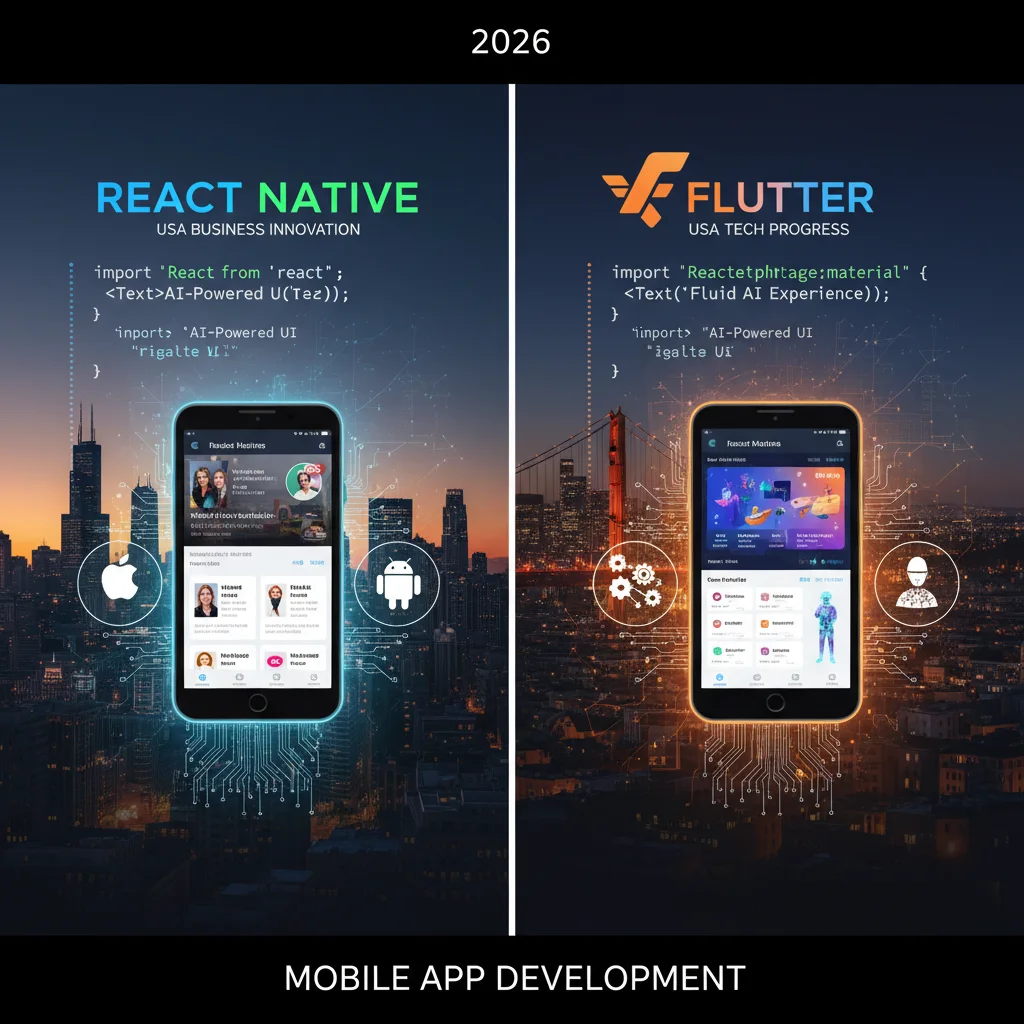
Building a mobile application has evolved significantly over the past decade. For US businesses looking to dominate their respective markets, the right technology stack is a critical decision. You want a framework that supports rapid development, delivers native-like performance, and seamlessly integrates with advanced artificial intelligence. At myfluiditi, an expert AI development company, we frequently guide enterprises through this exact technological crossroads. The debate over React Native vs Flutter is more relevant than ever in 2026. Both frameworks offer incredible capabilities, but they cater to different business needs, development styles, and product visions. This comprehensive guide will break down everything US companies need to know. We will explore technical performance, user interface capabilities, developer ecosystems, and AI integration. By the end of this deep dive, you will have a clear, strategic roadmap for choosing the optimal framework for your next AI-driven mobile application. The Mobile App Landscape in 2026 The mobile application market in the United States demands perfection. Users expect lightning-fast load times, fluid animations, and personalized experiences powered by artificial intelligence. A clunky interface or a slow application directly translates to lost revenue and damaged brand reputation. The Rise of AI-First Mobile Applications We are no longer building apps that simply display data. Modern applications require real-time machine learning inference, natural language processing, and predictive analytics. Whether you run a healthcare startup requiring secure patient data analysis or a retail enterprise needing intelligent product recommendations, AI is the new baseline. Why Cross-Platform Development Wins Native development (building separately for iOS using Swift and Android using Kotlin) is expensive and time-consuming. US developer salaries remain high, making dual codebases a heavy financial burden. Cross-platform frameworks solve this by allowing you to write code once and deploy it across multiple platforms. This is exactly why the conversation around React Native vs Flutter dominates tech boardrooms across the country. Understanding the Contenders Before diving into the granular technical details, we need to understand the origins and philosophies behind each framework. What is React Native? Created by Meta (formerly Facebook) and open-sourced in 2015, React Native uses JavaScript (and TypeScript) to build mobile applications. It leverages the popular React library, allowing developers to construct user interfaces using familiar web development paradigms. React Native does not render web views. Instead, it uses a bridge (and more recently, the Fabric rendering system and Java Native Interface) to invoke native UI components. This means a button in React Native renders as a true iOS or Android button on the device. What is Flutter? Developed by Google and released in 2017, Flutter takes a radically different approach. It uses the Dart programming language and its own high-performance rendering engine (Impeller). Instead of relying on native OEM widgets, Flutter draws every pixel on the screen itself. This approach guarantees absolute consistency across devices. A Flutter app will look exactly the same on an iPhone running the latest iOS as it does on a five-year-old Android device. Architectural Differences: The Core Debate The fundamental architecture of these two frameworks dictates how they perform, how they scale, and how difficult they are to maintain. The core of the React Native vs Flutter debate lies in how they communicate with the device hardware. React Native Architecture Historically, React Native relied on a JavaScript bridge. The JavaScript code would send serialized JSON messages across this bridge to the native side. This worked well for standard applications but often caused bottlenecks during heavy animations or complex data processing. In recent years, the React Native community rolled out the “New Architecture.” This includes the JavaScript Interface (JSI), which allows JavaScript to hold direct references to native C++ objects. This eliminates the need for serialized bridge communication, vastly improving performance. Flutter Architecture Flutter avoids the bridge concept entirely. The Dart code compiles directly into native ARM machine code. The engine handles all rendering, input, and event loops. Because Flutter bypasses the native UI toolkit, it avoids the overhead of translating commands between the framework and the operating system. Performance Comparison: Speed and Efficiency Performance is non-negotiable for US businesses. A delay of just one second can result in a significant drop in conversion rates. Let’s examine React Native vs Flutter through the lens of raw performance. CPU and Memory Usage Flutter generally outperforms React Native in CPU-intensive tasks because Dart compiles to native code. When your application requires heavy mathematical computations-such as processing local AI models or handling complex state management-Flutter maintains steady frame rates more reliably. React Native is highly performant for most standard business applications. However, if your app heavily relies on continuous data streaming or highly complex background processing, you may need to write custom native modules in Swift or Kotlin to maintain optimal performance. Rendering and Animations Flutter’s Impeller rendering engine is a game-changer for 2026. It precompiles shaders, completely eliminating the “jank” (stuttering) that plagued early cross-platform apps. If your application relies on complex, custom animations or heavily branded interfaces, Flutter offers a smoother experience out of the box. React Native animations are typically handled by libraries like Reanimated. While you can achieve smooth 60fps animations, it requires a deeper understanding of the framework’s mechanics to ensure the animations run on the native UI thread rather than the JavaScript thread. User Interface and User Experience The way your app looks and feels determines how users perceive your brand. The UI strategies in React Native vs Flutter are vastly different. React Native: The Native Feel Because React Native uses native components, your app automatically inherits the look and feel of the platform it runs on. An iOS user will see familiar iOS toggles, date pickers, and navigation bars. An Android user will see Material Design components. This is highly beneficial if your goal is to make the app feel exactly like a standard platform application. However, if you want a uniform, highly custom brand design across both platforms, you will spend extra time overriding these native defaults. Flutter: The Custom Canvas Flutter provides an extensive library of custom widgets.
Myfluiditi Offering Offshore Mobile App Developers in US

Building a powerful mobile application is essential for business growth and customer engagement. As companies look to innovate, the demand for skilled development talent has surged. This has led many US businesses to explore strategic partnerships to access a global talent pool. Myfluiditi stands at the forefront of this shift, providing access to elite offshore mobile app developers right here in the US. We bridge the gap between your ambitious project goals and the specialized expertise needed to bring them to life, all within a framework that prioritizes quality, communication, and cost-efficiency. This comprehensive guide will explore the significant advantages of partnering with offshore talent for your mobile app development needs. We will cover how this model delivers exceptional value, what to look for in a development partner, and how Myfluiditi’s unique approach guarantees project success. Our goal is to equip you with the knowledge needed to make an informed decision, one that can accelerate your development timeline, optimize your budget, and deliver a superior final product. By leveraging our curated network of global experts, your business can gain a significant competitive edge. The Evolution of App Development: Why Offshoring is a Strategic Imperacy The landscape of software development has undergone a dramatic transformation. What was once a localized endeavor is now a global enterprise. The primary driver for this change is the universal need for specialized skills, particularly in complex fields like artificial intelligence and custom mobile app creation. For many US companies, sourcing this talent locally can be a significant challenge. The domestic market is highly competitive, leading to prolonged hiring cycles, inflated salary expectations, and a limited pool of available experts. This bottleneck can stifle innovation and delay critical projects. This is where the strategic advantage of offshoring becomes clear. By expanding the search for talent beyond geographical borders, businesses unlock a world of possibilities. It’s no longer just about cost savings; it’s about talent acquisition. Companies can tap into a vast, international community of highly skilled engineers, designers, and project managers who possess the exact skills required for a project. This model allows businesses to build a dedicated team that is perfectly aligned with their technical requirements and business objectives. Furthermore, the offshore model fosters a “follow-the-sun” development cycle. With teams operating in different time zones, work can continue around the clock. An issue identified by your US-based team at the end of the day can be resolved by the offshore team overnight, ready for review the next morning. This continuous workflow dramatically accelerates project timelines, allowing companies to bring their products to market faster than their competitors. Partnering with a provider of offshore mobile app developers is no longer a fringe strategy; it is a mainstream approach for forward-thinking companies committed to innovation and efficiency. Unpacking the Tangible Benefits of Offshore Collaboration Engaging with offshore mobile app developers offers a multitude of benefits that extend far beyond simple cost reduction. These advantages create a powerful business case for why so many successful companies are adopting this model for their most critical technology projects. 1. Significant Cost-Effectiveness Let’s address the most well-known benefit first: cost. The financial advantages of offshoring are substantial. The cost of hiring a senior mobile app developer in major US tech hubs can be prohibitively expensive, not to mention the associated costs of benefits, office space, and equipment. By partnering with an offshore team, companies can access the same level of expertise, or even higher, for a fraction of the cost. This isn’t about sacrificing quality for price. It’s about leveraging global economic differences. A highly competitive salary in another country can be significantly lower than the US equivalent, allowing you to build a larger, more experienced team within the same budget. These cost savings can then be reinvested into other critical areas of the business, such as marketing, user acquisition, or developing additional product features. This financial flexibility provides a powerful competitive advantage. 2. Access to a Global Pool of Specialized Talent The technology landscape is evolving at an unprecedented rate. New frameworks, languages, and platforms emerge constantly, and expertise in niche areas like AI, machine learning, and IoT integration is in high demand. The domestic talent pool, while strong, may not have the specific, deep-seated expertise your project requires. Offshoring blows the doors wide open. It gives you access to a global ecosystem of specialists. Whether your project requires a developer with a decade of experience in Swift for iOS, a team that has mastered Kotlin for Android, or an AI expert who can build complex recommendation engines, you can find them. Myfluiditi specializes in sourcing and vetting these experts, ensuring that the offshore mobile app developers assigned to your project have the precise skills and experience needed to execute your vision flawlessly. 3. Accelerated Time-to-Market In today’s competitive marketplace, speed is everything. The ability to launch your app quickly can be the difference between capturing a market and chasing it. Offshore development models inherently support faster development cycles. As mentioned earlier, the “follow-the-sun” model enables 24-hour productivity, reducing downtime and keeping the project moving forward continuously. Moreover, the ability to scale your team on demand is a significant advantage. If a project requires an extra push to meet a tight deadline, you can quickly augment your team with additional developers, testers, or UI/UX designers. This scalability is difficult and expensive to achieve with an in-house team. By leveraging a flexible, global workforce, you can ensure your project stays on track and launches on schedule. 4. Enhanced Focus on Core Business Functions Managing an in-house development team requires significant administrative and managerial overhead. This includes recruitment, HR, payroll, training, and day-to-day project management. All of these activities divert time and resources away from your core business objectives like strategy, sales, and customer relationships. When you partner with a managed offshore provider like Myfluiditi, we handle all the operational complexities. We manage the team, facilitate communication, and ensure that project milestones are met. This frees up your internal leadership to
How to Choose the Right best saas development company

Building a Software as a Service (SaaS) product is no small feat. It requires vision, substantial capital, and, most importantly, the right technical partner to bring your ideas to life. In the highly competitive United States market, user expectations are sky-high. Customers demand seamless performance, intuitive user interfaces, and intelligent features powered by artificial intelligence. To meet these demands, you cannot settle for average. You need to know how to identify and select the best saas development company to ensure your product scales securely and successfully. This comprehensive guide will walk you through the entire process of finding the ideal development partner. We will explore the critical selection criteria from evaluating technical stacks and portfolios to understanding pricing structures and communication styles. Furthermore, we will delve into why artificial intelligence integration is no longer optional but essential, and how MyFluiditi can serve as your premier partner in web app and AI development. Here are the key takeaways you will gain from this guide: Understanding the core attributes that define top-tier development partners. Evaluating a potential partner’s technical capabilities and past performance. Navigating pricing models to ensure a high return on investment. Recognizing the critical importance of AI in modern SaaS applications. Learning a step-by-step vetting process to secure the best saas development company for your specific needs. The State of the US SaaS Market Before diving into the selection process, it helps to understand the landscape. The United States is the global epicenter for SaaS innovation. Businesses across all sectors healthcare, finance, logistics, and retail are transitioning from traditional software to cloud-based subscription models. This shift creates a massive opportunity, but it also means the market is saturated with development agencies claiming to be experts. To stand out in this crowded market, your SaaS application must offer unparalleled value. It must be robust enough to handle traffic spikes, secure enough to protect sensitive user data, and flexible enough to integrate with existing enterprise tools. Achieving this level of quality requires a team of seasoned engineers, UI/UX designers, and product managers. This is precisely why finding the best saas development company is the most crucial decision you will make in your product’s lifecycle. Why Partnering with the best saas development company Matters You might wonder if hiring freelancers or building an in-house team is a better approach than partnering with an agency. While those options have their place, working with a specialized agency offers distinct advantages for complex SaaS projects. First, the best saas development company provides immediate access to a cross-functional team. You do not just need coders; you need system architects, database administrators, security experts, quality assurance testers, and project managers. Recruiting these roles individually takes months. An agency provides a cohesive unit that has already established efficient workflows. Second, top agencies bring industry-specific experience. They have built similar products and understand the common pitfalls. They know how to design multitenant architectures, handle complex subscription billing logic, and ensure compliance with US regulations like HIPAA or SOC 2. When you hire the best saas development company, you are paying for their foresight and ability to prevent costly mistakes before they happen. Core Criteria for Selecting Your SaaS Partner Finding the right agency requires looking beyond flashy marketing materials. You must conduct a rigorous evaluation based on objective criteria. 1. Technical Stack and Architecture Expertise The foundation of any SaaS product is its technology stack. The tools and frameworks chosen at the beginning of the project will dictate your product’s performance, scalability, and maintenance costs for years to come. When interviewing a potential partner, inquire about their preferred technologies. Do they specialize in modern, scalable frameworks like React, Angular, or Vue.js for the frontend? For the backend, are they proficient in Node.js, Python, or Ruby on Rails? More importantly, can they explain why a particular stack is right for your specific use case? Furthermore, the best saas development company will have deep expertise in cloud architecture. SaaS applications require robust infrastructure to support multiple tenants (users or companies) simultaneously. Ask about their experience with Amazon Web Services (AWS), Google Cloud Platform (GCP), or Microsoft Azure. They should understand concepts like microservices architecture, serverless computing, and containerization (Docker, Kubernetes) to ensure your application can scale seamlessly as your user base grows. 2. Portfolio and Proven Track Record Never take an agency’s word for their capabilities. Always demand proof. Reviewing their portfolio is a non-negotiable step in the selection process. Look for case studies that mirror your project in scope, industry, or technical complexity. Did they build a B2B project management tool? A healthcare patient portal? An AI-driven analytics dashboard? Examine the user interfaces of their past work. Are they clean, modern, and intuitive? Do not stop at the visual layer. The best saas development company will provide detailed case studies outlining the business problems they solved, the technical hurdles they overcame, and the measurable results they achieved for their clients. Ask for client references and actually call them. Ask the references about the agency’s reliability, adherence to deadlines, and post-launch support. 3. Communication and Cultural Fit Software development is a highly collaborative process. Even if an agency has top-tier technical skills, poor communication will derail the project. Pay attention to how they communicate during the initial sales process. Are they prompt in their replies? Do they ask insightful questions about your business goals, or do they just want a feature list? The best saas development company acts as a strategic consultant, not just an order-taker. They should push back on ideas that might harm the product and suggest better alternatives. Consider the time zone and language barriers. For US-based businesses, partnering with a team that offers overlapping working hours is crucial for agile development. You need to be able to jump on a quick call to resolve blockers. Ensure their project managers are fluent in English and use transparent communication tools like Slack, Jira, or Trello to keep you updated on progress. 4. Pricing Models and Transparency Developing a robust
Step-by-Step Framework to Launch a Successful AI Mobile App
Building an intelligent application requires more than just standard coding. It demands a deep understanding of machine learning, user behavior, and robust data architecture. If you want to build a software product that learns, adapts, and provides genuine value, you need a precise blueprint. This guide breaks down the exact process required to take your concept from a rough idea to a market-ready product. You will learn how to validate your concept, choose the right technology stack, train your models, and successfully deploy your product to the masses. Whether you want to disrupt the healthcare industry or revolutionize retail, this framework will help you launch a successful AI Mobile App. Understanding the Demand for Intelligent Applications The software landscape has shifted dramatically. Users no longer settle for static interfaces; they expect personalized, predictive, and highly responsive experiences. This shift has made artificial intelligence a necessity rather than a luxury. When you plan to build an AI Mobile App, you must first understand the specific problem you intend to solve. Are you automating a tedious task? Are you providing personalized recommendations? Pinpointing the exact value proposition ensures your development efforts remain focused. In the United States, businesses are rapidly adopting intelligent solutions to stay competitive, making this the perfect time to enter the market. Myfluiditi specializes in helping businesses navigate this complex terrain. As a premier web app AI development company, we understand the nuances of the US market and the technical requirements necessary to stand out. Phase 1: Ideation and Market Research Every great product starts with a solid foundation. Before writing a single line of code, you need to validate your concept. Start by analyzing your target audience. Conduct surveys, read competitor reviews, and identify gaps in the current market. What frustrates users about existing solutions? How can artificial intelligence solve these pain points? Once you identify the problem, define the core features of your AI Mobile App. Differentiate between your Minimum Viable Product (MVP) features and future enhancements. Focus on functionalities that directly rely on artificial intelligence, such as natural language processing, image recognition, or predictive analytics. Phase 2: Designing a Seamless UI/UX Artificial intelligence can sometimes feel intimidating to the average user. Your design must bridge the gap between complex backend processing and a simple, intuitive user experience. When designing your AI Mobile App, prioritize transparency. Let users know when artificial intelligence is working in the background. For example, if your application provides a product recommendation, briefly explain why that specific item was chosen. This builds trust and encourages user engagement. Keep the interface clean and uncluttered. Use familiar navigation patterns so users can focus on the value your product provides rather than figuring out how to use it. Our design team at Myfluiditi ensures that every interface we create is both beautiful and highly functional. Phase 3: Selecting the Right Technology Stack Choosing the right technology stack is a critical decision that impacts the performance, scalability, and security of your product. For the frontend, consider cross-platform frameworks like React Native or Flutter. These allow you to deploy your AI Mobile App on both iOS and Android using a single codebase, saving time and resources. The backend is where the heavy lifting occurs. You will need a robust cloud infrastructure to handle data processing and model training. Services like AWS, Google Cloud, or Microsoft Azure offer excellent machine learning environments. At Myfluiditi, we help you select the exact combination of languages, frameworks, and cloud services that align with your specific goals. Phase 4: Data Collection and Model Training Artificial intelligence is only as good as the data it consumes. Gathering high-quality, relevant data is the most crucial step in this framework. Identify your data sources early. Will you use public datasets, purchase data from third parties, or generate your own? Ensure that your data collection methods comply with US privacy regulations, such as CCPA. Once you have your data, you must clean and format it before feeding it into your machine learning models. Training the models for your AI Mobile App requires patience and expertise. You must continuously test the algorithms against new data to ensure accuracy and eliminate bias. Phase 5: Development and Integration With your models trained and your design finalized, it is time to build the product. Agile development methodologies work best for intelligent applications. Break the project down into two-week sprints, allowing for continuous feedback and iteration. Integrating artificial intelligence into a mobile environment presents unique challenges. You must decide whether to process data on the device (edge computing) or in the cloud. Processing on the device offers faster response times and better privacy, but it requires significant processing power. Cloud processing can handle complex computations but requires a stable internet connection. Our developers at Myfluiditi are experts at optimizing these integrations. We ensure your AI Mobile App runs smoothly without draining the user’s battery or consuming excessive data. Phase 6: Rigorous Testing and Quality Assurance Testing an intelligent application is vastly different from testing standard software. You are not just checking for bugs; you are evaluating the accuracy of the artificial intelligence. Implement a comprehensive testing strategy that includes unit testing, integration testing, and user acceptance testing (UAT). Expose your AI Mobile App to edge cases to see how the algorithms react to unexpected inputs. Monitor the system for “concept drift,” which occurs when the real-world data changes, causing the model’s accuracy to degrade over time. Continuous testing ensures your product remains reliable and effective long after launch. Phase 7: App Store Optimization and Deployment A flawless product will fail if no one can find it. App Store Optimization (ASO) is critical for driving organic downloads. Optimize your title, subtitle, and keyword fields. Use clear, high-quality screenshots that highlight the intelligent features of your product. Write a compelling description that clearly communicates the value proposition of your AI Mobile App. When you are ready to launch, submit your product to the Apple App Store and Google Play Store. Ensure you follow
Why Vision Matters More Than Roadmaps

In the world of technology and software development, the roadmap has long been the trusted guide. It’s a detailed plan, a step-by-step chart that tells teams what to build, when to build it, and what comes next. For many organizations, the roadmap is a sacred document, a source of comfort in the complex and often chaotic process of bringing a digital product to life. But what happens when the destination changes? What happens when the landscape shifts so dramatically that the map you’re holding is no longer relevant? This is the reality of AI development. In this dynamic field, a rigid roadmap can become a liability, a set of constraints that stifles innovation. This is precisely why vision matters more than roadmaps. A roadmap tells you the “what” and the “when.” A vision, on the other hand, answers the far more critical question: “Why?” It is the North Star that guides every decision, inspires every team member, and ensures that the final product doesn’t just meet a list of features but solves a real problem and delivers genuine value. For businesses in the USA looking to harness the transformative power of AI, clinging to a traditional roadmap is like trying to navigate a new galaxy with an old-world sea chart. At myfluiditi.com, we champion a vision-first approach, recognizing that true innovation in AI is born from a clear, compelling purpose, not a rigid checklist. This exploration will delve into the critical distinction between these two concepts and argue that for any AI initiative to succeed, you must understand why vision matters more than roadmaps. The Tyranny of the Traditional Roadmap To appreciate the power of vision, we must first understand the limitations of its traditional counterpart. A product roadmap in a conventional software development setting is often a linear, feature-based plan. It might outline Q1 goals, Q2 deliverables, and so on, with specific functionalities assigned to each period. This approach provides a sense of control and predictability, which is appealing to stakeholders who want to know what they are getting and when. However, this perceived control is often an illusion, especially in AI development. Here’s why traditional roadmaps fail in this context: AI is Inherently Unpredictable: Unlike building a standard web form or a predictable database interaction, AI development is a process of discovery. You might start with a hypothesis about how a machine learning model will perform, but the actual results can only be known through experimentation, training, and iteration. A rigid roadmap that says “In Q3, the model will achieve 95% accuracy” is setting the team up for failure. The path to that accuracy level is not a straight line; it’s a winding road of research, data refinement, and algorithmic adjustments. Stifling Innovation and Serendipity: The greatest breakthroughs often come from unexpected places. While exploring one avenue, a data scientist might uncover a pattern that opens up an entirely new, more valuable opportunity. A rigid roadmap discourages these detours. It pressures the team to stick to the plan, even when a more promising path reveals itself. Innovation requires the freedom to explore, to follow curiosity, and to pivot based on new learnings. The roadmap, by its nature, restricts this freedom. The “Feature Factory” Trap: A feature-driven roadmap can turn a talented development team into a “feature factory.” Their job becomes churning out a pre-defined list of functions without a deep connection to the user’s problem or the business’s ultimate goal. This leads to bloated software filled with features that may not be used or, worse, don’t collectively solve the core issue. The team loses its sense of purpose, and morale suffers. They stop asking “Why are we building this?” and simply focus on “What’s next on the list?” It’s a classic case of missing the forest for the trees, and it’s a compelling reason why vision matters more than roadmaps. Rapidly Changing Technology Landscape: The field of AI is moving at an astonishing pace. A new model, a groundbreaking research paper, or a new development framework can emerge overnight and render your six-month-old plan obsolete. A team locked into a rigid roadmap may be forced to build with outdated technology simply because “it’s on the roadmap.” A vision-led team, however, is empowered to adapt and integrate new advancements that better serve the ultimate goal. Imagine a company building an AI-powered customer support chatbot. A roadmap-driven approach would list features like “Integrate with CRM in Q1,” “Add 50 new canned responses in Q2,” and “Implement sentiment analysis in Q3.” A vision-driven approach starts differently. The vision might be: “To create a support experience so seamless and helpful that customers feel understood and valued, reducing resolution time by 50%.” This vision allows the team to make better decisions. Maybe integrating with the CRM isn’t the first, most impactful step. Perhaps initial user feedback shows that the most significant pain point is the bot’s inability to understand complex queries. The vision-led team can pivot to focus on improving the Natural Language Processing (NLP) model first because that directly serves the vision of making customers feel understood. The feature-based roadmap would have forced them down a less impactful path. This practical example clearly illustrates why vision matters more than roadmaps. The Unifying Power of a Clear Vision If the roadmap is a list of directions, the vision is the destination itself. It’s a vivid, compelling picture of the future state you are trying to create. It is the core “why” that fuels every action. In AI development, a strong vision serves several critical functions that a roadmap simply cannot. First, a vision aligns everyone-from the CEO to the junior data scientist-around a common purpose. When everyone understands the ultimate goal, they can make autonomous, decentralized decisions that are still consistent with the overall strategy. An engineer doesn’t need to ask for permission to explore a new algorithm if they can clearly articulate how it could help achieve the vision more effectively. This creates a culture of ownership and proactive problem-solving, rather