Best consulting teams for AI roadmap development and delivery | A Complete Guide for Business Leaders

Artificial intelligence is no longer a concept from the future; it is a reality that is changing industries and how businesses work. The question for business leaders isn’t whether or not they should use AI; it’s how to do it in a way that gives them an edge over their competitors. An AI roadmap is the first step on the journey. This detailed document lays out your vision, goals, necessary resources, and a schedule for bringing AI into your company. But making and following this plan requires skills that many companies don’t have in-house. This is when having the right consulting partner is very important. It can be hard to figure out how to integrate AI into your business. It means learning about complicated technologies, finding use cases that will have a big effect, managing data infrastructure, and making sure that the implementation is ethical. This guide is for people in charge of businesses like you. We will talk about how important an AI roadmap is, what makes a consulting team the best for creating and delivering an AI roadmap, and how to choose a partner that fits your business goals. The first and most important step to unlocking the transformative power of AI for your business is to find the right team. Why Your Business Needs a Plan for AI An AI roadmap is not just a technical document; it is also a strategic business tool. It acts as your North Star, making sure that technology projects are in line with your main business goals. Without a clear plan, adopting AI can turn into a series of separate, costly tests that don’t pay off. A well-made roadmap stops this by giving you structure, clarity, and a way to measure your progress. Making AI work for business goals The main goal of an AI roadmap is to make sure that every AI project helps the business as a whole reach its goals. The roadmap shows how to connect the technology to the desired outcome, whether that is improving the customer experience, streamlining supply chain logistics, making operations more efficient, or finding new ways to make money. This alignment is very important for getting support from top management and justifying the large amount of money needed to implement AI. It changes AI from a cost center into a way to drive strategic growth. Reducing Risks and Keeping Track of Resources Putting AI into use is a complicated process that comes with risks. These can include problems with technology, worries about data privacy, job loss, and moral quandaries. A strategic roadmap helps you find and deal with these risks before they happen. It makes you think about possible problems early on and make backup plans. Also, a roadmap makes it easy to see how to divide up resources. It helps you plan your money well for technology, people, and training. By breaking the project down into phases, you can keep track of cash flow and show value at each stage. This makes it easier to keep things moving and get support from stakeholders. This kind of planning makes sure that you don’t just buy technology, but that you do it in a smart way that gets you specific, measurable results. Many business leaders think that the best way to handle these problems from the start is to work with one of the best consulting teams to create and deliver an AI roadmap. Building a culture of innovation Starting an AI journey shows that you are committed to new ideas. The process of making a roadmap encourages people from different departments to work together, breaking down barriers between IT, operations, marketing, and leadership. It gets people talking about what is possible and makes them think outside the box about how technology can help with long-standing business problems. This teamwork creates an environment that is more flexible, forward-thinking, and ready for the future. An AI roadmap isn’t just about using new tools; it’s also about making the company smarter and more flexible. What to Look for in the Best AI Consulting Teams There are a lot of companies in the market that say they are AI experts. But real expertise is much more than just being good at the technical stuff. The best consulting teams for making and delivering AI roadmaps have a rare mix of strategic insight, technical expertise, and a willingness to work together. When business leaders are looking for potential partners, they should look for a certain set of traits that set the best apart from the rest. 1. A lot of knowledge about a specific industry Most of the time, generic AI solutions don’t change anything. The best AI strategies are those that are made for the problems and chances that are unique to your industry. A top-notch consulting team will have proven experience in your field, whether it’s finance, healthcare, manufacturing, or retail. They know the rules and regulations that apply to your business, the competition it faces, and the special ways it works. They can find high-impact use cases that you might miss because they know a lot about this field. They can talk to you in your language and turn difficult technical ideas into real business value. Get case studies and references from companies in your field from potential partners. A strong sign that they are a good fit is that they can show that they have been successful in a similar situation in the past. 2. A mix of strategic and technical skills AI consulting isn’t just a job in IT; it’s a job in strategy. The best teams are made up of people with a wide range of skills, such as data scientists, machine learning engineers, business strategists, and experts in change management. To make a complete roadmap that works both technically and in business, we need to take a multidisciplinary approach. A good consulting team won’t just talk about data models and algorithms. To begin, they will learn about your business goals, the
Building or Buying Billing Software: What Makes Financial Sense in the US?
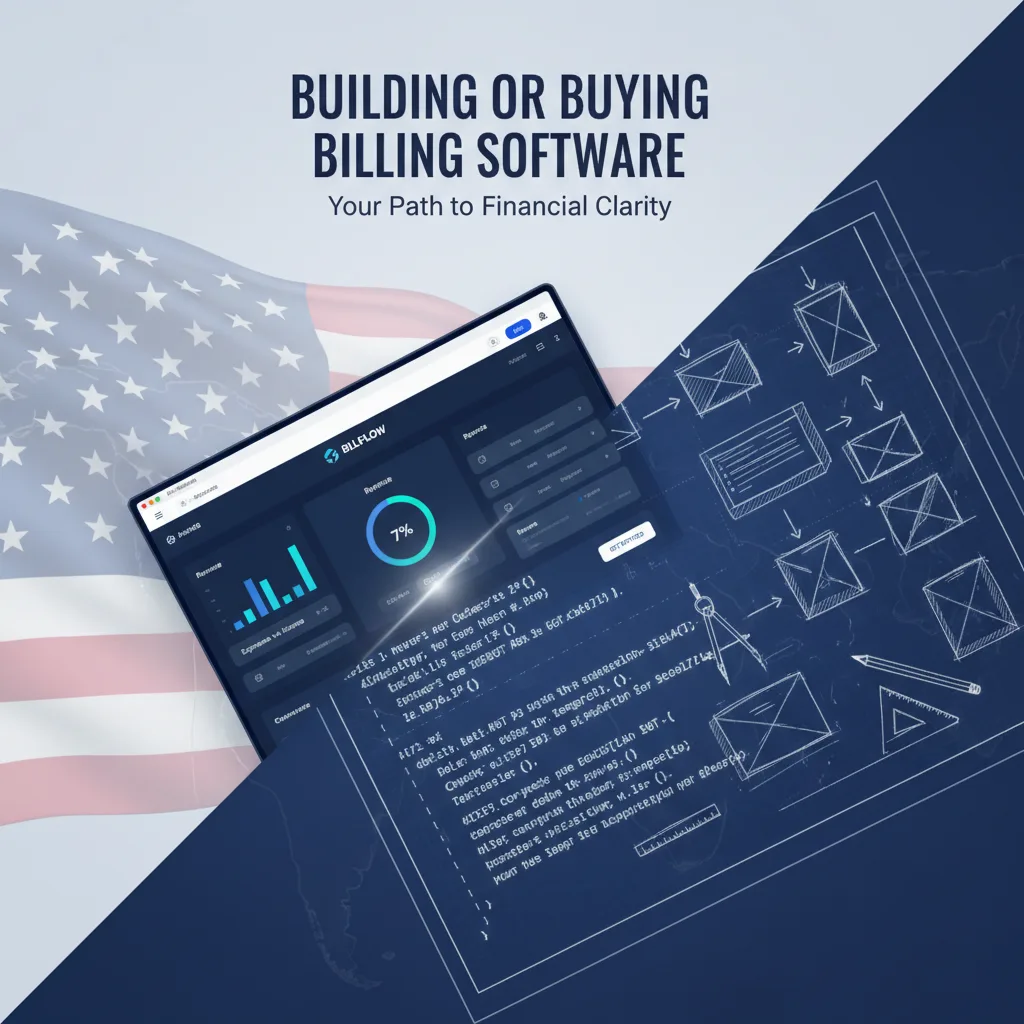
It’s not always easy to decide to use a new billing system. It is at the crossroads of strict financial planning, operational efficiency, and customer experience. The current tools are starting to break down for a lot of US businesses that are growing because of new subscription models, complicated tax laws, and more transactions. At this point, you have a big choice to make: do you build a custom solution from the ground up or buy a ready-made one? This isn’t just a discussion about technology; it’s a meeting about money. The decision to build or buy billing software will have an effect on your bottom line for years to come. We see this fight every day at MyFluiditi. We are an AI-driven web app development company, and we know that software needs to be more than just code that works; it needs to be a valuable business asset. This guide will break down the financial effects of this choice on the US market in particular. We will look at the hidden costs of development, the problems with SaaS subscriptions, and why the market is moving toward hybrid, AI-enhanced solutions. The main problem is between control and convenience. The main point of the argument is the choice between having full control and being able to do things right away. Many US businesses, especially those that are growing quickly, find that off-the-shelf software gets them most of the way there. The last 20%-the specific workflows, the unique integration with legacy systems, and the branding needs-becomes the problem. You are renting a solution when you choose to buy. You pay a monthly fee to have someone else take care of the infrastructure, security updates, and new features. It is easy to guess. But when you choose to build, you are putting money into an asset. You own the code, the data structure, and the plan. To choose between building or buying billing software, you need to really understand your company’s DNA. Do you run a tech company that needs to stand out with its billing process? Or are you a service provider who just needs billing to work in the background and not bother you? The “Buy” Argument: Speed and Certainty Most small and medium-sized businesses (SMEs) buy software, usually through a Software as a Service (SaaS) model. There is no doubt about the appeal. You can sign up today and send bills tomorrow. Immediate UseMoney is time. In the US, where getting to market quickly can mean the difference between success and failure, waiting six months for a custom build can be bad. When you buy something, you can skip the whole development lifecycle. You don’t need to hire a UX designer, a product manager, or a group of backend engineers. You just bring in your customer data and go live. A Cost Structure That Is Easy to UnderstandCFOs like things to be predictable. Most SaaS billing platforms charge a fee for each user or a percentage of the total number of transactions. This makes it easy to make a budget. You know exactly how much your operational costs (OpEx) will be next quarter. There are no surprise bills for server maintenance or emergency debugging. Following the rules and keeping things safeWhen you handle payments, you also handle sensitive data. This puts you in the realm of PCI-DSS compliance in the US, and possibly GDPR or CCPA compliance depending on where your customers live. Established billing companies have whole teams that work on compliance. When you buy, you’re basically passing on this huge liability to someone else. But the “buy” model has a limit. As your income grows, transaction fees can get very high. A 1% fee on $100,000 is not too bad, but a 1% fee on $100 million is a big hole in your revenue bucket. Also, you are stuck with the vendor’s roadmap. You have to wait and hope they build it if you need a certain feature, like a unique prorated refund logic for a niche subscription. The “Build” Argument: Personalisation and Value Over Time Making your own software is a big step. It takes money, time, and technical know-how. But for some kinds of businesses, this is the only way to get things done quickly. Full CustomisationGeneric software won’t work for you if your pricing model is different. You might charge based on complicated usage metrics, like “compute hours used during peak times minus loyalty credits.” Off-the-shelf tools have a hard time with this level of detail. Custom software is like a tailored suit for your business. No Fees for Each TransactionThe initial capital expenditure (CapEx) is high, but the long-term operational costs may be lower. You don’t have to give a vendor a cut of every sale. Once the system is up and running, your costs will be for maintenance and hosting, which are much easier to manage than fees based on a percentage. Asset with a planYour company’s value goes up when it has proprietary technology. Investors will be very happy if you own your core technology stack, including how you make money, if you ever want to leave or get more money. It shows that you don’t rely on third-party platforms that could raise prices or go out of business. Of course, the downside is risk. IT projects are well known for going over budget and taking too long. You are in charge of every bug, every time the server goes down, and every security patch. Financial Breakdown: The True Cost of Owning You need to look past the price tag to make a smart choice. We need to look at the Total Cost of Ownership (TCO) over a period of three to five years. The Price of BuyingLet’s say you pick a well-known business billing platform. Subscription fees: These usually go up as revenue goes up. A platform could cost $500 a month plus 0.8% of sales. If you process $10 million a year, that’s about $80,000 a year in transaction
Finding the Best AI Agents Development Company in India

Artificial intelligence is changing the business world in a big way. AI agents are at the center of this revolution. They are advanced, self-driving systems that can do complicated tasks, make decisions, and interact with their surroundings in a smart way. AI agents are no longer just a thing of the future; they are a real thing that adds value to businesses right now. They can automate customer service, improve supply chains, and make user experiences more personal. As businesses all over the world rush to adopt this technology, the need for skilled development partners has skyrocketed. India has become a global center for AI development because it has a lot of tech talent and a growing ecosystem for innovation. This guide will help you find the best AI agents development company in India and work with them. It will give you the information you need to make a smart choice that moves your business forward. It is very important to choose the right partner. The success of your AI project depends on the skills, dependability, and vision of the development team you hire to work on it. A bad partner can cause projects to be late, go over budget, and not meet expectations. On the other hand, a top-tier company will be a real extension of your team, bringing deep technical knowledge, strategic foresight, and a dedication to your long-term success. This blog will look at the most important things to think about when choosing a partner, go into more detail about the specific skills that make a top AI development company, and show how MyFluiditi embodies these qualities, making it a top choice for businesses in India, the US, and beyond. Learning about the strength of AI agents Before you start picking AI agents, you need to understand what they are and how they could change things. AI agents work with some freedom, unlike regular software that follows a strict set of rules. They can see their surroundings through sensors or data inputs, use complex algorithms to process that information, and then do things to reach certain goals. This ability lets them deal with changing, unpredictable situations that would be too much for regular automation to handle. Important Traits of Today’s AI Agents: Autonomy: AI agents can work on their own without needing constant human help. Based on their programming and what they know about the situation, they make choices and do things.Reactivity: They can see what’s going on around them and react to changes right away. For example, a customer service chatbot responds right away to a question from a user.Proactivity: Advanced AI agents don’t just respond; they also take the lead. Based on market trends and past data, an AI agent in charge of a supply chain might proactively reorder stock when it thinks there will be a shortage in the future.Learning and Adapting: AI agents can learn from experience through machine learning (ML) and deep learning (DL). They look at how things went in the past to learn how to do better in the future, and they get better and better over time.Every AI agent has a specific goal in mind, such as fixing a customer’s problem, making an investment portfolio more efficient, or finding strange things in a network.The effect on business across all sectorsAI agents can be used in a lot of different ways and in almost every part of the economy. AI agents power personalised recommendation engines, dynamic pricing strategies, and automated inventory management in e-commerce and retail. They also help customers shop online by guiding them through the process.Healthcare: AI agents help with things like figuring out what diseases a patient has from medical images, predicting what risks a patient might face, and taking care of administrative tasks like scheduling and billing. This lets doctors and nurses focus on taking care of patients.Finance: AI agents are used by banks and other financial institutions for algorithmic trading, fraud detection, credit scoring, and personalised financial advice. These agents can look at huge amounts of data in a matter of milliseconds to find chances and lower risks.Manufacturing: Smart factories are built around AI agents that use computer vision to keep an eye on predictive maintenance for machines, improve production schedules, and handle quality control. Customer Service: This is probably the most obvious use. AI-powered chatbots and voice assistants answer a lot of customer questions around the clock, giving instant help and letting human agents deal with more complicated problems.The way these agents are used strategically is what sets market leaders apart from the rest. To take advantage of this power, you need a development partner who knows both the technology and your business. This is the first thing you need to do to find the best AI agents development company in India. The Most Important Things to Look for in an AI Development PartnerFinding the right development partner is not a simple task. It’s more than just finding a vendor with technical skills. You want a long-term partner who can help you navigate the difficulties of implementing AI. When looking at possible companies, keep these important pillars in mind. 1. A strong portfolio and proven technical skills The technical skills of an AI development company are what make it great. AI is a very specialised field that needs a lot of knowledge about hard-to-understand ideas. What to Look For: The team should be able to show that they are good at machine learning, deep learning, natural language processing (NLP), computer vision, and reinforcement learning. Enquire about the particular libraries and frameworks they employ, including TensorFlow, PyTorch, Keras, scikit-learn, and spaCy.A company’s portfolio is the best way to show what it can do. It should be diverse and relevant. Find case studies and project examples that are similar to your field or the issue you’re trying to fix. Don’t just look at the end result; ask them about the problems they had and how they solved them. A company that is open about how
Expert B2C Web Development for US Businesses | MyFluiditi

A lot of the time, your website is the first thing a potential customer sees about your brand. This first point of contact is very important in the business-to-consumer (B2C) space. It’s more than just a digital brochure; it’s your online store, your 24/7 salesperson, and the center of your customer’s online experience. A site that isn’t well designed can turn customers away in seconds, but a site that is powerful and easy to use can turn visitors into loyal fans. This is where strategic B2C web development comes in. It turns a simple URL into a powerful tool for growth, engagement, and sales. The digital marketplace is busier and more competitive than ever for US businesses. Customers can choose from a huge number of options and expect smooth, personalized, and memorable online experiences. It’s not enough to just have a website anymore. Your online presence needs to grab people’s attention, build trust, and make it easy for them to go from finding you to buying from you. This complete guide will take you through the world of B2C web development. We’ll talk about why it’s so important for businesses today, look at the main trends that are affecting the industry, and list the best practices that set top brands apart from the rest. We will also show how a dedicated partner like MyFluiditi uses its knowledge of web, app, and AI development to create B2C platforms that not only work, but also grab people’s attention and get them to buy. Why B2C Web Development is the Most Important Part of Your BusinessB2C web development is the process of making, building, and maintaining websites for businesses that sell goods or services directly to people. B2C sites are built for a different journey than B2B sites, which often focus on long sales cycles, detailed specifications, and lead generation. They have to be emotionally appealing, look good, and be easy to use for quick, simple transactions. Take a look at how you shop online. When you go to a site like Nike, you see powerful images, hear inspiring stories, and have a clear way to find the shoes you want. Airbnb sells you the dream of a perfect vacation through beautiful photos and easy-to-use filters. These things don’t just happen by chance. They are the result of careful B2C web development that focuses only on what the end user wants and needs. Here’s why you have to spend money on good B2C web development if you want to do well in the US market: First impressions are important. A Google study found that people make up their minds about a website in just 50 milliseconds. A site that looks professional, modern, and loads quickly builds trust and credibility right away. Your brand may seem unreliable if your website is old or hard to use.Your website is a channel that you own completely, so you can talk to your customers directly. Your site gives you full control over your brand message, customer data, and the overall user journey. This is not the case with social media sites, where algorithms can change overnight.Engine for Sales and Revenue: The website is the main way for e-commerce businesses to make sales. It’s a great way for service-based businesses to get new customers. An optimized B2C website leads to more sales and more money.Brand Storytelling Hub: Your website is the best place to share the story of your brand. You can connect with your audience on an emotional level that goes beyond a simple transaction by using interesting text, images, and interactive elements.Data and Analytics Goldmine: A well-designed B2C website has a lot of useful data. You can learn a lot about what your customers want, how they shop, and where you can make their experience better by keeping an eye on their behavior. To stay competitive, you need to use this data-driven method.The Special Problems of B2C Web DevelopmentBuilding a successful B2C website comes with its own set of problems that are very different from those that come with B2B projects. The target audience is bigger, people often make purchases based on their feelings, and the competition is tough. 1. A lot of traffic and the ability to growB2C sites that are popular have to deal with huge, often unpredictable, spikes in traffic. A product going viral on TikTok, a big holiday sale like Black Friday, or a mention in a well-known blog can all bring millions of people to your site at once. If your website isn’t built to handle more traffic, it will crash, which will hurt your sales and your reputation. A strong architecture is the key to a solution. This means using cloud-based hosting services like AWS or Google Cloud, load balancers to spread out traffic, and content delivery networks (CDNs) to serve assets from servers that are closer to the user. We build scalable infrastructures from the ground up at MyFluiditi so that your site stays fast and responsive no matter how many visitors it gets. 2. The Journey of Buying with Emotion and ImpulsePeople often buy things for themselves based on feelings, wants, and impulses, not reason. A B2B buyer might spend weeks comparing technical specs for a software solution, but a B2C customer might buy a dress right away because they like the color. These feelings need to be present on your website. Solution: The design needs to be beautiful and interesting to look at. Good product photography, lifestyle videos, and copywriting that sells are all very important. The user experience (UX) should be smooth, with no obstacles that could make a user think twice about their impulse. One-click checkout, guest checkout options, and clear calls-to-action (CTAs) are all important features that help turn browsers into buyers. 3. Trust and safety for transactionsPeople are giving your website their personal and financial information. A single security breach can ruin your brand’s reputation and have big legal and financial effects. Trust is the most important thing to build and keep.
A Comprehensive Guide to Automotive Industry Web Development

The car industry is going through a big change right now. This revolution is digital, and it’s more than just a change in the types of engines or designs of cars. There has been a huge change in how people find, buy, and use cars. This puts a lot of pressure on dealerships, manufacturers, and service centers to keep up. At the center of this change is a key part: advanced web development that puts the user first. A simple, unchanging website isn’t enough anymore. Automotive companies need web platforms that are dynamic, powerful, and smart in order to compete and do well in today’s market.This is when having specialized knowledge in web development for the automotive industry becomes not just helpful, but necessary. Every interaction, from the first click on a digital showroom to making a service appointment through an integrated portal, is a chance to build trust, make things run more smoothly, and boost sales. This in-depth guide will look at the important role that web development plays in the US automotive industry, including major trends, the problems that businesses face, and the powerful solutions that custom web applications from companies like MyFluiditi can offer. We will talk about everything from making e-commerce experiences smooth to using AI to engage customers in ways that have never been done before. This will show how a well-planned digital presence is the key to success in the modern automotive industry. Why a Generic Website Doesn’t Work for Today’s Car DealershipFor years, the main purpose of a standard dealership website was to show a map, list inventory, and give a phone number. This “digital brochure” model is no longer useful. Customers today are researchers who do a lot of online research before they even go to a store. They want a rich, interactive, and personalized experience that a generic or template-based site can’t give them. Here are the main problems with having an old website:Bad inventory management: Generic sites often have trouble keeping their inventory up to date in real time. Customers get angry when they ask about a car that has already been sold or when they miss out on a new arrival that isn’t listed yet. It also makes things very hard for staff who have to manually update listings on several platforms. Not Personalizing: Today’s customers expect websites to know what they want. A generic platform treats all visitors the same, so it can’t give them personalized recommendations, remember their browsing history, or show them relevant financing options. This missed chance could mean the difference between making a sale and losing a lead. Disconnected User Journey: The path the customer takes is broken up. Someone who wants to buy a car might find it on your website, but then they would have to call to make sure it was still available, email to ask a question, and go to a different site to apply for financing. Each of these breaks in the process could be a way out. Not enough leads are being generated and managed: basic contact forms are no longer enough. Without advanced lead capture tools, CRM integration, and automated follow-up systems, you could lose valuable leads. Employees spend more time entering data by hand and less time getting to know potential buyers. Inability to Scale: As a car dealership or business grows, so do its digital needs. A generic website can’t easily add new tools, like trade-in value calculators, or handle more traffic without slowing down. This stops growth and makes it harder to come up with new ideas. These problems show that we need a stronger and more strategic approach. The answer is custom web development for the automotive industry, which creates digital platforms from scratch to meet the unique and complicated needs of the industry. The Basics of Web Development for the Modern Automotive IndustryA successful automotive web platform has a few key parts that work together to make things easy for both the customer and the business. At MyFluiditi, we work on putting these parts together to make a strong and cohesive digital ecosystem. 1. Websites for Custom Dealerships and ManufacturersThe main digital storefront needs to be more than just pretty; it needs to be a powerful sales and marketing tool. A custom-built website is the main place where all digital activities happen. Main Features:Responsive and Mobile-First Design: Most of the time, people do their automotive research on mobile devices. A website needs to work perfectly on all screen sizes, from phones to desktops. This means that customers on the go can easily read the text, tap the buttons, and load the page quickly. High-Resolution Vehicle Showcases: Customers want to see everything. Custom websites can include high-quality photo galleries, 360-degree views of the inside and outside, and videos that are embedded in the site to make a virtual showroom experience that is exciting and builds trust. Easy Navigation and Search: It should be easy to find the right car. Users can quickly narrow down their options with advanced filtering options like make, model, year, price, mileage, features, and color. A smart search function can also understand questions in everyday language, which makes it even easier to use. 2. Advanced Systems for Managing InventoryInventory is what keeps any dealership going. The most important thing is to manage it well, and the best way to do that is with a custom web app. A custom inventory management system (IMS) connects directly to the dealership’s internal records and the website that the public can see. A custom IMS has these benefits:Real-Time Synchronization: The system automatically takes a car off the website when it is sold. When a new car comes in, it can be added to the database right away and show up online with all of its details, pictures, and prices. This gets rid of any differences in the data and makes sure that customers always see an accurate list of available stock. VIN Decoding: With a Vehicle Identification Number (VIN) decoder, staff can