Introduction
Agent orchestration is an emerging concept in artificial intelligence that focuses on coordinating multiple AI agents to work together efficiently. Instead of relying on a single AI system, organizations now deploy multiple specialized agents. However, without proper coordination, these agents can become fragmented, leading to inefficiencies. Agent orchestration solves this by creating a structured system where agents collaborate, communicate, and execute tasks seamlessly.
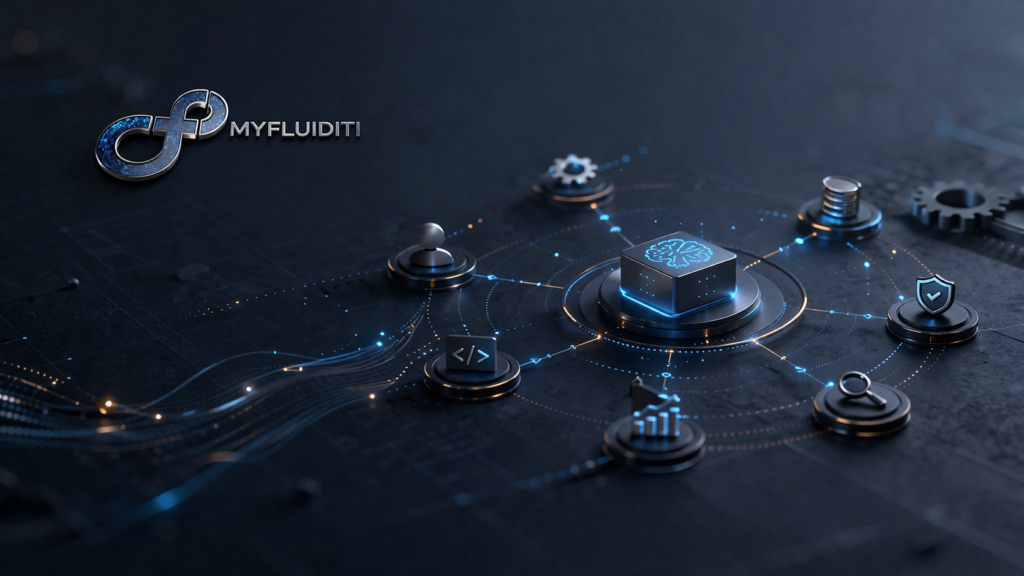
What is Agent Orchestration
Agent orchestration refers to the process of managing, coordinating, and optimizing multiple AI agents within a unified system. Each agent is designed to perform specific tasks, and orchestration ensures that they work together toward a common goal. It acts as a central control mechanism that assigns tasks, manages workflows, and integrates outputs.
Core Components of Agent Orchestration
1. Agent Management Layer
This layer is responsible for creating, monitoring, and managing AI agents. It ensures each agent performs its designated role effectively.
2. Workflow and Task Coordination
Defines how tasks are assigned and executed. It ensures tasks are completed in the correct sequence.
3. Context and Memory Sharing
Agents share data and context to maintain continuity. This helps avoid repetition and improves decision-making.
4. Tool and System Integration
Agents interact with external tools, APIs, and databases to gather and process information.
5. Security and Compliance
Ensures data privacy, access control, and adherence to regulations.
How Agent Orchestration Works
The process begins with defining a goal. Tasks are broken down and assigned to agents. Each agent performs its function and shares results with others. The orchestrator ensures smooth communication and combines outputs into a final result.
Benefits of Agent Orchestration
1. Scalability
Systems can easily expand by adding more agents.
2. Consistency
Standardized workflows ensure reliable outputs.
3. Faster Results
Parallel processing speeds up task completion.
4. Improved Collaboration
Agents work together efficiently.
5. Governance and Control
Provides better monitoring and compliance.
Use Cases
1. Customer Support Automation
2. Business Process Automation
3. IT Operations and DevOps
4. Data Analytics
5. Enterprise Search
Challenges
1. Complexity in design and implementation
2. Integration issues with legacy systems
3. Monitoring and debugging difficulties
4. Security risks
Pre-Deployment Considerations
Organizations must define objectives, choose the right tools, ensure data security, and test workflows before implementation. Agent orchestration is a powerful approach to managing multiple AI agents in a structured way. It enables scalability, efficiency, and better outcomes, making it essential for modern AI-driven enterprises.
Conclusion
Agent orchestration is a powerful approach to managing multiple AI agents in a structured way. It enables scalability, efficiency, and better outcomes, making it essential for modern AI-driven enterprises.