AI-Powered Fleet Management: Building Intelligent, Efficient, and Scalable Fleet Management Solutions
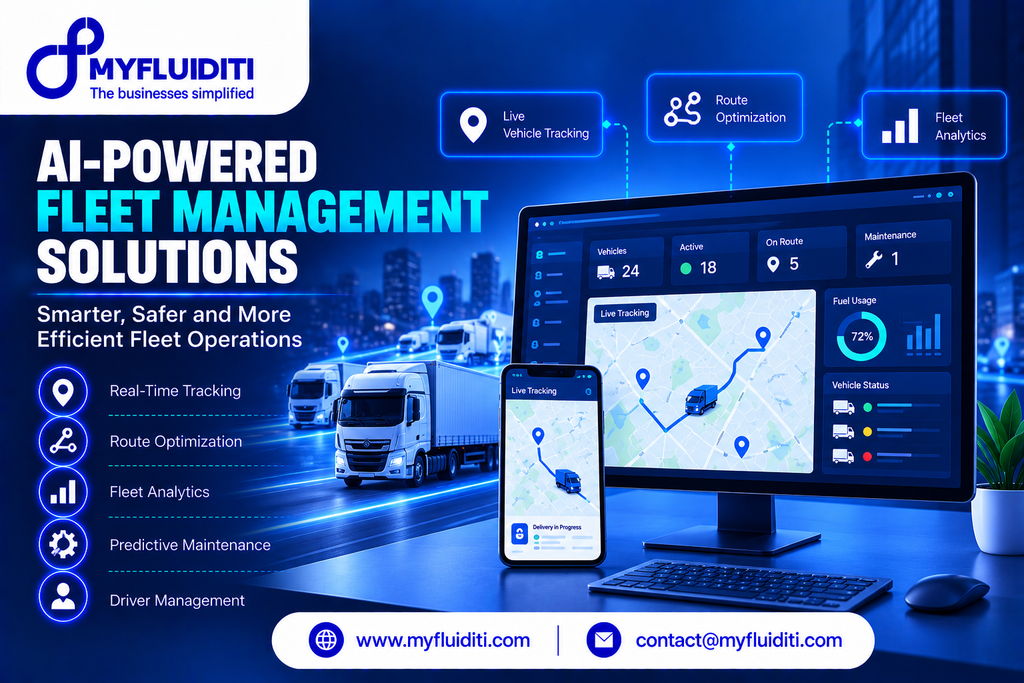
Introduction to AI-Powered Fleet Management In today’s rapidly evolving transportation and logistics industry, businesses need smarter ways to manage vehicles, drivers, routes, fuel consumption, and daily operations. Traditional fleet management methods often rely on manual tracking, disconnected systems, and reactive maintenance, making it difficult to control operating costs and maintain productivity. AI-Powered Fleet Management is transforming these operations by combining artificial intelligence, machine learning, GPS tracking, predictive analytics, and automation to create more intelligent and connected fleet operations. From logistics companies and transportation providers to delivery services, rental businesses, and enterprises with large vehicle networks, AI Fleet Management Solutions help organizations improve visibility, optimize resources, enhance driver safety, and make data-driven decisions. At MyFluiditi, we help businesses explore and develop intelligent software solutions that connect fleet operations with modern technologies, supporting better efficiency, scalability, and long-term digital growth. What Is AI-Powered Fleet Management? AI-Powered Fleet Management Software is a technology-driven system that uses artificial intelligence and real-time operational data to manage vehicles, monitor driver performance, optimize routes, predict maintenance requirements, and analyze fleet productivity. Unlike traditional fleet management systems that primarily record vehicle locations and trip details, AI-enabled platforms can analyze historical and live data to identify patterns, detect unusual activity, and support more informed operational decisions. By integrating GPS devices, vehicle sensors, telematics, cloud platforms, and intelligent analytics, businesses can manage their fleets through a centralized digital environment. Artificial Intelligence in Fleet Management can support route planning, fuel monitoring, driver behavior analysis, vehicle utilization, maintenance forecasting, and fleet performance reporting. These capabilities help businesses move from reactive fleet operations toward proactive, data-driven fleet management. Why Businesses Need AI Fleet Management Software Managing a fleet involves several interconnected responsibilities, including scheduling vehicles, assigning drivers, tracking deliveries, monitoring fuel expenses, maintaining vehicle health, and ensuring regulatory compliance. Without a connected system, these tasks can create delays, inconsistent records, unnecessary expenses, and limited operational visibility. AI Fleet Management Software Development helps businesses bring these processes together through automation, real-time monitoring, and intelligent recommendations. Fleet managers can identify underutilized vehicles, evaluate route efficiency, monitor unexpected fuel consumption, and respond to potential maintenance issues earlier. Businesses can also use fleet analytics to understand operational performance across locations and departments. By adopting Custom Fleet Management Software, organizations can build technology around their own workflows instead of depending entirely on generic tools that may not meet their operational requirements. Custom AI-Powered Fleet Management Software Development Every fleet business has different requirements based on vehicle types, service locations, delivery schedules, operational scale, and customer expectations. Custom AI-Powered Fleet Management Software Development enables businesses to create a platform tailored to their fleet operations and business goals. A custom solution can combine vehicle tracking, driver management, dispatch workflows, maintenance schedules, expense management, reporting, and AI-based decision support in one connected application. The platform can also support multiple branches, vehicle categories, user roles, and operational teams. At MyFluiditi, we focus on understanding business requirements before shaping a suitable software solution, helping organizations plan the necessary features, integrations, and architecture for their fleet management requirements. AI-Based Vehicle Tracking and Real-Time Fleet Monitoring Real-time visibility is a fundamental requirement for modern transportation operations. AI-Based Vehicle Tracking Software combines GPS data, vehicle telematics, and intelligent analytics to help fleet managers understand vehicle locations, movement patterns, trip progress, and operational status. A centralized fleet monitoring dashboard can display active vehicles, completed journeys, route deviations, unexpected stops, and other relevant information. When supported by appropriate data sources, intelligent systems can identify unusual movement patterns and generate alerts for review. Real-Time Fleet Monitoring Solutions can improve coordination between drivers, dispatch teams, managers, and customers while reducing dependence on repeated phone calls and manual status updates. By integrating tracking capabilities into a custom fleet platform, businesses can strengthen operational visibility and respond more effectively to changing conditions. AI-Powered Route Optimization and Intelligent Dispatch Route planning directly affects delivery schedules, fuel usage, driver productivity, and customer satisfaction. AI-Powered Route Optimization uses relevant information such as traffic conditions, delivery windows, vehicle capacity, road restrictions, and planned stops to help identify efficient routes. Depending on available integrations and data quality, route optimization systems can recommend alternative journeys when disruptions occur or priorities change. Intelligent dispatch capabilities can also help assign vehicles and drivers according to location, availability, workload, and delivery requirements. Fleet Route Optimization Software supports logistics providers, courier companies, transportation businesses, and last-mile delivery services in improving journey planning and managing multiple destinations more effectively. MyFluiditi can help businesses plan custom software integrations and intelligent workflows that connect routing, scheduling, and fleet operations within a unified platform. Predictive Maintenance and Vehicle Health Monitoring Unexpected vehicle breakdowns can lead to delayed deliveries, higher repair expenses, disrupted schedules, and reduced fleet availability. AI-Powered Predictive Maintenance uses historical maintenance records, mileage, operating conditions, sensor readings, and other available vehicle data to identify patterns that may indicate potential maintenance needs. Rather than depending only on fixed service intervals, businesses can use predictive insights alongside preventive maintenance schedules to plan inspections and repairs more effectively. Fleet Maintenance Management Software can organize service histories, maintenance reminders, repair records, component replacements, and vehicle availability. When integrated with compatible telematics or diagnostic systems, vehicle health monitoring can provide additional information for maintenance planning. These capabilities help businesses take a proactive approach to vehicle management while supporting longer-term asset performance. AI-Based Fuel Management and Cost Optimization Fuel is a significant operating expense for many transportation and logistics businesses. Poor route planning, excessive idling, inefficient driving patterns, and inconsistent fuel records can make it difficult to identify where money is being lost. AI-Powered Fuel Management Software can analyze fuel consumption, mileage, trip information, and available vehicle data to highlight unusual patterns and potential inefficiencies. Fleet managers can compare fuel performance across vehicles, drivers, routes, and operating periods to understand where improvements may be possible. Fleet Cost Optimization Solutions can also combine fuel records with maintenance expenses, tolls, repair costs, and other operational data to provide a clearer picture of fleet expenditure. With reliable data and appropriate integrations, intelligent
Web Designing: Creating Responsive, User-Friendly, and High-Converting Websites for Modern Businesses
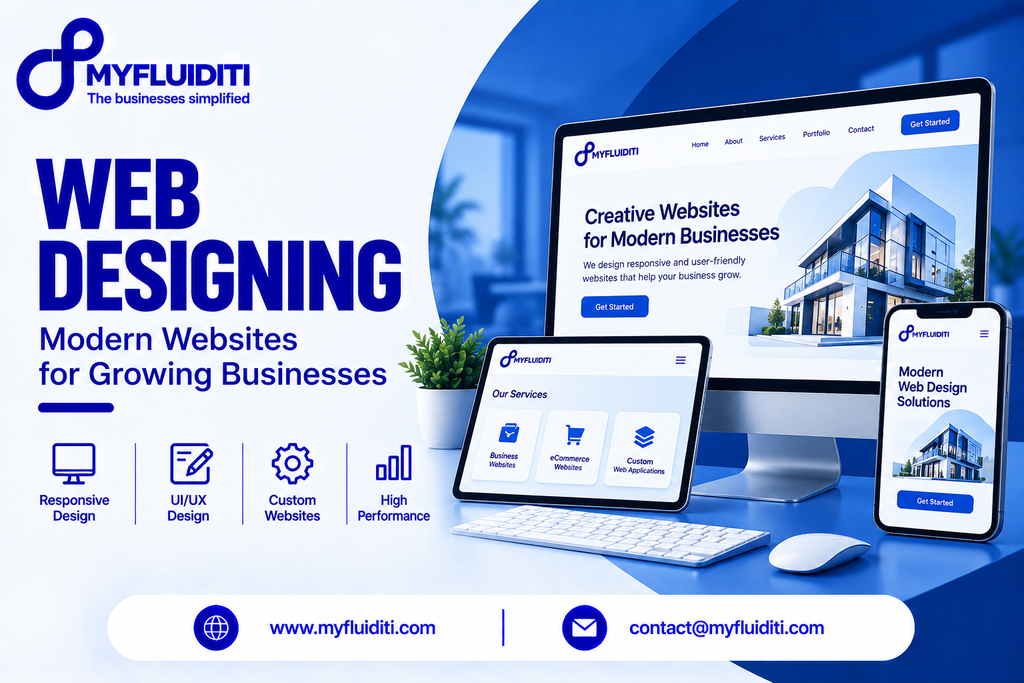
Introduction to Web Designing In today’s digital-first business environment, a website is more than an online presence; it is an important platform for building brand credibility, attracting potential customers, showcasing services, and generating business opportunities. A well-designed website helps visitors understand a brand, navigate information easily, and take meaningful actions. Web Designing Services combine visual design, user experience, responsive layouts, content presentation, and interactive elements to create websites that meet both user expectations and business objectives. From corporate websites and eCommerce stores to SaaS platforms and custom web applications, professional web design plays an important role in digital growth. At MyFluiditi, we help businesses create modern, responsive, and engaging websites that align with their brand identity and provide a strong foundation for online visibility and customer engagement. What Is Web Designing? Web Designing is the process of planning and creating the visual appearance, layout, structure, and user interaction of a website. It involves organizing content, choosing typography and colors, designing navigation, arranging page elements, and ensuring that visitors can access information comfortably across different devices. Modern Website Design Services also consider usability, accessibility, mobile responsiveness, page speed, and search engine optimization. An effective website design balances appearance with functionality so visitors can move naturally from discovering a business to exploring its services and contacting the company. MyFluiditi approaches website design with an understanding of business goals, audience needs, and the functionality required to deliver a consistent digital experience. Why Businesses Need Professional Web Designing Services A poorly structured website can make it difficult for visitors to find information, understand a company’s offerings, or complete important actions. Professional Web Designing Services for Businesses help create a clear digital identity, improve navigation, establish visual consistency, and communicate value effectively. A responsive and user-focused website can also support marketing campaigns, product discovery, customer inquiries, and lead generation. Businesses can use their websites to showcase expertise, publish useful content, present portfolios, and guide visitors toward relevant services. At MyFluiditi, we help startups, small businesses, and established enterprises create websites that support their brand positioning, customer experience, and long-term digital objectives. Custom Website Design Services Every business has its own audience, brand identity, products, and commercial goals. Custom Website Design Services focus on developing a website experience that reflects these requirements instead of relying entirely on generic templates. Custom design can include tailored page layouts, branded visual elements, service pages, interactive sections, lead-generation forms, and specialized navigation structures. The design process should also account for the site’s future growth, content updates, and integration requirements. MyFluiditi works with businesses to understand their requirements and develop website designs that balance brand consistency, usability, performance, and business functionality. Responsive Web Design for Mobile and Desktop Visitors access websites through smartphones, tablets, laptops, and desktop computers, making responsive design essential for a modern digital presence. Responsive Web Design Services focus on creating layouts that adapt to different screen sizes while keeping text readable, navigation accessible, images appropriately scaled, and important actions easy to use. Mobile-friendly website design is especially important for customers who discover services through search engines, advertisements, or social media. A responsive layout should also account for touch interactions, loading performance, and form usability. MyFluiditi helps businesses create responsive websites that provide a consistent experience across devices and support customers wherever they access the brand online. UI and UX Design for Websites User interface and user experience design are closely connected to the success of a website. Website UI Design focuses on the visual elements visitors interact with, including buttons, forms, menus, cards, typography, and page layouts. Website UX Design focuses on how easily users can understand the website, navigate between pages, find information, and complete their goals. A website may look attractive but still create frustration if the navigation is confusing or important information is difficult to locate. Effective UI/UX design combines clear information architecture, intuitive interaction patterns, consistent visual language, and user-centered decisions. At MyFluiditi, we consider both appearance and usability when designing websites for business audiences. Corporate Website Design A corporate website communicates a company’s identity, services, expertise, and value proposition to customers, partners, and potential employees. Corporate Website Design Services focus on creating professional page layouts, clear service descriptions, company information, contact options, and supporting content that strengthens brand credibility. Depending on the business, the website may include case studies, industry pages, client resources, leadership information, and inquiry forms. A well-organized corporate website also needs a responsive layout, accessible navigation, and a structure that supports future content expansion. MyFluiditi helps businesses develop corporate websites that communicate their capabilities clearly and provide visitors with straightforward paths to relevant information. Business Website Design for Small Businesses and Startups Small businesses and startups need websites that establish credibility and explain their offerings without unnecessary complexity. Small Business Website Design can include essential pages for services, company information, testimonials where available, frequently asked questions, and contact inquiries. Startup websites may also need product landing pages, waitlists, early-access registration, or MVP launch information. A clear design helps potential customers understand what the business offers and how to take the next step. MyFluiditi helps growing businesses build websites that reflect their brand, communicate their value, and provide a flexible foundation for adding new services and content as the company develops. eCommerce Website Design Services Online stores need more than attractive product images. They require clear product categorization, intuitive navigation, useful product details, accessible pricing information, and a straightforward checkout journey. eCommerce Website Design Services focus on creating shopping experiences that help customers discover products, compare options, manage carts, and complete purchases. The design may include product filters, search functionality, product galleries, customer accounts, promotional sections, and order information. Mobile usability and page performance are particularly important because customers may shop using a variety of devices and network conditions. MyFluiditi helps businesses develop eCommerce website experiences that support product discovery, customer confidence, and convenient online purchasing. Landing Page Design for Lead Generation A landing page is designed around a specific campaign, product, service, or conversion goal. Landing Page Design
Tutor Booking App Development: Building Scalable, On-Demand Tutoring and Online Learning Platforms
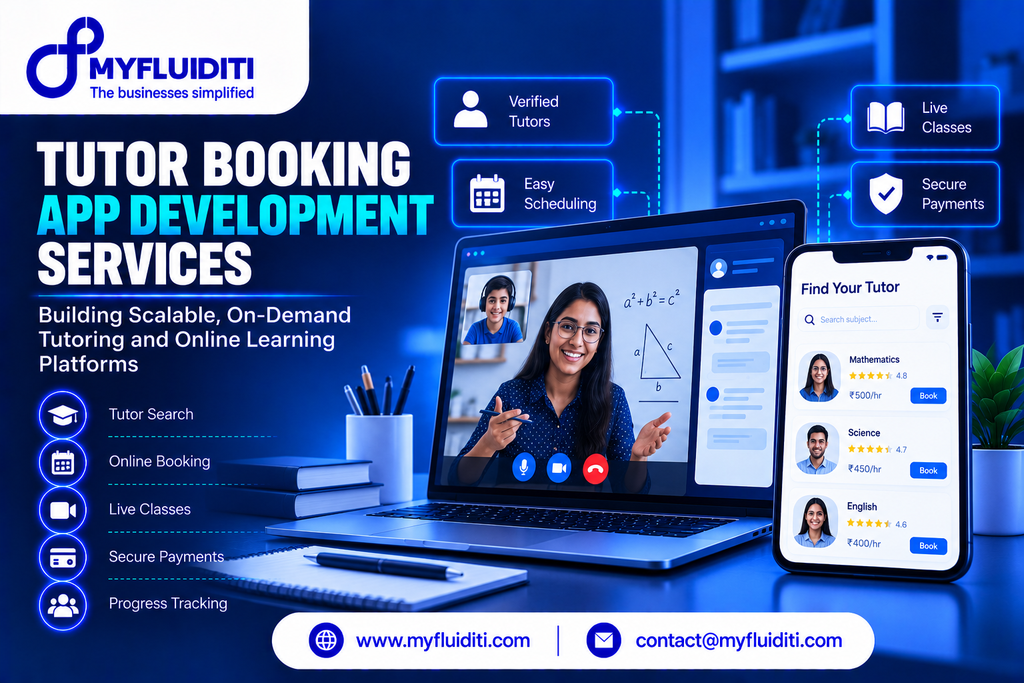
Introduction to Tutor Booking App Development The education industry is increasingly adopting digital platforms to make tutoring more accessible, flexible, and convenient for students, parents, independent tutors, and educational institutions. Traditional tutoring arrangements can involve time-consuming tutor searches, manual scheduling, payment coordination, and limited visibility into tutor availability. Tutor Booking App Development helps simplify these processes by connecting learners with suitable tutors through a centralized digital platform. With features such as online tutor discovery, real-time appointment scheduling, secure payments, virtual classrooms, and student progress tracking, businesses can create a more organized tutoring experience. From online tutoring startups to established education companies, On-Demand Tutor Booking Solutions offer opportunities to expand services and improve operational efficiency. At MyFluiditi, we help businesses develop customized tutor booking applications that bring students, tutors, and administrators together through scalable web and mobile technology. What Is Tutor Booking App Development? Tutor Booking App Development is the process of creating a web application or mobile platform that allows students to search for tutors, compare profiles, check availability, schedule lessons, and manage payments. A complete Tutor Booking Software Solution can include separate interfaces for students, tutors, parents, and administrators, with features designed around each user’s responsibilities. Students can find educators according to subject, experience, price, language, and learning preferences, while tutors can manage schedules, bookings, teaching materials, and earnings. Administrators can oversee registrations, payments, tutor verification, platform activity, and customer support. MyFluiditi develops custom tutoring platforms based on each business model, helping education providers create reliable booking workflows and digital learning experiences. Why Businesses Need On-Demand Tutor Booking Solutions Students and parents increasingly expect convenient ways to discover qualified tutors and arrange learning sessions around their schedules. At the same time, tutoring businesses need efficient methods to manage appointments, tutor availability, payments, and customer relationships. On-Demand Tutor Booking App Development can reduce manual coordination by bringing essential services into one platform. Businesses can offer scheduled tutoring, instant lesson requests where availability permits, online classes, in-person sessions, and recurring bookings. Digital booking systems can also help tutoring providers reach a wider audience beyond their immediate local area. MyFluiditi helps businesses identify the features that matter most to their target users and develop Custom Tutor Booking Applications that support customer convenience, service management, and long-term business growth. Custom Tutor Booking App Development Services Every tutoring business operates differently. An independent tutor may need a simple booking website, while an education marketplace may require student accounts, tutor onboarding, payment processing, scheduling automation, and administrative dashboards. Custom Tutor Booking App Development Services allow businesses to create platforms that match their specific operational needs rather than relying entirely on generic software. A custom solution can support individual tutors, coaching centers, subject-specific marketplaces, exam preparation services, language learning platforms, and institutional tutoring programs. At MyFluiditi, we help define the application scope, identify the essential user journeys, and build the necessary frontend, backend, database, and integration capabilities. This approach supports a practical launch while leaving room for future functionality. Online Tutor Booking Platform Development An online tutor booking platform gives learners a centralized place to find educators and arrange lessons. Online Tutor Booking Platform Development can include tutor directories, subject categories, search filters, profile pages, availability calendars, booking confirmation, payment processing, and lesson reminders. The platform can also support online and offline tutoring depending on the business model. For online sessions, students may receive a secure lesson link or enter a virtual classroom through an integrated learning environment. For in-person tutoring, the application may include location preferences and meeting details. MyFluiditi develops tutoring platforms that connect these workflows in a clear, user-friendly experience, helping businesses make tutor discovery and appointment management more convenient. Tutor Search and Discovery System Development Finding the right educator is one of the most important steps in the tutoring journey. Tutor Search and Discovery Development enables students to explore available tutors using relevant criteria such as subject expertise, academic level, qualifications, teaching experience, language, price, ratings, and schedule. Search results should be easy to understand, while tutor profiles should provide enough information for learners and parents to make informed choices. Depending on the platform, businesses can also include location-based search for home tutoring and filters for online lessons. MyFluiditi helps create intuitive search and discovery interfaces that reduce unnecessary friction and make it easier for students to identify tutors suited to their learning requirements. Tutor Profile and Verification Management A detailed tutor profile helps students understand an educator’s qualifications, experience, teaching style, subject expertise, and availability before making a booking. Tutor Profile Management Software can allow tutors to maintain their professional information, upload relevant credentials, set lesson rates, and describe the services they offer. A platform may also include an administrative review process for checking submitted qualifications and approving tutor accounts. Verification features should be designed around the business’s actual policies and available verification methods rather than implying that every profile has been independently confirmed. MyFluiditi can develop tutor onboarding and profile management workflows that support transparency, platform quality, and informed decision-making. Real-Time Tutor Availability and Scheduling Scheduling is a core requirement for any tutoring marketplace. Tutor Scheduling Software Development allows tutors to define their working hours, publish available time slots, block unavailable periods, and manage upcoming lessons. Students can select a suitable time based on the tutor’s current availability and the platform’s booking rules. A well-designed scheduling system should account for time zones when serving international users, session durations, buffer periods, rescheduling policies, and cancellation windows. Real-Time Tutor Availability Management can also help prevent overlapping bookings when availability updates are handled correctly by the backend. MyFluiditi helps businesses implement booking calendars and scheduling workflows that reduce manual coordination and support a more reliable tutoring experience. Instant Tutor Booking and Appointment Management Some students prefer to schedule lessons in advance, while others need help at short notice. Instant Tutor Booking App Development can support immediate booking requests when a suitable tutor is available, while scheduled appointment features help users plan future sessions. The platform can display booking status, session details, confirmation
AI-Powered Education Solution: Building Intelligent, Personalized, and Scalable Learning Platforms
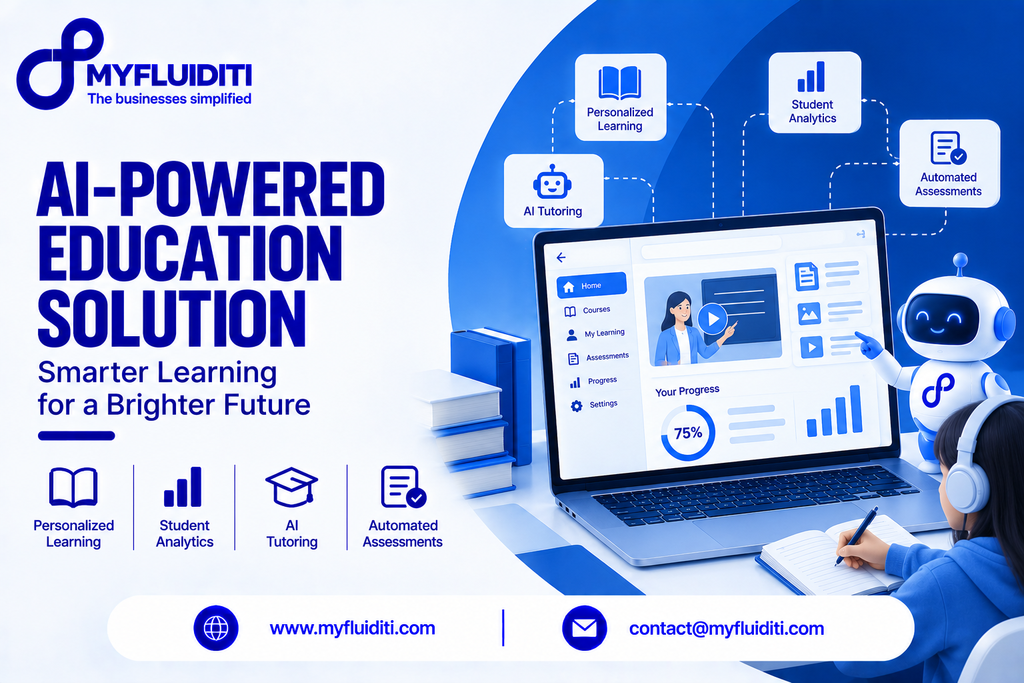
Introduction to AI-Powered Education Solutions The education industry is evolving rapidly as schools, colleges, universities, coaching institutes, and eLearning businesses adopt digital technologies to improve teaching and learning experiences. Traditional education systems often face challenges such as different learning speeds, limited personalized support, time-consuming assessments, and difficulties tracking student progress. AI-Powered Education Solutions help address these challenges by combining artificial intelligence, machine learning, data analytics, and intelligent automation to create more adaptive and engaging learning environments. From personalized learning platforms to AI tutors, automated assessments, and student performance analytics, artificial intelligence is transforming how educational content is delivered and managed. At MyFluiditi, we help organizations explore AI in Education through custom software development, intelligent learning applications, and scalable digital solutions designed around their educational goals. What Is an AI-Powered Education Solution? An AI-Powered Education Solution is a digital platform or software application that uses artificial intelligence to support teaching, learning, assessment, student engagement, and educational administration. These solutions can analyze learning interactions, recommend relevant study materials, assist with question answering, automate selected academic workflows, and provide insights into student performance. Depending on the institution’s requirements, an AI-powered education platform may include intelligent tutoring systems, adaptive learning engines, automated grading, educational chatbots, learning analytics, and personalized content recommendations. By integrating AI capabilities into learning management systems, mobile applications, and web-based education platforms, institutions can create more flexible digital learning experiences. MyFluiditi develops custom AI solutions that connect these capabilities with the specific needs of schools, universities, edtech companies, and corporate training providers. Why Businesses and Educational Institutions Need AI in Education Educational institutions need technology that supports different learning needs while helping teachers and administrators manage their responsibilities more efficiently. Artificial Intelligence in Education can assist with identifying learning gaps, recommending suitable learning resources, supporting assessment workflows, and providing data-driven insights into student engagement. Edtech companies can use AI to develop differentiated digital products, improve learner experiences, and expand access to educational services. Universities and training organizations can also explore AI-powered knowledge assistants and analytics tools to support students and educators. Successful implementation requires more than adding an AI chatbot to an existing platform; it involves aligning the technology with learning objectives, data privacy requirements, accessibility, and educator workflows. MyFluiditi helps organizations identify appropriate AI use cases and build solutions around measurable educational and operational needs. Custom AI-Powered Education Software Development Every institution has its own curriculum, teaching methods, learner profiles, assessment standards, and administrative processes. Custom AI Education Software Development enables organizations to build digital learning systems tailored to these requirements. A custom platform may combine student portals, course management, AI tutoring, content recommendations, online assessments, progress tracking, and administrative dashboards. It can also integrate with existing learning management systems, student information systems, and communication platforms. Rather than forcing every institution to use the same workflow, custom development provides flexibility to configure features according to the learning environment. At MyFluiditi, we help transform education technology requirements into practical applications with suitable AI capabilities, structured data flows, and an architecture designed for future improvements. AI-Powered Personalized Learning Students learn at different speeds and may need different explanations, practice activities, and levels of support. AI-Powered Personalized Learning uses learner interactions, assessment results, and available progress data to recommend content and activities that are more relevant to each student. A personalized learning platform may suggest revision materials, provide additional practice for difficult topics, or recommend more advanced content when a learner demonstrates readiness. These recommendations should be designed around educational objectives and reviewed for relevance, fairness, and accuracy. Personalized learning does not replace the role of teachers; instead, it can provide additional information and learning opportunities that educators can use to support their students. MyFluiditi helps educational organizations develop intelligent learning experiences that adapt to student needs while keeping educators involved in the learning process. Adaptive Learning Platform Development AI-Powered Adaptive Learning Platforms adjust learning activities based on a student’s progress, responses, and demonstrated understanding. For example, a platform may recommend extra exercises after repeated incorrect answers or introduce more challenging material when a learner consistently performs well. Machine learning models and rule-based recommendation systems can help determine which content to present next, depending on the quality and availability of learning data. Effective adaptive learning also requires well-structured course content, clear learning objectives, and reliable assessment methods. MyFluiditi helps build adaptive learning applications that can connect student performance data with personalized content delivery, enabling institutions and edtech companies to provide more flexible digital learning journeys. AI Tutor Development and Intelligent Tutoring Systems Students frequently need help understanding difficult concepts outside scheduled classroom hours. AI Tutor Development enables educational platforms to provide interactive assistance through conversational interfaces, guided explanations, practice questions, and topic-based learning support. An Intelligent Tutoring System can guide students through a problem, explain concepts step by step, and recommend additional practice based on their responses. When designed responsibly, AI tutors can encourage learners to understand the reasoning behind an answer instead of simply presenting a final solution. These systems should use reliable educational material, acknowledge uncertainty, and direct learners to teachers when a question requires human judgment. MyFluiditi can help integrate AI tutoring capabilities into web applications, mobile learning platforms, and existing eLearning systems. AI Chatbot Development for Education Educational institutions manage a wide range of recurring questions about admissions, course schedules, assignments, fees, examinations, learning resources, and institutional procedures. AI Chatbot Development for Education can help students and staff access relevant information through conversational interfaces. An education chatbot may answer frequently asked questions, guide users through platform features, explain institutional processes, and direct users to the correct department. With Generative AI Chatbots, institutions can support more natural interactions, while retrieval-augmented generation can connect responses to approved documents and knowledge sources. Access controls, content validation, privacy safeguards, and human escalation are important for reliable deployment. MyFluiditi helps businesses and educational organizations build AI chatbot solutions that fit their workflows and provide useful, context-aware support. Generative AI in Education Generative AI in Education creates opportunities to assist with lesson preparation, study
ReactJS Development: Building Scalable, Interactive, and High-Performance Web Applications
Introduction to ReactJS Development In today’s competitive digital environment, businesses need fast, interactive, and scalable web applications that deliver seamless user experiences across devices. ReactJS Development has become a popular approach for building modern user interfaces, dynamic websites, enterprise dashboards, SaaS platforms, and customer-facing web applications. By using reusable components and efficient interface updates, ReactJS helps development teams create flexible digital products that can evolve with changing business requirements. From startup MVPs to complex enterprise applications, ReactJS Development Services support businesses in improving application performance, simplifying frontend development, and delivering engaging digital experiences. At MyFluiditi, we help businesses transform their ideas into reliable digital solutions through custom web application development, modern frontend engineering, API integration, and scalable software architecture. What Is ReactJS Development? ReactJS Development is the process of building interactive user interfaces and frontend applications using React, a JavaScript library designed for creating component-based interfaces. React enables developers to divide complex interfaces into smaller, reusable components, making applications easier to maintain, update, and expand. These components can manage changing data and interface states, allowing users to interact with applications without requiring a complete page reload for every action. ReactJS Web Development is suitable for business websites, customer portals, eCommerce platforms, booking applications, SaaS products, admin dashboards, and data-driven enterprise systems. When combined with technologies such as Node.js, Python, Java, REST APIs, and cloud infrastructure, React can form the frontend foundation of a complete software solution. Why Businesses Need ReactJS Development Services Modern businesses require digital platforms that respond quickly to user interactions, support growing traffic, and provide consistent experiences across desktop, tablet, and mobile screens. Traditional interfaces can become difficult to maintain when features, integrations, and user requirements increase. Custom ReactJS Development Services help address these challenges through reusable UI components, structured frontend architecture, efficient state management, and integration with existing backend systems. Businesses can use ReactJS to build interactive customer portals, product management systems, online marketplaces, enterprise dashboards, and subscription-based platforms. With a well-planned architecture, React applications can support continuous feature development, easier maintenance, and future integrations. MyFluiditi helps businesses identify the right development approach based on their product goals, technical requirements, target audience, and long-term growth plans. Custom ReactJS Development Every business has different workflows, customers, and operational needs. Custom ReactJS Development focuses on creating applications around those specific requirements instead of relying entirely on generic templates. A custom React solution can include tailored navigation, reusable interface components, interactive forms, data visualizations, customer accounts, role-based dashboards, and integrations with business software. Whether a company needs a customer-facing web platform or an internal business application, React provides a flexible foundation for building features that match its operating model. At MyFluiditi, we work with businesses to understand their requirements, define the application structure, plan reusable components, and develop frontend functionality that aligns with their business objectives. ReactJS Web Application Development ReactJS Web Application Development enables businesses to build dynamic applications that deliver more functionality than a static website. React-based web applications can support interactive product catalogues, account management, online booking, reporting tools, customer service portals, and real-time information displays. By connecting the frontend to backend services through APIs, applications can retrieve data, process user actions, and display updated information efficiently. A well-designed React web application also considers responsive layouts, accessibility, loading performance, error handling, and maintainability. MyFluiditi helps organizations develop custom web applications that combine modern interface design with dependable backend connectivity and a scalable technical foundation. ReactJS Frontend Development The frontend is the part of an application that users see and interact with, making it central to the overall digital experience. ReactJS Frontend Development involves building page layouts, navigation systems, interactive forms, reusable components, menus, tables, filters, dashboards, and other interface elements. A thoughtfully structured frontend helps users complete tasks efficiently while giving businesses greater flexibility to update features and maintain consistent design patterns. React can be combined with HTML, CSS, JavaScript, TypeScript, and suitable UI libraries to develop responsive and maintainable interfaces. Our approach at MyFluiditi focuses on connecting interface functionality with real business workflows so that the application is not only visually consistent but also practical, accessible, and easy to use. ReactJS UI Development and Component Development A consistent interface is essential for applications with multiple pages, user roles, and business functions. ReactJS UI Development uses reusable components to maintain a common design language throughout an application. Buttons, forms, navigation elements, cards, modal windows, tables, and data displays can be developed as components and reused wherever appropriate. ReactJS Component Development also helps teams separate responsibilities within the interface, making features easier to test, modify, and extend. For larger applications, a shared component library can improve development consistency and reduce unnecessary duplication. MyFluiditi can help businesses establish structured UI components and frontend patterns that support future enhancements without making the codebase unnecessarily complicated. ReactJS Single Page Application Development ReactJS Single Page Application Development is useful when businesses need applications that provide smooth navigation and interactive functionality without repeatedly loading complete pages. Single-page applications can support online dashboards, project management systems, customer portals, internal business tools, and web-based productivity platforms. React components update relevant parts of the interface when data or application state changes, helping users move between tasks efficiently. Application routing, API communication, loading indicators, error states, and state management must be designed carefully to maintain a reliable experience. MyFluiditi develops application architectures according to project requirements, ensuring that navigation, data handling, and frontend components work together effectively. ReactJS Dashboard and Admin Panel Development Business teams rely on dashboards to monitor performance, manage records, and make informed decisions. ReactJS Dashboard Development can provide interactive charts, searchable tables, performance indicators, reports, filters, and real-time data views. ReactJS Admin Panel Development can support user management, content administration, order processing, inventory tracking, role permissions, and operational controls. When connected to secure backend APIs, these interfaces can help teams manage complex workflows from a centralized application. Effective dashboard development also requires clear information hierarchy, responsive layouts, appropriate access controls, and efficient data loading. At MyFluiditi, we build dashboard and admin