Base44 App Development: Building AI-Powered, No-Code, and Scalable Business Applications
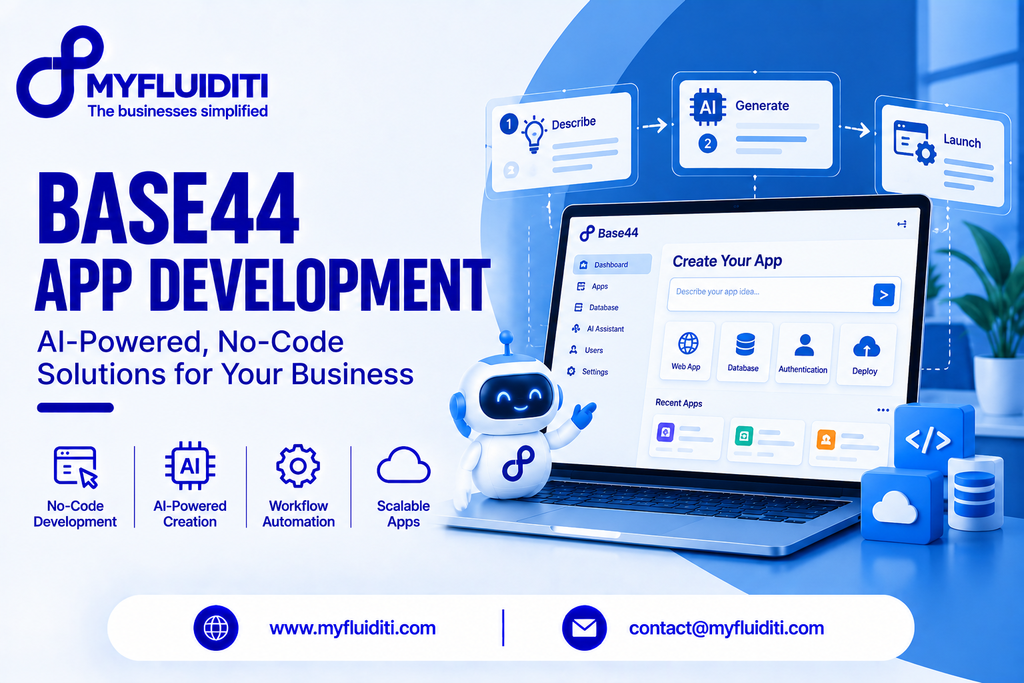
Introduction to Base44 App Development Businesses are increasingly adopting AI-powered development platforms to transform ideas into functional digital products with greater speed and flexibility. Traditional application development can involve multiple stages, including interface design, backend development, database configuration, authentication, API integration, testing, and deployment. Base44 App Development introduces an AI-driven approach that helps simplify application creation by allowing users to describe their requirements in natural language and generate functional applications through an AI-powered platform. Base44 supports the creation of applications with interfaces, data management, backend logic, authentication, integrations, and deployment capabilities. This approach can help startups, entrepreneurs, and established businesses explore new digital products, internal tools, customer portals, and workflow automation solutions. At MyFluiditi, we help businesses understand how AI-powered application development fits their requirements and how to turn early concepts into practical, scalable digital solutions through the right combination of AI tools, application engineering, and technical expertise. What Is Base44 App Development? Base44 App Development refers to creating and customizing applications using Base44, an AI-powered app-building platform that generates application functionality from natural-language instructions. Rather than configuring every component manually from the beginning, users can describe their application idea and refine the generated result as the project evolves. The platform supports capabilities such as AI App Development, No-Code Application Development, Backend Logic, Database Management, User Authentication, Workflow Automation, API Connectivity, and Application Deployment. These features can help businesses create prototypes, operational tools, customer-facing applications, and early-stage software products. Base44 can reduce the amount of initial setup required for suitable applications, but the right development approach still depends on the product’s complexity, integrations, security requirements, and future growth plans. MyFluiditi helps businesses evaluate these factors before deciding how to use AI app builders within their digital product strategy. Why Businesses Need Base44 App Development Services Businesses need faster ways to validate ideas, automate repetitive work, improve internal processes, and deliver digital experiences without unnecessary development complexity. Base44 App Development Services can help organizations explore these opportunities by using AI-assisted application creation to accelerate initial development and experimentation. For startups, an AI app builder can help transform a concept into a working prototype that can be demonstrated to potential customers or used to collect early feedback. For established organizations, it can support internal dashboards, employee portals, approval workflows, customer management tools, and other business applications. At MyFluiditi, we focus on connecting application development decisions with business objectives. By understanding the intended users, required functionality, integration needs, and expected usage, we help businesses determine whether Base44, custom development, or a combination of both is the most suitable approach. Custom Base44 Application Development Every business has unique operational requirements, customer journeys, and workflows. Custom Base44 Application Development allows businesses to create applications around specific use cases rather than relying entirely on generic software products. A custom application may include user registration, role-based access, data entry forms, reporting dashboards, approval workflows, customer records, notifications, and integrations with existing business systems. The application can then be refined through iterative instructions and testing as the requirements become clearer. MyFluiditi helps businesses define application requirements, organize essential features, and identify areas where AI-assisted development can accelerate delivery. For requirements that exceed a platform’s capabilities, additional custom engineering or external integrations may be needed. AI-Powered App Development with Base44 Artificial Intelligence is changing how businesses approach software development. AI-Powered App Development enables teams to use natural-language prompts to describe application functionality, generate interfaces, establish workflows, and refine application behavior. Base44 uses AI to help create application screens and functionality from user instructions. This can make early development more accessible to founders, business teams, and entrepreneurs who want to validate an idea before committing to a larger engineering project. Our approach at MyFluiditi focuses on using AI development tools strategically. Clear requirements, structured prompts, iterative validation, and functional testing remain essential to producing applications that solve real business problems. No-Code Application Development with Base44 No-Code App Development enables users to build applications with less direct programming by relying on visual configuration, natural-language instructions, and platform-provided functionality. This approach can help non-technical founders and business teams experiment with software ideas without implementing every component manually. Base44 can support suitable use cases involving forms, dashboards, portals, data management, and workflow automation. It can also help teams make iterative changes as they gather feedback from users. However, no-code development does not remove every technical consideration. Businesses still need to evaluate application permissions, data handling, integration limits, testing requirements, and platform dependencies. MyFluiditi helps organizations assess these factors so their no-code application strategy remains aligned with their operational and long-term business needs. Base44 Web Application Development Web applications provide browser-based access to business functionality without requiring users to install a separate application for every supported device. Base44 Web Application Development can support the creation of customer portals, internal dashboards, management tools, booking applications, and other browser-accessible solutions. Responsive design is particularly important because users may access the application through desktops, tablets, and smartphones. A well-planned application should provide intuitive navigation, readable content, appropriate access controls, and reliable data handling across supported screen sizes. MyFluiditi helps businesses plan web application experiences around their users and workflows. When requirements demand advanced integrations, custom functionality, or specialized performance optimization, additional development work may be appropriate. Base44 Mobile-Friendly Application Development Modern businesses need applications that are accessible across devices. Base44 Mobile App Development can support mobile-friendly applications that adapt to different screen sizes and provide convenient access through supported web-based experiences. Businesses can explore mobile-responsive customer portals, task management applications, employee tools, booking systems, and operational dashboards. A mobile-friendly interface can help employees and customers interact with essential functionality while away from a desktop computer. It is important to distinguish a mobile-responsive web application from a fully native Android or iOS application. App-store distribution, device-specific capabilities, offline behavior, and advanced native functionality may require additional solutions depending on the project requirements. MyFluiditi helps businesses choose an appropriate application architecture based on how users will access and use the product. Base44 MVP Development for Startups Startups often
Fantasy Football App Development: Building Scalable, Interactive, and High-Performance Fantasy Football Platforms
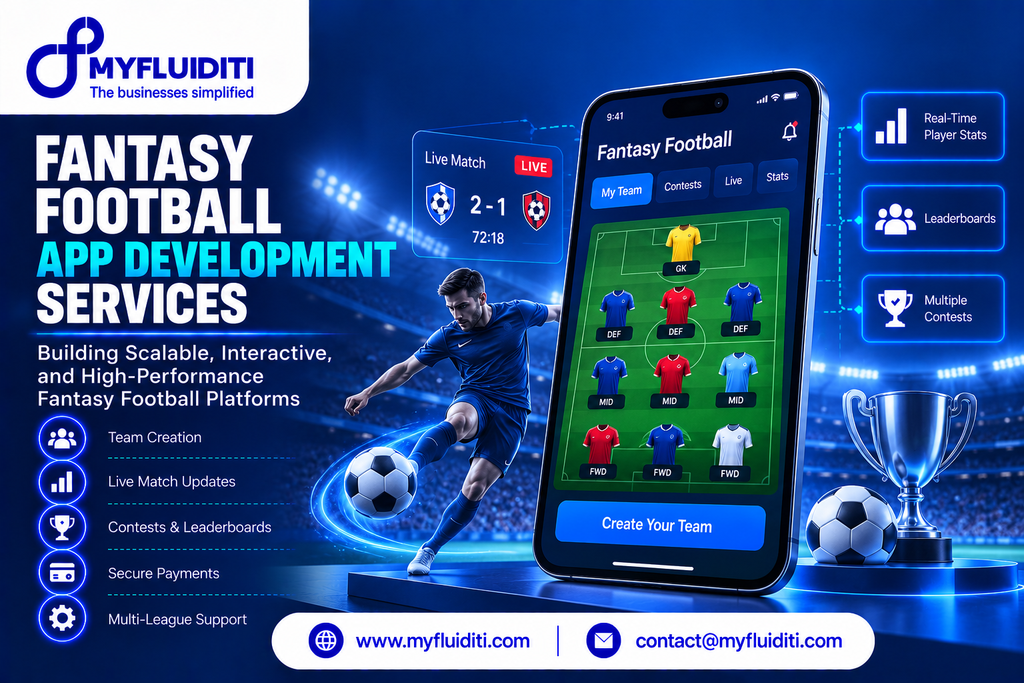
Introduction to Fantasy Football App Development Fantasy football has become an engaging form of digital sports entertainment, allowing football fans to create virtual teams, select real-world players, compete with other participants, track player performance, and earn points based on actual match statistics. As digital sports communities continue to grow, businesses are investing in Fantasy Football App Development to deliver interactive, data-driven, and personalized experiences across web and mobile platforms. A successful fantasy football platform requires more than team selection and leaderboards. It needs real-time sports data integration, accurate fantasy point calculation, contest management, player statistics, team creation, secure user accounts, push notifications, analytics, and scalable backend infrastructure. At MyFluiditi, we help businesses transform fantasy sports concepts into custom digital platforms by combining modern application development, API integration, cloud technologies, and intelligent software engineering. What Is Fantasy Football App Development? Fantasy Football App Development is the process of designing, building, testing, and maintaining web and mobile applications that allow users to participate in virtual football competitions based on the real-world performance of football players. Depending on the target audience and business model, a fantasy football platform may support season-long leagues, private competitions, player drafts, head-to-head matchups, tournament-based contests, or daily fantasy sports formats. A modern Fantasy Football App Development Solution brings together user registration, player selection, team management, scoring engines, live match updates, contest participation, rankings, notifications, and administrative controls. The platform can also integrate advanced analytics, AI-powered player insights, personalized recommendations, and predictive models to enhance the overall user experience. Why Businesses Need Fantasy Football App Development Services The growth of digital sports communities creates opportunities for sports entrepreneurs, media companies, gaming businesses, startups, and established entertainment brands to develop their own fantasy football platforms. However, users expect reliable performance, transparent scoring, intuitive navigation, timely updates, and engaging competition features. Fantasy Football App Development Services help businesses build customized platforms that align with their audience, competition formats, monetization strategy, and technical requirements. A well-designed fantasy football application can improve user engagement, encourage repeat participation, strengthen sports communities, and support new digital business models. MyFluiditi focuses on building flexible software solutions that support business growth, allowing fantasy football platforms to introduce new leagues, expand user capacity, integrate additional data providers, and improve features as user expectations evolve. Custom Fantasy Football App Development Every fantasy football business has different requirements. Some platforms focus on private leagues and season-long competitions, while others emphasize live match experiences, tournament participation, player analytics, or multi-league support. Custom Fantasy Football App Development enables businesses to create applications around their specific requirements instead of relying on inflexible, generic software. A custom solution can include player databases, football league management, team creation, draft systems, scoring configuration, contest registration, leaderboards, user profiles, notifications, and administrative dashboards. The platform can also support different user roles, competition rules, and regional requirements. At MyFluiditi, we approach custom fantasy football development by understanding the intended audience, platform functionality, business objectives, and future expansion plans before defining the architecture and development roadmap. Fantasy Football Mobile App Development Mobile applications provide users with convenient access to fantasy football teams, player statistics, match information, competition standings, and performance updates. Fantasy Football Mobile App Development focuses on delivering responsive, intuitive experiences that work smoothly across supported mobile devices. A fantasy football mobile app can include team creation, player selection, live scoring, league participation, player performance tracking, match notifications, and personalized dashboards. Users can monitor their fantasy teams, review upcoming fixtures, compare statistics, and follow competition progress from their smartphones. MyFluiditi can develop Android, iOS, and cross-platform mobile applications using suitable technologies based on project requirements. With a scalable backend and well-integrated sports data services, businesses can deliver a consistent experience across devices. Fantasy Football Web Application Development A web-based fantasy football platform gives users access to their teams, leagues, player information, and competition dashboards through a browser. Fantasy Football Web Application Development requires a responsive interface, reliable backend services, secure user authentication, and efficient data synchronization. The web application can provide team management screens, player comparison tools, league tables, match schedules, draft interfaces, contest dashboards, and detailed performance analytics. Responsive web design also helps ensure that users can access essential features from desktops, tablets, and mobile browsers. Our development approach combines modern frontend technologies with secure backend systems and API integrations to create scalable fantasy football web applications that support both daily activity and high-demand match periods. Fantasy Football Team Creation and Player Selection Team creation is one of the most important features of a fantasy football application. Users need an intuitive interface to explore available players, review statistics, select a squad, and build a team according to the rules of a particular competition. A Fantasy Football Team Management System can support player filters, positional requirements, team selection limits, player availability, budget restrictions, captain selection, and squad validation. Depending on the competition format, users may also be able to make substitutions, transfer players, or modify teams before the applicable deadline. A well-designed Fantasy Football Player Selection System helps users understand their options and make informed decisions without unnecessary complexity. Clear rules and timely validation also help reduce errors during team creation. Real-Time Football Data Integration Real-time sports information is essential for fantasy football platforms because match events and player performances influence scoring, rankings, and user engagement. Real-Time Football Data Integration connects the application with suitable sports data providers to retrieve fixtures, team information, player statistics, match events, and other relevant information. Depending on the provider and subscription, integrations may support live match scores, lineups, goals, assists, cards, substitutions, and other statistical events. The application must process incoming data reliably and account for corrections or changes from the data source. MyFluiditi can develop sports API integrations and backend workflows that synchronize relevant football data with fantasy football applications. Data validation, error handling, monitoring, and provider-specific rate limits should be considered to maintain consistency and reliability. Fantasy Football Live Scoring System Live scoring helps users understand how their fantasy teams are performing while real football matches are in progress.
AI-Powered Ecommerce Platform: Building Intelligent, Personalized, and Scalable E-Commerce Solutions
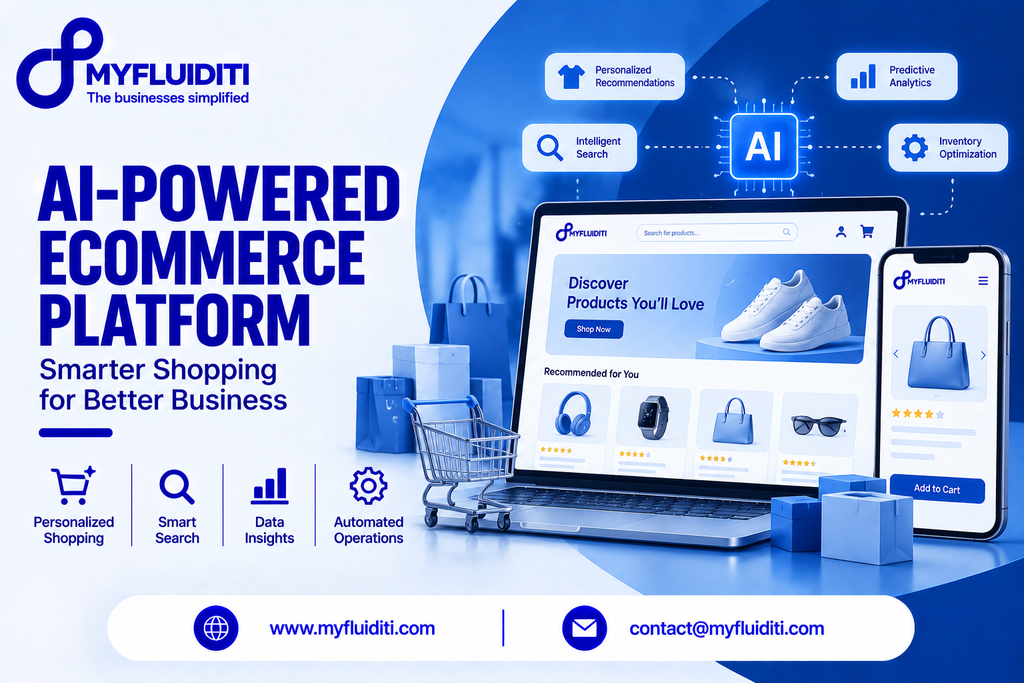
Introduction to AI-Powered Ecommerce Platforms The e-commerce industry is rapidly evolving as businesses move beyond traditional online stores toward intelligent, personalized, and data-driven digital commerce experiences. Customers now expect relevant product recommendations, faster search, seamless checkout, personalized offers, responsive support, and consistent experiences across web and mobile platforms. This growing demand has made an AI-Powered Ecommerce Platform an important technology investment for businesses looking to increase conversions, improve customer engagement, automate operations, and build long-term digital growth. An AI-powered e-commerce platform combines Artificial Intelligence, Machine Learning, predictive analytics, automation, customer data, and intelligent recommendation systems with modern e-commerce technologies. These capabilities enable online businesses to understand customer behavior, predict purchasing patterns, personalize shopping experiences, optimize inventory, improve product discovery, and make faster business decisions. At MyFluiditi, we build intelligent digital commerce solutions that combine e-commerce engineering with AI capabilities to help businesses create scalable and future-ready shopping platforms. What Is an AI-Powered Ecommerce Platform? An AI-Powered Ecommerce Platform is an intelligent e-commerce application that uses artificial intelligence and machine learning to improve customer experiences and automate business processes. Unlike conventional e-commerce systems that primarily depend on predefined rules, AI-powered platforms can analyze large volumes of customer, product, transaction, and behavioral data to identify patterns and generate intelligent recommendations. An AI Ecommerce Platform can support personalized product recommendations, intelligent search, customer behavior analytics, demand forecasting, dynamic pricing, inventory optimization, AI chatbots, automated customer support, fraud detection, marketing automation, and predictive analytics. By connecting these capabilities with a secure and scalable e-commerce architecture, businesses can create digital shopping experiences that continuously become more intelligent as more data becomes available. Why Businesses Need AI-Powered Ecommerce Development Competition in e-commerce has increased significantly, making it difficult for businesses to depend only on product catalogs and conventional online shopping functionality. Customers have thousands of products and multiple brands to choose from, which means businesses need intelligent technologies to understand customer intent and deliver relevant experiences. AI-powered ecommerce development helps businesses transform customer data into actionable insights. Artificial Intelligence can analyze browsing behavior, previous purchases, search activity, product interactions, cart activity, and other signals to understand customer preferences. This intelligence can then be used to personalize recommendations, improve conversion opportunities, reduce cart abandonment, and increase customer retention. MyFluiditi approaches AI e-commerce development by understanding the business model, customer journey, existing technology environment, and growth objectives before selecting the right AI capabilities. This allows us to build solutions that are aligned with measurable business requirements instead of adding AI features without a clear purpose. Custom AI Ecommerce Platform Development Every e-commerce business has different products, customers, workflows, pricing models, and operational requirements. Custom AI Ecommerce Platform Development allows organizations to build intelligent commerce systems around their specific business processes. A custom platform can combine product management, customer management, order management, payment processing, inventory management, analytics, AI recommendations, intelligent search, automation, and third-party integrations within a unified architecture. The platform can also be designed to support startups, growing online retailers, marketplaces, D2C brands, B2B commerce businesses, and enterprise organizations. Our team at MyFluiditi develops custom e-commerce solutions with scalable architecture so businesses can introduce new AI capabilities, integrate additional services, and expand their digital commerce operations as they grow. AI-Powered Product Recommendations One of the most valuable applications of artificial intelligence in e-commerce is intelligent product recommendation. Traditional product suggestions often rely on simple categories or predefined rules, while AI Product Recommendation Systems can analyze customer behavior and identify relationships between products and customer preferences. Machine learning algorithms can use purchase history, browsing patterns, product views, search activity, cart interactions, and similar customer behavior to generate more relevant recommendations. These recommendations can appear on product pages, homepages, search results, shopping carts, checkout pages, and personalized marketing campaigns. An intelligent recommendation engine can help businesses increase product discovery, improve average order value, create personalized shopping experiences, and encourage repeat purchases. AI-Powered Personalization in E-Commerce Personalization has become a major component of modern digital commerce. Customers expect online stores to understand their interests and present products and content that are relevant to them. AI-Powered Ecommerce Personalization enables businesses to create individualized shopping experiences using customer behavior and contextual information. AI can personalize product recommendations, promotional offers, search results, product collections, content, notifications, and customer journeys. At MyFluiditi, we can integrate intelligent personalization capabilities into e-commerce platforms so businesses can move from generic shopping experiences toward more contextual and customer-centric digital commerce. Intelligent Ecommerce Search Product discovery is critical to e-commerce conversions. Customers who cannot quickly find relevant products may leave the website or move to a competitor. AI can significantly improve product discovery through AI-Powered Ecommerce Search. Intelligent search can understand product names, attributes, categories, customer intent, synonyms, natural-language queries, and behavioral patterns. Instead of depending entirely on exact keyword matches, AI-powered search can provide more relevant results based on what customers are actually looking for. Natural Language Processing can also enable conversational product discovery, allowing customers to search using natural questions and descriptive phrases. This creates a more intuitive shopping experience while helping businesses improve product visibility. AI Chatbots for Ecommerce Customer support is another important area where artificial intelligence can improve e-commerce operations. AI Ecommerce Chatbots can provide instant assistance for product questions, order tracking, returns, shipping information, product availability, payment-related questions, and general customer support. Generative AI and Large Language Models can make e-commerce chatbots more conversational and context-aware. With appropriate business data and integrations, an AI assistant can help customers discover products, compare options, understand product information, and navigate the purchasing process. MyFluiditi develops AI-powered conversational solutions that can be integrated with e-commerce websites, mobile applications, product catalogs, CRM systems, order management systems, and other business platforms. AI for Customer Behavior Analytics E-commerce businesses generate enormous amounts of customer data through browsing sessions, searches, purchases, product interactions, campaigns, and customer support conversations. AI Customer Behavior Analytics helps transform this information into actionable business intelligence. Machine learning models can identify purchasing patterns, customer segments, product preferences, churn signals, and high-value customer behaviors. These insights can support
Node.js Development: Building Scalable, High-Performance, and Real-Time Web Applications
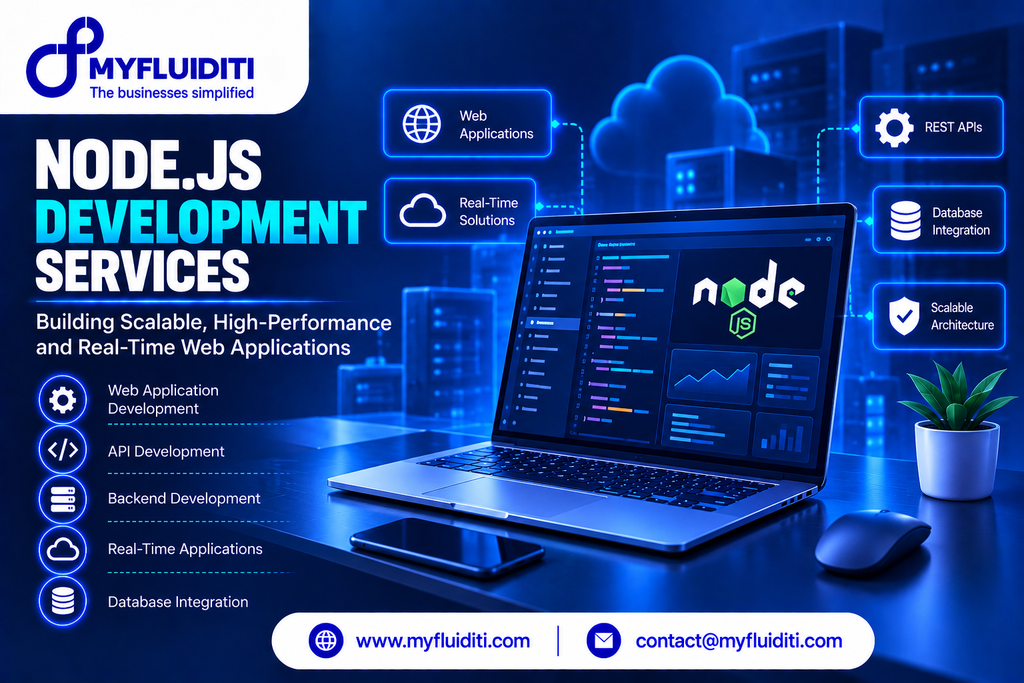
Introduction to Node.js Development Modern businesses need web applications that are fast, scalable, secure, and capable of handling continuously growing numbers of users and transactions. Node.js Development has become a powerful approach for building modern web applications, backend systems, APIs, real-time platforms, SaaS products, and enterprise applications. As an asynchronous, event-driven JavaScript runtime, Node.js is designed to build scalable network applications and efficiently handle concurrent connections. Businesses are increasingly choosing Node.js Development Services because a JavaScript-based backend can work effectively with modern frontend technologies while supporting API-driven architectures, real-time communication, cloud applications, microservices, and data-intensive digital products. MyFluiditi helps businesses build customized Node.js solutions that combine performance, scalability, security, modern architecture, and long-term maintainability. What Is Node.js Development? Node.js Development is the process of using the Node.js runtime to build server-side applications, backend systems, APIs, web applications, real-time applications, microservices, and other digital solutions. Node.js allows developers to use JavaScript on the server side, making it possible to build both frontend and backend components using technologies from the JavaScript ecosystem. Node.js is particularly well suited to applications involving network communication and non-blocking I/O. Its event-driven architecture and event loop allow applications to process many I/O operations efficiently without waiting for each operation to complete before continuing. Why Businesses Need Node.js Development Services Businesses need technology platforms that can respond quickly to users, integrate with multiple systems, and scale as digital operations expand. Node.js Development Services can provide a flexible foundation for building high-performance web applications, APIs, SaaS platforms, dashboards, eCommerce systems, and real-time business applications. Node.js also fits naturally into modern full-stack development environments. Organizations can combine Node.js with React, Angular, Vue, databases, cloud platforms, APIs, DevOps tools, and AI services to create complete digital ecosystems. MyFluiditi uses this flexibility to develop technology solutions based on each client’s business requirements rather than applying the same architecture to every project. Custom Node.js Development Every organization has different workflows, users, integrations, and technology requirements. Custom Node.js Development allows businesses to build backend systems specifically around their operational and product requirements. Custom Node.js applications can include business logic, user authentication, APIs, database connectivity, payment integrations, dashboards, real-time communication, third-party integrations, automation, and cloud services. MyFluiditi works with businesses to understand their requirements and develop Node.js applications that can evolve as their products and customer bases grow. Node.js Web Application Development Node.js Web Application Development provides a strong backend foundation for dynamic web applications. Node.js can power customer portals, enterprise platforms, eCommerce applications, SaaS products, marketplaces, dashboards, and custom business applications. MyFluiditi combines Node.js backend development with modern frontend technologies such as React and Angular to create responsive and scalable full-stack applications. This allows businesses to develop complete digital products with connected frontend interfaces, backend services, databases, and APIs. Node.js Backend Development The backend is responsible for application logic, authentication, data processing, API communication, integrations, and database operations. Node.js Backend Development provides the infrastructure required to support these functions. Our Node.js developers can create modular backend architectures that separate business logic, services, database operations, authentication, and integrations. This approach makes applications easier to maintain and provides flexibility when businesses need to introduce new features. Node.js API Development Modern applications depend heavily on APIs to communicate between frontend interfaces, mobile applications, databases, third-party services, and enterprise systems. Node.js API Development can be used to create RESTful APIs and backend services for web and mobile applications. MyFluiditi develops secure and scalable APIs that can connect applications with payment gateways, CRM systems, ERP platforms, cloud services, AI models, databases, authentication systems, and external business platforms. API-driven architecture can also make it easier to extend a product across multiple digital channels. Node.js REST API Development Node.js REST API Development enables applications to exchange data through structured HTTP-based interfaces. REST APIs can support user management, authentication, product catalogs, orders, payments, reporting, notifications, analytics, and other application functions. A well-designed REST API can improve communication between frontend and backend systems while making third-party integrations easier. MyFluiditi focuses on API architecture, authentication, validation, error handling, security, performance, and maintainability when developing Node.js API solutions. Node.js Real-Time Application Development Real-time applications need information to move between users and servers with minimal delay. Node.js Real-Time Application Development can support applications such as chat platforms, collaboration tools, live dashboards, notifications, tracking systems, online gaming platforms, trading interfaces, and real-time monitoring systems. Node.js’s event-driven architecture makes it suitable for applications that manage frequent network communication and asynchronous events. MyFluiditi can integrate technologies such as WebSockets and real-time communication services to create responsive digital experiences. Node.js Chat Application Development Communication platforms require reliable real-time data exchange between users. Node.js Chat Application Development can support one-to-one messaging, group conversations, notifications, online status, media sharing, message history, and real-time updates. Node.js can be combined with WebSocket-based technologies, databases, cloud services, authentication systems, and notification services to create scalable communication platforms. MyFluiditi can customize these capabilities according to the application’s business model and user requirements. Node.js SaaS Application Development Software-as-a-Service businesses require scalable application architectures capable of supporting multiple customers, users, subscriptions, permissions, and business workflows. Node.js SaaS Development can provide the backend foundation for cloud-based SaaS platforms. A Node.js SaaS application can include multi-user access, role-based permissions, subscription management, billing integration, analytics, dashboards, APIs, notifications, and cloud deployment. MyFluiditi helps SaaS businesses develop modular and scalable architectures that can support future product expansion. Node.js Enterprise Application Development Large organizations often require applications that integrate with existing enterprise systems and support complex business processes. Node.js Enterprise Application Development can be used for internal platforms, enterprise portals, workflow applications, dashboards, integration services, and API layers. MyFluiditi can integrate Node.js applications with ERP, CRM, databases, cloud platforms, third-party APIs, authentication systems, and enterprise services. This allows businesses to modernize existing systems while maintaining connectivity with their current technology environment. Node.js eCommerce Development eCommerce platforms require reliable product management, customer accounts, shopping carts, order processing, payment integration, inventory management, notifications, and analytics. Node.js eCommerce Development can provide a flexible backend for these requirements. MyFluiditi can build custom eCommerce solutions using Node.js
Startup App Development: Building Scalable, Innovative, and High-Performance Mobile Apps for Startups
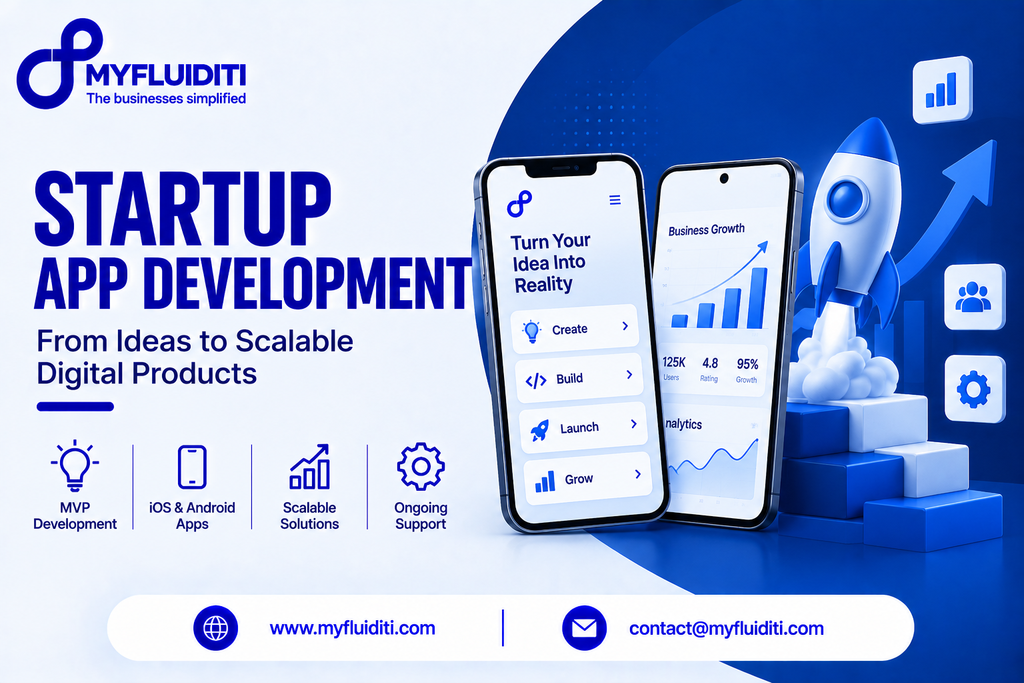
Introduction to Startup App Development Startups are built around ideas, innovation, and the ability to solve real customer problems through scalable products. In today’s digital-first business environment, a well-designed mobile application can become the foundation of a startup’s product, customer experience, revenue model, and long-term growth strategy. Startup App Development helps founders transform business concepts into functional, market-ready digital products that can be tested, launched, improved, and scaled according to customer demand. Building a successful startup application requires more than simply developing mobile screens. Startups need the right product strategy, technology architecture, user experience, backend infrastructure, security, analytics, integrations, and development methodology. MyFluiditi helps startups move from idea validation to MVP app development, product launch, and continuous improvement using modern mobile technologies and scalable engineering practices. MyFluiditi’s startup-focused approach emphasizes lean development, rapid validation, scalable architecture, and long-term product growth. What Is Startup App Development? Startup App Development is the process of designing, developing, testing, launching, and maintaining mobile applications specifically for startup businesses. It can include Android app development, iOS app development, cross-platform app development, backend development, API integration, cloud infrastructure, database development, analytics, security, and post-launch support. A custom startup mobile app can be created for almost any business model, including fintech, healthcare, eCommerce, education, social networking, logistics, food delivery, travel, fitness, SaaS, marketplaces, on-demand services, AI products, and business automation platforms. Why Startups Need Custom Mobile App Development Startups operate under unique constraints such as limited budgets, changing customer requirements, short launch timelines, and the need to prove product-market fit. Custom Mobile App Development for Startups allows founders to prioritize the features that matter most to their target customers while keeping the application architecture ready for future expansion. Instead of investing heavily in unnecessary functionality from the beginning, startups can build a focused product, collect customer feedback, analyze usage patterns, and continuously improve the application. This approach can reduce unnecessary development effort while allowing businesses to respond quickly to market requirements. MVP App Development for Startups A Startup MVP Development strategy allows founders to launch a Minimum Viable Product containing the essential features required to test a business idea with real users. An MVP is not simply an incomplete application. It is a focused product designed around the core problem the startup is trying to solve. MyFluiditi helps startups prioritize essential features, develop scalable foundations, launch the initial product, and use real-world feedback to guide future development. Our MVP development approach can include mobile app development, backend engineering, API development, cloud integration, analytics, testing, and continuous product enhancement. Startup Mobile App Development Services A complete Startup Mobile App Development Service can cover the entire product lifecycle, from product discovery and technical planning to development, testing, deployment, and maintenance. Depending on the business requirement, the application can include customer-facing mobile apps, administrative dashboards, backend systems, APIs, payment systems, notifications, analytics, and third-party integrations. MyFluiditi provides end-to-end development capabilities so founders can work with a technology partner across multiple stages of the product journey. Our team can help convert an initial concept into a working digital product while keeping scalability and future feature expansion in mind. Android App Development for Startups Android provides startups with an extensive mobile ecosystem and can be an important platform for reaching users across different markets and device categories. Android App Development for Startups can include custom applications, secure authentication, push notifications, location services, payment integration, cloud connectivity, offline functionality, and third-party API integration. MyFluiditi develops Android applications using suitable technologies and development practices based on the startup’s product requirements, target devices, expected user base, and scalability objectives. iOS App Development for Startups For startups targeting Apple users, iOS App Development can provide a premium mobile experience across iPhone and iPad devices. A startup iOS application can include secure authentication, subscription functionality, payments, notifications, location-based features, real-time communication, analytics, and cloud integration. Our development approach focuses on creating responsive and reliable applications while considering Apple’s platform requirements, application performance, security, and future maintenance. Cross-Platform App Development for Startups Startups often need to launch across multiple platforms while controlling development time and resources. Cross-Platform App Development can allow businesses to create applications for Android and iOS using shared development technologies. MyFluiditi works with technologies such as Flutter and React Native for suitable startup projects, helping businesses create consistent application experiences while maintaining a development architecture that can evolve as the product grows. MyFluiditi’s mobile engineering capabilities include React Native, Flutter, Swift, and Kotlin across startup-focused development projects. Startup Product Design and User Experience A technically strong application still needs an intuitive user experience. Startup App UI/UX Design focuses on creating simple navigation, clear user journeys, effective onboarding, accessible interfaces, and conversion-oriented experiences. For startups, every interaction can influence whether users continue using the product. MyFluiditi considers user journeys and product usability during application planning and development so that the final product is designed around real customer requirements rather than technology alone. Startup App Backend Development The backend is responsible for handling business logic, user accounts, application data, authentication, transactions, notifications, integrations, and communication between the mobile application and other systems. Startup Backend Development provides the foundation required to operate a scalable mobile product. MyFluiditi can develop backend systems using technologies such as Node.js, Python, Java, Spring Boot, .NET, and other suitable frameworks. The backend architecture is selected based on application requirements, expected traffic, data complexity, integrations, security needs, and future scalability. API Development and Integration for Startups Modern startup applications depend on APIs to communicate with payment gateways, maps, social platforms, CRM systems, analytics services, cloud platforms, AI services, and other external applications. Startup API Development provides the connectivity layer required for these integrations. MyFluiditi develops secure REST APIs and integration services that connect mobile applications with backend systems and third-party platforms. API-first architecture can also make it easier for startups to expand from mobile applications into web platforms, partner applications, and other digital channels. Cloud-Based Startup App Development Startups need infrastructure that can grow as their user base increases. Cloud-Based App Development for