Introduction
A professional website is an essential part of building a successful business in today’s digital marketplace. Businesses in New York operate in a competitive environment where customers expect fast-loading websites, simple navigation, responsive layouts, and convenient online experiences. A well-developed website helps businesses establish credibility, communicate their services, attract potential customers, and generate enquiries.
Website Development in New York involves more than creating attractive web pages. It requires a combination of strategic planning, user-focused design, modern technologies, search engine optimization, and reliable website performance. Whether you are launching a startup, expanding an existing company, or improving an outdated website, choosing the right development approach can support your long-term business goals.
MyFluiditi provides digital development solutions designed to help businesses create functional, responsive, and scalable websites. Explore our Website Development services to build a digital platform aligned with your business requirements.
Website Development Requirements in New York
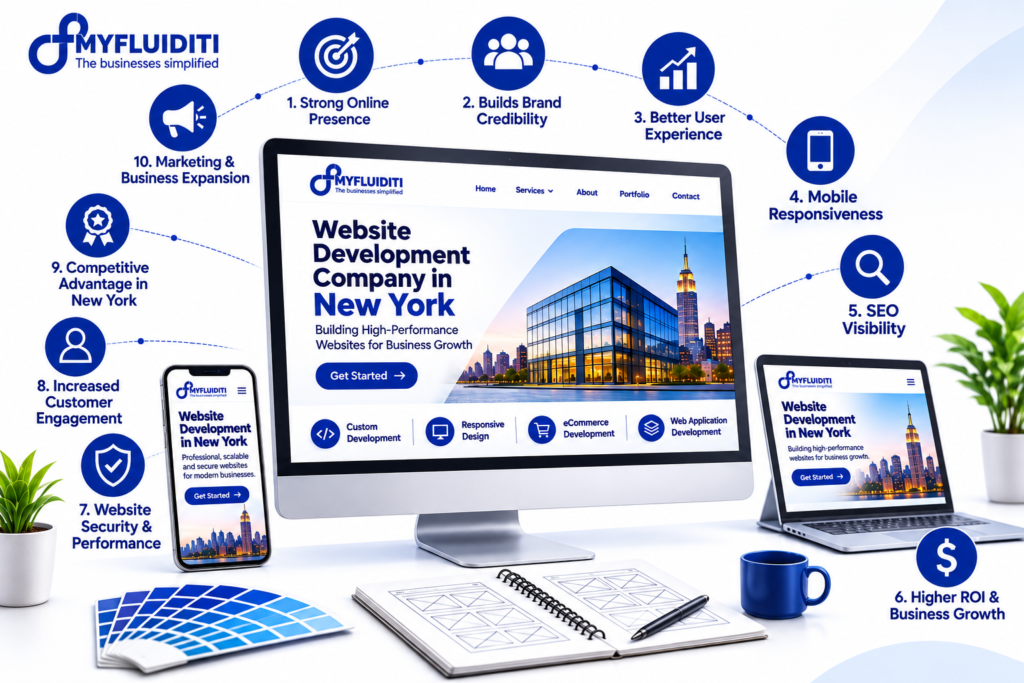
Building a Strong Digital Presence in a Competitive Market
New York businesses serve customers across different industries, including finance, healthcare, retail, real estate, education, hospitality, and technology. A professional website helps businesses communicate their value and reach customers who search online for relevant products and services.
A successful website should present business information clearly, explain service offerings, and provide straightforward ways for visitors to contact the company. Businesses can benefit from customized Web Designing solutions that combine visual consistency, accessible layouts, and user-friendly navigation.
Creating Customer-Focused Website Experiences
Website visitors expect a smooth experience across desktops, tablets, and smartphones. Complicated navigation, slow-loading pages, and unclear information can make users leave before contacting a business.
A customer-focused website uses organized content, readable typography, clear navigation, and responsive layouts. Professional HTML5 Development helps create structured web pages that support modern browsers and responsive website experiences.
Supporting Business Growth and Lead Generation
A business website should guide visitors toward meaningful actions, such as requesting a quotation, booking an appointment, purchasing a product, or submitting an enquiry. Contact forms, service pages, landing pages, and clear calls to action help businesses convert website visitors into potential customers.
Custom website functionality can also support business operations. With suitable CRM Development, businesses can organize customer information, manage enquiries, and improve communication with potential clients.
Custom Website Development Services
Customized Business Website Development
Every business has different objectives, customer expectations, and operational requirements. A standard website template may not provide the flexibility needed to represent a company’s services or workflows.
Custom website development focuses on creating features, layouts, and functionalities according to specific business needs. MyFluiditi’s Website Development solutions can support businesses looking for tailored digital platforms, professional service websites, and scalable online experiences.
Dynamic Website Development
Dynamic websites allow businesses to display and manage content through databases and server-side technologies. These websites are useful for companies that frequently update service information, publish articles, manage user accounts, or display changing business data.
Frameworks such as Laravel, CakePHP, CodeIgniter, and Yii support the development of structured web applications. Businesses can explore Laravel Development, CakePHP Development, CodeIgniter Development, and Yii Development for customized application requirements.
CMS Website Development
A content management system helps businesses update website content without editing every page manually. CMS platforms are useful for company websites, blogs, service pages, and content-driven websites.
Businesses can choose suitable platforms based on their content requirements, customization needs, and website complexity. MyFluiditi offers CMS Development solutions, including WordPress Development, Joomla Development, and Drupal Development.
Scalable Website Architecture
A website should be designed to support future business growth. As a company expands, it may require additional pages, integrations, customer features, and more advanced functionality.
Scalable development makes it easier to introduce new features without rebuilding the entire website. A structured Full Stack Development approach combines frontend and backend development to create complete web solutions that can evolve with changing business requirements.
Business Website Development
Corporate Website Development
Corporate websites help organizations communicate their services, company information, business capabilities, and professional identity. They often include service pages, company profiles, industry information, contact details, and enquiry forms.
A well-organized corporate website should provide consistent branding and clear information architecture. Custom design and development help businesses present their services professionally while creating a convenient experience for visitors.
Startup Website Development
Startups need websites that explain their products, services, business models, and value propositions. A professional website can help new businesses establish credibility and introduce their offerings to potential customers and investors.
Flexible development frameworks allow startups to launch essential features first and expand their websites as the business grows. A combination of responsive design, clear messaging, and scalable functionality creates a strong digital foundation.
Small Business Website Development
Small businesses need websites that communicate their services, location, operating information, and customer benefits. A simple and informative website can help customers discover the business and contact the team.
Customized website layouts, local search optimization, and clear calls to action can improve the online experience. Businesses can also use content management systems to update service details and publish new information efficiently.
Professional Service Website Development
Professional service providers, including consultants, agencies, legal firms, and technology companies, require websites that explain their expertise and encourage enquiries.
Service descriptions, team profiles, project information, testimonials, and contact forms help visitors understand what the business offers. Integrating suitable CRM Development features can also help manage enquiries and maintain customer information.
Responsive Website Design and Development
Mobile-Friendly Website Development
A large number of customers browse websites using smartphones. A mobile-friendly website adjusts its layout, images, navigation, and content to fit smaller screens.
Responsive website development helps visitors access business information without unnecessary zooming or horizontal scrolling. Mobile-friendly layouts also support better usability across different devices.
Cross-Browser Compatibility
Visitors may access websites through browsers such as Google Chrome, Safari, Firefox, and Microsoft Edge. A website should maintain consistent functionality and appearance across commonly used browsers.
Developers test layouts, forms, navigation, interactive elements, and page rendering to identify browser-specific issues. Modern HTML5 Development practices help create structured pages that work across supported browsing environments.
Responsive Layout and Navigation
Responsive layouts reorganize website elements based on screen size. Navigation menus, images, forms, buttons, and content sections should remain accessible on desktops, tablets, and smartphones.
A professional design approach considers how visitors interact with the website on different devices. Effective Web Designing combines visual presentation with practical navigation and accessibility.
Mobile Performance Optimization
Mobile performance depends on image size, scripts, server response, page structure, and other technical factors. Optimizing these elements can help reduce loading delays and improve the browsing experience.
Developers can improve performance through image compression, efficient code, browser caching, and suitable hosting configurations. Regular testing helps identify areas that need further optimization.
UI/UX Design and Development
User Interface Design
User interface design focuses on the visual elements of a website, including colors, typography, buttons, forms, icons, and page layouts. A consistent interface helps visitors understand how to interact with the website.
Professional design should reflect the business identity while keeping important information easy to find. Custom Graphics & Animation can also support visual communication through illustrations, motion elements, and relevant graphic assets.
User Experience Design
User experience design focuses on how visitors navigate and interact with a website. A well-planned user experience reduces confusion and helps users complete important actions.
Developers and designers consider visitor expectations, navigation patterns, page hierarchy, and accessibility when planning the website. The objective is to create an experience that is simple, consistent, and useful.
Wireframing and Prototyping
Wireframes provide a basic representation of website layouts before detailed development begins. They help organize page sections, navigation elements, content areas, and important calls to action.
Prototypes provide a more interactive preview of the planned website. Reviewing these layouts before development helps identify usability issues and align the final design with business requirements.
Conversion-Focused Website Design
Conversion-focused design encourages visitors to take specific actions. These actions may include submitting a contact form, requesting a quotation, scheduling a consultation, or making a purchase.
Clear messaging, relevant page content, visible contact information, and straightforward forms can improve conversion opportunities. Website design should connect the visitor’s needs with the business’s services.
E-Commerce Website Development
Custom Online Store Development
E-commerce websites allow businesses to display products, manage online orders, and sell directly to customers. A professional online store should provide organized product categories, detailed product information, search functionality, and a convenient purchasing experience.
Custom E-Commerce Development helps businesses build online stores according to their product types, business processes, and customer requirements.
Shopping Cart and Checkout Integration
The shopping cart allows customers to review selected products before completing a purchase. A well-designed checkout process should make it easy to update quantities, review order details, and provide delivery information.
Reducing unnecessary checkout steps can help create a smoother purchasing experience. Developers should also test the checkout process across different devices and browsers.
Payment Gateway Integration
Payment gateway integration allows customers to complete online transactions through supported payment methods. The selected payment solution should meet the business’s operational requirements and security expectations.
A reliable payment process should provide clear transaction information and appropriate payment status updates. Businesses should choose payment providers based on supported regions, transaction requirements, and integration compatibility.
Product and Inventory Management
Product management systems help businesses organize product descriptions, images, prices, categories, and stock information. Inventory management features can also support order processing and stock updates.
These functions are particularly useful for growing online stores with multiple product categories. A well-structured e-commerce platform helps businesses manage their online operations more efficiently.
E-Commerce Platform Development
Different e-commerce platforms provide different levels of customization, administration, and integration capabilities. Businesses should select a platform based on their product range, budget, scalability requirements, and technical preferences.
MyFluiditi provides Magento Development and Shopify Development services for businesses planning to build or improve their online stores.
Custom Web Application Development
Customer Portal Development
Customer portals provide users with access to account information, service updates, documents, requests, and other business-related information. These portals can improve communication between companies and their customers.
Custom portal development should consider user roles, authentication, data access, and security requirements. The features should be planned according to the organization’s services and customer workflows.
CRM Integration and Development
Customer relationship management systems help businesses manage customer details, sales activities, enquiries, and communication history. CRM integration connects website enquiries with business management processes.
A customized CRM Development solution can help organizations manage customer information and improve lead tracking. Integrating CRM tools with existing business systems can also reduce repetitive manual tasks.
Appointment Booking Applications
Appointment booking applications allow customers to select available dates, submit booking details, and receive confirmation. These applications are useful for healthcare providers, consultants, service businesses, and professional organizations.
A booking system may include availability management, appointment notifications, customer details, and administrative controls. The application should provide a straightforward experience on both desktop and mobile devices.
Dashboard and Business Management Applications
Business dashboards organize important information into a central interface. They may display sales activity, customer records, operational reports, inventory details, and performance indicators.
Custom dashboards can be developed according to the data and workflows used by an organization. Full application development helps businesses connect different operational functions through a unified digital platform.
Website Development Technologies
Frontend Development Technologies
Frontend development focuses on the parts of a website that visitors see and interact with. HTML, CSS, and JavaScript form the foundation of most modern website interfaces.
Frameworks and libraries such as AngularJS and ReactJS help developers create interactive user interfaces and reusable components. Businesses can explore AngularJS Development and ReactJS Development for suitable frontend application requirements.
Backend Development Technologies
Backend development manages the server-side functionality of a website or web application. It includes application logic, authentication, database communication, business rules, and API processing.
Technologies such as PHP and frameworks including Laravel, CakePHP, CodeIgniter, and Yii can support different backend requirements. NodeJS Development is another option for building server-side applications and API-driven solutions.
Database Management
Databases store information such as customer accounts, product records, service enquiries, orders, and website content. A suitable database structure helps applications retrieve and manage information efficiently.
Database selection depends on the application’s data relationships, performance requirements, security needs, and expected growth. Developers should also plan database backups and access controls.
API Integration
Application programming interfaces allow websites and applications to communicate with external platforms and services. APIs can connect websites with payment gateways, CRM systems, marketing platforms, shipping services, and other business applications.
A suitable integration strategy helps reduce manual work and improves information exchange between systems. Businesses with complex operational requirements may benefit from ERP & CRM Integration.
Cloud Hosting and Deployment
Website deployment involves preparing the application, configuring the hosting environment, connecting the domain, and making the website available to users. Hosting requirements depend on traffic, application complexity, storage, and security needs.
Cloud hosting can provide flexible infrastructure for businesses with changing resource requirements. Deployment planning should include backups, monitoring, performance testing, and security configuration.
SEO-Friendly Website Development
Technical SEO Structure
Technical SEO helps search engines access, crawl, and understand website content. Important elements include clean URL structures, XML sitemaps, robots.txt configuration, canonical tags, and appropriate internal linking.
A well-organized website structure helps search engines understand the relationship between pages. Developers should also ensure that important content is accessible and that unnecessary technical errors are addressed.
New York Local SEO Optimization
Businesses targeting New York customers should create website content that clearly communicates their services and target locations. Relevant location-based keywords can help connect website pages with local search intent.
For example, businesses may target terms such as Website Development Company in New York, Web Development Services New York, and Website Design Company NYC where those phrases accurately represent their offerings.
Local business information, relevant service pages, and consistent contact details can support local search visibility. Location-specific content should provide useful information rather than repeating city names unnaturally.
On-Page SEO Optimization
On-page SEO involves optimizing page titles, meta descriptions, headings, images, URLs, and website content. Each page should have a clear topic and provide information that matches the visitor’s search intent.
Relevant keywords should appear naturally in headings and paragraphs. Descriptive image alt text and meaningful internal links also help improve content organization and accessibility.
Core Web Vitals and User Experience
Website performance contributes to the overall visitor experience. Core Web Vitals evaluate important aspects of loading performance, interactivity, and visual stability.
Developers can improve performance by optimizing images, reducing unnecessary scripts, improving server response times, and using efficient page structures. Performance testing should be part of ongoing website optimization.
Content Management and SEO
A well-organized content management system makes it easier to publish and update website content. Businesses can use CMS platforms to manage service pages, blogs, landing pages, and other important information.
MyFluiditi’s CMS Development solutions can support content management requirements through suitable platforms and customized functionality.
Website Performance and Security
Website Speed Optimization
Website speed affects how quickly visitors can access information and interact with pages. Slow-loading websites can create a poor browsing experience, especially for mobile users.
Performance optimization may involve image compression, code minification, caching, content delivery networks, and database improvements. Regular monitoring helps identify performance issues as website content and traffic increase.
Website Security Implementation
Website security protects business information, customer data, and application functionality. Security measures may include SSL certificates, secure authentication, access controls, software updates, and regular vulnerability checks.
Developers should also validate user inputs and protect forms against common security threats. Security planning should be included throughout the development process rather than added only after launch.
Data Protection and Privacy
Websites that collect customer information should handle personal data responsibly. Businesses should consider appropriate privacy policies, consent mechanisms, data storage practices, and access restrictions.
The website’s data protection approach should reflect applicable legal and industry requirements. Secure integrations and controlled database access can help protect sensitive business information.
Website Maintenance and Support
Website maintenance helps keep pages, applications, and integrations working properly after launch. Regular updates, backups, performance checks, and security reviews help reduce technical issues.
Businesses should also review website content and functionality as their services change. Ongoing maintenance supports website reliability and long-term usability.
Website Development for Different Industries
Healthcare Website Development
Healthcare websites help clinics, hospitals, and medical service providers communicate their services, departments, appointment options, and contact information. They should present information clearly and provide accessible navigation for different users.
Healthcare websites may also require appointment booking, patient enquiry forms, and secure integrations. Development should consider privacy, accessibility, and relevant healthcare regulations.
Finance and Banking Website Development
Financial organizations require websites that communicate services, products, and business information accurately. Clear navigation and secure digital experiences are important for visitors accessing financial information.
Depending on the requirements, websites may include customer portals, enquiry forms, calculators, and secure account-related integrations. Security and data protection should remain central to the development approach.
Real Estate Website Development
Real estate websites help agencies and property businesses display listings, property details, images, locations, and enquiry options. Search filters and organized property categories make it easier for visitors to find relevant information.
Custom integrations can support property management, lead collection, and customer communication. Responsive design is especially important for visitors browsing property listings on mobile devices.
Education Website Development
Educational institutions need websites to present courses, admission information, faculty details, schedules, and campus information. A well-structured website helps students and parents find relevant details quickly.
More advanced platforms may include student portals, online applications, learning management integrations, and payment functionality.
Retail and Hospitality Website Development
Retail and hospitality businesses use websites to showcase products, services, menus, locations, and booking options. E-commerce functionality can support online sales, while reservation systems can help customers make bookings.
Businesses can use Shopify Development or Magento Development when their online retail requirements match the capabilities of these platforms.
Technology and SaaS Website Development
Technology and SaaS companies need websites that explain their products, features, pricing, integrations, and business benefits. Product pages, demo request forms, customer portals, and knowledge resources can support the customer journey.
Custom web applications and modern frontend frameworks can help create interactive digital experiences. Full Stack Development can support projects that require connected frontend and backend functionality.
Website Development Process
Requirement Analysis and Planning
The development process begins by understanding business objectives, target audiences, required features, and technical expectations. This stage helps define the website’s scope and identify the functionality needed for launch.
A clear project plan also establishes priorities for content, design, integrations, and testing.
Website Design and Wireframing
The design stage organizes the website’s page structure, navigation, content sections, and visual elements. Wireframes help define the layout before detailed interface design begins.
The design should reflect the business identity while keeping the user experience simple and consistent.
Frontend and Backend Development
Frontend development creates the visible interface, while backend development manages application logic, databases, and server-side functionality.
Depending on the project, developers may use ReactJS Development, AngularJS Development, NodeJS Development, or suitable PHP frameworks.
Testing and Quality Assurance
Testing checks whether the website works as expected across supported browsers and devices. Developers review navigation, forms, links, page layouts, loading performance, integrations, and security-related functionality.
Identifying issues before launch helps create a more reliable website experience.
Website Deployment and Launch
Deployment prepares the completed website for public access. This includes hosting configuration, domain connection, SSL setup, database configuration, and final checks.
After launch, the website should be monitored to confirm that pages, forms, and integrations operate correctly.
Ongoing Maintenance and Optimization
Website development continues beyond the initial launch. Businesses may need new features, updated content, technical improvements, and additional integrations as their requirements change.
Ongoing maintenance helps keep the website aligned with business goals and evolving customer expectations.
Choosing a Website Development Company in New York
Technical Expertise and Development Capabilities
A website development company should understand the technologies and platforms required for the project. Businesses should review its experience with frontend development, backend frameworks, CMS platforms, e-commerce systems, and third-party integrations.
The right technical approach depends on the website’s complexity, performance expectations, and future development plans.
Portfolio and Previous Projects
Reviewing a development company’s portfolio helps businesses understand its design quality, technical capabilities, and experience across different industries.
Look for examples that demonstrate responsive layouts, useful functionality, clear navigation, and business-focused website experiences.
Client Reviews and Company Reputation
Client reviews can provide useful information about project communication, delivery processes, technical support, and overall client experience. Platforms such as Clutch – Web Developers in New York can help businesses explore development companies and compare publicly available client feedback.
You can also review companies such as Sparx IT Solutions and BootesNull to understand different website development service offerings in the market.
Project Communication and Transparency
Clear communication helps keep website projects organized. Businesses should understand the project scope, development stages, expected deliverables, timelines, and responsibilities before work begins.
Regular updates and review opportunities help ensure that the website remains aligned with the agreed requirements.
Scalability and Long-Term Support
A website should support future changes in business requirements. Before choosing a development partner, consider its ability to provide additional functionality, integrations, maintenance, and technical improvements.
Long-term support can help businesses maintain website performance and adapt their digital platforms as they grow.
Why Choose MyFluiditi for Website Development?
Customized Digital Solutions
Every business has different digital requirements. MyFluiditi focuses on website solutions that consider business objectives, user expectations, and required functionality.
From business websites to customized web applications, the development approach should reflect the needs of the project rather than relying on a one-size-fits-all structure. Explore the Website Development service to learn more.
Modern Development Technologies
Choosing suitable technologies helps create websites that are functional, maintainable, and scalable. Depending on project requirements, development may involve PHP frameworks, JavaScript technologies, CMS platforms, and e-commerce systems.
MyFluiditi offers technology-focused services such as Laravel Development, CodeIgniter Development, CakePHP Development, and NodeJS Development.
Responsive Website Experiences
A professional website should provide a consistent experience across desktop, tablet, and mobile devices. Responsive layouts, accessible navigation, and optimized page elements help visitors interact with business information more easily.
Business-Focused Development
Website functionality should support practical business objectives, including customer enquiries, online sales, service bookings, and internal workflows. Integrations such as ERP & CRM Integration can connect website functionality with business operations where required.
Flexible CMS and E-Commerce Solutions
Businesses may need different platforms depending on their content and online sales requirements. MyFluiditi’s service options include WordPress Development, Drupal Development, Joomla Development, Magento Development, and Shopify Development.
Future Trends in Website Development
AI-Powered Website Experiences
Artificial intelligence is becoming increasingly useful in website development. AI-powered chatbots, personalized recommendations, automated customer support, and intelligent search features can help businesses improve online interactions.
Businesses should identify practical use cases before introducing AI features. The selected solutions should support customer needs while maintaining appropriate data protection and transparency.
Progressive Web Applications
Progressive Web Applications combine website accessibility with selected app-like capabilities. Depending on browser and device support, PWAs can provide features such as installability, offline access, and improved mobile experiences.
They can be useful for businesses that want to deliver convenient digital services without developing separate native applications for every platform.
Headless CMS Development
Headless CMS architecture separates content management from the frontend presentation layer. This allows businesses to manage content centrally and deliver it across websites, applications, and other digital platforms.
It can be suitable for organizations that need flexible content distribution and customized frontend experiences.
Voice Search and Conversational Interfaces
Voice search and conversational interfaces are changing how some users interact with digital platforms. Clear content, natural-language information, and well-structured website pages can help support these experiences.
Businesses should continue focusing on useful content and accessible navigation while adapting to changing search behaviour.
Advanced Website Security
As websites become more connected to payment systems, customer databases, and external services, security remains an important development consideration.
Regular software updates, secure authentication, access controls, monitoring, and data protection practices help reduce potential risks. Security should remain part of ongoing website maintenance.
Ready to Develop Your Website with MyFluiditi?
Build a professional digital presence with website solutions designed around your business needs. Whether you require a business website, custom web application, responsive design, CMS platform, or e-commerce store, MyFluiditi can help you explore suitable development options.
Explore our Website Development Services and connect with the team to discuss your next project.
Visit MyFluiditi: https://myfluiditi.com/
Contact Us: https://myfluiditi.com/contact
Email: contact@myfluiditi.com