AI-Powered Fleet Management: Building Intelligent, Efficient, and Scalable Fleet Management Solutions
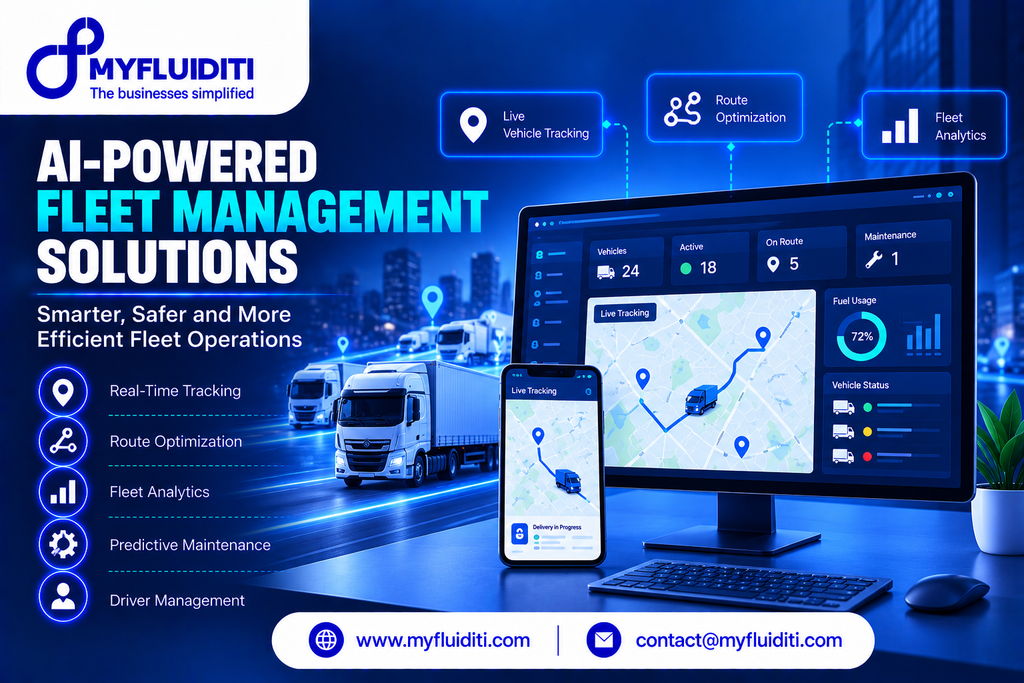
Introduction to AI-Powered Fleet Management In today’s rapidly evolving transportation and logistics industry, businesses need smarter ways to manage vehicles, drivers, routes, fuel consumption, and daily operations. Traditional fleet management methods often rely on manual tracking, disconnected systems, and reactive maintenance, making it difficult to control operating costs and maintain productivity. AI-Powered Fleet Management is transforming these operations by combining artificial intelligence, machine learning, GPS tracking, predictive analytics, and automation to create more intelligent and connected fleet operations. From logistics companies and transportation providers to delivery services, rental businesses, and enterprises with large vehicle networks, AI Fleet Management Solutions help organizations improve visibility, optimize resources, enhance driver safety, and make data-driven decisions. At MyFluiditi, we help businesses explore and develop intelligent software solutions that connect fleet operations with modern technologies, supporting better efficiency, scalability, and long-term digital growth. What Is AI-Powered Fleet Management? AI-Powered Fleet Management Software is a technology-driven system that uses artificial intelligence and real-time operational data to manage vehicles, monitor driver performance, optimize routes, predict maintenance requirements, and analyze fleet productivity. Unlike traditional fleet management systems that primarily record vehicle locations and trip details, AI-enabled platforms can analyze historical and live data to identify patterns, detect unusual activity, and support more informed operational decisions. By integrating GPS devices, vehicle sensors, telematics, cloud platforms, and intelligent analytics, businesses can manage their fleets through a centralized digital environment. Artificial Intelligence in Fleet Management can support route planning, fuel monitoring, driver behavior analysis, vehicle utilization, maintenance forecasting, and fleet performance reporting. These capabilities help businesses move from reactive fleet operations toward proactive, data-driven fleet management. Why Businesses Need AI Fleet Management Software Managing a fleet involves several interconnected responsibilities, including scheduling vehicles, assigning drivers, tracking deliveries, monitoring fuel expenses, maintaining vehicle health, and ensuring regulatory compliance. Without a connected system, these tasks can create delays, inconsistent records, unnecessary expenses, and limited operational visibility. AI Fleet Management Software Development helps businesses bring these processes together through automation, real-time monitoring, and intelligent recommendations. Fleet managers can identify underutilized vehicles, evaluate route efficiency, monitor unexpected fuel consumption, and respond to potential maintenance issues earlier. Businesses can also use fleet analytics to understand operational performance across locations and departments. By adopting Custom Fleet Management Software, organizations can build technology around their own workflows instead of depending entirely on generic tools that may not meet their operational requirements. Custom AI-Powered Fleet Management Software Development Every fleet business has different requirements based on vehicle types, service locations, delivery schedules, operational scale, and customer expectations. Custom AI-Powered Fleet Management Software Development enables businesses to create a platform tailored to their fleet operations and business goals. A custom solution can combine vehicle tracking, driver management, dispatch workflows, maintenance schedules, expense management, reporting, and AI-based decision support in one connected application. The platform can also support multiple branches, vehicle categories, user roles, and operational teams. At MyFluiditi, we focus on understanding business requirements before shaping a suitable software solution, helping organizations plan the necessary features, integrations, and architecture for their fleet management requirements. AI-Based Vehicle Tracking and Real-Time Fleet Monitoring Real-time visibility is a fundamental requirement for modern transportation operations. AI-Based Vehicle Tracking Software combines GPS data, vehicle telematics, and intelligent analytics to help fleet managers understand vehicle locations, movement patterns, trip progress, and operational status. A centralized fleet monitoring dashboard can display active vehicles, completed journeys, route deviations, unexpected stops, and other relevant information. When supported by appropriate data sources, intelligent systems can identify unusual movement patterns and generate alerts for review. Real-Time Fleet Monitoring Solutions can improve coordination between drivers, dispatch teams, managers, and customers while reducing dependence on repeated phone calls and manual status updates. By integrating tracking capabilities into a custom fleet platform, businesses can strengthen operational visibility and respond more effectively to changing conditions. AI-Powered Route Optimization and Intelligent Dispatch Route planning directly affects delivery schedules, fuel usage, driver productivity, and customer satisfaction. AI-Powered Route Optimization uses relevant information such as traffic conditions, delivery windows, vehicle capacity, road restrictions, and planned stops to help identify efficient routes. Depending on available integrations and data quality, route optimization systems can recommend alternative journeys when disruptions occur or priorities change. Intelligent dispatch capabilities can also help assign vehicles and drivers according to location, availability, workload, and delivery requirements. Fleet Route Optimization Software supports logistics providers, courier companies, transportation businesses, and last-mile delivery services in improving journey planning and managing multiple destinations more effectively. MyFluiditi can help businesses plan custom software integrations and intelligent workflows that connect routing, scheduling, and fleet operations within a unified platform. Predictive Maintenance and Vehicle Health Monitoring Unexpected vehicle breakdowns can lead to delayed deliveries, higher repair expenses, disrupted schedules, and reduced fleet availability. AI-Powered Predictive Maintenance uses historical maintenance records, mileage, operating conditions, sensor readings, and other available vehicle data to identify patterns that may indicate potential maintenance needs. Rather than depending only on fixed service intervals, businesses can use predictive insights alongside preventive maintenance schedules to plan inspections and repairs more effectively. Fleet Maintenance Management Software can organize service histories, maintenance reminders, repair records, component replacements, and vehicle availability. When integrated with compatible telematics or diagnostic systems, vehicle health monitoring can provide additional information for maintenance planning. These capabilities help businesses take a proactive approach to vehicle management while supporting longer-term asset performance. AI-Based Fuel Management and Cost Optimization Fuel is a significant operating expense for many transportation and logistics businesses. Poor route planning, excessive idling, inefficient driving patterns, and inconsistent fuel records can make it difficult to identify where money is being lost. AI-Powered Fuel Management Software can analyze fuel consumption, mileage, trip information, and available vehicle data to highlight unusual patterns and potential inefficiencies. Fleet managers can compare fuel performance across vehicles, drivers, routes, and operating periods to understand where improvements may be possible. Fleet Cost Optimization Solutions can also combine fuel records with maintenance expenses, tolls, repair costs, and other operational data to provide a clearer picture of fleet expenditure. With reliable data and appropriate integrations, intelligent
Car Wash: Building Scalable On-Demand Car Wash and Vehicle Care Solutions
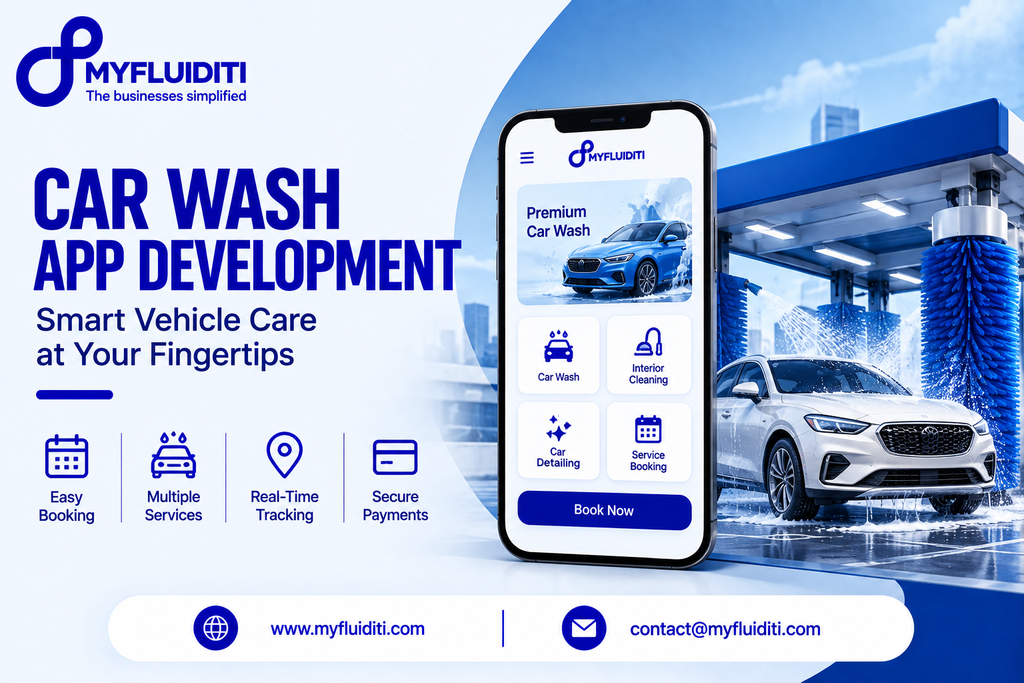
Introduction to Car Wash Solutions The car care industry is evolving as customers increasingly look for convenient, technology-enabled services that allow them to schedule vehicle cleaning and detailing without spending time waiting at traditional car wash locations. Digital platforms and mobile applications can connect customers with car wash providers, enable online bookings, support cashless payments, manage service schedules, and provide real-time updates throughout the service journey. This has created new opportunities for businesses to build on-demand car wash solutions that combine convenience, operational efficiency, and scalable technology. MyFluiditi helps businesses transform traditional car wash operations into connected digital platforms through custom software development, mobile application development, API integration, cloud technologies, and intelligent automation. Whether the requirement is an on-demand doorstep car wash platform, a car wash booking application, a multi-location car wash management system, or a complete vehicle detailing marketplace, our team can design and develop solutions around the business model and customer experience. What Is a Car Wash App? A car wash app is a mobile or web-based platform that enables customers to discover car wash services, select packages, choose a location and time, make payments, and track their service. For businesses, the platform can provide tools to manage customers, service providers, bookings, pricing, payments, operations, and performance analytics. An on-demand car wash app can support both scheduled and immediate service requests depending on the business model. Customers can book services from their homes, offices, parking areas, or other supported locations, while service providers can receive job information and update service status through a dedicated application or dashboard. This connected model can reduce manual coordination and create a more convenient vehicle care experience. Custom Car Wash App Development Every car wash business operates differently. Some businesses may focus on doorstep vehicle cleaning, while others operate fixed service centers, premium detailing studios, fleet washing operations, or multi-location car care businesses. A generic application may not adequately support all these workflows. MyFluiditi provides custom car wash app development services designed around the specific requirements of each business. Our team can develop customer applications, washer or service-provider applications, administrative dashboards, backend APIs, payment systems, booking workflows, location services, notifications, subscription functionality, and reporting capabilities as part of a complete digital car wash ecosystem. On-Demand Car Wash App Development An on-demand car wash model allows customers to request vehicle cleaning services according to their preferred location and schedule. This approach can be particularly useful for customers who want vehicle cleaning at home, at work, or in other convenient locations. With on-demand car wash app development, MyFluiditi can create a platform that connects customers with available washers or service providers. The system can manage booking requests, service packages, customer locations, staff assignments, payments, notifications, service status, and other operational workflows through a centralized application architecture. Car Wash Booking System Development A digital booking system can simplify appointment scheduling and reduce dependence on phone calls, manual registers, and messaging applications. Customers can view available services, select preferred dates and time slots, provide vehicle information, and confirm appointments through the platform. MyFluiditi develops car wash booking systems that can be customized around service duration, location availability, staff capacity, vehicle type, pricing, and business rules. The booking system can also connect with notifications and payment processing so that customers receive confirmation and updates throughout the booking lifecycle. Mobile Car Wash App Development A mobile car wash application provides customers with convenient access to vehicle cleaning and detailing services from their smartphones. A mobile-first platform can make service discovery, booking, payments, communication, and tracking easier for customers while providing operational tools for service providers. MyFluiditi can develop mobile car wash applications for Android and iOS, using native or cross-platform technologies according to project requirements. The application experience can be designed around quick booking, easy service selection, location management, vehicle profiles, notifications, payments, reviews, and booking history. Customer App for Car Wash Services The customer application is the primary digital touchpoint between the car wash business and its users. A well-designed customer experience should make it simple for users to select a vehicle, choose a service package, select a location, schedule a service, complete payment, and monitor the booking. At MyFluiditi, we focus on creating user-friendly car wash mobile applications with streamlined booking journeys and responsive interfaces. Customer profiles can be connected with vehicle information, previous bookings, payment records, subscriptions, and service preferences to create a more personalized experience. Vehicle Profile and Car Management Customers may own multiple vehicles or require different services depending on vehicle size, type, and condition. A vehicle profile system allows users to save important vehicle information and select the appropriate vehicle during booking. MyFluiditi can develop vehicle management functionality that allows users to add cars, maintain vehicle details, select vehicle categories, and associate bookings with individual vehicles. This can help businesses apply appropriate service packages and pricing while giving customers a simpler repeat-booking experience. Car Wash Service Packages Different customers may require different levels of vehicle cleaning. A platform can support basic exterior washing, interior cleaning, premium detailing, waxing, polishing, deep cleaning, and other vehicle care services according to the business model. Our car wash service package development approach allows businesses to configure service categories, pricing, descriptions, estimated durations, vehicle-specific pricing, and optional add-ons. MyFluiditi can structure the application so administrators can update packages without requiring major changes to the application. Car Wash Scheduling and Appointment Management Scheduling is an important component of car wash operations. Businesses need to coordinate customer requests with staff availability, service locations, working hours, and service duration. MyFluiditi develops car wash scheduling software that can help businesses manage appointments and service capacity through centralized workflows. Customers can select available time slots while administrators and service providers can view upcoming bookings and manage service assignments. Doorstep Car Wash Solutions Doorstep car wash services provide vehicle cleaning at the customer’s preferred location instead of requiring the customer to visit a physical facility. This model requires location management, service provider coordination, route planning, booking management, and real-time communication. With doorstep car
Force.com Development: Build Scalable and Customized Salesforce Applications
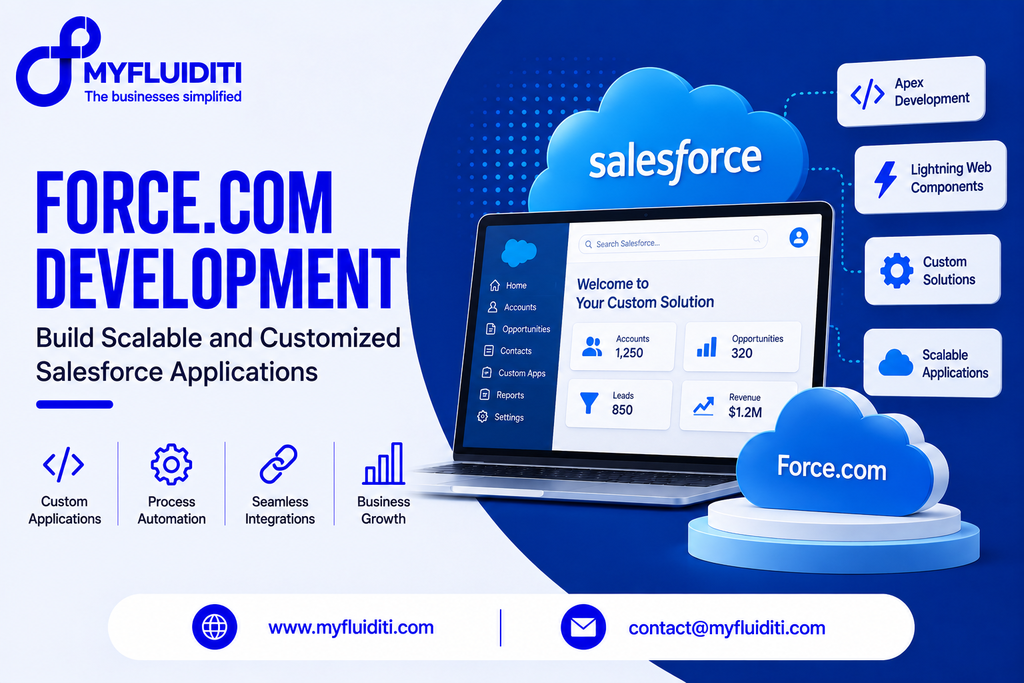
Introduction to Force.com Development Businesses today need more than standard CRM functionality to manage complex workflows, customer relationships, business operations, and enterprise data. Force.com Development provides a powerful way to extend the Salesforce ecosystem and create customized cloud applications that match specific business requirements. Salesforce Platform supports custom data models, application development, automation, integrations, and user experiences, making it suitable for organizations looking to modernize their business applications. With the right Salesforce development approach, companies can transform their existing Salesforce environment into a scalable application platform that supports unique processes and evolving business needs. MyFluiditi helps businesses leverage Force.com and Salesforce development capabilities to create customized solutions that improve productivity, streamline operations, and connect critical business systems. What Is Force.com Development? Force.com Development refers to building and extending cloud-based applications on the Salesforce Platform using its development technologies, data model, APIs, automation capabilities, and user-interface frameworks. It enables organizations to create applications that work closely with Salesforce data while supporting customized business logic, workflows, integrations, and user experiences. Salesforce application development can combine low-code capabilities with programmatic technologies such as Apex, Visualforce, Lightning Web Components, and Salesforce APIs. Apex enables developers to implement custom business logic, automation, integrations, and transaction processing directly on the Salesforce Platform. This flexibility makes Force.com Development valuable for businesses that need functionality beyond standard Salesforce configurations. Why Businesses Need Custom Salesforce Application Development Every organization has different processes, departments, customers, data requirements, and operational workflows. Standard Salesforce functionality may not always address specialized business requirements, particularly when organizations need custom applications, complex automation, external system integrations, or specialized interfaces. Custom Salesforce application development allows businesses to extend their CRM environment according to their operational requirements instead of forcing teams to adapt their processes to generic software. A customized Salesforce solution can help organizations centralize information, automate repetitive processes, improve collaboration, and provide employees with applications designed around their daily workflows. MyFluiditi works with businesses to understand their requirements and design Salesforce solutions that align technology with business objectives. Customized Force.com Application Development Customized application development is one of the key advantages of the Salesforce Platform. Businesses can develop applications around their specific data structures, workflows, user roles, and operational processes. Salesforce supports both declarative and programmatic development, allowing applications to combine configurable features with custom development where required. MyFluiditi focuses on building custom Force.com applications that are designed around business requirements, whether the organization needs a new enterprise application, an extension of an existing Salesforce environment, or a specialized business workflow. Our development approach emphasizes scalability, usability, integration, maintainability, and long-term business value. Apex Development for Business Logic Complex Salesforce applications often require customized business logic that cannot be achieved through configuration alone. Apex development enables developers to create object-oriented business logic that operates directly on the Salesforce Platform. Apex can support triggers, custom classes, transaction processing, data validation, automation, web services, and integrations with external applications. MyFluiditi uses Apex development where custom logic is required to create reliable and efficient Salesforce applications. By implementing business rules within the Salesforce environment, organizations can automate important processes while maintaining consistency across customer and enterprise data. Lightning Web Components and Modern Salesforce Interfaces Modern Salesforce application development increasingly uses Lightning Web Components (LWC) to create responsive and reusable user interfaces. Salesforce identifies Lightning Web Components as the preferred approach for modern UI development, while Visualforce remains available for existing and specialized use cases. MyFluiditi can help businesses modernize Salesforce interfaces by developing customized Lightning experiences that provide intuitive navigation, responsive layouts, reusable components, and improved user interaction. Combining Salesforce Lightning technologies with business-focused application design can help organizations create interfaces that are easier for employees and customers to use. Visualforce Development and Custom Salesforce Interfaces Visualforce is a Salesforce framework for creating customized interfaces and pages that run on the Lightning Platform. It provides developers with the ability to build custom pages, components, and user experiences using Visualforce markup, HTML, CSS, JavaScript, and Apex-based controllers. Although Salesforce recommends Lightning Web Components for new modern development, Visualforce can remain valuable when organizations need to maintain, extend, or integrate existing Visualforce applications. MyFluiditi supports Visualforce development and modernization, helping businesses maintain existing Salesforce functionality while gradually moving toward modern Lightning-based experiences when appropriate. Salesforce API and Third-Party Integration Enterprise businesses rarely operate with Salesforce as an isolated system. They often depend on ERP platforms, payment systems, websites, mobile applications, marketing platforms, analytics tools, databases, and other enterprise applications. Salesforce integration services can connect these systems and enable information to move between platforms. Salesforce provides APIs and integration capabilities that allow external systems to communicate with Salesforce data and applications. MyFluiditi helps businesses design and develop Salesforce integrations that connect critical systems, reduce manual data entry, improve data consistency, and create more connected business workflows. Salesforce Automation and Workflow Development Automation plays an important role in improving business productivity and reducing repetitive manual activities. Salesforce provides automation capabilities through Flow, workflow-related technologies, formulas, validation rules, Apex, and other platform features. MyFluiditi helps organizations identify processes that can be automated and develop Salesforce solutions that support activities such as record updates, approvals, notifications, data validation, task creation, and business-rule execution. Effective Salesforce workflow automation can help employees spend less time on repetitive administrative tasks and more time on customer engagement and strategic activities. Force.com Custom Application Integration Businesses may already have multiple applications supporting sales, finance, customer service, operations, marketing, and other departments. A customized Force.com solution can serve as an important part of a connected enterprise technology environment. Salesforce Platform is designed to work with external systems through APIs, integration standards, and platform capabilities. MyFluiditi develops integration-focused Salesforce solutions that help businesses connect their CRM environment with existing enterprise applications. This approach can improve visibility across departments while creating a more unified flow of business information. Scalable Salesforce Application Development Scalability is essential when developing enterprise applications because business requirements can change as organizations grow. A Salesforce application should be designed to support increasing users, data, integrations, workflows, and
SEO Services for Sustainable Online Visibility and Business Growth
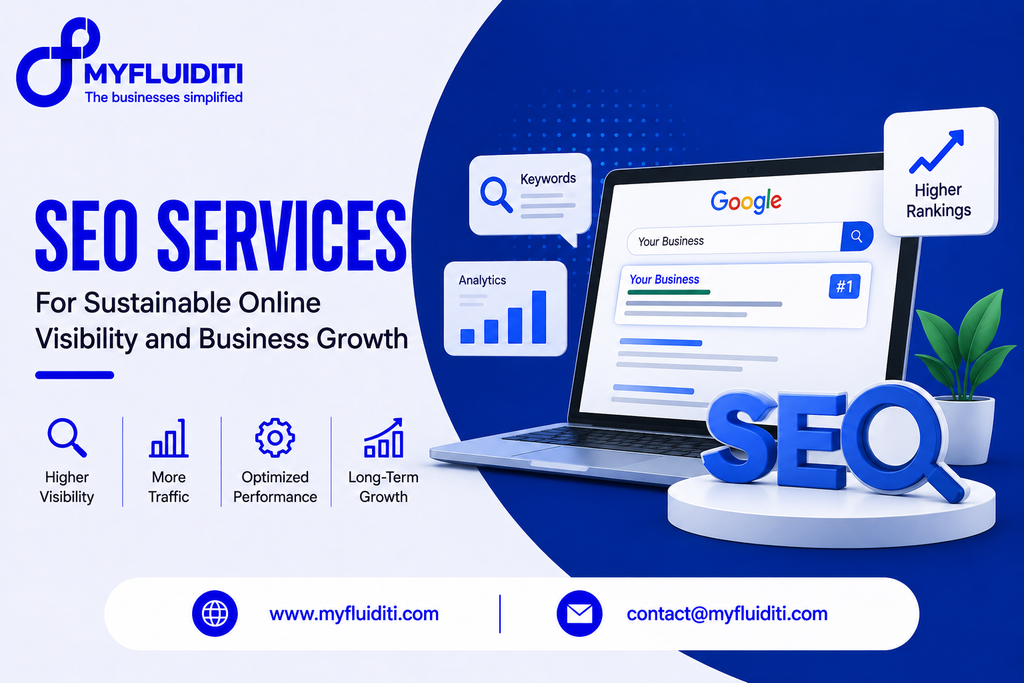
Introduction to SEO Services In a highly competitive digital environment, having a website is only the beginning of building an online presence. Businesses need to appear in relevant search results when potential customers are actively looking for products, services, and solutions. SEO services help businesses improve organic search visibility, attract relevant website traffic, strengthen online authority, and generate sustainable growth through search engines. Search engine optimization combines technical improvements, content optimization, keyword targeting, website structure, user experience, and authority-building strategies to improve how a website is discovered and understood. MyFluiditi helps businesses build search-focused digital strategies that connect their websites with the right audiences and support long-term online growth. Modern SEO for Digital Business Growth Search engine optimization has evolved beyond simply placing keywords throughout website content. Modern SEO involves understanding search intent, improving website performance, creating valuable content, optimizing technical infrastructure, building topical authority, and delivering a strong experience across devices. MyFluiditi approaches search engine optimization services as an ongoing growth strategy that connects technical SEO, content marketing, website optimization, and performance analysis to measurable business goals. Technical SEO Services A strong SEO strategy begins with a technically accessible website. Technical SEO services focus on areas such as website architecture, crawlability, indexing, internal linking, canonicalization, structured data, page performance, mobile usability, and other technical factors that influence how search engines discover and understand website content. MyFluiditi evaluates technical website health and identifies areas that can be improved so search engines can efficiently access important pages while users receive a smoother browsing experience. On-Page SEO Services On-page optimization ensures that individual website pages clearly communicate their purpose and relevance to search engines and users. On-page SEO services include optimizing page titles, headings, content structure, keyword usage, internal links, image attributes, metadata, and other page-level elements. MyFluiditi creates optimization strategies that balance search visibility with natural, useful content, helping businesses target relevant search terms without relying on excessive keyword repetition. Keyword Research and Search Intent Effective SEO begins with understanding what potential customers are searching for and why they are searching for it. SEO keyword research identifies relevant primary keywords, secondary keywords, long-tail searches, industry terms, and commercial search opportunities. MyFluiditi analyzes keyword relevance and search intent to develop content and landing-page strategies that target users at different stages of the buying journey. This helps businesses attract traffic that is more closely aligned with their products, services, and conversion objectives. Local SEO Services For businesses serving specific cities, regions, or local markets, visibility in geographically relevant searches can be especially valuable. Local SEO services focus on improving a business’s presence for location-based searches through relevant website optimization, local content, business information, location signals, and other local search strategies. MyFluiditi helps businesses strengthen their local digital presence and improve their ability to connect with customers searching for services within their target geographic markets. Content SEO and Content Marketing High-quality content plays an important role in building organic search visibility. SEO content marketing combines keyword research, search intent, topic development, content optimization, and ongoing refinement to create useful pages that can attract organic traffic. MyFluiditi develops content strategies around service pages, blogs, industry topics, informational searches, and commercial keywords, helping businesses establish topical relevance while providing useful information to their target audiences. SEO for Service-Based Businesses Service businesses need visibility for searches related to their expertise, offerings, locations, and customer needs. A well-optimized service website can help potential customers discover a company at the moment they are researching or evaluating a solution. MyFluiditi develops service-based SEO strategies that improve landing pages, strengthen content relevance, target valuable keywords, and build stronger relationships between search intent and business offerings. E-Commerce SEO Services E-commerce websites compete across large numbers of product, category, and transactional searches. E-commerce SEO services focus on improving product pages, category pages, website architecture, internal linking, metadata, content, and overall search accessibility. MyFluiditi helps online businesses develop search-friendly e-commerce structures that support product discovery, organic traffic growth, and better opportunities for converting search visitors into customers. Enterprise SEO Services Large websites often contain hundreds or thousands of pages, multiple categories, complex architectures, and several business units. Enterprise SEO services address the scalability challenges associated with large digital platforms. MyFluiditi develops enterprise-focused strategies covering technical SEO, content architecture, internal linking, keyword targeting, website migrations, international or multi-location visibility, and ongoing performance monitoring to support large-scale organic growth. Mobile SEO and User Experience Mobile devices represent a major part of modern web usage, making mobile-friendly experiences essential for businesses competing in search. Mobile SEO focuses on responsive design, usability, page speed, navigation, content presentation, and technical performance across mobile devices. MyFluiditi works with businesses to ensure their websites deliver consistent experiences across smartphones, tablets, and desktops while maintaining strong technical foundations for search visibility. SEO-Friendly Website Architecture Website structure influences both user navigation and search engine discovery. A well-planned SEO-friendly website architecture creates logical relationships between pages, improves internal linking, distributes authority effectively, and makes important content easier to discover. MyFluiditi considers website hierarchy, navigation, URL structures, category organization, internal links, and content relationships when developing SEO strategies for websites and web applications. Internal Linking and Website Structure Internal links help users navigate related information while helping search engines understand relationships between pages. Internal linking strategy can strengthen important service pages, connect supporting content, and improve the overall flow of authority throughout a website. MyFluiditi develops contextual internal linking structures that connect relevant pages naturally and help businesses build stronger topical relationships across their websites. Link Building and Off-Page SEO A website’s authority is influenced by signals beyond its own pages. Off-page SEO and link building focus on building relevant online authority through credible backlinks, digital mentions, partnerships, content outreach, and other legitimate authority-building strategies. MyFluiditi approaches link acquisition with relevance and quality in mind, helping businesses develop stronger off-page signals while maintaining a sustainable search strategy. SEO Audits and Website Performance Analysis An SEO campaign should begin with an understanding of the website’s existing performance. SEO audit services evaluate technical health, content quality,
Salesforce Lightning Development for Connected Enterprise Growth
Introduction to Salesforce Lightning Development Businesses today need CRM platforms that are flexible, connected, scalable, and capable of supporting rapidly changing customer and operational requirements. Salesforce Lightning has become a powerful platform for creating modern customer relationship management experiences, custom applications, intelligent workflows, and connected enterprise solutions. Salesforce Lightning Development enables organizations to extend Salesforce beyond standard configurations and create tailored digital experiences that align with specific business processes. MyFluiditi helps businesses transform their Salesforce environment through custom Lightning development, application modernization, integration, automation, and scalable enterprise solutions designed around business goals. Modern Salesforce Lightning Solutions for Enterprises Salesforce Lightning provides organizations with a modern platform for developing interactive and responsive business experiences. It supports custom user interfaces, Salesforce applications, mobile experiences, and digital experiences through technologies such as Lightning Web Components and Lightning base components. Salesforce recommends Lightning Web Components for new development, making it an important technology for modern Salesforce customization. Custom Salesforce Lightning Development Every organization has unique workflows, customer journeys, data structures, and operational requirements. Standard Salesforce functionality may not always cover specialized business needs. Custom Salesforce Lightning development allows businesses to extend the platform with tailored interfaces, components, workflows, features, and applications. MyFluiditi works with organizations to understand their business processes and develop Lightning solutions that fit naturally into their Salesforce environment while maintaining scalability and usability. Lightning Web Components Development Lightning Web Components, commonly known as LWC, are a modern programming model based on web standards and are used to create custom interfaces and applications on the Salesforce Platform. LWC components use HTML and JavaScript and can be used across Lightning Experience, the Salesforce mobile app, and Experience Builder sites. MyFluiditi uses Lightning Web Components development to create responsive and reusable Salesforce interfaces that improve application usability and business productivity. Custom components can be designed around specific business functions, allowing organizations to provide employees with focused experiences instead of relying only on standard screens. Salesforce Lightning UI and UX Development User experience has a direct impact on productivity, adoption, and customer engagement. Salesforce Lightning development enables organizations to create modern interfaces using Lightning base components and the Salesforce Lightning Design System. Salesforce notes that its base components are designed to support consistent experiences, accessibility, and efficient UI development. MyFluiditi focuses on creating intuitive Salesforce Lightning UI/UX solutions that make complex workflows easier to navigate. From dashboards and record pages to custom components and application interfaces, we structure experiences around the needs of the actual users. Salesforce Lightning Application Development Organizations often need custom applications within Salesforce to manage specialized processes, departments, or customer interactions. Salesforce Lightning application development enables businesses to create purpose-built applications that work within the broader Salesforce ecosystem. MyFluiditi develops custom Lightning applications that can connect business data, workflows, users, and integrations into a unified environment. Salesforce Lightning Customization Salesforce offers extensive configuration capabilities, but organizations with advanced requirements may need deeper customization. Salesforce Lightning customization can include custom components, application pages, dashboards, actions, layouts, workflows, and user experiences. MyFluiditi combines configuration and development approaches to deliver solutions that are practical, maintainable, and aligned with business operations. Salesforce Lightning Migration and Modernization Organizations using older Salesforce interfaces or legacy technologies may need to modernize their applications to deliver better user experiences and maintain compatibility with current development practices. Salesforce provides paths for migrating Visualforce and Aura-based experiences toward Lightning technologies, with Lightning Web Components recommended for new development. MyFluiditi helps organizations approach Salesforce Lightning migration as a structured modernization initiative. We assess existing components, business logic, integrations, and workflows before developing a suitable migration strategy that reduces disruption and improves the long-term maintainability of the Salesforce environment. Salesforce Aura to Lightning Web Components Migration Many established Salesforce environments contain Aura components that continue to support existing functionality. At the same time, LWC is the preferred approach for new Lightning development. Salesforce states that LWC and Aura components can coexist and interoperate, which provides flexibility during modernization projects. MyFluiditi can support Aura to LWC migration by assessing existing components, identifying modernization priorities, rebuilding suitable functionality with Lightning Web Components, and validating the updated experience. This approach can help organizations modernize gradually without requiring unnecessary disruption to business operations. Salesforce Visualforce to Lightning Migration Legacy Visualforce applications may continue to support important business processes, but businesses often require more interactive and modern experiences. Salesforce Lightning provides a component-based approach for creating responsive applications and experiences. MyFluiditi helps businesses modernize Visualforce to Lightning applications by analyzing current implementations and developing appropriate Lightning alternatives. Our approach considers business functionality, user experience, integrations, and future scalability rather than simply replacing the visual layer. Salesforce Apex and Lightning Development Lightning applications often require custom backend logic to support advanced business requirements. Salesforce Lightning Web Components can work with Apex methods through wired or imperative calls, allowing custom components to interact with Salesforce data and business logic. MyFluiditi combines Apex development with Lightning components to create solutions that connect frontend experiences with custom Salesforce logic. This allows businesses to support specialized calculations, data processing, validations, automation, and other application requirements within their Salesforce environment. Salesforce API Integration Enterprise organizations frequently depend on multiple applications, platforms, databases, payment services, ERP systems, communication tools, and third-party applications. Salesforce API integration connects these systems so important information can move across the enterprise ecosystem. Lightning applications can work with Salesforce APIs and, where appropriate, third-party APIs through supported integration mechanisms. MyFluiditi develops integration solutions that connect Salesforce with existing business technology, helping organizations reduce disconnected processes and improve data accessibility across applications. Salesforce Lightning Workflow Automation Manual administrative activities can consume employee time and create inconsistent processes. Salesforce workflow automation helps organizations streamline repetitive activities, approvals, record updates, notifications, and business processes. MyFluiditi evaluates existing workflows and identifies opportunities for automation within Salesforce so teams can spend more time on high-value activities and less time managing repetitive operations. Salesforce Lightning CRM Customization Customer relationship management requirements differ across industries and business models. Salesforce CRM customization enables organizations to adapt Salesforce around