Introduction to Graphics and Animation
In today’s digital world, businesses need more than text and static images to attract customers and communicate their brand message effectively. Graphics and animation have become powerful tools for creating engaging digital experiences, improving brand recognition, and presenting complex ideas in a simple and memorable way. From website graphics and animated banners to motion graphics, interactive visuals, and digital illustrations, creative visual content helps businesses capture attention and communicate with their target audience.
As online competition continues to grow, businesses are investing in professional graphics and animation services to strengthen their digital presence and create more engaging websites, applications, marketing campaigns, and product presentations. High-quality visual design can help communicate a company’s identity, explain its services, highlight product features, and create a consistent brand experience across digital platforms.
MyFluiditi helps businesses bring their ideas to life through technology-driven digital solutions and creative visual experiences. By combining visual design principles with modern web development capabilities, businesses can build attractive, interactive, and user-friendly digital platforms that support their marketing and business objectives.
What Is Graphics and Animation?
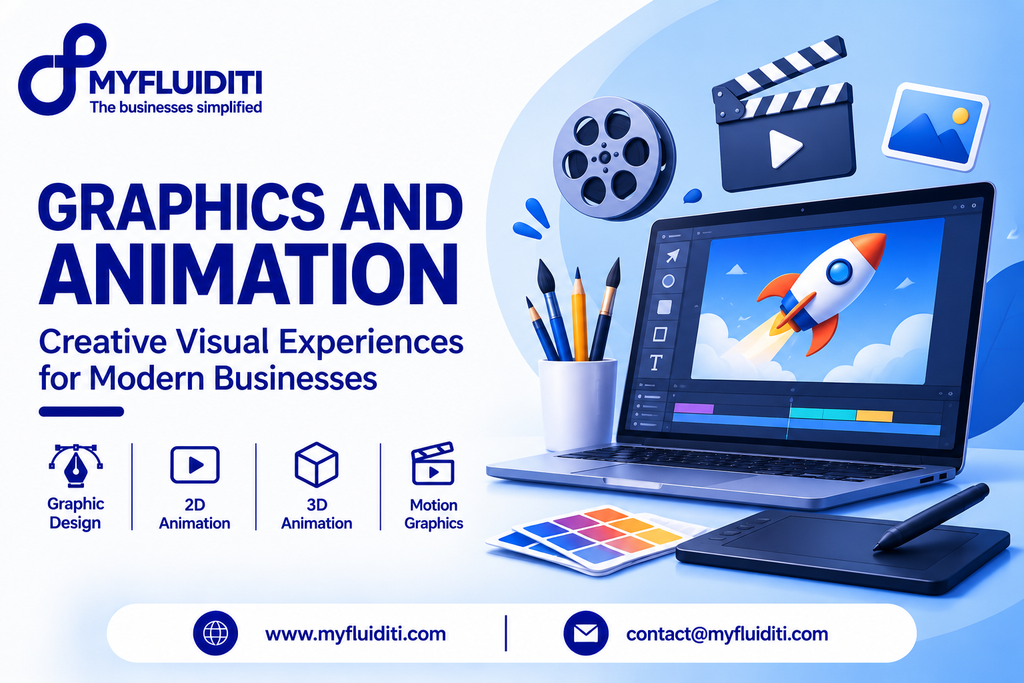
Graphics and animation involve creating visual elements, illustrations, moving images, and digital effects to communicate information, promote products, and improve user engagement. Graphics focus on visual communication through images, typography, icons, illustrations, layouts, and brand elements, while animation introduces movement, transitions, and storytelling to make visual content more dynamic.
Modern businesses use graphic design and animation services across websites, mobile applications, social media campaigns, product demonstrations, advertisements, presentations, e-learning platforms, and corporate communication. These visuals can help transform complicated information into content that audiences can understand quickly.
For example, a software company can use animated product demonstrations to explain how its application works, while an e-commerce business can use product graphics and animation to showcase product features. Similarly, a corporate website can use carefully designed icons, visual illustrations, and subtle animations to guide visitors through its services.
With the right creative strategy, graphics and animation become more than decorative elements. They become valuable business assets that improve communication, strengthen brand identity, and support digital growth.
Why Businesses Need Professional Graphics and Animation Services
Visual content plays an important role in how customers discover, understand, and remember a brand. A website with inconsistent graphics or unclear visual communication may struggle to maintain visitors’ attention. In contrast, well-planned visual content can make a website easier to understand, more attractive, and more professional.
Professional graphics and animation services help businesses create a consistent visual identity across their websites, applications, advertisements, and social media platforms. Consistent colours, typography, illustrations, icons, and animation styles help customers recognize a brand and develop familiarity with its products or services.
Animation can also simplify technical information. Businesses offering software, AI solutions, financial platforms, healthcare technology, or complex industrial products can use animated explainer visuals to demonstrate workflows and explain features without relying entirely on lengthy written descriptions.
Graphics and animation can support digital marketing campaigns by making advertisements, landing pages, promotional content, and product presentations more visually appealing. When these assets communicate a clear message and include a relevant call to action, they can also support customer engagement and conversion goals.
At MyFluiditi, visual experiences can be considered alongside broader website and application requirements, helping businesses create digital products where design, functionality, and communication work together.
Graphics and Animation Services for Modern Digital Platforms
Businesses require different types of visual content depending on their audience, industry, and marketing objectives. A successful graphics and animation strategy begins by identifying where the visuals will be used and what they should communicate.
Website Graphics and Visual Design
Website graphics help establish the visual identity of a digital platform. Custom illustrations, banners, icons, infographics, background elements, and visual highlights can make a website more engaging while helping visitors understand its content.
Website graphics design should balance appearance with usability. Images need to support the surrounding content, maintain visual consistency, and work effectively across desktop, tablet, and mobile screens. Oversized graphics or unnecessary visual effects can affect page performance, so design decisions should consider loading speed and responsiveness.
MyFluiditi’s website development capabilities can support businesses that need modern digital platforms with visually consistent interfaces. By aligning graphics with website structure and business goals, companies can create a professional online presence that communicates their services clearly.
2D Graphics and Animation
2D animation services use illustrations, shapes, characters, text, and movement to communicate messages in an engaging format. This approach is useful for explainer videos, educational content, product demonstrations, advertising campaigns, training materials, and social media promotions.
Businesses can use 2D animation to explain a product’s benefits, demonstrate a service workflow, introduce a new feature, or communicate a brand story. Since visual elements can be designed around a specific message, 2D animation offers flexibility for different industries and audiences.
Well-planned 2D animation combines storytelling, timing, visual hierarchy, and clear messaging. These elements help viewers follow the content without feeling overwhelmed by unnecessary movement or excessive information.
3D Graphics and Animation
3D graphics and animation use three-dimensional models, lighting, textures, camera movement, and rendering to present objects and environments with greater depth. Businesses can use 3D product animation to demonstrate product design, illustrate components, show product functionality, or create realistic visual presentations.
Industries such as manufacturing, real estate, architecture, retail, education, and technology can benefit from 3D visualisation when real-world products or environments are difficult to demonstrate through static images alone.
A 3D animation project may involve modelling, texturing, lighting, rigging, animation, rendering, and post-production. The level of detail depends on the project’s goals, available assets, delivery format, and performance requirements.
When 3D visuals are used on websites or applications, the experience should be optimised for the target device. Lightweight assets and carefully selected formats can help balance visual quality with performance.
Motion Graphics for Marketing and Branding
Motion graphics services combine typography, icons, illustrations, shapes, transitions, and visual effects to create moving content. Businesses use motion graphics for promotional videos, animated advertisements, logo reveals, digital presentations, campaign visuals, and social media content.
Motion graphics can make a marketing message easier to follow by presenting information in a structured sequence. For example, a technology company can use animated graphics to introduce a new software feature, demonstrate a process, or highlight key benefits within a short promotional video.
Consistent motion design can also strengthen brand recognition. When animation styles, colours, typography, and transitions follow a clear visual direction, the resulting content can feel connected across different marketing channels.
Animated Banners, Icons, and Website Interactions
Small animations can make a website feel more responsive when they provide useful feedback or direct attention to important information. Animated icons, hover effects, loading indicators, button transitions, and interface micro-interactions can improve the experience when implemented thoughtfully.
Website animation design should support usability rather than distract users. Movement should be purposeful, navigation should remain clear, and animations should not prevent visitors from accessing essential content. Developers should also consider accessibility preferences, including reduced-motion settings, to help create a more comfortable experience for different users.
MyFluiditi can support businesses in connecting website functionality with modern front-end development, allowing interactive elements to be considered as part of the overall digital experience.
Graphics and Animation for Different Industries
The value of graphics and animation extends across industries because every business needs to communicate information, present products, and explain its services.
In e-commerce, product graphics and animation can highlight product features, demonstrate usage, and support promotional campaigns. Animated product presentations can provide another way for customers to understand items before making purchasing decisions.
In healthcare and education, animated illustrations can help explain procedures, concepts, learning materials, and technical information. Clear visual storytelling can make educational content easier to follow, provided the information is accurate and appropriate for its audience.
In real estate and architecture, 3D visualisation can present building concepts, interior designs, layouts, and planned environments. In software and technology, animated explainer videos can demonstrate digital workflows, SaaS platforms, AI-powered features, and application functionality.
For startups, graphics and animation can help communicate an idea before a product is fully developed. For established enterprises, a consistent visual system can support product launches, internal training, marketing campaigns, and customer communication across multiple channels.
MyFluiditi’s wider software and digital development focus allows businesses to consider visual requirements as part of a broader website, application, or digital product project.
How MyFluiditi Approaches Graphics and Animation Projects
A successful graphics and animation project starts with understanding the purpose behind the visuals. At MyFluiditi, the project approach can be aligned with the client’s business goals, digital platform requirements, audience expectations, and intended use of the final assets.
The process begins with requirement analysis, where the project objectives, target audience, brand guidelines, preferred visual style, content requirements, delivery formats, and timelines are clarified. This helps establish whether the project requires website graphics, animated interface elements, promotional visuals, product illustrations, or a combination of visual assets and digital development.
The next stage involves creative planning and visual direction. This may include defining colours, typography, visual hierarchy, illustration style, animation references, and content flow. For animation-led projects, storyboards or scene plans can help organise the message before production begins.
During design and development, the visual elements are created according to the agreed requirements. Where graphics are part of a website or application, they can be integrated with the interface and tested across relevant devices and screen sizes. Animation timing, transitions, file sizes, and responsiveness are reviewed to ensure the visual experience remains useful and accessible.
Quality assurance is an important part of the process. Graphics need to remain clear, consistent, and correctly displayed, while animated elements should work as intended without unnecessarily affecting page speed or usability. Feedback and revisions help refine the final result before delivery or deployment.
By connecting creative requirements with digital implementation, MyFluiditi can help businesses plan visual content that supports a wider digital product or online presence.
How MyFluiditi Helps Businesses With Graphics and Animation
MyFluiditi helps businesses develop digital solutions that align with their operational requirements and growth objectives. When graphics and animation are part of a website, web application, or mobile application project, visual planning can contribute to a more consistent and engaging user experience.
Businesses can benefit from integrating custom graphics, interactive web elements, and animation-ready interfaces into their digital platforms. Rather than treating visual design and software development as completely separate activities, a coordinated approach can help ensure that the visual assets support the product’s functionality, brand identity, and intended audience.
For startups, this can mean presenting an idea through a more polished website or product demonstration. For established companies, it can involve improving existing digital interfaces, refreshing visual content, or introducing new interactive elements that support customer engagement.
MyFluiditi can also help align graphics with broader digital requirements such as responsive website development, application functionality, API integration, and scalable software architecture where these capabilities are relevant to the project. This approach helps businesses consider not only how a digital product looks, but also how it works and how it can evolve as requirements change.
The specific scope of graphics and animation work depends on each project’s requirements. Defining the deliverables, formats, level of animation, integration needs, and review process at the beginning helps establish realistic expectations and a clear direction for execution.
Graphics and Animation for Websites and Mobile Applications
Modern websites and mobile applications use visual elements to guide users, communicate information, and make digital interactions easier to understand. Custom graphics can help establish a recognisable interface, while subtle animations can communicate progress, highlight changes, and provide feedback when users interact with an application.
Graphics for web design may include hero illustrations, feature icons, service visuals, infographics, product diagrams, and supporting artwork. In mobile applications, graphics need to work within smaller screens and remain readable across different device sizes. Animation should be carefully designed so that it supports the task rather than slowing users down.
Businesses developing SaaS products, customer portals, e-commerce applications, booking systems, and enterprise platforms can benefit from consistent visual design across their digital touchpoints. A unified approach to design and development helps maintain a familiar experience as users move between pages, features, and devices.
MyFluiditi’s website and application development capabilities can help businesses bring these visual requirements into a functioning digital product, with attention to responsiveness, usability, and technical performance.
The Role of Graphics and Animation in Digital Marketing
Digital marketing depends on communicating the right message to the right audience. Visual content can help brands present information quickly across websites, social media, email campaigns, online advertisements, and product landing pages.
Animated marketing content can be used to introduce a product, explain a service, demonstrate a feature, or highlight an offer. Graphics can help make campaign messages consistent, while visual storytelling can give audiences a clearer understanding of what a business provides.
However, strong visuals alone do not guarantee better search rankings, leads, or conversions. Marketing performance also depends on audience relevance, message clarity, landing-page quality, content strategy, page speed, and the overall user journey.
For this reason, graphics and animation should be developed with a clear objective. A campaign visual designed to generate enquiries may need a different structure from an educational animation or a brand awareness video. Aligning the creative output with the intended action helps businesses use visual content more effectively.
SEO and Website Performance Considerations for Graphics and Animation
Visual assets can support a website’s content and user experience, but they must be implemented carefully. Large image files, excessive animation, and poorly optimised media can slow down a website and create a frustrating experience for visitors.
SEO-friendly graphics and animation begin with relevant visual content that supports the page’s topic. Descriptive image filenames, meaningful alternative text for informative images, suitable image dimensions, modern image formats, and responsive delivery can help improve accessibility and media handling. Alternative text should describe the purpose or information conveyed by the image rather than repeat keywords unnecessarily.
Animations that are essential to understanding a page should not be the only way important information is communicated. Text alternatives, clear controls, and appropriate accessibility considerations help make the experience more inclusive. Where animations are used on landing pages, their impact on loading performance and user interaction should be evaluated.
From an SEO perspective, graphics and animation should complement useful page content rather than replace it. Search engines need clear textual context to understand a page, while visitors need informative content that answers their questions. Combining high-quality visual content, responsive web design, accessible interfaces, and performance optimisation can contribute to a stronger overall website experience.
MyFluiditi’s web development capabilities can help businesses consider these technical factors when visual assets are integrated into a website or web application.
Technologies Used in Graphics, Animation, and Web Integration
The technologies used in a graphics and animation project depend on the type of content being produced and how it will be delivered. Graphic design workflows may use vector illustration and image-editing software, while animation projects may involve motion design, timeline-based animation, 3D modelling, rendering, and video editing tools.
For website integration, technologies such as HTML5, CSS3, JavaScript, and modern front-end frameworks can support animated interfaces and responsive visual components. SVG graphics can be useful for scalable icons and illustrations, while Lottie animations may be suitable for certain lightweight interface animations. Video and 3D assets require formats and delivery methods suited to the target platform and device capabilities.
Performance considerations are especially important when animations are embedded into websites and applications. Asset compression, lazy loading where appropriate, efficient rendering, responsive layouts, and careful use of motion can help maintain a balance between visual quality and usability.
MyFluiditi’s broader technology capabilities can support the web and application development aspects of projects that require these visual elements. The appropriate tools and implementation approach should be selected according to the project’s scope, design requirements, technical constraints, and long-term maintenance needs.
Future Trends in Graphics and Animation
The future of graphics and animation is being shaped by interactive design, real-time rendering, artificial intelligence-assisted creative workflows, immersive digital experiences, and increasingly personalised content. Businesses are exploring new ways to explain products, create more engaging interfaces, and deliver visual experiences across websites, mobile devices, and digital marketing channels.
AI-assisted graphics and animation can support selected stages of the creative process, such as ideation, concept exploration, asset variations, and workflow automation. Human review remains important for brand consistency, factual accuracy, originality, and quality control.
Interactive 3D experiences and real-time visualisation may also become more useful for product demonstrations, online shopping, training, and digital presentations. At the same time, lightweight animations and accessible interfaces will remain important for businesses that want engaging experiences without compromising usability or performance.
As these technologies evolve, companies will need to select visual solutions based on practical business needs rather than adopting trends simply for appearance. MyFluiditi can help businesses evaluate graphics and animation requirements alongside their wider digital development goals, creating a foundation for future improvements and new features.
Conclusion: Build Engaging Digital Experiences With MyFluiditi
Graphics and animation have become important elements of modern digital communication. From website graphics and motion design to 2D animation, 3D visualisation, animated product demonstrations, and interactive interface elements, visual content helps businesses explain ideas, strengthen brand identity, and create more engaging digital experiences.
Choosing the right graphics and animation services requires a clear understanding of the target audience, business objective, visual style, delivery platform, and performance requirements. When creative design is aligned with responsive web development, accessibility, and useful content, businesses can build digital experiences that look professional and serve a meaningful purpose.
MyFluiditi helps businesses develop technology-driven digital solutions that support their online presence and product goals. By considering visual requirements alongside website and application development, businesses can create more consistent, functional, and scalable digital experiences.
Whether a business is launching a new website, improving an existing application, promoting a product, or exploring animated content for digital communication, a well-planned approach to graphics and animation can support its long-term digital strategy. With clear objectives and the right technical implementation, visual content can become a valuable part of a business’s growth and customer engagement efforts.