Replacing Manual Processes with Intelligent Web Systems
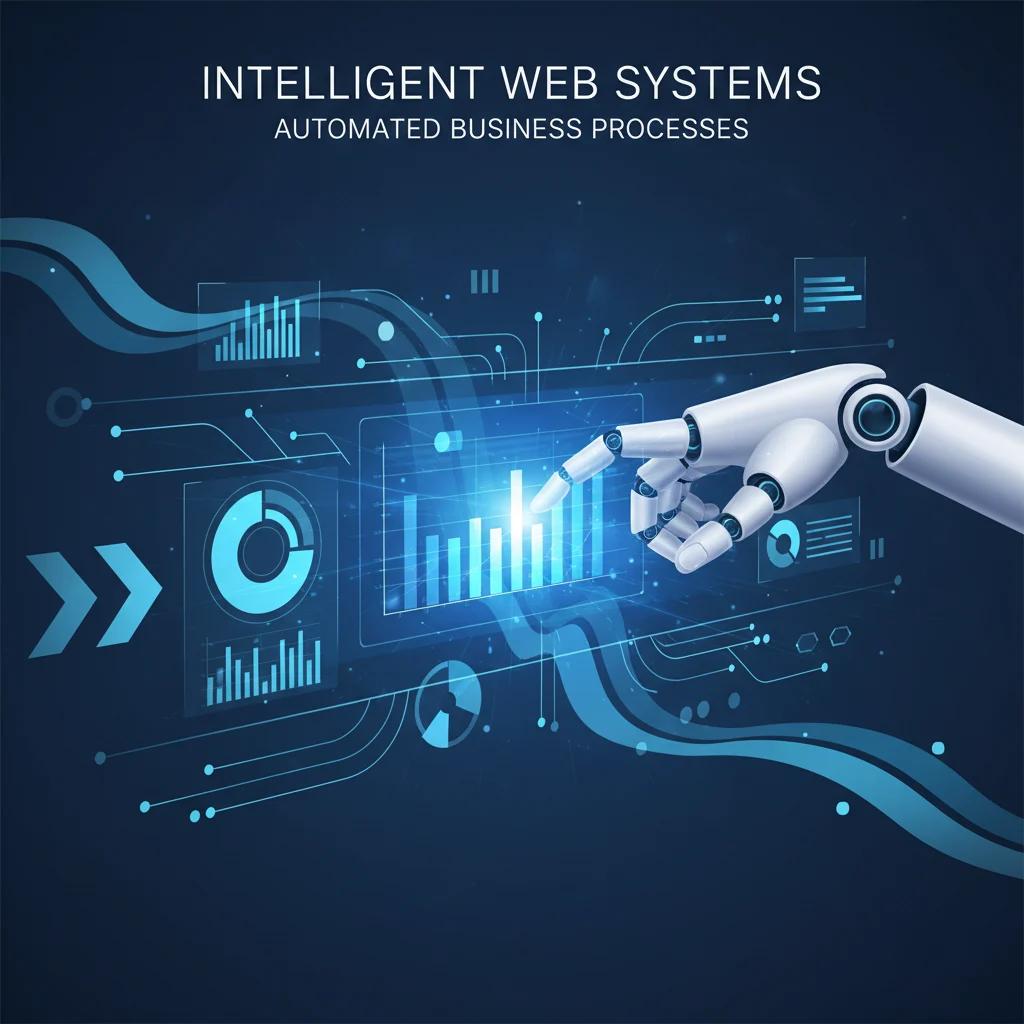
The hum of servers, the click of a mouse, and the silent, relentless execution of code-this is the new sound of productivity. For decades, businesses have relied on manual processes, from data entry and customer service to inventory management and financial reporting. While these methods were once the backbone of commerce, they are now becoming its biggest bottleneck. Human error, slow turnaround times, and high labor costs are just a few of the challenges that businesses face. The solution lies in a profound technological shift: the adoption of Intelligent Web Systems. These are not just your average websites or applications; they are sophisticated, AI-driven platforms designed to automate, optimize, and revolutionize how work gets done. This transformation is more than just a trend; it’s a fundamental change in business operations. By replacing outdated manual workflows with smart, automated solutions, companies can unlock unprecedented levels of efficiency, accuracy, and growth. This comprehensive guide will explore the world of Intelligent Web Systems. We will dissect what they are, examine the tangible benefits they deliver, and showcase real-world examples of their power across various industries. We will also delve into the critical role of artificial intelligence and machine learning in making these systems truly “intelligent” and provide a roadmap for businesses looking to make the switch. Get ready to explore how you can leave manual inefficiency behind and step into a future powered by intelligent automation. What Exactly Are Intelligent Web Systems? At its core, an Intelligent Web System is a web-based application or platform that uses artificial intelligence (AI), machine learning (ML), and data analytics to perform tasks that traditionally require human intelligence and intervention. Unlike a static website that simply displays information, these systems are dynamic, interactive, and capable of learning from data to make decisions, automate complex workflows, and provide personalized user experiences. Think of the difference between a simple online calculator and a sophisticated financial planning platform. The calculator performs a predefined function based on your input. The financial platform, an example of an Intelligent Web System, analyzes your spending habits, predicts future expenses, suggests investment opportunities, and adapts its recommendations as your financial situation changes. It doesn’t just compute; it understands, predicts, and advises. These systems are built on a foundation of several key technological pillars: Artificial Intelligence (AI) and Machine Learning (ML): This is the “brain” of the system. AI and ML algorithms enable the platform to recognize patterns, understand natural language, make predictions, and learn from new data without being explicitly reprogrammed. Data Processing and Analytics: These systems are designed to ingest, process, and analyze vast amounts of data in real-time. This capability allows them to uncover insights, identify trends, and trigger automated actions based on specific data points or events. Automation Engines: These are the workhorses that execute tasks. From sending automated email sequences to managing complex supply chain logistics, automation engines carry out the workflows defined by the system’s logic. Integration Capabilities (APIs): A hallmark of a powerful Intelligent Web System is its ability to communicate with other software and platforms. Application Programming Interfaces (APIs) allow for seamless data exchange between your CRM, ERP, marketing tools, and other essential business software, creating a unified and cohesive operational ecosystem. User-Centric Interface (UI/UX): Despite their complexity under the hood, the best intelligent systems feature intuitive, user-friendly interfaces. The goal is to make sophisticated technology accessible and easy to use for non-technical users, empowering every member of the team. By combining these elements, businesses can create powerful platforms that streamline operations, reduce the burden of repetitive manual work, and free up human talent to focus on more strategic, creative, and high-value initiatives. The Overwhelming Benefits of Automating Manual Processes Moving away from manual processes is not just about adopting new technology; it’s a strategic business decision that yields substantial and measurable returns. The benefits extend far beyond simple time savings, impacting everything from your bottom line to employee morale and customer satisfaction. 1. Drastic Reduction in Operational Costs Manual labor is expensive. It includes salaries, benefits, training costs, and the overhead associated with managing a workforce. Intelligent Web Systems automate repetitive, time-consuming tasks, directly reducing the person-hours required to run your business. Consider the process of onboarding a new client. Manually, this can involve data entry into multiple systems, sending welcome emails, creating project folders, and assigning tasks-a process that could take hours and involve several employees. An automated system can execute this entire sequence in seconds, triggered by a single form submission. This translates into significant cost savings, allowing you to reallocate budget and personnel to revenue-generating activities like sales and product development. 2. Unparalleled Accuracy and Consistency Humans make mistakes. It’s an unavoidable fact. Whether it’s a typo in a client’s address, an error in a financial report, or a missed step in a complex workflow, human error can have costly consequences. It can lead to shipping delays, incorrect invoices, compliance issues, and damaged customer relationships. Intelligent Web Systems perform tasks with robotic precision. Once a workflow is defined and automated, it is executed perfectly every single time. Data is transferred without transposition errors, calculations are always correct, and required steps are never forgotten. This level of consistency and accuracy is impossible to achieve with manual processes, mitigating risk and ensuring a higher quality of output across the board. 3. Enhanced Productivity and Efficiency Efficiency is about doing more with less. By automating manual tasks, you free your employees from the drudgery of repetitive work. They no longer have to spend their days copying and pasting data, manually generating reports, or managing simple customer inquiries. Instead, they can focus their time, skills, and creativity on tasks that require critical thinking, strategic planning, and human interaction. This shift has a twofold effect. First, the business as a whole operates more efficiently, as automated systems can handle a massive volume of tasks at a speed no human team could match. Second, individual employee productivity soars. When professionals are engaged in meaningful work that leverages their expertise,
Why Companies Are Migrating to Cloud-Based Platforms

Business leaders across the United States face a constant pressure: innovate or fade away. The infrastructure that supported your company five years ago is likely straining under the weight of modern demands. Legacy systems are rigid, expensive to maintain, and often incompatible with the new wave of artificial intelligence tools that define competitive advantage in the 2020s. This reality has triggered a mass exodus from on-premises data centers. Organizations are not just dipping their toes into the water; they are diving headfirst into digital transformation. But this shift represents more than just a change in where data is stored. It is a fundamental rethinking of how a business operates, scales, and delivers value to its customers. At myfluiditi.com, we see this transition daily. As a web app and AI development company, we witness firsthand how the cloud empowers businesses to deploy smarter applications faster. This guide explores the driving forces behind this migration, the hurdles you might face, and how professional Enterprise Cloud Migration Services can ensure your transition is seamless and strategic. The Limitations of Legacy Infrastructure To understand why companies are moving, we must first look at what they are leaving behind. On-premises infrastructure-the traditional server room down the hall or the rented rack in a data center-served us well for decades. However, it operates on a model of scarcity and prediction. When you manage your own hardware, you have to predict your peak usage for the next three to five years. If you overestimate, you waste capital on idle servers. If you underestimate, your system crashes during traffic spikes, costing you sales and reputation. Beyond capacity planning, legacy systems create “technical debt.” Your IT team spends the majority of their time “keeping the lights on”-patching servers, replacing failed hard drives, and managing cooling systems. This leaves very little time for innovation. In an era where agility is the currency of success, being tethered to physical hardware is a significant liability. Key Drivers for Cloud Migration The decision to migrate is rarely driven by a single factor. usually, it is a combination of financial, operational, and strategic incentives that tip the scale. 1. Unmatched Scalability and Agility The most immediate benefit of the cloud is elasticity. In a cloud environment, resources are not finite in the way they are on-premises. Imagine a retailer preparing for Black Friday. With physical servers, they would need to buy enough hardware to handle that one day of traffic, leaving that hardware 90% idle for the rest of the year. With the cloud, that retailer can instantly scale up computing power to handle the surge and scale back down the next day. You pay only for what you use. This agility extends to development as well. Developers at myfluiditi.com can spin up new environments for testing AI algorithms or web apps in minutes. There is no waiting weeks for procurement to approve and ship a new server. This speed to market is often the difference between leading a market and playing catch-up. 2. Shifting from CapEx to OpEx Financial flexibility is a massive draw for CFOs. maintaining an on-premises data center requires significant Capital Expenditure (CapEx). You pay upfront for assets that depreciate over time. Cloud computing shifts this to Operational Expenditure (OpEx). You pay a monthly subscription based on consumption. This frees up capital that can be reinvested into core business areas-like product development, marketing, or hiring top talent. Additionally, utilizing Enterprise Cloud Migration Services can help you forecast these operational costs accurately, preventing the “bill shock” that some unmanaged migrations experience. 3. Enhanced Security and Compliance A common myth persists that data is safer within your own four walls. In reality, major cloud providers (like AWS, Azure, and Google Cloud) invest billions of dollars annually into security-far more than any single enterprise could afford. These providers offer enterprise-grade encryption, rigorous physical security at data centers, and sophisticated threat detection systems. For US companies operating in regulated industries like healthcare or finance, cloud platforms often provide built-in compliance frameworks for HIPAA, PCI-DSS, and SOC 2. This makes adhering to regulations easier and less costly. 4. Unlocking the Power of AI and Machine Learning This is where myfluiditi.com specializes. Modern AI and Machine Learning (ML) applications require immense processing power. Training a large language model or running complex data analytics on a legacy server is often impossibly slow or expensive. Cloud platforms provide access to high-performance computing and specialized hardware (like TPUs and GPUs) on demand. They also offer pre-built AI services-such as image recognition, natural language processing, and predictive analytics-that developers can integrate into your web apps via API. Moving to the cloud is the prerequisite for becoming an AI-driven company. 5. Facilitating Remote Work and Collaboration The modern workforce is distributed. Employees expect to access data and applications from anywhere, on any device. Legacy VPNs often struggle to handle the bandwidth required for a fully remote workforce, leading to latency and frustration. Cloud-based platforms are built for the internet. They allow teams to collaborate on documents in real-time, access CRM systems from mobile devices, and share large files instantly. This accessibility boosts productivity and allows companies to hire talent regardless of geographic location. The Hidden Risks of Staying On-Premises While the benefits of moving are clear, the risks of not moving are becoming increasingly dangerous. Obsolescence: Hardware manufacturers eventually stop supporting older equipment. Running your business on “end-of-life” hardware is a ticking time bomb. Talent Shortage: Top IT talent wants to work with modern technologies. It is becoming harder to find engineers who specialize in maintaining legacy mainframes or outdated server architectures. Disaster Recovery Failures: implementing a robust disaster recovery plan on-premises is expensive. It essentially requires duplicating your entire infrastructure at a second location. The cloud offers built-in redundancy, making disaster recovery cheaper and more reliable. Understanding the Migration Strategies (The 6 Rs) Migration is not a one-size-fits-all process. When we engage with clients for Enterprise Cloud Migration Services, we typically look at the “6 Rs” of migration strategy
AI Consultant vs AI Consulting Company Differences

Deciding on the right guide for your company’s artificial intelligence initiatives is a landmark decision. As AI continues to redefine entire markets, the question has shifted from whether to adopt AI to how to implement it effectively. This brings business leaders to a critical fork in the road: should you engage an individual AI consultant, or should you partner with a comprehensive AI consulting company? The optimal choice is rarely obvious and hinges on your unique business needs, the scope of your project, available budget, and your long-term strategic vision. Grasping the core ai consultant vs ai consulting company differences is the foundational step toward making a strategic decision that propels your business forward. This extensive guide will deconstruct these differences, offering a thorough examination of everything from the depth of expertise and cost structures to project scalability and ongoing support. We will analyze the distinct benefits and potential challenges of each path, equipping you with the knowledge to select the ideal AI partner to foster innovation and secure measurable business outcomes. For companies across the USA, making this choice correctly can mean the difference between leading the market and falling behind. Establishing the Roles: The Individual vs. The Team Before we can perform a detailed comparison, it is crucial to establish clear definitions for both an AI consultant and an AI consulting company. Although both entities provide expert guidance on AI strategy and execution, their operational structures, capabilities, and engagement models are fundamentally dissimilar. Who is an AI Consultant? An AI consultant is a single, independent professional who offers specialized, deep expertise in one or several focused domains of artificial intelligence. These experts often possess impressive academic credentials or extensive technical experience, having served as data scientists, machine learning engineers, or AI researchers in prominent roles. They typically function as freelancers or sole proprietors, delivering a highly personalized level of service and a concentrated dose of knowledge. An individual consultant is frequently hired for their profound, niche expertise. For instance, a business might engage a consultant who specializes solely in Natural Language Processing (NLP) to develop a sophisticated customer service chatbot, or an expert in computer vision to create a system for automated product inspection on an assembly line. They work in close collaboration with your team, offering hands-on development, strategic direction, and direct technical mentorship. The relationship is intimate, direct, and sharply focused on a specific problem. What is an AI Consulting Company? In contrast, an AI consulting company is a formal organization comprising a multidisciplinary team of specialists. Firms like MyFluidiTi assemble a diverse roster of talent, including AI strategists, data scientists, machine learning engineers, data engineers, project managers, cloud architects, and UI/UX designers, all operating under a single, coordinated entity. MyFluidiTi.com offers unparalleled flexibility by allowing businesses to choose the engagement model that best fits their needs: you can hire an individual developer, assemble a dedicated team, or hand over your entire AI project for full-scope development and execution. Instead of accessing a single point of expertise, you gain the collective intelligence of a full-service team prepared to manage complex, end-to-end AI initiatives. Consulting companies are built to handle large-scale projects from initial ideation and strategic planning through to development, deployment, ongoing maintenance, and future scaling. They operate with established, battle-tested methodologies, formal project management frameworks, and a wide breadth of experience accumulated across countless industries and AI applications. This structured approach provides a holistic, managed solution for businesses aiming to undertake significant AI-driven transformations. The essential ai consultant vs ai consulting company differences start to become clear when you compare the scale and diversity of the resources each can bring to bear on a project. A Comprehensive Comparison: Key Differentiators To truly appreciate the ai consultant vs ai consulting company differences, we must dissect them across several vital business dimensions. The specific priorities of your organization will dictate which of these factors carry the most weight in your decision-making process. 1. Breadth and Depth of Expertise This is arguably the most critical distinction between the two options. AI Consultant: An individual consultant provides deep, but often narrowly focused, expertise. If your project demands a world-class authority in a specific area, like using reinforcement learning for dynamic pricing models, a single consultant could be the ideal choice. They bring a level of profound, specialized skill that can solve a well-defined problem with unparalleled elegance and efficiency. The challenge arises when the project’s scope expands. If you discover that your data infrastructure needs a complete overhaul or the final model requires a custom API for integration, you may find the consultant’s skill set is insufficient. This would force you to either hire additional freelancers or divert internal resources, adding significant management overhead and complexity. AI Consulting Company: A company delivers a wide spectrum of integrated expertise. When you partner with a firm, you are not simply hiring an individual; you are securing access to an entire team. Does your project require a robust data pipeline to be built before any model training can commence? The firm has a data engineer ready to deploy. Does the trained model need to be deployed on a scalable, secure cloud infrastructure for production use? They have a certified cloud solutions architect on the team. Does the final AI-powered tool need an intuitive user interface for your non-technical staff? They have UI/UX designers and front-end developers to build it. This integrated team structure is specifically designed to manage every facet of a multifaceted AI project, guaranteeing a cohesive, functional, and complete solution. This breadth of capability is a central theme in the conversation about ai consultant vs ai consulting company differences. 2. Project Management, Process, and Governance The methodology used to manage a project from inception to completion has a profound impact on timelines, budgetary adherence, and the quality of the final deliverable. AI Consultant: When collaborating with an independent consultant, the primary responsibility for project management often falls squarely on your internal team. While the consultant will manage their own
Full-Stack Development Services for Scalable US Web Apps USA
Full-Stack Development Custom full-stack development by MyFluiditi for US businesses, delivering secure, scalable web and mobile apps built for growth nationwide across US markets AI. Today’s US businesses rely heavily on strong digital products. Websites and applications serve as the primary drivers of revenues, client interaction, and day-to-day business operations. Businesses must also have access to reliable and scalable technology to succeed in today’s environment, making full-stack development an integral part of the solution. MyFluiditi delivers professional full-stack development services for US-based web and app projects. Our service assists businesses to design, build and scale digital solutions that perform well in real-world scenarios. We assist US start-ups, growth-oriented firms, and large corporations. Our focus is on delivering clean code and a simple design, producing measurable results. Each solution we provide is designed to meet the needs of the US marketplace and the expectations of US users. The Definition of Full-stack Development Full-stack development combines both front-end and back-end technologies to create an integrated system that connects what users see on the front-end of an application with how the back-end technology supports the front-end. Front-end development includes the design (graphics, layout, and how a user interacts with the application); back-end development includes server-side. This includes the databases, servers, and business logic that are necessary to support the front-end functionality of the application. With MyFluiditi’s full-stack development model, developers at MyFluiditi work on both the front-end and back-end. The use of MyFluiditi’s full-stack development services will provide US businesses with more efficient development, improved product integration, and fewer gaps in technology. Why Companies in the United States Opt for Full Stack Development The speed of the market dictates how quickly US companies must work with agile teams and streamlined processes. The use of full-stack development helps to eliminate the communication bottlenecks between teams because one team has a complete understanding of how the overall system functions. Therefore, systems are updated faster, and launches will be smoother. By using myFluiditi as a full stack development partner, US companies will save both time and money due to the advantages of our full-stack knowledge and experience in building systems that can scale as businesses evolve. The US Market Requirements for Web/Application Development Projects American consumers expect websites/applications to be fast, simple and reliable, and will leave a product or service that is not satisfying to meet these needs in a timely manner. In addition, US companies must ensure that they meet local security and regulatory compliance standards when it comes to the development of web/program products. Data security and product performance should always be considered. myFluiditi focuses on providing web/app products that meet the standards and guidelines of the US government and to provide our customers with a product that meets both their employees’ and customers’ trust and longevity. Front-End Development Services The front end is the first opportunity to make a strong impression. A strong front-end design will improve engagement levels and increase conversion rates. myFluiditi design and develop websites and applications that offer responsive and clean user-interface experiences. We strive to ensure that our websites and applications look exceptional when using any device (desktop/laptop/tablet/smartphone). Our team is experienced in developing websites and applications using the latest modern frameworks of development (e.g. React, Angular, vs.net) which aid in providing US customers with a rich and interactive experience. We strive to build websites and applications that have simple functionality, readable layouts, and smooth animations throughout the site/application. Back-End Development Solutions The Back-End Development provides functionality (features) and performance (speed, efficiency, etc.) by managing all aspects of data, users, and the business logic. MyFluiditi is committed to developing secure and scalable Back-End Development solutions utilizing technologies including but not limited to Node.js, Python, Java, and .NET. Our Back-End Development solution serves as the infrastructure to manage high-levels of traffic and complex flow processing, which is vital for companies throughout the U.S. and is the backbone of the day-to-day operations of businesses. Database Design & Management Data is the engine that powers most digital platforms today. The failure to design, store and manage data effectively results in delays, inaccuracies and other problems. At MyFluiditi, we are skilled at creating effective database designs for both web and app projects (MySQL, PostgreSQL, MongoDB, Cloud), resulting in databases that will allow for fast querying processes while ensuring data is secure from outside intrusions. All of this works together to improve the performance and reliability of the platform. API Development & Integration Most modern digital platforms rely on using APIs (application programming interfaces) as they are used to securely communicate with other systems and services. MyFluiditi builds secure and fully documented APIs, as well as integrates third-party solutions (i.e., payment gateways, CRM systems, analytics tools) utilized in today’s US marketplace. When those integrations are strong, it leads to greater automation of tasks and improved flow of data. Creating Mobile Applications for US Companies Mobile Devices are now dominating the online world in America. Companies require apps that work well on smartphones, since almost all people access the internet via their mobile devices. MyFluiditi designs mobile applications compatible for both iOS and Android devices; whether using native or cross-platform technology. MyFluiditi app designs focus on user friendliness, fast access time, and reliability so that US companies can connect with their users on-the-go. Mobile Application Development Companies in the USA Businesses need mobile applications to provide positive experiences to their customers while using them on smartphones, which accounts for a majority of the traffic in the American digital space. At MyFluiditi, we create iOS and Android mobile solutions using both native and cross-platform technologies. MyFluiditi focuses on developing mobile applications that provide an excellent user experience, fast performance, and stable solutions to help brands in the USA connect with their end users while they are on-the-go. Full-Stack Cloud Solutions Cloud infrastructure forms the backbone of the modern development lifecycle. A majority of companies within the United States utilize cloud-based platforms for their operations. MyFluiditi provides cloud-based solutions on AWS, Microsoft Azure, and
Legacy System Modernization Services for US Enterprises
Legacy system modernization services for US enterprises to improve security, scalability, and performance with expert solutions from MyFluiditi. Legacy systems continue to run in many large corporations in the US. These include banking, healthcare, manufacturers, insurance companies, and government contractors. They were developed many years ago, but currently, they impede the progress of these businesses. They were instrumental in making these businesses successful. This is because US companies today are being pushed to digitalize and are threatened by expectations to deliver digital-first customer experiences, regulatory demands to deliver better security and compliance, and by competitors building digital, cloud-based, and agile-based solutions. And so, companies that do not use updated solutions will face major drawbacks. Legacy system modernization services facilitate the modernization of inflexible, insecure, and/or unscaleable legacy systems to a flexible, secure, and scalable system. MyFluiditi, being a legacy system modernization company, helps enterprises navigate the complex process of the service. The article discusses the importance of modernization, challenges in legacies, approaches taken in modernization, and how US businesses can succeed in their process. What are Legacy Systems in US Enterprises? Legacy systems define older software platforms or applications that continue to be actively used. Many organizations within the US continue to employ systems implemented through COBOL, Fortran, or the older Java frameworks. Other organizations use on-premise databasing and other hardware solutions. Many such systems run mission-critical operations. For example, payroll systems, billing systems, inventory control systems, patient records, transaction processing, and so on are mission-critical operations that depend on such systems. Because of these, organizations often delay change However, age creates problems. “Legacy systems tend to be inflexible and do not adapt to integration with other systems. They require scarce skills that are expensive to maintain. Ultimately, these issues increase in severity,” explains David Norfolk, partner and head of software implementation services group at P Why Legacy Systems Remain Prevalent in the US Market US enterprises are ahead in embracing digital technology compared to many global markets. US banking and insurance organizations developed their own technology platforms in the 1980s and 1990s. The platforms were able to process millions of transactions flawlessly. The leaders did not think it was a reason to replace this technology. However, over time, the requirements of the business changed. Channels were expanding, digital channels were expanding, data volumes were exploding, security threats were rising, but still, most businesses did not modernize. The Hidden Costs of Maintaining Legacy Systems Legacy systems, while they may look stable, have a high degree of hidden costs. Much of the money in large IT budgets is spent. Knowledgeable developers retire or stop working. Patches get harder to apply. Code integration takes custom coding. Downtime itself appears more often as well. “If our systems have failed, it takes longer to bring them back up.” The customers notice these failures immediately US enterprises face risks too, but they have specific regulations such as HIPAA, PCI-DSS, and SOX. Legacy systems cannot satisfy these regulations. Legacy system modernization services reduce these costs, yet maintaining an important business function. What are Legacy System Modernization Services? Legacy system modernization services allow organizations to update, change, or replace old systems. Legacy system modernization services are provided through a structure. They allow organizations to minimize risks while enhancing system efficiency and flexibility. Modernization, however, does not always result in replacement, as in many scenarios, enterprises tend to modernize in steps, keeping appropriate logic while changing the interfaces and infrastructures. MyFluiditi provides innovative services in the US business environment, which are tailored in a way that combines business with innovation. Important Factors Driving Modernization in American Enterprises There are several drivers of modernization for US organizations. Digital transformation tops the list. Customers demand a fast and seamless experience across devices. Legacy systems cannot provide this experience. Another driver of change in the cybersecurity arena are cybersecurity threats. Ransomware attacks are the prime concern for outdated systems, and even that has been taken care of with new systems in Scalability is another factor to consider. Cloud-native infrastructure scales. Legacy infrastructure does not. Finally, data analytics and AI require modern architecture. Legacy systems tend to compartmentalize data and stifle understanding. Common Challenges Faced by US Enterprises Modernization projects generally fail without proper planning. US enterprises have particular challenges. Risk of Business Disruption Mission-critical systems are those systems that cannot stop, as even a brief stoppage can result in business losses and damage to reputation. Enterprises are afraid of breaking systems that Data Complexity Legacy systems maintain vast data repositories of several decades. The format varies, and documentation might be ambiguous. The data migration process demands precision. Regulatory Requirements US industries have strict regulations. The healthcare, finance, and government sectors often come under audit and compliance checks. Organizational Resistance Teams feel comfortable with existing systems. Change causes fear. Leaders must engage stakeholders with clear goals. The challenges of legacy system modernization services are addressed. Modernization Approaches Used by US Enterprises There is no single modernization path. Every enterprise decides its own based on its needs, cost, and risks. Rehosting (Lift and Shift Rehosting involves existing applications running on new infrastructure. In this case, code is left unchanged. This approach enables faster results. US enterprises use rehosting as a means of cutting hardware costs and enhancing reliability. This option brings limited innovation and low risks. Refactoring Refactoring involves improving the application code to make it perform optimally in terms of scalability. The application code does not change. The architecture of the application This method enables cloud native feature support/integration. This approach needs greater technical effort. Replatform Replatforming involves replacing underlying platforms, whereas application behavior is preserved. Databases and middleware may be changed. This choice is adopted by US enterprises for better performance and security in the context of the enterprise. Rebuilding Create new applications using new frameworks. Core functions are created from scratch. Replacing with SaaS Some enterprises replace legacy systems with commercial SaaS products, and this is the path often followed by CRM and ERP platforms. MyFluiditi helps the enterprises