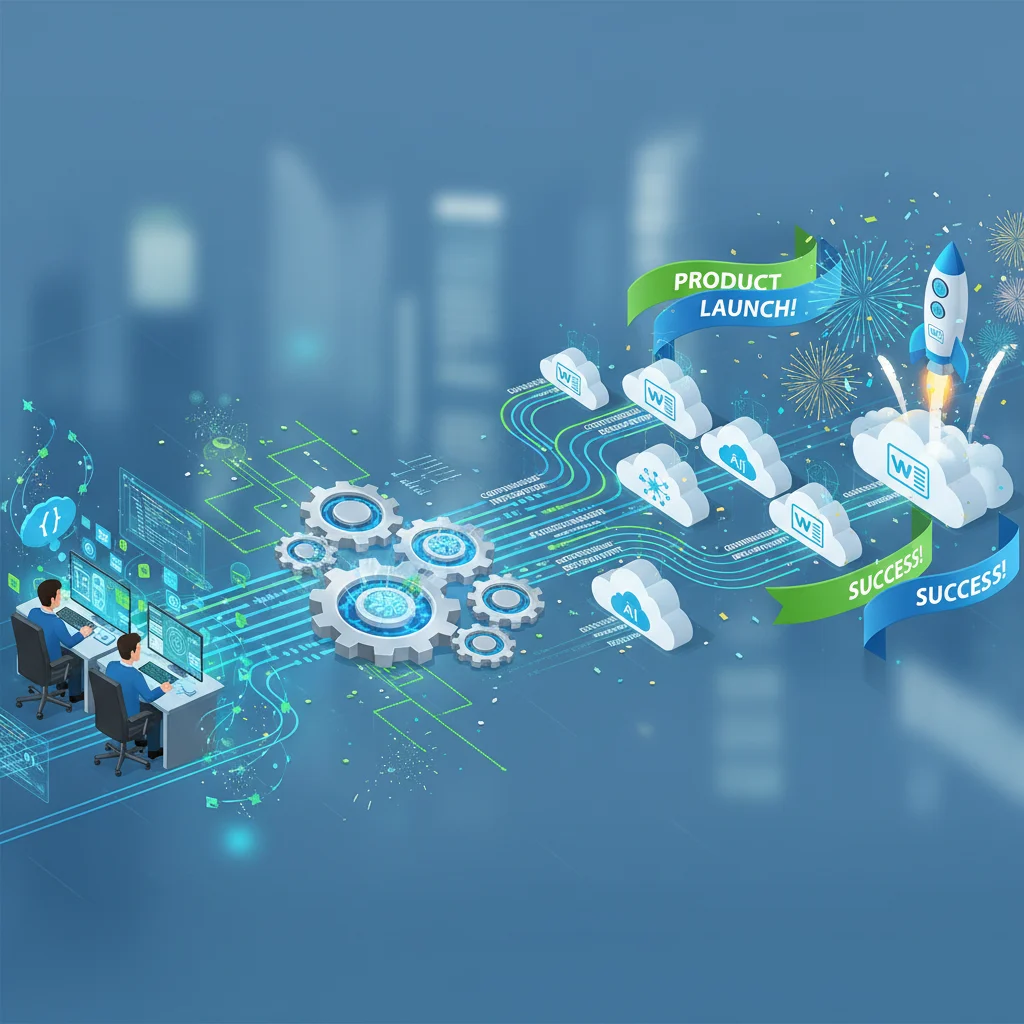
Software development moves at a relentless speed. Whether you are building an intelligent AI-driven platform or a complex web application, the time it takes to move from an idea to a deployed product matters. Delaying releases means missing market opportunities. Rushing them leads to bugs, downtime, and frustrated users. This is where modern engineering practices step in to bridge the gap between speed and stability.
At MyFluiditi, an AI and web app development company based in the USA, we see firsthand how the right development culture transforms business outcomes. Bridging the gap between software development and IT operations allows teams to deploy high-quality software faster than ever before.
This post explores the critical role of DevOps in accelerating software delivery. We will break down how these practices work, why they are essential for AI and web app development, the benefits and challenges of implementation, and actionable best practices you can apply to your engineering teams.
Understanding the Shift to Continuous Engineering
Historically, software development followed a rigid, linear path. Developers wrote code and tossed it over a metaphorical wall to the operations team, who then had the burden of figuring out how to deploy and maintain it. This siloed approach caused friction. Developers wanted to push new features rapidly, while operations teams prioritized system stability.
DevOps changes this dynamic completely. By integrating development and operations into a single, cohesive lifecycle, teams share accountability for the software from end to end. This alignment eliminates bottlenecks, reduces handoff friction, and creates a culture where releasing software becomes a routine, low-stress event rather than a massive quarterly ordeal.
The Core Mechanisms Driving Faster Delivery
How exactly does DevOps make software delivery faster? The answer lies in replacing manual, error-prone tasks with automated, repeatable pipelines.
Continuous Integration (CI)
Continuous Integration requires developers to merge their code changes into a central repository frequently often multiple times a day. Each merge triggers an automated build and a series of tests. If the new code breaks an existing feature, the system flags the error immediately. Developers can fix issues while the code is still fresh in their minds, preventing massive integration conflicts just before a major release.
Continuous Delivery and Deployment (CD)
Continuous Delivery takes the validated code from the CI process and automatically prepares it for release to production. Continuous Deployment takes this a step further by deploying the code directly to users without manual intervention, provided it passes all automated checks. This pipeline ensures that software is always in a deployable state, allowing companies to push updates, security patches, and new features to users in minutes rather than months.
Infrastructure as Code (IaC)
Manually configuring servers and databases slows down deployment and introduces inconsistencies. Infrastructure as Code solves this by allowing teams to manage and provision computing infrastructure through machine-readable definition files. Need a new testing environment that mirrors production exactly? IaC spins it up automatically in seconds. This eliminates the “it works on my machine” problem and accelerates the setup required for faster software delivery.
Accelerating Web App and AI Development
For a web app and AI development company like MyFluiditi, speed must not compromise precision. AI development, in particular, requires handling massive datasets, training complex models, and deploying them to scalable environments.
DevOps in AI and Machine Learning (MLOps)
Deploying AI models introduces unique challenges. Data scientists often build incredible models in isolated notebook environments, but moving those models into a live web application takes significant engineering effort. Applying DevOps principles to machine learning-often called MLOps-automates the model training, testing, and deployment pipelines. When a model degrades over time due to new real-world data, automated pipelines can trigger a retraining process and deploy the updated model seamlessly, ensuring the AI application remains accurate and reliable.
Scalable Web Applications
Modern web applications in the USA demand high availability and fast load times. Using containerization technologies and orchestration platforms, DevOps teams can ensure that web apps scale automatically based on user traffic. When a new feature rolls out, automated load balancing and deployment strategies like blue-green or canary releases ensure that users experience zero downtime.
Tangible Benefits for Your Business
Organizations that fully embrace DevOps experience measurable advantages that extend far beyond the engineering department.
- Accelerated Time-to-Market: Automated pipelines cut deployment times dramatically, allowing you to deliver value to customers faster than your competitors.
- Higher Software Quality: Automated testing catches bugs early in the cycle. By the time code reaches production, it has survived rigorous validation.
- Improved Team Collaboration: Breaking down silos fosters a culture of shared responsibility. Developers and operations teams work together to solve problems rather than blaming each other for failures.
- Faster Recovery Times: When failures happen, automated rollbacks and comprehensive monitoring tools allow teams to identify and resolve issues rapidly, minimizing downtime.
Navigating the Challenges of Implementation
Transitioning to a new engineering culture does not happen overnight. Teams often face hurdles when adopting DevOps practices.
- Cultural Resistance: People naturally resist change. Shifting from a siloed mindset to a collaborative one requires strong leadership and clear communication.
- Tool Complexity: The landscape of automation tools is vast and constantly evolving. Selecting the right tools and integrating them into a cohesive pipeline can overwhelm inexperienced teams.
- Legacy Systems: Older, monolithic architectures resist automated deployment. Teams often need to refactor legacy applications into microservices before they can fully realize the benefits of automated pipelines.
Best Practices for a Successful Transformation
To achieve faster software delivery without sacrificing quality, consider these proven best practices:
Start Small and Scale
Do not attempt to overhaul your entire engineering process at once. Start by automating a single workflow, such as your testing suite or your deployment to a staging environment. Once the team builds confidence and sees the value, expand the practices to other areas.
Prioritize Automated Testing
A fast pipeline is useless if it delivers broken code. Invest heavily in unit tests, integration tests, and end-to-end testing. High test coverage gives developers the confidence to deploy frequently.
Embrace Continuous Monitoring
Deployment is not the end of the software lifecycle; it is just the beginning. Implement robust logging and monitoring tools to track application performance in real-time. Continuous feedback loops allow your team to detect anomalies before users report them.
Cultivate a Blameless Culture
When a deployment fails, focus on fixing the system rather than punishing the individual. Blameless post-mortems help teams uncover the root causes of failures and build more resilient pipelines for the future.
Partnering for Success in the USA
Building intelligent web applications requires a delicate balance of speed, innovation, and reliability. At MyFluiditi, we integrate DevOps deeply into our AI and web app development processes. By automating the heavy lifting, we focus our energy on crafting intelligent solutions that drive business growth for our clients across the USA.
Faster software delivery is no longer a luxury; it is a baseline requirement for staying competitive. By embracing DevOps, you empower your engineering teams to build better products, respond to market shifts instantly, and deliver exceptional experiences to your users.