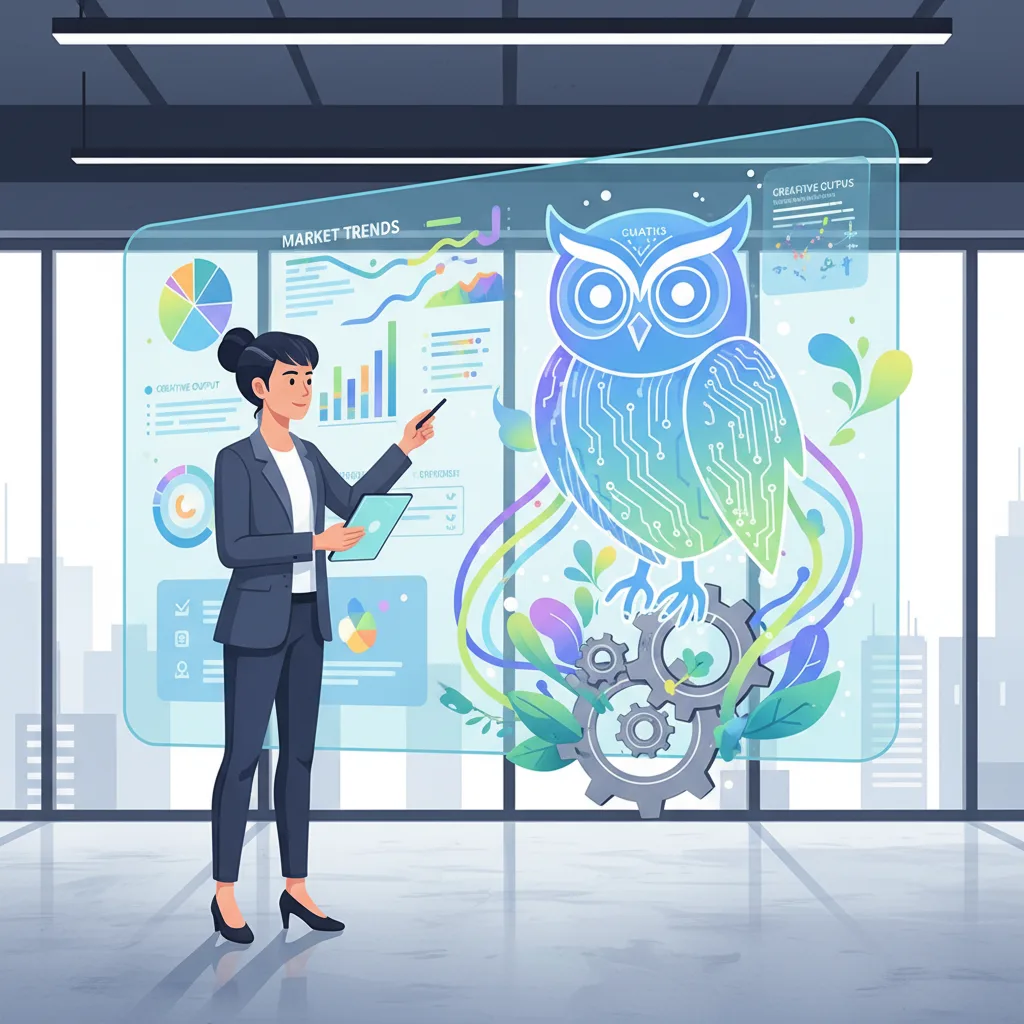
Artificial intelligence is transforming how businesses operate across the United States. From optimizing daily workflows to creating entirely new digital experiences, AI is no longer a futuristic concept-it is a baseline requirement for competitive web applications. For enterprise leaders and technical founders alike, staying ahead means constantly evaluating the technological landscape. When you ask, exactly what are industry trends shaping the next decade of software, the answer lies in how seamlessly AI integrates into our daily digital tools.
This comprehensive guide explores the core movements defining the future of AI web app development. We will unpack the explosive growth of generative AI, the strategic shift toward edge computing, the critical importance of AI ethics, and the democratization of software through low-code and no-code platforms. Finally, we will show you how MyFluiditi partners with USA-based businesses to turn these advanced concepts into tangible, high-performing web applications.
The Shifting Landscape of Artificial Intelligence
The pace of innovation in artificial intelligence demands constant vigilance. Business leaders frequently gather in boardrooms to ask, what are industry trends signaling for our next product roadmap? The signals point clearly toward integration, speed, and responsibility. We are moving away from siloed AI experiments and toward embedded, invisible intelligence that anticipates user needs before they explicitly state them.
As companies race to deploy these technologies, understanding the underlying currents becomes essential. You cannot simply bolt an AI feature onto an outdated application and expect market dominance. Instead, you must build with a fundamentally intelligent architecture from day one. To truly grasp what are industry trends doing to market dynamics, we must look at the specific technologies driving user adoption and operational efficiency.
Generative AI: Revolutionizing Web Applications
Generative AI has captured the public imagination, but its real power lies in enterprise applications. We have moved past simple text generation into complex, multimodal content creation that happens in real-time.
Dynamic Content Generation
Modern web applications use generative models to create highly personalized user interfaces. Instead of serving static pages, apps now analyze user behavior and generate custom dashboards, reports, and recommendations on the fly. When developers study what are industry trends in user engagement, dynamic content consistently ranks at the top. This approach significantly reduces churn rates and increases the time users spend extracting value from your software.
Automated Code and Workflow Generation
Generative AI also transforms how developers build the applications themselves. AI-assisted coding tools help engineering teams write boilerplate code, identify bugs, and optimize database queries much faster. This internal efficiency directly translates to faster feature releases for your end-users.
Advanced Conversational Interfaces
The standard chatbot is dead. Today’s AI development focuses on autonomous agents that can execute complex tasks across multiple systems. If a user wants to pull a quarterly sales report, analyze it for anomalies, and email a summary to their team, a modern AI agent can do this through a single conversational prompt.
Edge Computing: Bringing AI Closer to the Source
Cloud computing revolutionized software, but sending massive amounts of data back and forth to centralized servers creates latency. Edge computing solves this by processing AI models locally, closer to where the data originates.
Eliminating Latency
For web applications requiring real-time decision-making like financial trading platforms or remote healthcare monitoring-milliseconds matter. By moving AI processing to the edge, ge-optimized processors is the clearest indicator
Enhancing Data Privacy and Security
Sending sensitive user data to the cloud introduces security vulnerabilities. Edge computing allows web applications to process personal information locally on the user’s device. The application extracts the necessary insights and discards the raw data, ensuring compliance with strict data protection regulations. When privacy advocates ask what are industry trends doing to protect consumers, edge AI is the primary technical solution.
Reducing Infrastructure Costs
Constant cloud API calls become expensive as your application scales. By handling heavy AI computations at the edge, development companies drastically reduce cloud hosting and bandwidth expenses. This trend makes high-powered AI applications economically viable for smaller businesses.
Navigating AI Ethics and Responsible Development
As AI systems gain more autonomy, the ethical implications of their decisions come under intense scrutiny. Responsible AI development is no longer just a legal requirement; it is a core component of brand trust.
Algorithmic Bias Mitigation
AI models learn from historical data, which often contains human biases. If an AI web app helps HR departments screen resumes, it must do so fairly. AI development companies now employ rigorous testing frameworks to identify and eliminate bias before deploying models. When researchers investigate what are industry trends in compliance, algorithmic fairness is a massive focal point.
Transparency and Explainability
Users need to know why an AI system made a specific decision. “Black box” AI is unacceptable in industries like finance or healthcare. Modern development focuses on explainable AI (XAI), which provides clear, human-readable logic for every output.
Data Governance and Consent
Building ethical AI requires strict data governance. Web applications must transparently communicate what data they collect, how they use it to train models, and give users explicit control over their information. Companies that prioritize user consent build stronger, longer-lasting relationships with their target audience.
The Rise of Low-Code and No-Code AI Solutions
The demand for AI solutions vastly outpaces the supply of specialized machine learning engineers. Low-code and no-code AI platforms have emerged to bridge this gap, allowing business analysts and domain experts to build intelligent applications.
Democratizing AI Development
You no longer need a PhD in computer science to deploy a predictive model. Visual interfaces allow users to drag and drop AI components, train custom models on their own datasets, and integrate them into web apps via APIs. If you evaluate what are industry trends in workforce productivity, the democratization of software development is leading the charge.
Accelerating Speed to Market
Traditional AI development takes months of prototyping and testing. Low-code platforms reduce this cycle to weeks or even days. This rapid prototyping allows companies to test AI features with real users quickly, gather feedback, and iterate without exhausting their engineering budgets.
Bridging the Business-IT Divide
Low-code AI tools create a shared language between technical teams and business stakeholders. Product managers can build functional prototypes to demonstrate their vision, which engineers can then scale and secure. This collaborative approach ensures that AI initiatives closely align with actual business objectives.
How MyFluiditi Keeps Your Business Ahead of the Curve
Knowing the trends is only half the battle; executing them flawlessly is what separates industry leaders from the rest. At MyFluiditi, we specialize in transforming these complex AI advancements into robust, scalable web applications tailored for the USA market. We constantly analyze what are industry trends doing to your specific sector, ensuring your software remains a step ahead of your competitors.
Custom AI Web App Development
We do not believe in one-size-fits-all solutions. Our team works closely with you to understand your unique operational challenges and target audience. Whether you need a generative AI content engine, an edge-processed analytics dashboard, or an ethical AI decision-support system, we architect the platform from the ground up to serve your exact needs.
Seamless Integration and Scaling
Adding AI to existing legacy systems can be disruptive. MyFluiditi ensures smooth integrations through modern API architectures. As your user base grows, our cloud-native and edge-hybrid solutions scale effortlessly, maintaining peak performance without exponential cost increases.
Security and Ethical Compliance First
We build trust into every line of code. Our development process prioritizes data security, privacy compliance, and algorithmic fairness. When your stakeholders ask what are industry trends in risk mitigation, you can confidently show them the robust safeguards embedded directly into your MyFluiditi-developed application.
Conclusion
The future of software is inextricably linked to artificial intelligence. From the personalized power of generative models and the lightning-fast processing of edge computing to the critical importance of ethical development frameworks, these shifts dictate how businesses will operate tomorrow. Continually assessing what are industry trends will ensure you never fall behind in this rapidly evolving digital landscape.
Do not let your competitors define the future of your industry. Partner with a development team that understands how to leverage these technologies for maximum business impact. Contact MyFluiditi today to schedule a consultation, and let us build the intelligent web applications that will drive your company forward.