Digital Marketing Solutions That Drive Growth and Customer Engagement
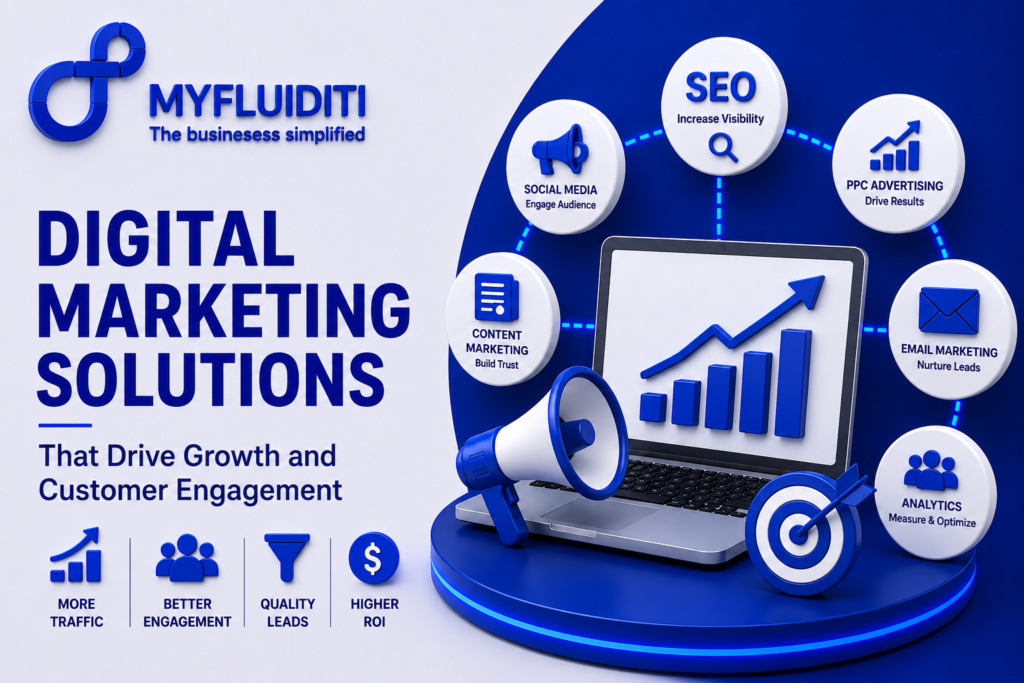
Introduction In today’s highly competitive digital landscape, businesses need more than just an online presence to succeed. They need Digital Marketing Solutions that increase brand visibility, attract qualified leads, engage customers, and drive measurable business growth. With consumers relying heavily on search engines, social media, websites, and online reviews to make purchasing decisions, organizations must adopt a strategic and data-driven approach to marketing. Investing in digital marketing services helps businesses stay competitive, improve customer relationships, and achieve sustainable success in an increasingly connected world. At MyFluiditi, we empower businesses with customized digital marketing strategies designed to increase online visibility, generate high-quality leads, and maximize return on investment. Our expertise combines creativity, analytics, and modern technology to help brands grow faster in the digital era. Understanding Digital Marketing Solutions Digital Marketing Solutions encompass a wide range of online strategies and technologies that help businesses connect with their target audience across multiple digital channels. Unlike traditional marketing, digital marketing provides measurable insights, real-time optimization, and personalized customer experiences that improve campaign effectiveness. Businesses today rely on Search Engine Optimization (SEO), Pay-Per-Click (PPC) advertising, content marketing, social media marketing, email marketing, video marketing, influencer collaborations, and marketing automation to reach potential customers. When these channels work together, they create a powerful marketing ecosystem that drives both customer acquisition and long-term engagement. At MyFluiditi, we develop integrated digital marketing strategies tailored to each business’s goals, industry, and target audience, ensuring every campaign delivers measurable business value. Why Businesses Need Digital Marketing Solutions Customer behavior has changed dramatically over the past decade. Buyers now research products online, compare competitors, read customer reviews, and engage with brands across multiple digital platforms before making purchasing decisions. Businesses that fail to establish a strong digital presence risk losing valuable opportunities to competitors. Digital Marketing enables organizations to reach the right audience at the right time with highly personalized messaging. By using advanced audience targeting, behavioral analytics, and performance tracking, businesses can improve conversion rates while reducing unnecessary marketing expenses. At MyFluiditi, we help businesses create customer-focused marketing strategies that increase visibility, strengthen brand credibility, and deliver long-term growth through data-driven decision-making. Search Engine Optimization for Sustainable Growth One of the most effective long-term marketing strategies is Search Engine Optimization (SEO). A well-optimized website improves search engine rankings, attracts organic traffic, and increases brand credibility. SEO involves optimizing website structure, creating high-quality content, improving technical performance, building authoritative backlinks, and targeting high-value keywords that customers actively search for. Businesses that invest in SEO benefit from continuous traffic growth without relying solely on paid advertising. At MyFluiditi, our SEO specialists develop comprehensive optimization strategies that improve search visibility, drive qualified traffic, and help businesses achieve sustainable online growth. Social Media Marketing Builds Stronger Customer Relationships Social media has become one of the most influential platforms for customer engagement. Businesses use platforms such as LinkedIn, Facebook, Instagram, X, and YouTube to build communities, increase brand awareness, and interact directly with customers. Effective Social Media Marketing goes beyond posting content. It requires audience research, content planning, campaign optimization, community engagement, and continuous performance analysis. MyFluiditi helps businesses create compelling social media strategies that increase audience engagement, strengthen brand loyalty, and generate meaningful business opportunities across multiple platforms. Content Marketing Drives Trust and Authority High-quality content remains one of the strongest drivers of digital success. Informative blogs, articles, videos, case studies, whitepapers, and educational resources help businesses establish authority while providing value to their audience. Content Marketing not only improves SEO performance but also supports lead generation, customer education, and brand positioning. Valuable content builds trust and encourages long-term customer relationships. At MyFluiditi, we develop SEO-focused content strategies that combine keyword optimization with engaging storytelling, helping businesses improve search rankings while delivering meaningful experiences to their customers. Pay-Per-Click Advertising Delivers Immediate Results While SEO provides long-term growth, Pay-Per-Click (PPC) advertising offers immediate visibility and lead generation. PPC campaigns allow businesses to target specific audiences based on demographics, interests, search intent, and online behavior. Platforms like Google Ads and social media advertising provide businesses with powerful opportunities to promote products and services to highly relevant audiences. Continuous campaign monitoring and optimization help maximize conversions while controlling advertising costs. MyFluiditi creates performance-driven PPC campaigns that improve click-through rates, generate quality leads, and maximize marketing ROI through continuous optimization and detailed analytics. Data Analytics Improves Marketing Performance Successful digital marketing depends on understanding customer behavior and campaign performance. Modern analytics platforms provide businesses with valuable insights into website traffic, user engagement, conversion rates, customer journeys, and campaign effectiveness. By analyzing data continuously, organizations can optimize strategies, improve customer experiences, and make informed business decisions. Marketing Analytics transforms raw data into actionable insights that support long-term growth. At MyFluiditi, we leverage advanced analytics and performance monitoring tools to ensure every marketing initiative delivers measurable and continuously improving results. Personalization Enhances Customer Engagement Modern consumers expect personalized experiences across every digital interaction. Generic marketing campaigns are becoming less effective as customers increasingly prefer brands that understand their needs and preferences. Businesses that personalize website experiences, email campaigns, advertisements, and content achieve significantly higher engagement and conversion rates. Personalized marketing strengthens customer relationships while improving satisfaction and loyalty. MyFluiditi develops customer-centric digital marketing solutions that leverage behavioral insights and audience segmentation to deliver relevant experiences throughout the customer journey. Mobile-First Digital Marketing With mobile devices accounting for the majority of internet usage, businesses must prioritize mobile-friendly digital experiences. Responsive websites, fast-loading pages, mobile advertising, location-based marketing, and optimized user experiences play a critical role in customer engagement. A mobile-first strategy ensures customers can easily interact with businesses regardless of the device they use. This improves user satisfaction while supporting higher conversion rates. At MyFluiditi, we help businesses optimize their digital presence for mobile users, ensuring seamless experiences across smartphones, tablets, and desktops. How MyFluiditi Helps Businesses Succeed with Digital Marketing Every business has unique goals, target audiences, and competitive challenges. At MyFluiditi, we develop customized digital marketing solutions that align with each organization’s objectives and growth strategy. Our
Still Using Chatbots? Here’s Why Modern AI Agents Are the Better Investment
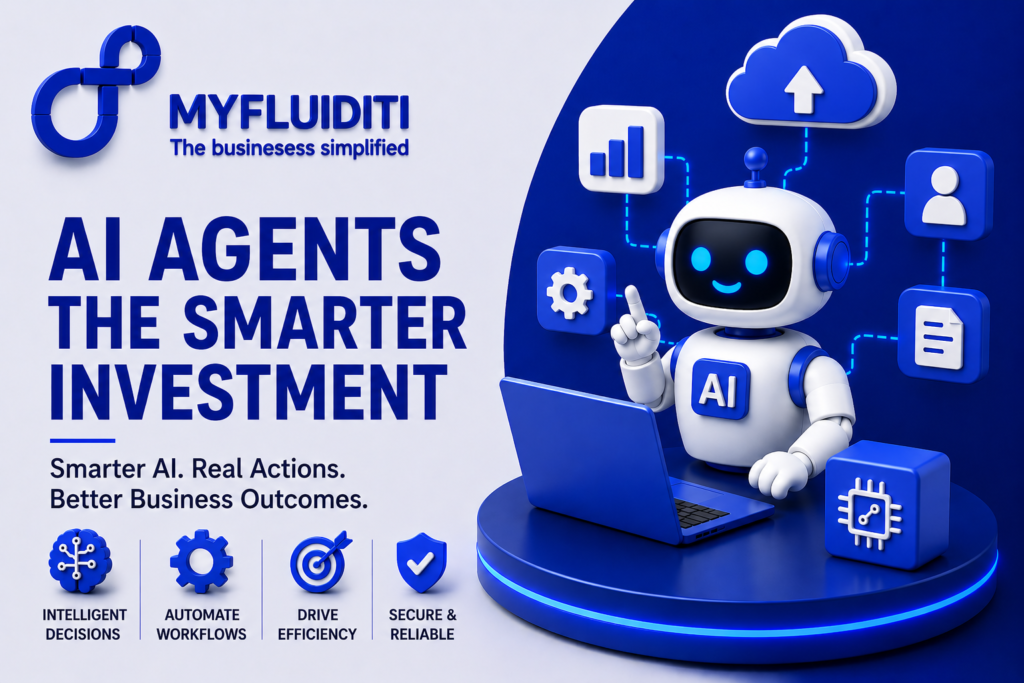
Introduction Artificial intelligence has rapidly evolved from simple conversational bots to intelligent systems capable of making decisions, automating workflows, and driving business outcomes. While chatbots have played a significant role in improving customer support and handling routine queries, modern enterprises now require technology that goes beyond answering questions. Today’s organizations need AI Agents that can understand context, analyze information, take action, and continuously improve business processes. This shift is redefining the future of enterprise AI, making AI agents a smarter and more strategic investment than traditional chatbots. As businesses continue their digital transformation journey, adopting intelligent AI solutions is becoming essential for improving efficiency, reducing operational costs, and delivering exceptional customer experiences. At myfluiditi, we help organizations implement next-generation AI solutions that transform everyday operations into intelligent, automated workflows. Understanding Traditional Chatbots Chatbots have become a common feature across websites, mobile applications, banking platforms, healthcare portals, and eCommerce stores. They are designed to respond to predefined questions using scripted conversations or basic natural language processing. While they successfully reduce customer service workloads, they are typically limited by predefined rules and lack the ability to understand complex business contexts. Most chatbots cannot independently perform tasks such as retrieving information from multiple enterprise systems, making intelligent decisions, or automating complete workflows. Their primary function remains answering questions rather than solving business problems. As customer expectations continue to grow, businesses require AI systems that deliver much more than automated responses. What Makes AI Agents Different? Unlike conventional chatbots, AI Agents are built to reason, learn, plan, and execute tasks across multiple applications and business systems. They combine Generative AI, Machine Learning, Natural Language Processing (NLP), workflow automation, and enterprise integrations to become intelligent digital assistants capable of supporting entire business processes. Instead of simply replying to customer questions, AI agents understand user intent, gather information from CRM platforms, ERP systems, cloud applications, internal databases, and third-party APIs before completing tasks with minimal human intervention. This ability transforms AI from a support tool into a strategic business asset. At myfluiditi, we design AI-powered enterprise solutions that integrate seamlessly with existing technology ecosystems, enabling businesses to automate repetitive work while maintaining complete security, compliance, and governance. Why Businesses Are Investing in AI Agents The growing adoption of AI-powered automation is driven by the increasing need for operational efficiency and personalized customer experiences. AI agents significantly reduce manual effort while enabling employees to focus on high-value strategic initiatives. Unlike traditional chatbots, AI agents can understand customer history, analyze previous interactions, predict future requirements, and recommend personalized solutions. This creates faster response times, higher customer satisfaction, and improved decision-making across departments. Organizations also benefit from increased scalability. Whether supporting hundreds or millions of users, AI agents continuously learn from new interactions and become more effective over time without requiring constant manual updates. AI Agents Drive Intelligent Business Automation Modern enterprises generate enormous amounts of operational data every day. AI agents transform this data into actionable insights by connecting multiple business applications into a unified intelligent ecosystem. Rather than asking employees to switch between several software platforms, AI agents automatically collect information, generate reports, schedule meetings, create documentation, update CRM records, process transactions, and trigger business workflows. This level of workflow automation accelerates productivity while minimizing human error. Businesses adopting intelligent AI solutions experience faster execution, lower operational costs, and improved collaboration across departments. Enhanced Customer Experience Through AI Customer expectations have changed dramatically. Consumers now expect personalized, immediate, and context-aware support regardless of the communication channel. Unlike rule-based chatbots, AI agents maintain conversation history, understand customer preferences, analyze previous purchases, and deliver highly personalized recommendations. They can proactively identify potential issues, initiate follow-up actions, and even coordinate with backend systems to resolve customer requests automatically. At myfluiditi, our AI solutions are designed to help organizations create seamless customer experiences that improve engagement, strengthen loyalty, and increase customer retention. AI Agents Improve Internal Operations The benefits of AI agents extend far beyond customer service. Organizations increasingly deploy them across finance, human resources, sales, procurement, IT operations, healthcare, manufacturing, and supply chain management. AI agents assist employees by generating reports, automating document processing, managing approvals, tracking compliance, monitoring business performance, and supporting faster decision-making. These intelligent capabilities significantly improve operational efficiency while reducing administrative overhead. This enterprise-wide automation enables organizations to achieve higher productivity without increasing workforce complexity. Security and Governance Matter As AI adoption accelerates, organizations must ensure that intelligent systems operate securely and responsibly. Enterprise AI requires robust data security, governance frameworks, user authentication, compliance monitoring, and controlled access to sensitive information. Unlike standalone chatbots, enterprise AI agents are designed with advanced security controls, audit capabilities, and permission-based workflows that support regulatory compliance across industries. myfluiditi develops secure AI ecosystems that prioritize data privacy, governance, and enterprise-grade security while enabling businesses to innovate with confidence. AI Agents Deliver Greater Return on Investment Although implementing AI agents may require greater initial planning than deploying a simple chatbot, the long-term value is substantially higher. Organizations benefit from lower operating costs, faster business processes, improved customer satisfaction, enhanced employee productivity, and stronger competitive advantage. Instead of maintaining multiple disconnected automation tools, AI agents provide a unified intelligent platform capable of supporting diverse business functions. Their ability to continuously learn and optimize workflows ensures that organizations receive ongoing value as business requirements evolve. This makes AI agents one of the most impactful investments for organizations pursuing digital transformation and intelligent automation. How myfluiditi Helps Businesses Adopt AI Agents Every organization has unique business processes, technology environments, and operational goals. At myfluiditi, we work closely with clients to design, develop, and deploy customized AI agent solutions that align with their specific requirements. Our expertise spans AI consulting, enterprise software development, cloud integration, workflow automation, API development, and intelligent business applications. From identifying automation opportunities to integrating AI with CRM, ERP, cloud platforms, and internal systems, we help businesses build scalable AI ecosystems that deliver measurable business outcomes. Our solutions are designed to increase productivity, enhance customer engagement, improve operational efficiency, and
Cloud-Native Application Development: Building Future-Ready Businesses
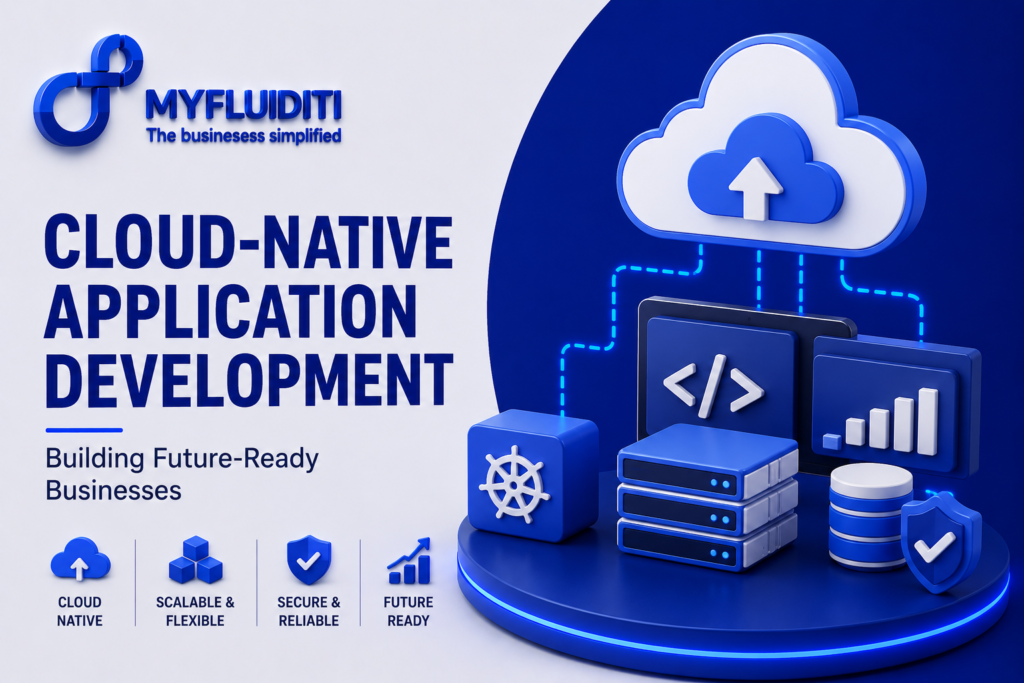
Introduction In today’s rapidly evolving digital landscape, businesses must innovate continuously to remain competitive, agile, and customer-centric. Traditional application architectures often struggle to meet modern business demands due to limited scalability, inflexible infrastructure, and lengthy deployment cycles. As organizations accelerate their Digital Transformation initiatives, Cloud-Native Application Development has emerged as a critical strategy for building resilient, scalable, and future-ready business ecosystems. Cloud-native technologies enable organizations to develop, deploy, and manage applications that fully leverage the capabilities of cloud computing. By adopting Cloud-Native Application Development Services, enterprises can accelerate innovation, improve operational efficiency, reduce infrastructure costs, and respond rapidly to changing market demands. At MyFluiditi, we help businesses embrace Cloud-Native Solutions through modern software engineering practices, scalable architectures, DevOps automation, and cloud transformation strategies designed to support sustainable business growth. Why Businesses Are Moving Toward Cloud-Native Development The modern business environment demands speed, flexibility, and continuous innovation. Organizations must rapidly launch new products, deliver seamless digital experiences, and adapt to evolving customer expectations. Traditional monolithic applications often limit business agility due to rigid architectures and complex maintenance requirements. As digital ecosystems expand, businesses require applications that can scale dynamically while maintaining high performance and reliability. Cloud-Native Development enables organizations to build highly scalable applications that support business expansion, improve customer experiences, and accelerate innovation. At MyFluiditi, we help enterprises modernize their application landscape by adopting cloud-native architectures that enable long-term digital success. What is Cloud-Native Application Development? Cloud-Native Application Development refers to the process of designing and building applications specifically optimized for cloud environments. These applications are developed using modern architectural principles that maximize the benefits of cloud platforms. Cloud-native applications typically incorporate technologies such as: Unlike traditional applications, cloud-native solutions are designed to be scalable, resilient, portable, and easily maintainable. At MyFluiditi, we develop cloud-native applications that help organizations innovate faster while improving operational efficiency. The Role of Cloud-Native Applications in Digital Transformation Successful Enterprise Digital Transformation requires organizations to modernize both business processes and technology infrastructure. Cloud-native applications play a vital role by enabling: Organizations leveraging Cloud-Native Technologies can quickly respond to market changes while maintaining business continuity. MyFluiditi helps enterprises align cloud-native strategies with business objectives to maximize digital transformation outcomes. Microservices Architecture: The Foundation of Cloud-Native Applications One of the core principles of cloud-native development is Microservices Architecture. Rather than building applications as a single monolithic system, microservices divide functionality into smaller, independent services that can be developed, deployed, and scaled separately. Benefits include: At MyFluiditi, we design microservices-based applications that enable businesses to rapidly evolve and scale digital services. Containerization and Orchestration Modern cloud-native applications rely heavily on Containerization Technologies such as Docker and orchestration platforms like Kubernetes. Containers package applications along with their dependencies, ensuring consistency across development, testing, and production environments. Kubernetes automates container deployment, scaling, and management, enabling organizations to efficiently manage complex application environments. Advantages include: MyFluiditi helps businesses implement containerized architectures that enhance application performance and operational efficiency. Scalability and High Availability Modern businesses require applications capable of supporting fluctuating workloads without compromising performance. Scalable Cloud Applications can automatically adjust computing resources based on user demand, ensuring optimal performance during peak periods. Cloud-native architectures offer: At MyFluiditi, we build highly available cloud-native systems that support business growth while minimizing downtime. DevOps and Continuous Delivery Cloud-native development is closely integrated with DevOps Practices and CI/CD Pipelines. DevOps promotes collaboration between development and operations teams, enabling organizations to deliver software updates quickly and reliably. Continuous integration and deployment enable: MyFluiditi implements robust DevOps frameworks that accelerate software delivery while maintaining security and stability. Serverless Computing for Business Agility Serverless Computing allows organizations to develop and run applications without managing underlying infrastructure. Businesses only pay for actual resource consumption, reducing infrastructure costs while improving operational efficiency. Benefits of serverless architectures include: At MyFluiditi, we help organizations leverage serverless technologies to build cost-effective and highly scalable digital solutions. API-First Development and Enterprise Integration Modern enterprises operate across diverse technology ecosystems. API-First Development enables seamless integration between applications, platforms, and third-party services. Enterprise applications often need to integrate with: MyFluiditi specializes in Enterprise Application Integration that enables organizations to create connected digital ecosystems with seamless data flow. Security in Cloud-Native Environments Security remains a top priority for cloud-native applications. Organizations must ensure that cloud environments are protected against evolving cyber threats while maintaining regulatory compliance. Essential cloud-native security practices include: At MyFluiditi, we adopt a security-first approach by embedding cybersecurity practices throughout the application development lifecycle. Data Management and Analytics Modern applications generate massive amounts of business data. Cloud-native environments enable organizations to leverage advanced Data Analytics Solutions for real-time insights and informed decision-making. Businesses can utilize: MyFluiditi helps organizations implement scalable data architectures that unlock business value from enterprise data. Business Benefits of Cloud-Native Application Development Organizations investing in Cloud-Native Development Services gain significant strategic advantages. Accelerated Innovation Cloud-native architectures enable faster product development and feature releases. Improved Scalability Applications automatically scale based on business demand. Reduced Costs Cloud-native technologies optimize infrastructure utilization and operational expenses. Enhanced Reliability Built-in redundancy and resilience improve system availability. Greater Agility Businesses can rapidly adapt to market changes and customer needs. Faster Time-to-Market Automated development pipelines significantly reduce release cycles. At MyFluiditi, we help businesses maximize these benefits through customized cloud-native strategies. Challenges in Cloud-Native Adoption Despite the benefits, organizations often face challenges when adopting cloud-native technologies. Common challenges include: Successful adoption requires careful planning, architecture expertise, and a structured implementation approach. MyFluiditi provides end-to-end cloud modernization services that minimize risks while ensuring successful adoption. How MyFluiditi Helps Businesses Build Future-Ready Cloud-Native Applications At MyFluiditi, we understand that every organization has unique business objectives and technology requirements. Our cloud-native services include: By combining expertise in cloud computing, software engineering, cybersecurity, and enterprise architecture, MyFluiditi helps businesses build scalable and future-ready digital ecosystems. Future Trends in Cloud-Native Development The future of Cloud-Native Application Development will be driven by emerging technologies including: Organizations adopting these technologies will gain significant competitive advantages through increased agility and innovation. At MyFluiditi, we continuously
Building Scalable Enterprise Applications for Digital Growth
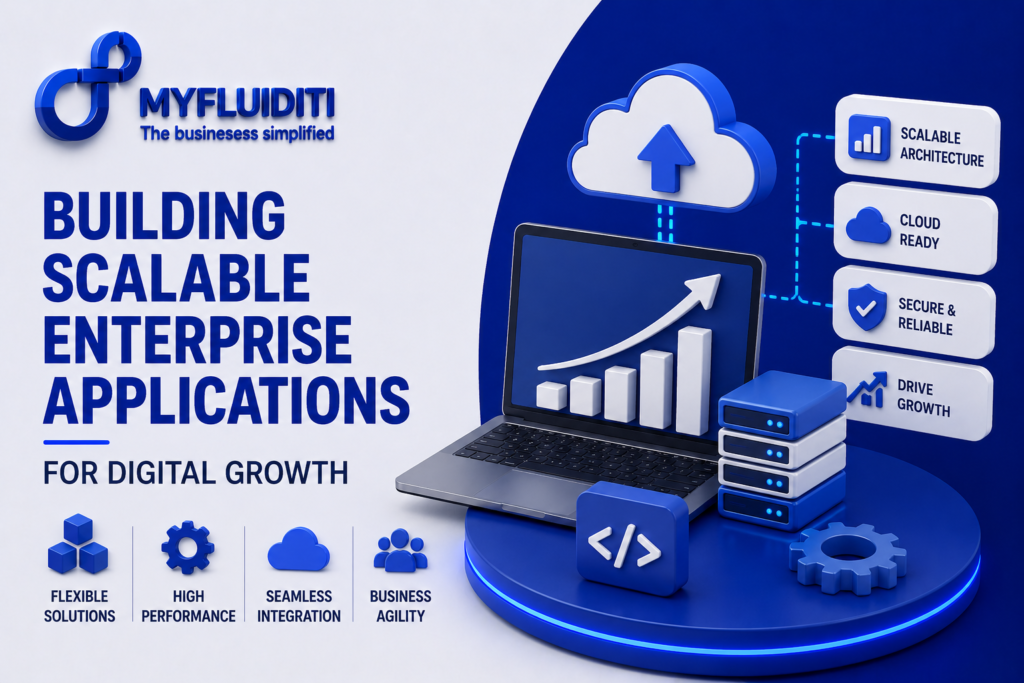
Introduction In today’s rapidly evolving digital landscape, businesses must continuously innovate, adapt, and expand to remain competitive. As organizations grow, their technology infrastructure must be capable of supporting increasing workloads, evolving customer expectations, and changing market demands. This is where Building Scalable Enterprise Applications becomes critical for achieving sustainable Digital Growth. Modern enterprises require applications that not only support current business operations but also scale seamlessly as the organization expands. Scalable applications enable businesses to accommodate growing user bases, process larger volumes of data, integrate emerging technologies, and deliver exceptional customer experiences without compromising performance. At MyFluiditi, we help organizations accelerate Digital Transformation by designing and developing Scalable Enterprise Applications that are secure, flexible, cloud-ready, and built to support long-term business growth. Why Scalability Matters in Enterprise Application Development As businesses expand, their operational requirements become increasingly complex. Applications that perform efficiently today may struggle to handle future demands if scalability is not considered during development. A lack of scalability can result in performance bottlenecks, system downtime, poor user experiences, increased maintenance costs, and reduced business agility. Scalable applications provide organizations with the flexibility to grow without constantly rebuilding technology infrastructure. At MyFluiditi, we develop Enterprise Software Solutions that enable businesses to scale efficiently while maintaining high availability and optimal performance. Understanding Scalable Enterprise Applications Scalable Enterprise Applications are software systems designed to handle increasing workloads, users, transactions, and data volumes while maintaining performance, reliability, and security. Scalability can be achieved through architecture, infrastructure, and application design strategies that allow systems to expand dynamically as business requirements evolve. Modern scalable applications often leverage: At MyFluiditi, we build future-ready applications using modern architectural principles that support both current and future business objectives. Aligning Enterprise Applications with Digital Growth Strategies Successful digital growth requires technology solutions that align closely with business goals. Organizations must ensure that enterprise applications support strategic initiatives such as market expansion, customer engagement, operational efficiency, and innovation. Scalable applications enable businesses to: At MyFluiditi, we work closely with stakeholders to understand business priorities and develop customized applications that drive measurable business outcomes. Cloud-Native Development for Enterprise Scalability Cloud-Native Application Development has become a foundational approach for building scalable enterprise solutions. Cloud-native applications are specifically designed to take full advantage of cloud environments, offering flexibility, resilience, and rapid scalability. Benefits of cloud-native applications include: At MyFluiditi, we design and implement Cloud-Native Enterprise Applications that leverage platforms such as AWS, Microsoft Azure, and Google Cloud to maximize scalability and operational efficiency. Microservices Architecture for Flexible Growth Traditional monolithic applications often create limitations as businesses grow. Microservices Architecture breaks applications into smaller, independently deployable services that can be developed, updated, and scaled individually. Advantages of microservices include: MyFluiditi helps organizations modernize legacy applications and adopt microservices architectures that support continuous innovation and business growth. Leveraging APIs for Enterprise Integration Modern enterprises operate within complex ecosystems consisting of multiple applications, platforms, and data sources. Enterprise Application Integration ensures seamless communication across systems such as: API-first development strategies enable businesses to integrate systems efficiently while supporting scalability and future expansion. At MyFluiditi, we build API-driven enterprise solutions that create connected digital ecosystems and eliminate operational silos. Containerization and Orchestration for Scalability Containerization technologies such as Docker and orchestration platforms like Kubernetes have transformed modern application deployment. Containers package applications and their dependencies into portable units that can run consistently across different environments. Benefits include: MyFluiditi leverages Containerized Application Development and Kubernetes orchestration to deliver highly scalable enterprise environments that support evolving business requirements. Ensuring High Performance and Reliability Enterprise applications must consistently deliver exceptional performance regardless of workload fluctuations. High-performance applications require: At MyFluiditi, our engineering teams design resilient systems that ensure maximum uptime, responsiveness, and business continuity. Data Management for Scalable Applications As organizations grow, data volumes increase significantly. Scalable enterprise applications require modern Data Management Solutions capable of handling structured and unstructured data efficiently. Organizations increasingly adopt: At MyFluiditi, we implement scalable data architectures that provide businesses with secure, accessible, and actionable insights. Security as a Core Component of Scalability Growth should never compromise security. Scalable applications must incorporate strong cybersecurity frameworks that protect business-critical data and maintain compliance. Essential security measures include: At MyFluiditi, we follow a Security-First Development Approach to ensure enterprise applications remain secure, compliant, and resilient against evolving cyber threats. DevOps and Continuous Delivery for Enterprise Agility Modern enterprises require rapid innovation cycles. DevOps Practices and Continuous Integration/Continuous Deployment (CI/CD) pipelines enable organizations to release updates quickly while maintaining quality and stability. Benefits include: MyFluiditi implements DevOps automation frameworks that accelerate software delivery while supporting scalability and operational excellence. Artificial Intelligence and Automation in Enterprise Applications Intelligent technologies are increasingly becoming essential components of scalable enterprise applications. Organizations are integrating: These technologies enhance decision-making, automate repetitive processes, and improve customer experiences. At MyFluiditi, we integrate AI-powered capabilities into enterprise applications to help businesses unlock new growth opportunities and improve operational efficiency. Overcoming Challenges in Enterprise Scalability While scalable application development offers significant benefits, organizations often encounter challenges including: A strategic development approach is essential for overcoming these challenges. MyFluiditi provides comprehensive Enterprise Application Consulting Services that help organizations navigate complexity while maximizing business value. Measuring Success in Scalable Application Development Organizations should establish measurable KPIs to evaluate application scalability and business impact. Key performance indicators may include: At MyFluiditi, we help businesses define success metrics and continuously optimize enterprise applications to maximize ROI. How MyFluiditi Helps Businesses Build Scalable Enterprise Applications At MyFluiditi, we understand that every organization has unique growth objectives and operational challenges. Our end-to-end enterprise application services include: By combining expertise in software engineering, cloud computing, cybersecurity, artificial intelligence, and enterprise architecture, MyFluiditi helps organizations build scalable applications that drive long-term digital growth. Future Trends in Scalable Enterprise Applications The future of enterprise applications will be shaped by emerging technologies such as: Organizations that embrace these technologies will gain significant competitive advantages through increased agility, innovation, and operational efficiency. At MyFluiditi, we continuously help businesses adopt next-generation technologies that support sustainable digital transformation.
Enterprise HR Management Portal for Digital Workforce Operations
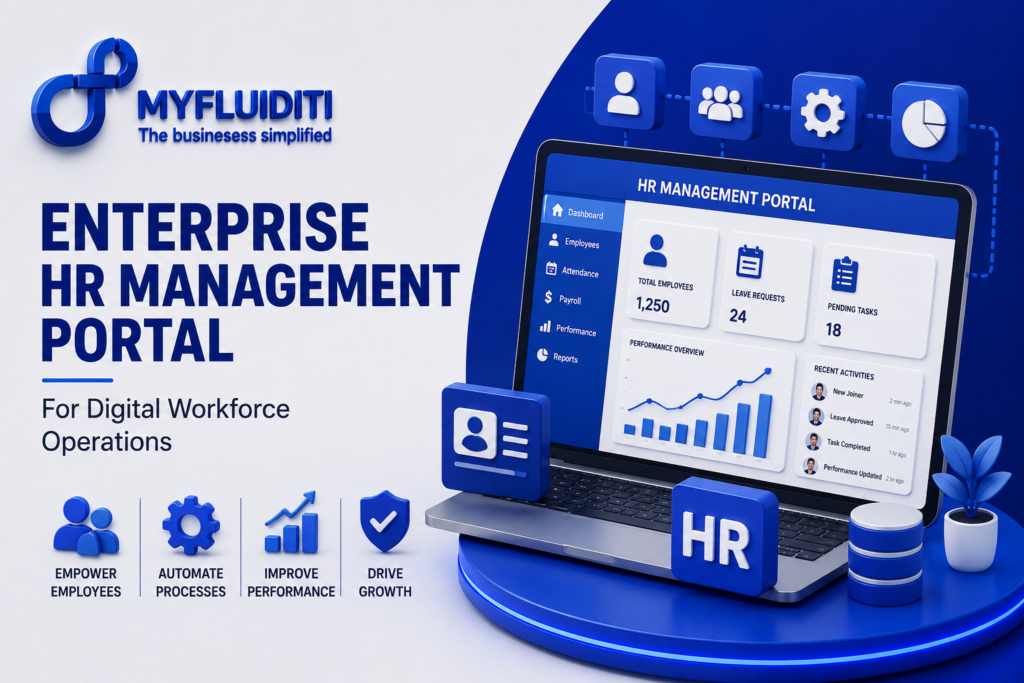
Introduction In today’s rapidly evolving business environment, organizations are increasingly embracing digital transformation to manage distributed, hybrid, and global workforces more efficiently. Traditional HR processes that rely on manual operations, disconnected systems, and paper-based workflows often struggle to meet modern workforce demands. This has accelerated the adoption of Enterprise HR Management Portals as a critical component of Digital Workforce Operations. An Enterprise HR Management Portal serves as a centralized platform that streamlines human resource functions, enhances employee experiences, automates administrative processes, and provides real-time workforce insights. By integrating advanced technologies such as Artificial Intelligence (AI), Cloud Computing, Workflow Automation, and Data Analytics, organizations can build agile, efficient, and employee-centric HR ecosystems. At MyFluiditi, we help businesses modernize workforce operations through Custom HR Portal Development, intelligent automation solutions, cloud-native architectures, and enterprise-grade digital transformation strategies designed to improve operational efficiency and employee engagement. Why Modern Enterprises Need HR Management Portals Managing a modern workforce has become increasingly complex due to remote work models, global teams, changing compliance requirements, and evolving employee expectations. Traditional HR systems often create operational bottlenecks, resulting in delayed approvals, fragmented employee data, inefficient onboarding processes, and limited visibility into workforce performance. A modern Enterprise HR Management System enables organizations to automate HR processes, improve collaboration, centralize employee information, and enhance decision-making capabilities. At MyFluiditi, we help organizations transition from legacy HR systems to intelligent digital platforms that support scalable and future-ready workforce management. What is an Enterprise HR Management Portal? An Enterprise HR Management Portal is a centralized digital platform that manages and automates core human resource functions across the organization. The portal acts as a single source of truth for employee information while enabling seamless interactions between employees, managers, HR teams, and leadership. Key capabilities often include: At MyFluiditi, we develop Custom HR Management Portals tailored to unique organizational requirements, ensuring seamless integration with existing enterprise systems. Employee Self-Service for Enhanced Workforce Experience Modern employees expect instant access to information and self-service capabilities. An Employee Self-Service Portal (ESS) empowers employees to manage personal information, request leave, access payslips, update profiles, submit expenses, and track HR requests without depending on HR personnel. Self-service capabilities significantly reduce administrative workloads while improving employee satisfaction and productivity. MyFluiditi designs intuitive and user-friendly employee portals that deliver exceptional digital experiences across web and mobile platforms. Streamlining Recruitment and Talent Acquisition Attracting and retaining top talent is essential for organizational success. An integrated Talent Management System enables organizations to automate recruitment workflows, manage job postings, track applicants, schedule interviews, and streamline candidate onboarding. AI-powered recruitment capabilities further improve hiring efficiency by screening resumes, identifying suitable candidates, and reducing hiring timelines. At MyFluiditi, we build intelligent recruitment modules that help organizations optimize hiring processes and improve talent acquisition outcomes. Digital Onboarding and Employee Lifecycle Management Employee onboarding plays a vital role in workforce productivity and engagement. A digital HR portal can automate onboarding tasks such as document collection, policy acknowledgments, training assignments, system provisioning, and orientation scheduling. Beyond onboarding, organizations can manage the complete employee lifecycle, including promotions, transfers, performance reviews, and offboarding processes. MyFluiditi helps businesses automate employee lifecycle management through scalable HR automation solutions that improve consistency and operational efficiency. Attendance, Leave, and Workforce Management Managing employee attendance and leave manually can be time-consuming and error-prone. An integrated Workforce Management System enables organizations to automate attendance tracking, shift scheduling, leave approvals, overtime calculations, and workforce planning. Real-time visibility into workforce availability helps organizations optimize resource allocation and improve operational efficiency. At MyFluiditi, we develop workforce management solutions that support hybrid, remote, and on-site workforce models. Performance Management and Employee Engagement Employee performance and engagement directly impact business success. Modern HR portals provide continuous feedback mechanisms, goal tracking, performance evaluations, and employee recognition programs that support high-performance cultures. Organizations can establish measurable objectives, monitor progress, and identify development opportunities through data-driven performance management systems. MyFluiditi delivers intelligent performance management solutions that help organizations align employee goals with business objectives. Payroll Automation and Compliance Management Payroll processing involves complex calculations, tax regulations, and compliance requirements. An integrated Payroll Management System automates salary processing, deductions, reimbursements, tax calculations, and statutory reporting while reducing errors and administrative effort. Compliance management features help organizations adhere to labor laws, industry regulations, and internal policies. At MyFluiditi, we implement secure payroll automation solutions that improve accuracy, transparency, and regulatory compliance. AI and Analytics in HR Operations Modern HR functions increasingly rely on data-driven decision-making. AI-Powered HR Analytics enables organizations to analyze workforce trends, predict attrition, identify skill gaps, and optimize workforce strategies. Advanced analytics provide valuable insights into: At MyFluiditi, we integrate AI and analytics capabilities into HR platforms to support strategic workforce planning and business growth. Cloud-Based HR Portals for Scalability As organizations expand, HR systems must support growing workforce requirements. Cloud-Based HR Management Solutions offer scalability, flexibility, accessibility, and cost efficiency compared to traditional on-premises systems. Cloud platforms enable employees and managers to access HR services securely from anywhere, supporting remote and hybrid work environments. MyFluiditi develops cloud-native HR portals that provide seamless scalability while ensuring high availability and business continuity. Integration with Enterprise Systems HR systems rarely operate independently. An effective HR portal should integrate seamlessly with: Enterprise integration eliminates data silos and enables efficient information flow across business functions. At MyFluiditi, we specialize in Enterprise System Integration that creates connected digital ecosystems for workforce operations. Security and Data Privacy Considerations HR systems manage highly sensitive employee information. Organizations must ensure strong security measures, including: At MyFluiditi, we follow a security-first development approach to ensure HR platforms remain compliant, secure, and resilient against evolving cyber threats. Benefits of Enterprise HR Management Portals Organizations implementing Digital HR Solutions can achieve numerous benefits: Improved Operational Efficiency Automation reduces manual effort and streamlines administrative tasks. Enhanced Employee Experience Self-service capabilities improve employee satisfaction and engagement. Faster Decision-Making Real-time analytics provide actionable workforce insights. Reduced Operational Costs Automation minimizes administrative overhead and process inefficiencies. Improved Compliance Integrated compliance controls help organizations meet regulatory requirements. Greater Workforce Visibility Centralized