Business Data Technology Implementation Order Guide
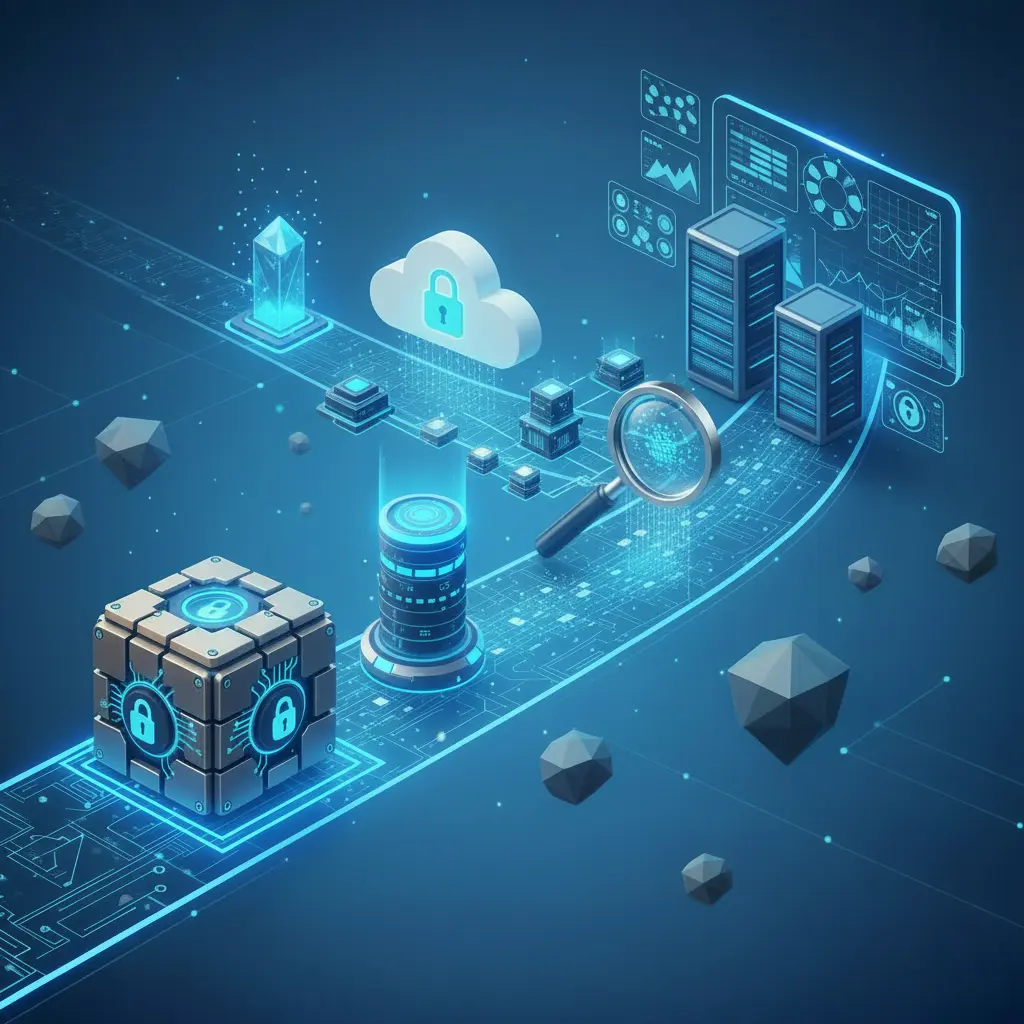
Transforming raw information into a competitive advantage requires more than just purchasing the latest software. For CTOs, IT managers, and business owners across the USA, the true challenge lies in sequencing. Adopting tools in the wrong sequence leads to siloed information, inflated costs, and failed AI initiatives. Understanding the correct business data technology implementation order is the foundational step toward building resilient, intelligent, and scalable systems. At MyFluiditi, we specialize in AI web app development. We see firsthand how organizations struggle when they deploy advanced artificial intelligence before establishing a solid information architecture. This guide provides a comprehensive roadmap for structuring your technology investments. We will break down the exact phases required to turn fragmented systems into cohesive, AI-ready powerhouses. The Stakes of Digital Transformation Organizations often rush to implement machine learning models or predictive analytics dashboards without preparing their underlying infrastructure. This approach almost always backfires. When you disrupt the proper business data technology implementation order, you force advanced algorithms to train on incomplete, dirty, or inaccessible information. The Cost of Disorganized Strategies Investing heavily in front-end AI web apps without backend preparation drains budgets. When applications lack a unified source of truth, employees spend countless hours manually reconciling reports. Furthermore, security vulnerabilities multiply when systems are pieced together haphazardly. By respecting a strategic sequence, US businesses can avoid these expensive missteps and ensure every new tool integrates smoothly with existing assets. Why the US Market Requires Precision The American market demands speed and compliance. With regulations varying across states and industries, your architecture must be both agile and secure. Competitors are rapidly adopting AI solutions. To stay ahead, you need a framework that supports rapid deployment while maintaining strict governance. Following the right business data technology implementation order guarantees that your company scales efficiently without compromising security or performance. Phase 1: Comprehensive Assessment and Auditing You cannot build a house without surveying the land. The first phase of any technological upgrade involves a rigorous audit of your current capabilities. Identifying Existing Assets Start by cataloging every piece of software, database, and manual process currently in use. Where does your information live? How does it move between departments? Who has access to it? Mapping these touchpoints reveals bottlenecks and redundancies. Ignoring this step disrupts the entire business data technology implementation order, leading to redundant purchases and incompatible systems down the line. Gap Analysis and Goal Setting Once you understand your current landscape, define your business objectives. Are you trying to improve customer retention, automate supply chain logistics, or personalize user experiences? Compare your current capabilities against these goals. The resulting gap analysis will dictate exactly what infrastructure you need to build next. Phase 2: Choosing the Right Infrastructure With a clear audit in hand, you must establish a secure, scalable home for your information. This foundational layer dictates the success of every subsequent phase. Cloud vs. On-Premise Solutions Modern AI web apps thrive in cloud environments. Cloud providers offer the elasticity required to process massive volumes of information dynamically. While some highly regulated industries still rely on on-premise servers, hybrid or fully cloud-based architectures provide the flexibility necessary for growth. Selecting your hosting environment is a critical milestone in the business data technology implementation order. Establishing Data Lakes and Warehouses Raw information needs a repository. Data lakes store unstructured information, while data warehouses organize processed, structured information for specific queries. Establishing these repositories ensures that when you eventually deploy business intelligence tools or AI models, they have a centralized, reliable source to pull from. Building this infrastructure early prevents the formation of isolated information silos across different departments. Phase 3: Governance and Security Protocols Before you start analyzing your centralized repositories, you must secure them. Security cannot be an afterthought; it must be baked into the architecture. Compliance in the American Market Data privacy regulations are becoming stricter. You must implement access controls, encryption, and audit trails to ensure compliance with standards like SOC 2, HIPAA, or state-specific privacy laws. Defining who can access specific types of information protects your organization from internal breaches and external threats. Building Resilient Architectures Establishing robust governance early in the business data technology implementation order ensures that your systems remain secure as they grow. This involves creating standardized naming conventions, establishing data quality rules, and implementing automated backup protocols. When information is clean, standardized, and secure, subsequent analytics and AI deployments become significantly easier to manage. Phase 4: Analytics and Business Intelligence Integration With a secure, organized foundation in place, you can begin extracting value through business intelligence (BI) tools. Moving from Raw Information to Actionable Insights BI tools connect to your warehouses to create visual representations of your operations. This phase transforms abstract numbers into readable dashboards, highlighting trends in sales, operational efficiency, and customer behavior. Deploying BI tools at this specific stage of the business data technology implementation order guarantees that executives make decisions based on accurate, real-time information rather than outdated spreadsheets. Tool Selection and Dashboarding Choose BI platforms that integrate seamlessly with your existing cloud infrastructure. Focus on creating role-specific dashboards. A CTO needs different metrics than a marketing director. By tailoring these views, you ensure that every department gains immediate value from the new architecture, building momentum for the final, most complex phase of transformation. Phase 5: Advanced AI and Machine Learning Deployment This is where MyFluiditi excels. With your infrastructure built, governed, and analyzed, your organization is finally ready to deploy advanced artificial intelligence. How MyFluiditi Approaches AI Web Apps We build intelligent web applications that leverage your newly organized ecosystem. Because you followed the correct business data technology implementation order, our AI models can access clean, centralized information. This allows us to develop custom applications that automate complex workflows, predict customer behavior, and generate deep, actionable insights. Predictive Analytics and Automation Machine learning models thrive on high-quality input. By waiting until Phase 5 to deploy these tools, you ensure the models train on accurate historical records. This leads to highly precise predictive analytics. Whether you
what are industry trends in AI development company

Artificial intelligence is transforming how businesses operate across the United States. From optimizing daily workflows to creating entirely new digital experiences, AI is no longer a futuristic concept-it is a baseline requirement for competitive web applications. For enterprise leaders and technical founders alike, staying ahead means constantly evaluating the technological landscape. When you ask, exactly what are industry trends shaping the next decade of software, the answer lies in how seamlessly AI integrates into our daily digital tools. This comprehensive guide explores the core movements defining the future of AI web app development. We will unpack the explosive growth of generative AI, the strategic shift toward edge computing, the critical importance of AI ethics, and the democratization of software through low-code and no-code platforms. Finally, we will show you how MyFluiditi partners with USA-based businesses to turn these advanced concepts into tangible, high-performing web applications. The Shifting Landscape of Artificial Intelligence The pace of innovation in artificial intelligence demands constant vigilance. Business leaders frequently gather in boardrooms to ask, what are industry trends signaling for our next product roadmap? The signals point clearly toward integration, speed, and responsibility. We are moving away from siloed AI experiments and toward embedded, invisible intelligence that anticipates user needs before they explicitly state them. As companies race to deploy these technologies, understanding the underlying currents becomes essential. You cannot simply bolt an AI feature onto an outdated application and expect market dominance. Instead, you must build with a fundamentally intelligent architecture from day one. To truly grasp what are industry trends doing to market dynamics, we must look at the specific technologies driving user adoption and operational efficiency. Generative AI: Revolutionizing Web Applications Generative AI has captured the public imagination, but its real power lies in enterprise applications. We have moved past simple text generation into complex, multimodal content creation that happens in real-time. Dynamic Content Generation Modern web applications use generative models to create highly personalized user interfaces. Instead of serving static pages, apps now analyze user behavior and generate custom dashboards, reports, and recommendations on the fly. When developers study what are industry trends in user engagement, dynamic content consistently ranks at the top. This approach significantly reduces churn rates and increases the time users spend extracting value from your software. Automated Code and Workflow Generation Generative AI also transforms how developers build the applications themselves. AI-assisted coding tools help engineering teams write boilerplate code, identify bugs, and optimize database queries much faster. This internal efficiency directly translates to faster feature releases for your end-users. Advanced Conversational Interfaces The standard chatbot is dead. Today’s AI development focuses on autonomous agents that can execute complex tasks across multiple systems. If a user wants to pull a quarterly sales report, analyze it for anomalies, and email a summary to their team, a modern AI agent can do this through a single conversational prompt. Edge Computing: Bringing AI Closer to the Source Cloud computing revolutionized software, but sending massive amounts of data back and forth to centralized servers creates latency. Edge computing solves this by processing AI models locally, closer to where the data originates. Eliminating Latency For web applications requiring real-time decision-making like financial trading platforms or remote healthcare monitoring-milliseconds matter. By moving AI processing to the edge, ge-optimized processors is the clearest indicator Enhancing Data Privacy and Security Sending sensitive user data to the cloud introduces security vulnerabilities. Edge computing allows web applications to process personal information locally on the user’s device. The application extracts the necessary insights and discards the raw data, ensuring compliance with strict data protection regulations. When privacy advocates ask what are industry trends doing to protect consumers, edge AI is the primary technical solution. Reducing Infrastructure Costs Constant cloud API calls become expensive as your application scales. By handling heavy AI computations at the edge, development companies drastically reduce cloud hosting and bandwidth expenses. This trend makes high-powered AI applications economically viable for smaller businesses. Navigating AI Ethics and Responsible Development As AI systems gain more autonomy, the ethical implications of their decisions come under intense scrutiny. Responsible AI development is no longer just a legal requirement; it is a core component of brand trust. Algorithmic Bias Mitigation AI models learn from historical data, which often contains human biases. If an AI web app helps HR departments screen resumes, it must do so fairly. AI development companies now employ rigorous testing frameworks to identify and eliminate bias before deploying models. When researchers investigate what are industry trends in compliance, algorithmic fairness is a massive focal point. Transparency and Explainability Users need to know why an AI system made a specific decision. “Black box” AI is unacceptable in industries like finance or healthcare. Modern development focuses on explainable AI (XAI), which provides clear, human-readable logic for every output. Data Governance and Consent Building ethical AI requires strict data governance. Web applications must transparently communicate what data they collect, how they use it to train models, and give users explicit control over their information. Companies that prioritize user consent build stronger, longer-lasting relationships with their target audience. The Rise of Low-Code and No-Code AI Solutions The demand for AI solutions vastly outpaces the supply of specialized machine learning engineers. Low-code and no-code AI platforms have emerged to bridge this gap, allowing business analysts and domain experts to build intelligent applications. Democratizing AI Development You no longer need a PhD in computer science to deploy a predictive model. Visual interfaces allow users to drag and drop AI components, train custom models on their own datasets, and integrate them into web apps via APIs. If you evaluate what are industry trends in workforce productivity, the democratization of software development is leading the charge. Accelerating Speed to Market Traditional AI development takes months of prototyping and testing. Low-code platforms reduce this cycle to weeks or even days. This rapid prototyping allows companies to test AI features with real users quickly, gather feedback, and iterate without exhausting their engineering budgets. Bridging the Business-IT
Need AI Tool for Create Excel Sheet Data for Inventory
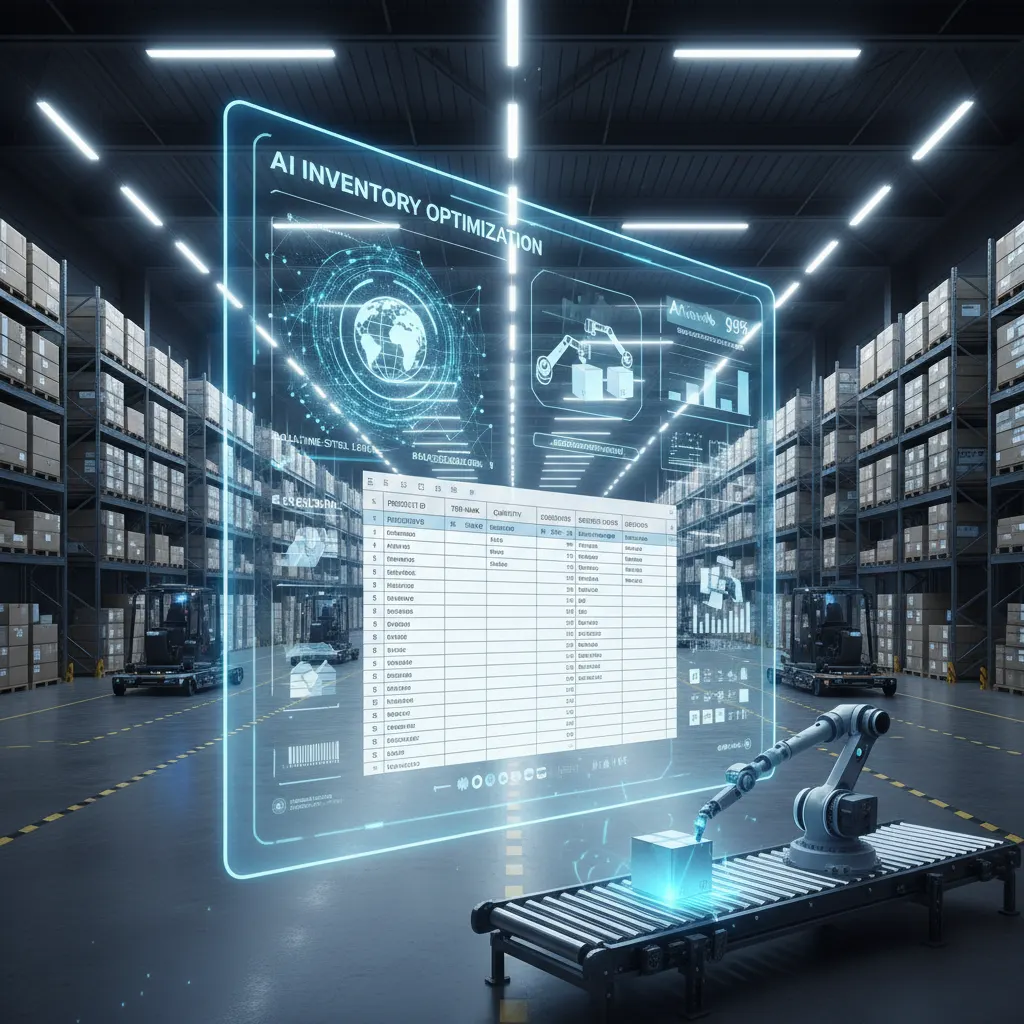
Managing stock levels, tracking shipments, and predicting supply needs can feel overwhelming. If you manage a growing business in the USA, you know that manual data entry drains resources and introduces costly errors. You might find yourself searching the internet, typing the exact phrase: “I need ai tool for create excel sheet data for inventory.” You are not alone in this search. This comprehensive guide explores the importance of artificial intelligence in stock management. We will break down how these technologies simplify spreadsheet generation, outline the essential features you must look for, and explain how myfluiditi.com delivers custom web app AI solutions to solve these exact challenges. The Shift to Automated Inventory Management For decades, businesses relied on basic spreadsheets and manual counting. Workers spent countless hours walking warehouse floors, tallying items, and typing numbers into a computer. This method is slow, prone to human error, and completely disconnected from real-time sales data. As supply chains grow more complex, American businesses face pressure to fulfill orders faster than ever. A simple typo in a spreadsheet can lead to stockouts, delayed shipments, and unhappy customers. When companies hit this breaking point, they realize they need ai tool for create excel sheet data for inventory. AI removes the heavy lifting from human workers and hands it over to smart algorithms that process data instantly. Artificial intelligence does not just record numbers; it analyzes them. It looks at historical sales, seasonal trends, and current market demands to predict exactly what you will need and when you will need it. Top Benefits of AI in Inventory Management Integrating AI into your operations offers numerous advantages that go far beyond simple data entry. When executives express the thought, “We need ai tool for create excel sheet data for inventory,” they are actually looking for the broad business benefits that come with intelligent automation. 1. Drastic Reduction in Human Error Manual data entry is the leading cause of stock discrepancies. A tired employee might accidentally add an extra zero to a purchase order. AI tools pull data directly from barcodes, sales platforms, and warehouse sensors, populating your spreadsheets with perfect accuracy. 2. Real-Time Stock Visibility You never have to guess how many units remain in your warehouse. AI systems update your data instantly as sales happen. This real-time visibility allows managers to make quick decisions regarding promotions, reordering, and liquidating dead stock. 3. Predictive Restocking Traditional methods force you to wait until stock runs low before you reorder. AI anticipates the drop. By analyzing past purchasing behavior and upcoming market trends, the technology alerts you exactly when to contact suppliers, preventing costly stockouts. 4. Significant Cost Savings Labor costs add up quickly when employees spend days counting inventory. Automating these tasks frees your team to focus on high-level strategy, customer service, and business growth. Furthermore, accurate data prevents over-ordering, which ties up valuable capital in unsold goods. How AI Simplifies Creating Excel Sheet Data Excel remains a staple in business operations. It is familiar, highly customizable, and compatible with almost every major software platform. However, building these sheets from scratch requires advanced knowledge of formulas, macros, and pivot tables. This is why warehouse managers often search online for “need ai tool for create excel sheet data for inventory”. They want the familiar format of a spreadsheet without the manual labor required to build it. Automated Data Extraction Modern AI tools integrate directly with your e-commerce platforms, point-of-sale systems, and warehouse scanners. Instead of an employee typing numbers into cells, the AI extracts the data and formats it perfectly into a spreadsheet layout. Natural Language Processing (NLP) Some advanced web applications allow you to use plain English to generate reports. You can type a command like, “Generate a spreadsheet showing all electronics with less than 50 units in stock.” The AI interprets this command and instantly produces the exact Excel file you requested. Intelligent Categorization AI automatically sorts your items into logical categories. It identifies patterns in your product descriptions and groups them by size, color, vendor, or profit margin. This automatic sorting makes your Excel sheets highly organized and easy to scan. Essential Features to Look for in an AI Tool Not all software applications offer the same level of utility. When you actively address the specific “need ai tool for create excel sheet data for inventory” requirement, you must evaluate potential software against a strict set of criteria. Seamless Integration Capabilities The software must communicate effortlessly with your existing tech stack. Look for tools that offer robust APIs and native integrations with popular platforms like Shopify, Amazon, QuickBooks, and your preferred ERP systems. Custom Reporting Templates Every business tracks slightly different metrics. Your AI tool should allow you to define custom parameters for your Excel exports. Whether you need to see daily turnover rates or quarterly supplier costs, the tool should generate sheets tailored to your exact specifications. Cloud-Based Accessibility Your team needs access to inventory data whether they sit in a corporate office, stand on a warehouse floor, or travel to a supplier meeting. Web-based applications ensure that the latest Excel data is always available on any device with an internet connection. Scalability A small retail shop manages a few hundred SKUs, while a massive distributor manages millions. The AI solution you choose must handle growing data volumes without slowing down or crashing. How myfluiditi.com Stands Out in AI Web App Development Finding off-the-shelf software that fits your exact workflow is often frustrating. Generic tools force you to change your business processes to match the software. This is where myfluiditi.com changes the game. As a premier web app AI development company serving the USA, we build custom solutions for businesses who say they need ai tool for create excel sheet data for inventory. We understand that your inventory challenges are unique, and your software should reflect that. Custom-Built for Your Operations We do not sell boxed software. Our team of AI developers analyzes your specific supply chain, identifies your bottlenecks, and builds a
Digital Transformation Strategies for Small and Mid-Size Companies
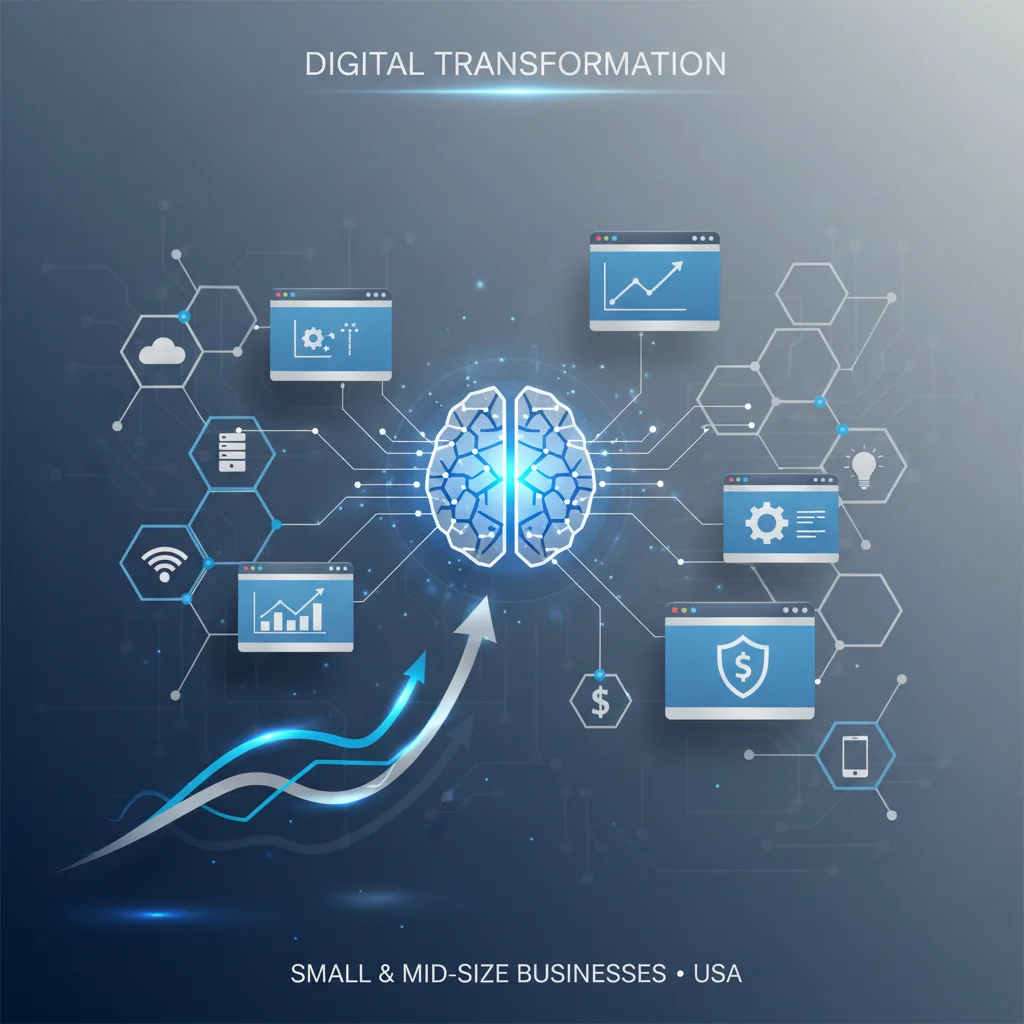
Running a small or mid-size business (SMB) in the United States requires constant adaptation. Customer expectations shift rapidly, and operational costs continue to rise. You might feel like large corporations hold all the cards when it comes to technology. However, the right approach can level the playing field. Developing effective Digital Transformation Strategies is no longer optional; it is a critical step for survival and growth. This guide breaks down how your company can leverage technology, specifically artificial intelligence and web application development, to streamline operations and boost revenue. We will explore practical steps, common hurdles, and real-world examples to help you navigate this transition smoothly. What Does Digital Transformation Mean for SMBs? For a small or mid-size company, digital transformation means integrating digital technology into all areas of your business. It changes how you operate and deliver value to your customers. It is also a cultural shift that requires your team to challenge the status quo and experiment with new methods. Many business owners think buying a new software subscription checks the box. But true transformation goes deeper. It involves rethinking your processes from the ground up. Effective Digital Transformation Strategies focus on aligning technology with your specific business goals, whether that means automating manual data entry, improving customer service through web apps, or using AI to forecast inventory needs. The Core Benefits of Modernizing Your Business Why should your company invest time and resources into upgrading its technology? The benefits extend far beyond simply having modern tools. Increased Efficiency and Productivity Manual processes drain your team’s energy and time. By implementing custom web applications, you can automate repetitive tasks. This frees your staff to focus on high-value work, like building client relationships or developing new products. Better Customer Experiences Today’s consumers expect seamless, fast, and personalized interactions. A custom web app can provide your customers with a self-service portal, allowing them to track orders, schedule appointments, or access support at any time. AI-driven chatbots can answer questions instantly, improving satisfaction rates. Data-Driven Decision Making Relying on gut feelings is risky. Modern business tools collect and analyze vast amounts of data. This gives you clear insights into customer behavior, operational bottlenecks, and financial trends. Enhanced Competitiveness The USA market is highly competitive. Implementing robust Digital Transformation Strategies allows you to move faster and offer better services than competitors who rely on outdated systems. You can scale your operations up or down quickly based on market demands. Common Challenges and How to Overcome Them Transitioning to new technology is rarely without friction. Understanding potential roadblocks helps you prepare and avoid costly mistakes. Budget Constraints SMBs often operate on tight budgets. A complete system overhaul might seem financially impossible.The Solution: Start small. You do not need to change everything at once. Identify the one process that costs you the most time and money. Build a small custom web app to solve that specific problem, prove the return on investment, and use those savings to fund the next project. Employee Resistance People naturally resist change, especially if they have done a job the same way for years.The Solution: Involve your team early in the process. Ask them about their daily frustrations and show them how the new technology will make their jobs easier, not replace them. Comprehensive training is also essential. Lack of In-House Expertise Most mid-size companies do not have a massive IT department to manage complex integrations.The Solution: Partner with a specialized technology firm. At myfluiditi.com, we help businesses design and build web apps and AI tools that fit their exact needs, acting as an extension of your team. Essential Digital Transformation Strategies Building a roadmap is crucial for success. Here are key Digital Transformation Strategies you can implement to drive meaningful change in your organization. 1. Automating Workflows with AI Artificial intelligence is not just for tech giants. SMBs can use AI to automate complex workflows. For example, AI can automatically categorize incoming customer support emails, routing them to the correct department based on the text. This reduces response times and prevents messages from getting lost. 2. Building Custom Web Applications Off-the-shelf software rarely fits a business perfectly. You end up changing your processes to fit the software, which causes frustration. Custom web app development ensures the software works exactly how you need it to. Whether you need a secure portal for vendors or an internal project management tool, a custom web app scales with your business. 3. Migrating to Cloud Infrastructure Storing data on local servers is risky and limits remote work capabilities. Moving to the cloud ensures your team can access necessary tools from anywhere securely. It also reduces hardware maintenance costs and provides automatic data backups. 4. Integrating Systems Many businesses use five or six different software programs that do not communicate with each other. This leads to duplicate data entry and errors. A core part of successful Digital Transformation Strategies involves integrating these systems so data flows seamlessly from your marketing platform to your sales CRM and into your accounting software. The Role of AI in Your Transformation Artificial intelligence acts as an accelerator for your business growth. When you integrate AI into your web applications, you unlock capabilities that were previously impossible for small teams. Consider predictive analytics. An AI model can analyze your historical sales data, factor in seasonal trends, and predict what inventory you will need next month. This prevents overstocking and reduces warehousing costs. AI can also personalize the user experience on your web app. If you run a B2B distribution company, an AI engine can recommend complementary products to buyers based on their past purchase history, directly increasing your average order value. How Web App Development Accelerates Growth A website tells people what you do, but a web application lets them interact with your business. Custom web apps are central to modern Digital Transformation Strategies because they digitize your core services. Imagine you run a mid-size logistics company in the Midwest. Your clients constantly call for status updates on
The Role of DevOps in Faster Software Delivery
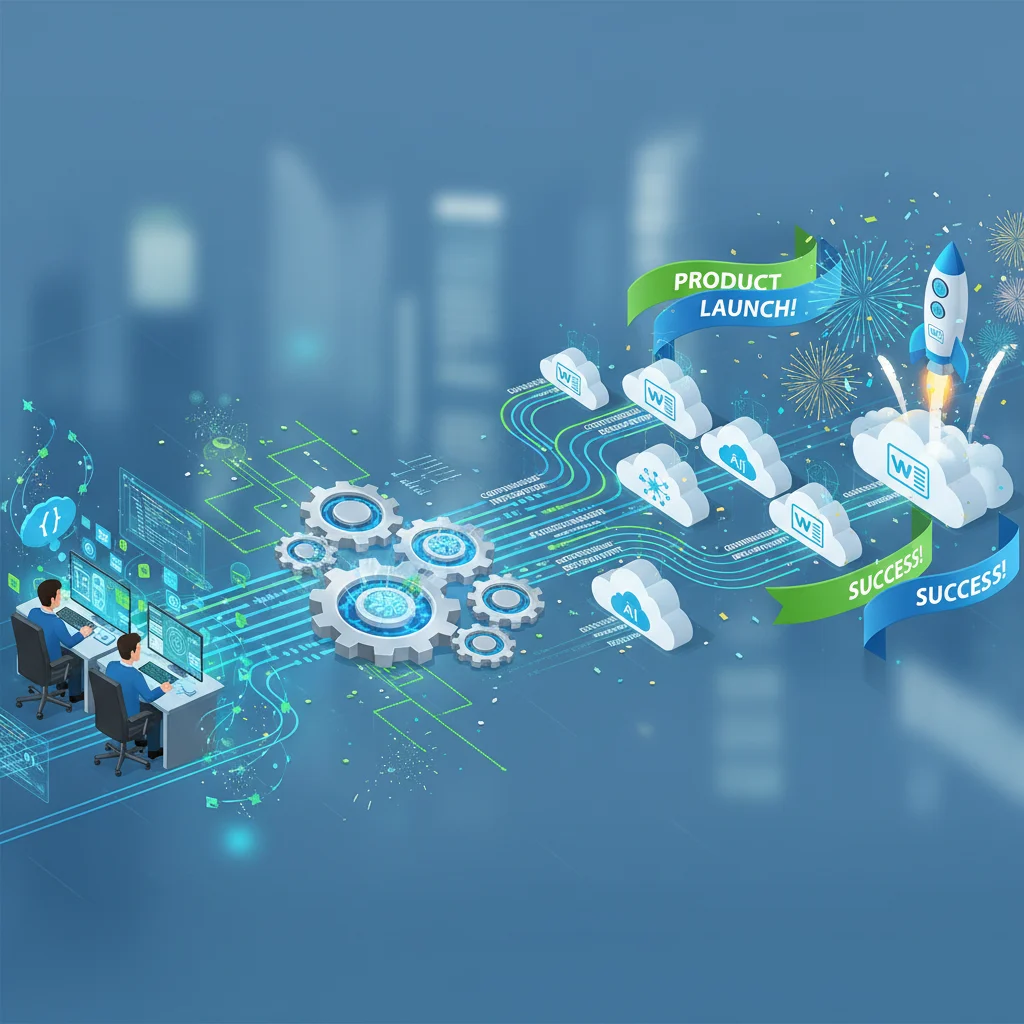
Software development moves at a relentless speed. Whether you are building an intelligent AI-driven platform or a complex web application, the time it takes to move from an idea to a deployed product matters. Delaying releases means missing market opportunities. Rushing them leads to bugs, downtime, and frustrated users. This is where modern engineering practices step in to bridge the gap between speed and stability. At MyFluiditi, an AI and web app development company based in the USA, we see firsthand how the right development culture transforms business outcomes. Bridging the gap between software development and IT operations allows teams to deploy high-quality software faster than ever before. This post explores the critical role of DevOps in accelerating software delivery. We will break down how these practices work, why they are essential for AI and web app development, the benefits and challenges of implementation, and actionable best practices you can apply to your engineering teams. Understanding the Shift to Continuous Engineering Historically, software development followed a rigid, linear path. Developers wrote code and tossed it over a metaphorical wall to the operations team, who then had the burden of figuring out how to deploy and maintain it. This siloed approach caused friction. Developers wanted to push new features rapidly, while operations teams prioritized system stability. DevOps changes this dynamic completely. By integrating development and operations into a single, cohesive lifecycle, teams share accountability for the software from end to end. This alignment eliminates bottlenecks, reduces handoff friction, and creates a culture where releasing software becomes a routine, low-stress event rather than a massive quarterly ordeal. The Core Mechanisms Driving Faster Delivery How exactly does DevOps make software delivery faster? The answer lies in replacing manual, error-prone tasks with automated, repeatable pipelines. Continuous Integration (CI) Continuous Integration requires developers to merge their code changes into a central repository frequently often multiple times a day. Each merge triggers an automated build and a series of tests. If the new code breaks an existing feature, the system flags the error immediately. Developers can fix issues while the code is still fresh in their minds, preventing massive integration conflicts just before a major release. Continuous Delivery and Deployment (CD) Continuous Delivery takes the validated code from the CI process and automatically prepares it for release to production. Continuous Deployment takes this a step further by deploying the code directly to users without manual intervention, provided it passes all automated checks. This pipeline ensures that software is always in a deployable state, allowing companies to push updates, security patches, and new features to users in minutes rather than months. Infrastructure as Code (IaC) Manually configuring servers and databases slows down deployment and introduces inconsistencies. Infrastructure as Code solves this by allowing teams to manage and provision computing infrastructure through machine-readable definition files. Need a new testing environment that mirrors production exactly? IaC spins it up automatically in seconds. This eliminates the “it works on my machine” problem and accelerates the setup required for faster software delivery. Accelerating Web App and AI Development For a web app and AI development company like MyFluiditi, speed must not compromise precision. AI development, in particular, requires handling massive datasets, training complex models, and deploying them to scalable environments. DevOps in AI and Machine Learning (MLOps) Deploying AI models introduces unique challenges. Data scientists often build incredible models in isolated notebook environments, but moving those models into a live web application takes significant engineering effort. Applying DevOps principles to machine learning-often called MLOps-automates the model training, testing, and deployment pipelines. When a model degrades over time due to new real-world data, automated pipelines can trigger a retraining process and deploy the updated model seamlessly, ensuring the AI application remains accurate and reliable. Scalable Web Applications Modern web applications in the USA demand high availability and fast load times. Using containerization technologies and orchestration platforms, DevOps teams can ensure that web apps scale automatically based on user traffic. When a new feature rolls out, automated load balancing and deployment strategies like blue-green or canary releases ensure that users experience zero downtime. Tangible Benefits for Your Business Organizations that fully embrace DevOps experience measurable advantages that extend far beyond the engineering department. Accelerated Time-to-Market: Automated pipelines cut deployment times dramatically, allowing you to deliver value to customers faster than your competitors. Higher Software Quality: Automated testing catches bugs early in the cycle. By the time code reaches production, it has survived rigorous validation. Improved Team Collaboration: Breaking down silos fosters a culture of shared responsibility. Developers and operations teams work together to solve problems rather than blaming each other for failures. Faster Recovery Times: When failures happen, automated rollbacks and comprehensive monitoring tools allow teams to identify and resolve issues rapidly, minimizing downtime. Navigating the Challenges of Implementation Transitioning to a new engineering culture does not happen overnight. Teams often face hurdles when adopting DevOps practices. Cultural Resistance: People naturally resist change. Shifting from a siloed mindset to a collaborative one requires strong leadership and clear communication. Tool Complexity: The landscape of automation tools is vast and constantly evolving. Selecting the right tools and integrating them into a cohesive pipeline can overwhelm inexperienced teams. Legacy Systems: Older, monolithic architectures resist automated deployment. Teams often need to refactor legacy applications into microservices before they can fully realize the benefits of automated pipelines. Best Practices for a Successful Transformation To achieve faster software delivery without sacrificing quality, consider these proven best practices: Start Small and Scale Do not attempt to overhaul your entire engineering process at once. Start by automating a single workflow, such as your testing suite or your deployment to a staging environment. Once the team builds confidence and sees the value, expand the practices to other areas. Prioritize Automated Testing A fast pipeline is useless if it delivers broken code. Invest heavily in unit tests, integration tests, and end-to-end testing. High test coverage gives developers the confidence to deploy frequently. Embrace Continuous Monitoring Deployment is not the end of the