IoT Development: Building Scalable, Connected, and Intelligent IoT Solutions
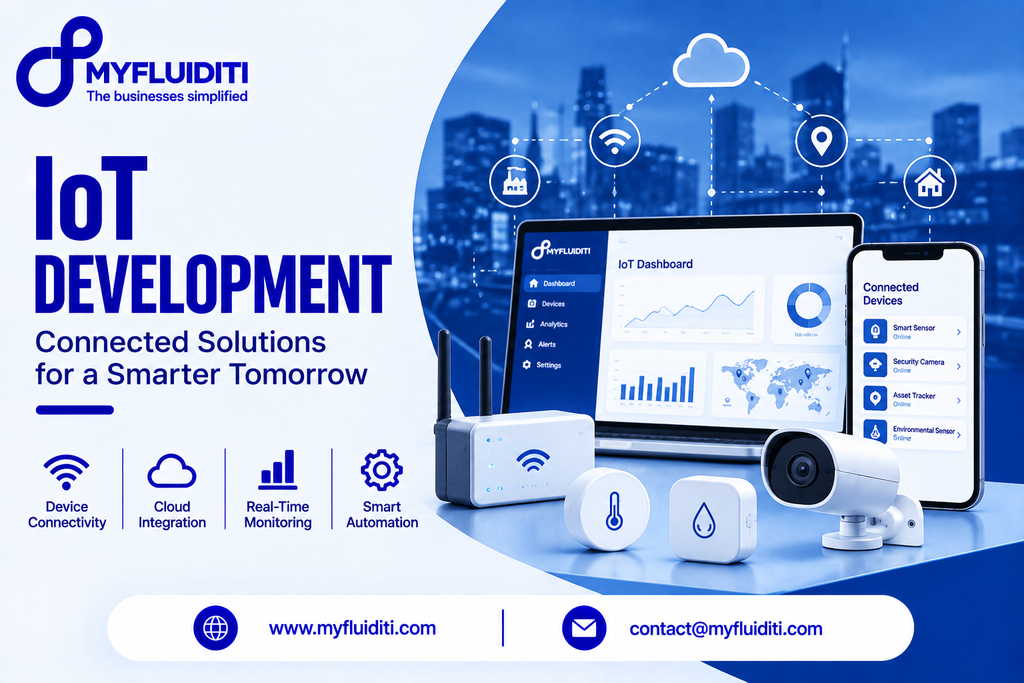
Introduction to IoT Development The Internet of Things (IoT) is transforming the way businesses connect physical devices, collect real-time information, automate processes, and make data-driven decisions. From smart healthcare devices and connected vehicles to industrial machinery, smart homes, logistics systems, agriculture, and enterprise infrastructure, IoT Development enables physical devices to communicate with software applications and digital platforms. Modern IoT Development Services combine connected devices, sensors, embedded software, communication protocols, cloud platforms, APIs, databases, analytics, mobile applications, and web dashboards to create complete IoT Solutions for modern businesses. Businesses today are moving beyond basic device connectivity and adopting Custom IoT Solutions for real-time monitoring, remote device management, predictive maintenance, asset tracking, operational automation, intelligent analytics, and improved business visibility. A properly designed IoT Architecture can connect devices, gateways, edge computing systems, cloud platforms, applications, and enterprise software into a scalable technology ecosystem. What Is IoT Development? IoT Development is the process of designing, developing, integrating, and managing connected devices and software systems that collect, exchange, process, and act on data. An IoT ecosystem can connect sensors, machines, vehicles, wearable devices, industrial equipment, appliances, and other connected assets with IoT Applications, cloud platforms, databases, and business systems. Unlike traditional software development, IoT Software Development involves both physical and digital environments. Device capabilities, firmware, connectivity, power consumption, communication protocols, data processing, cloud infrastructure, application development, security, and remote device management must work together to create a reliable IoT Platform. Why Businesses Need IoT Development Services Organizations are increasingly investing in IoT Development Services to improve operational visibility, automate processes, monitor connected assets, and make better use of real-time data. IoT can help businesses monitor equipment, track assets, identify abnormal conditions, automate repetitive activities, and provide employees and customers with real-time information. With Custom IoT Development, businesses can create connected applications specifically designed around their operational requirements instead of relying completely on generic platforms. When combined with Artificial Intelligence, Machine Learning, Cloud Computing, and Data Analytics, IoT can support intelligent automation, predictive insights, and advanced decision-making. Custom IoT Development Services Custom IoT Development brings together hardware connectivity, embedded software, cloud applications, APIs, databases, analytics, dashboards, and mobile applications according to a specific business use case. A complete IoT project can include IoT Consulting, IoT Architecture Design, IoT Application Development, IoT Integration, IoT Testing, IoT Deployment, and IoT Maintenance. At MyFluiditi, we approach IoT Software Development as a complete connected ecosystem. We focus on connecting the device layer with cloud infrastructure, business applications, APIs, analytics, and automation so organizations can transform connected-device data into useful business information. IoT Device and Sensor Integration Sensors are a fundamental component of most IoT Solutions because they collect information from physical environments. Depending on the application, IoT Sensors can capture temperature, humidity, pressure, vibration, movement, location, energy consumption, machine status, and other operational data. IoT Sensor Integration connects these physical data sources with embedded systems, gateways, communication networks, and software applications. Our approach considers how sensor data should be collected, validated, transmitted, processed, stored, analyzed, and displayed so businesses can convert raw sensor information into actionable insights. IoT Device Development IoT Device Development focuses on creating connected hardware and software systems that can collect and transmit data. Connected devices can include industrial equipment, smart appliances, wearable devices, tracking systems, healthcare devices, automotive systems, and smart-building equipment. IoT devices require reliable firmware, communication capabilities, power management, security, and integration with cloud or edge platforms. MyFluiditi can support the software and integration layers required to connect IoT Devices with business applications and centralized management platforms. IoT Firmware and Embedded Software Development Connected devices require reliable IoT Firmware Development and embedded software to communicate with sensors, process device data, control hardware, manage connectivity, and interact with cloud platforms. Firmware becomes particularly important when IoT devices operate with limited memory, processing capacity, bandwidth, or battery power. Our Embedded IoT Development approach focuses on creating reliable communication between hardware and software. By connecting embedded systems with cloud applications, APIs, databases, and dashboards, businesses can build an integrated End-to-End IoT Solution. IoT Connectivity and Communication Reliable connectivity is essential for every IoT Application. Depending on the environment and requirements, connected devices may use Wi-Fi, Bluetooth, cellular networks, Ethernet, LoRaWAN, or other communication technologies. Protocols such as MQTT, HTTP, CoAP, AMQP, and WebSocket can be used for different IoT communication requirements. The right IoT Connectivity Solution depends on device capabilities, network availability, latency, bandwidth, power consumption, geographic coverage, security, and data volume. IoT Gateway Development An IoT Gateway can operate as an intermediary between connected devices and cloud or enterprise systems. IoT gateways can aggregate device information, translate communication protocols, filter data, perform local processing, and provide a connection between device networks and cloud platforms. For industrial and enterprise environments, IoT Gateway Development can be especially valuable when multiple devices use different protocols or when certain operations need to continue locally even when cloud connectivity is temporarily unavailable. Edge Computing for IoT Edge Computing processes data closer to connected devices rather than sending every piece of information to a centralized cloud platform. This approach can support applications that require low latency, local processing, bandwidth optimization, or continuous operation during temporary connectivity issues. An Edge IoT Solution can process sensor information locally, identify important events, filter telemetry, execute lightweight analytics, and send relevant information to cloud platforms. MyFluiditi can incorporate Edge Computing for IoT when applications require faster response and efficient device-to-cloud communication. IoT Cloud Development Cloud infrastructure provides the scalability required for modern Cloud IoT Solutions. A cloud-based IoT platform can provide device connectivity, data ingestion, storage, APIs, analytics, application services, monitoring, and centralized device management. Our IoT Cloud Development approach can integrate connected devices with platforms such as AWS, Microsoft Azure, and other cloud environments according to project requirements. Cloud IoT architecture can also connect databases, data pipelines, AI services, dashboards, enterprise applications, and third-party systems. IoT Platform Development An IoT Platform provides the software foundation for managing connected devices, processing telemetry, storing data, monitoring device health, and connecting IoT information with applications. IoT
Full Stack Development: Building Scalable, Secure, and High-Performance Web Applications
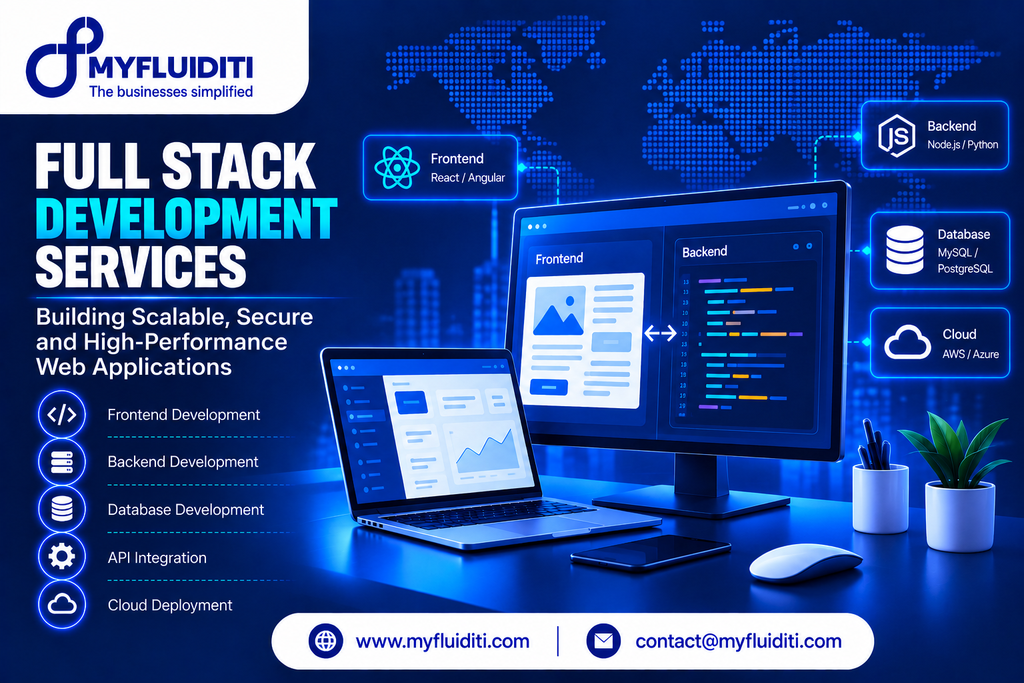
Introduction to Full Stack Development Modern businesses need digital applications that are more than visually attractive websites. They need powerful frontend interfaces, reliable backend systems, secure APIs, optimized databases, cloud infrastructure, and scalable architectures that can support growing users and business operations. Full Stack Development brings these essential layers together to create complete web applications and digital products that work as one connected technology ecosystem. From startup MVPs and SaaS platforms to enterprise applications, eCommerce platforms, customer portals, dashboards, marketplaces, and AI-powered solutions, full stack development provides an end-to-end approach to building modern digital products. A full stack development team can work across the frontend, backend, databases, APIs, integrations, security, deployment, and application infrastructure, helping businesses reduce technical gaps between different development layers. What Is Full Stack Development? Full stack development refers to the development of both the frontend and backend components of a web application, along with the databases, APIs, integrations, and supporting infrastructure required to run the application. The frontend is responsible for the interface users interact with, while the backend manages business logic, authentication, APIs, data processing, and communication with databases and external systems. Full stack web development connects these layers into a unified application architecture. Modern full stack solutions commonly include frontend frameworks such as React or Angular, backend technologies such as Node.js or Python, relational or NoSQL databases, REST or GraphQL APIs, cloud infrastructure, authentication, testing, and deployment. Why Businesses Need Full Stack Development Businesses increasingly depend on web applications to manage customers, employees, products, transactions, operations, data, and digital services. When frontend, backend, database, and infrastructure development are handled as disconnected components, integration problems and communication gaps can increase development complexity. Full stack development services provide a more connected development approach by allowing the technology team to understand the complete application architecture. This can help businesses create consistent frontend and backend integration, improve development efficiency, simplify maintenance, and build applications that are prepared for future scalability. Full Stack Web Development Services Full stack web development covers the complete lifecycle of a web application, from planning and architecture to development, testing, deployment, and ongoing improvement. It can include frontend development, backend development, database development, API development, third-party integrations, authentication, cloud deployment, DevOps, performance optimization, security, and application maintenance. MyFluiditi brings these capabilities together to help businesses build complete digital platforms instead of developing isolated technology components. Our approach focuses on understanding the business requirement first and then selecting the appropriate architecture, technologies, integrations, and development strategy. Frontend Development The frontend is the part of a web application that users see and interact with. A high-quality frontend needs to be responsive, fast, accessible, intuitive, and compatible across different browsers and devices. Our frontend development services use modern technologies such as React, Angular, JavaScript, HTML, and CSS to create responsive web interfaces, dashboards, portals, SaaS applications, eCommerce platforms, and enterprise applications. MyFluiditi focuses on creating frontend architectures that can communicate efficiently with backend APIs while maintaining performance and scalability. Backend Development The backend provides the business logic and technical functionality behind a web application. It manages user authentication, application workflows, data processing, APIs, database communication, notifications, transactions, permissions, and integrations. Backend development services can involve technologies such as Node.js, Python, Java, Spring Boot, .NET, and other server-side frameworks. MyFluiditi develops backend systems based on the application’s functional requirements, security needs, data architecture, performance expectations, and scalability goals. Database Design and Development A reliable database is an important foundation for any data-driven application. Poor database architecture can result in slow queries, inconsistent data, scalability problems, and application performance issues. Our database development services focus on designing appropriate database structures, relationships, queries, data models, indexing strategies, and optimization approaches. Depending on project requirements, applications can use technologies such as MySQL, PostgreSQL, MongoDB, SQL Server, or other database systems. MyFluiditi considers data architecture from the early stages of development so that the database can support both current application requirements and future growth. API Development and Integration Modern applications rarely operate independently. They often need to communicate with payment gateways, CRM platforms, ERP systems, cloud services, analytics platforms, authentication providers, mobile applications, and third-party software. API development services provide the communication layer between these systems. MyFluiditi can develop REST APIs, GraphQL APIs, custom APIs, and third-party API integrations that enable applications to exchange data securely and efficiently. APIs also make it easier to connect web applications with mobile apps, enterprise systems, SaaS platforms, and external services. Custom Web Application Development Every business has different workflows, users, data requirements, and operational processes. Standard software may not always provide the functionality required for a specific business model. Custom web application development allows businesses to build applications around their unique requirements. MyFluiditi can develop custom customer portals, business applications, dashboards, workflow platforms, booking systems, marketplaces, internal tools, and enterprise web applications using modern full stack technologies. SaaS Application Development Software as a Service has become a popular model for delivering digital products to businesses and consumers. SaaS applications require scalable architecture, secure authentication, user management, subscription functionality, dashboards, APIs, databases, and reliable cloud infrastructure. MyFluiditi provides SaaS development services covering product architecture, frontend development, backend development, database design, API development, authentication, subscription workflows, cloud deployment, and application scaling. Our full stack approach helps create SaaS products where the different technical layers are designed to work together. Full Stack Development for Startups Startups often need to move quickly from an idea to a working MVP while keeping the architecture flexible enough for future growth. Building the right technical foundation early can make it easier to add features, onboard users, integrate external services, and scale the product. MyFluiditi helps startups with MVP development, full stack web development, SaaS development, product engineering, API integration, cloud deployment, and application modernization. We focus on developing the core product first while keeping future scalability and maintainability in mind. Enterprise Full Stack Development Enterprise applications often involve complex business logic, multiple user roles, large datasets, integrations, security requirements, and connections to existing enterprise systems. Full stack development for enterprises therefore
Mobile App Maintenance Services: Keeping Your Mobile Applications Secure, Scalable, and High-Performing
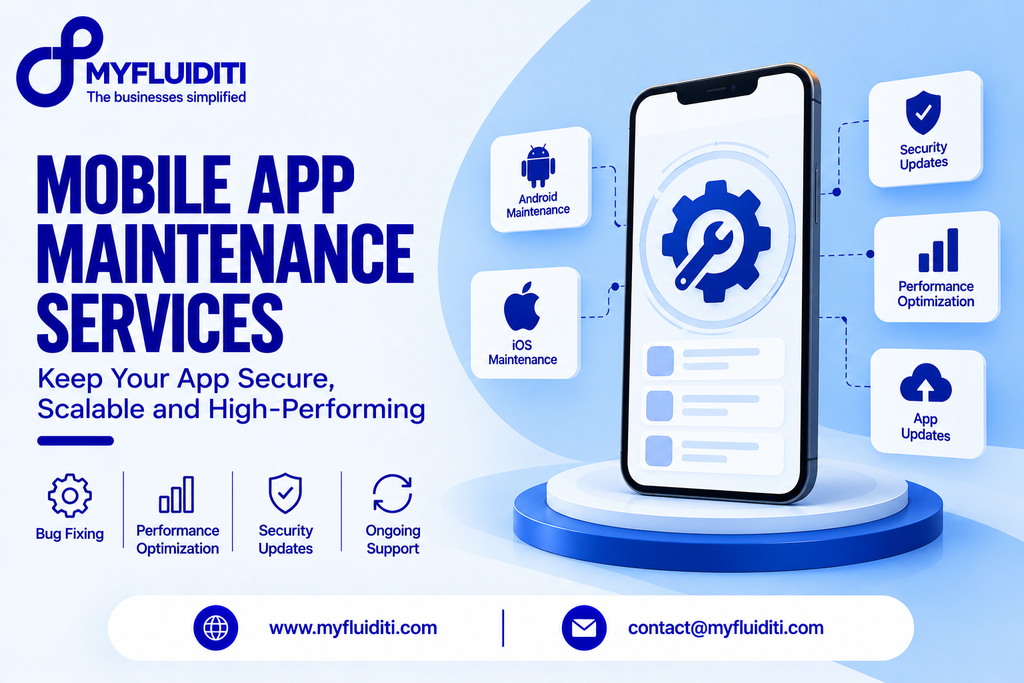
Introduction to Mobile App Maintenance Services Launching a mobile application is only the beginning of its lifecycle. Once an app is available to users, it needs continuous monitoring, updates, bug fixing, security improvements, performance optimization, and feature enhancements to remain reliable and competitive. Mobile App Maintenance Services help businesses keep their applications stable, secure, compatible with evolving mobile platforms, and aligned with changing customer expectations. Mobile applications operate in an environment that continuously changes with new operating system versions, mobile devices, APIs, SDKs, security requirements, cloud services, and third-party integrations. An application that performs well today can experience compatibility issues, crashes, security vulnerabilities, or performance degradation after technology updates. Professional mobile app maintenance and support helps businesses proactively manage these changes and maintain a high-quality digital experience. Industry mobile maintenance services commonly include bug fixing, performance optimization, OS compatibility updates, security patching, SDK updates, and ongoing application support. What Are Mobile App Maintenance Services? Mobile app maintenance services are ongoing technical services designed to keep an existing mobile application functional, secure, updated, optimized, and ready for future requirements. These services begin after the application has been developed and deployed and continue throughout its operational lifecycle. Mobile application maintenance can include bug fixing, crash resolution, performance optimization, security updates, operating system compatibility, API maintenance, third-party integration updates, database optimization, feature enhancements, application monitoring, testing, and release management. The objective is not simply to fix problems after they occur but to continuously improve the application’s reliability and ability to support business growth. Why Mobile App Maintenance Is Important Mobile applications are constantly exposed to changing technical and business conditions. New Android and iOS versions can introduce compatibility requirements, third-party APIs can change, SDKs can become outdated, security vulnerabilities can be discovered, and users can expect new features and better performance. Without regular app maintenance and support, businesses may experience application crashes, slow loading, broken integrations, outdated functionality, security risks, poor user experiences, and increasing technical debt. Regular maintenance allows organizations to identify issues earlier, keep applications updated, and improve the overall stability of their mobile products. Mobile App Bug Fixing and Crash Resolution Application bugs can negatively affect user experience and business operations. Issues may include application crashes, broken screens, login failures, payment errors, API problems, database errors, notification issues, device-specific problems, or unexpected application behavior. MyFluiditi provides mobile app bug fixing services by analyzing application behavior, identifying the root cause of issues, implementing fixes, and validating the changes through testing. Our approach focuses on resolving the immediate issue while also understanding why it occurred so that similar problems can be reduced in future releases. Mobile App Performance Optimization Application performance directly affects how users interact with a mobile product. Slow loading screens, delayed API responses, excessive memory usage, battery consumption, rendering issues, and inefficient background processes can create a poor application experience. Our mobile app performance optimization approach evaluates application performance across different areas, including frontend code, APIs, databases, network communication, images and assets, memory usage, and backend services. MyFluiditi helps optimize applications to improve responsiveness, stability, loading performance, and overall efficiency. Android App Maintenance Services Android applications need continuous maintenance because they operate across a wide range of devices, screen sizes, hardware configurations, Android versions, and manufacturers. Changes in Android platform requirements can also require application updates. Android app maintenance services can include compatibility updates, bug fixing, performance optimization, SDK updates, security patches, device compatibility testing, API maintenance, and feature enhancements. MyFluiditi helps businesses maintain Android applications so they remain functional and compatible as the Android ecosystem evolves. iOS App Maintenance Services iOS applications also require regular maintenance to remain compatible with new Apple operating system versions, devices, SDKs, APIs, and App Store requirements. Changes in the iOS ecosystem can affect application functionality, integrations, performance, and security. Our iOS app maintenance services cover bug fixing, performance optimization, compatibility updates, dependency updates, security improvements, API maintenance, testing, and release support. We help businesses maintain reliable iOS applications while supporting continuous improvements throughout the application lifecycle. Cross-Platform App Maintenance Businesses increasingly use cross-platform technologies such as Flutter and React Native to develop applications for multiple platforms. Although cross-platform development can streamline application development, these applications still require regular maintenance to manage framework updates, dependencies, platform changes, APIs, and device compatibility. MyFluiditi supports Flutter app maintenance and React Native app maintenance by addressing bugs, updating dependencies, improving performance, maintaining integrations, and supporting new application releases. This helps businesses maintain a consistent application experience across Android and iOS platforms. Mobile App Security Maintenance Mobile applications handle valuable information such as customer details, authentication credentials, payment information, business data, and application-specific content. Security maintenance is therefore an important part of the mobile application lifecycle. Mobile app security maintenance can include dependency updates, vulnerability fixes, secure authentication, API security, data protection, encryption, access control, and security-focused testing. MyFluiditi considers security requirements while maintaining applications and updating their technology components. Mobile App OS Compatibility Updates Operating systems continuously evolve, and application developers need to ensure that existing applications continue to work correctly after platform updates. Compatibility issues can affect application interfaces, APIs, permissions, background operations, notifications, device functionality, and third-party integrations. Our mobile app maintenance process includes iOS and Android compatibility updates to help applications remain aligned with changing platform requirements. Regular compatibility testing and technology updates can reduce the risk of application failures following major platform changes. Mobile App SDK and Dependency Updates Mobile applications frequently depend on third-party SDKs, frameworks, libraries, APIs, analytics tools, payment systems, maps, authentication services, and notification platforms. These dependencies can become outdated or change their implementation requirements. SDK and dependency maintenance helps ensure that applications continue to work correctly while reducing risks associated with outdated software components. MyFluiditi can review application dependencies, update required libraries, test compatibility, and address issues created by dependency changes. Third-Party API Integration Maintenance Mobile applications often depend on external APIs for payments, maps, authentication, analytics, social login, notifications, shipping, customer management, and other business functions. Changes to these external services can affect application functionality.
IT Consulting: Building Scalable, Secure, and Future-Ready Technology Solutions
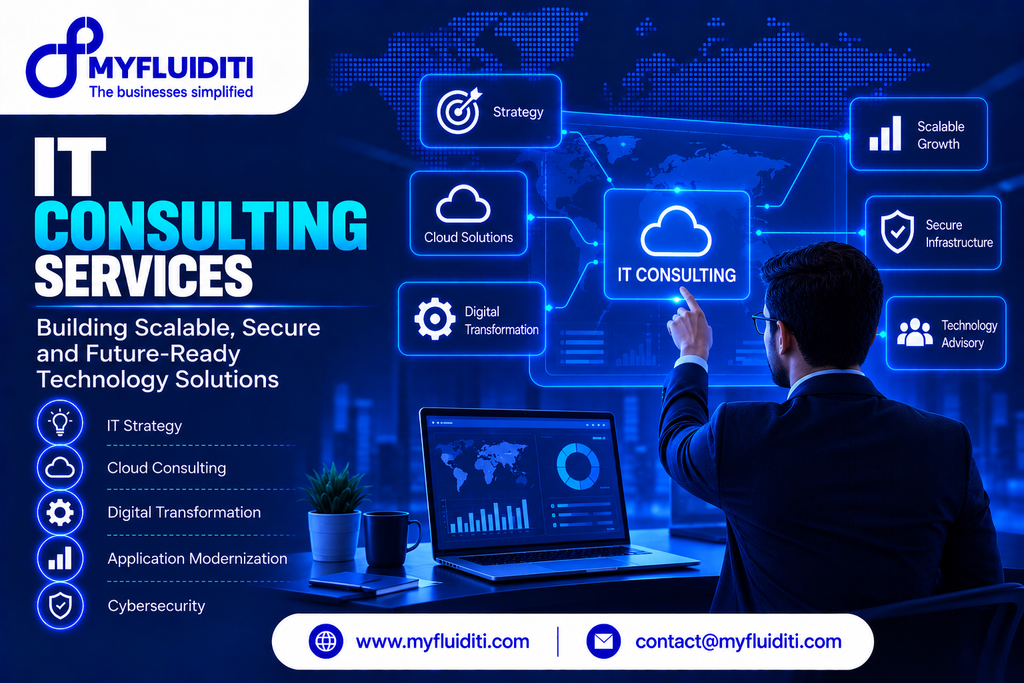
Introduction to IT Consulting Technology is now at the center of modern business operations, customer experiences, product development, data management, and business growth. As organizations adopt cloud computing, artificial intelligence, automation, enterprise applications, APIs, analytics, and digital platforms, managing technology effectively has become increasingly complex. IT Consulting helps businesses understand their technology requirements, solve existing IT challenges, improve their technology infrastructure, and create a clear strategy for long-term digital growth. A strong IT strategy connects technology investments with business objectives. It can help organizations evaluate their current IT environment, identify technology gaps, modernize legacy applications, improve system integration, strengthen security, optimize infrastructure, and prepare for emerging technologies. Modern technology consulting commonly covers strategy, architecture, cloud, infrastructure, digital transformation, application modernization, cybersecurity, and technology operations. What Is IT Consulting? IT consulting is a professional technology advisory service that helps organizations plan, manage, improve, and transform their IT environment. IT consultants analyze business requirements, existing applications, infrastructure, software, databases, integrations, security practices, and technology processes to identify areas that require improvement. IT consulting services can include IT strategy consulting, technology consulting, digital transformation consulting, enterprise architecture consulting, cloud consulting, cybersecurity consulting, application modernization, data consulting, IT infrastructure consulting, API integration, automation, and technology roadmap development. The objective is to help organizations make informed technology decisions while building scalable, secure, efficient, and future-ready IT environments. Why Businesses Need IT Consulting Services As organizations expand, their technology landscape often becomes more complicated. Businesses may use multiple applications, cloud platforms, databases, CRM systems, ERP platforms, APIs, SaaS solutions, security tools, and third-party services. If these technologies are not properly planned and integrated, businesses can experience technical debt, inefficient workflows, security risks, increasing infrastructure costs, poor application performance, and scalability challenges. IT consulting services provide businesses with a structured way to evaluate their current technology environment and identify opportunities for improvement. Instead of making technology investments based only on immediate requirements, organizations can develop a long-term technology strategy that considers scalability, security, performance, integration, cost, and future business needs. IT Strategy Consulting An effective IT strategy provides a clear direction for how technology should support business objectives. IT strategy consulting involves evaluating the current technology landscape, understanding business priorities, identifying technology gaps, and developing a roadmap for future improvements. At MyFluiditi, we approach IT strategy by first understanding the business problem and existing technology environment. We then evaluate the technical requirements and identify suitable solutions across software development, cloud, data, AI, cybersecurity, automation, and enterprise technologies. This helps organizations create a technology roadmap that connects business objectives with practical technology execution. Technology Consulting for Business Growth Technology should support business growth without creating unnecessary complexity. Technology consulting helps organizations evaluate their existing technology stack, identify opportunities for optimization, select suitable technologies, and design solutions that can support future requirements. MyFluiditi helps businesses connect technology decisions with their actual operational and growth objectives. Whether the requirement involves developing a new digital product, modernizing an existing application, migrating infrastructure, integrating enterprise systems, implementing AI, or improving IT operations, our approach focuses on creating technology solutions that can scale with the business. Digital Transformation Consulting Digital transformation consulting helps businesses modernize their operations, applications, processes, and technology infrastructure through digital technologies. Digital transformation can involve cloud adoption, application modernization, business process automation, AI implementation, data modernization, enterprise application integration, and development of new digital platforms. Successful transformation requires more than introducing new software. Businesses need to evaluate their existing processes, applications, data, architecture, security, and technology capabilities before defining a transformation roadmap. Technology strategy and digital transformation are closely connected because organizations need to align technology decisions with their broader business objectives. MyFluiditi helps businesses identify practical digital transformation opportunities and develop solutions that improve operational efficiency, technology scalability, automation, and digital customer experiences. IT Assessment and Technology Audit Before making major technology investments, organizations need a clear understanding of their existing IT environment. An IT assessment examines applications, infrastructure, databases, cloud platforms, integrations, technology stacks, security practices, and operational processes. Technology assessments can help identify outdated systems, technical debt, performance limitations, integration gaps, security concerns, redundant technologies, and scalability challenges. The findings can then be used to establish technology priorities and create a structured IT modernization roadmap. Enterprise Architecture Consulting Enterprise architecture provides a structured view of how business applications, data, infrastructure, integrations, and technology systems work together. As organizations grow, a well-planned architecture becomes increasingly important for scalability, interoperability, security, and efficient technology management. Enterprise architecture consulting can cover business architecture, application architecture, data architecture, integration architecture, technology architecture, API architecture, and cloud architecture. MyFluiditi helps organizations evaluate their existing architecture and design technology environments that can support current requirements while remaining flexible for future growth. Cloud Consulting Services Cloud computing has become an important part of modern IT environments. Organizations use cloud platforms to host applications, manage databases, store data, scale infrastructure, support remote operations, and deploy digital products. However, successful cloud adoption requires appropriate planning around architecture, security, migration, performance, governance, and cost. Cloud consulting services can include cloud readiness assessment, cloud strategy, cloud architecture, cloud migration planning, cloud modernization, cloud security, and cloud cost optimization. Cloud transformation practices commonly connect cloud strategy with architecture, migration, infrastructure resilience, and security. MyFluiditi helps organizations evaluate their cloud requirements and plan cloud solutions according to application architecture, workload requirements, scalability needs, data requirements, and long-term technology objectives. Cloud Migration Consulting Migrating applications and data from traditional infrastructure to the cloud requires careful planning. Businesses need to understand application dependencies, databases, infrastructure requirements, security considerations, performance expectations, and business continuity requirements before starting migration. Our cloud migration consulting approach focuses on understanding the existing environment and developing a suitable migration strategy. Depending on the application, migration may involve rehosting, refactoring, rearchitecting, rebuilding, or modernizing the existing solution for cloud-native environments. Application Modernization Consulting Legacy applications can become difficult to maintain when their frameworks, architecture, databases, or integrations no longer support modern business requirements. Application modernization helps organizations improve existing applications through technology upgrades, architecture changes, API integration,
Car Wash: Building Scalable On-Demand Car Wash and Vehicle Care Solutions
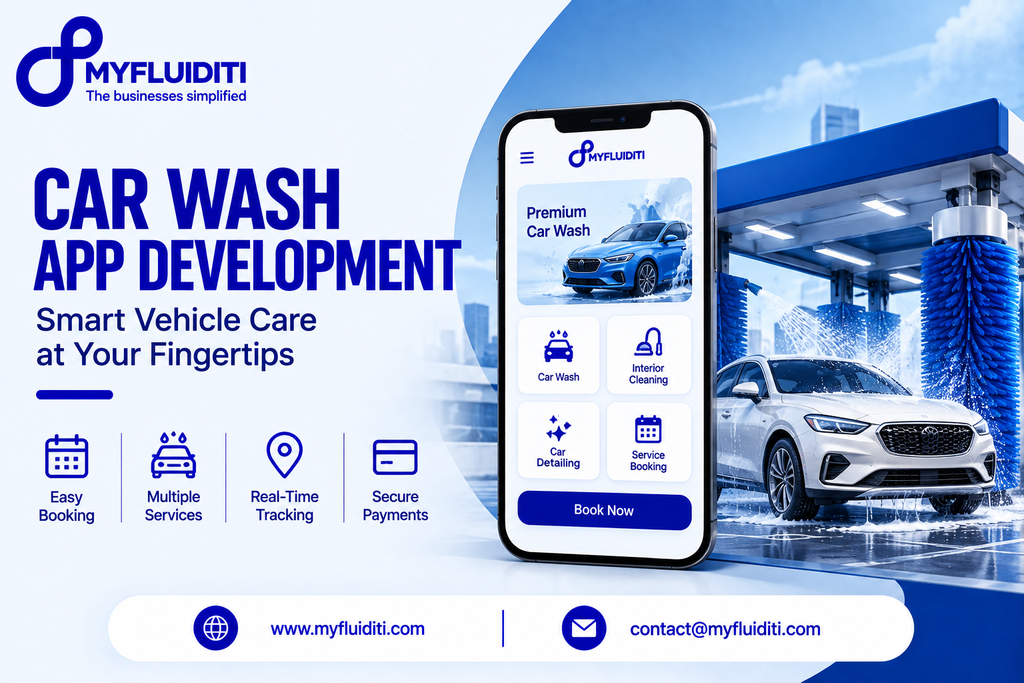
Introduction to Car Wash Solutions The car care industry is evolving as customers increasingly look for convenient, technology-enabled services that allow them to schedule vehicle cleaning and detailing without spending time waiting at traditional car wash locations. Digital platforms and mobile applications can connect customers with car wash providers, enable online bookings, support cashless payments, manage service schedules, and provide real-time updates throughout the service journey. This has created new opportunities for businesses to build on-demand car wash solutions that combine convenience, operational efficiency, and scalable technology. MyFluiditi helps businesses transform traditional car wash operations into connected digital platforms through custom software development, mobile application development, API integration, cloud technologies, and intelligent automation. Whether the requirement is an on-demand doorstep car wash platform, a car wash booking application, a multi-location car wash management system, or a complete vehicle detailing marketplace, our team can design and develop solutions around the business model and customer experience. What Is a Car Wash App? A car wash app is a mobile or web-based platform that enables customers to discover car wash services, select packages, choose a location and time, make payments, and track their service. For businesses, the platform can provide tools to manage customers, service providers, bookings, pricing, payments, operations, and performance analytics. An on-demand car wash app can support both scheduled and immediate service requests depending on the business model. Customers can book services from their homes, offices, parking areas, or other supported locations, while service providers can receive job information and update service status through a dedicated application or dashboard. This connected model can reduce manual coordination and create a more convenient vehicle care experience. Custom Car Wash App Development Every car wash business operates differently. Some businesses may focus on doorstep vehicle cleaning, while others operate fixed service centers, premium detailing studios, fleet washing operations, or multi-location car care businesses. A generic application may not adequately support all these workflows. MyFluiditi provides custom car wash app development services designed around the specific requirements of each business. Our team can develop customer applications, washer or service-provider applications, administrative dashboards, backend APIs, payment systems, booking workflows, location services, notifications, subscription functionality, and reporting capabilities as part of a complete digital car wash ecosystem. On-Demand Car Wash App Development An on-demand car wash model allows customers to request vehicle cleaning services according to their preferred location and schedule. This approach can be particularly useful for customers who want vehicle cleaning at home, at work, or in other convenient locations. With on-demand car wash app development, MyFluiditi can create a platform that connects customers with available washers or service providers. The system can manage booking requests, service packages, customer locations, staff assignments, payments, notifications, service status, and other operational workflows through a centralized application architecture. Car Wash Booking System Development A digital booking system can simplify appointment scheduling and reduce dependence on phone calls, manual registers, and messaging applications. Customers can view available services, select preferred dates and time slots, provide vehicle information, and confirm appointments through the platform. MyFluiditi develops car wash booking systems that can be customized around service duration, location availability, staff capacity, vehicle type, pricing, and business rules. The booking system can also connect with notifications and payment processing so that customers receive confirmation and updates throughout the booking lifecycle. Mobile Car Wash App Development A mobile car wash application provides customers with convenient access to vehicle cleaning and detailing services from their smartphones. A mobile-first platform can make service discovery, booking, payments, communication, and tracking easier for customers while providing operational tools for service providers. MyFluiditi can develop mobile car wash applications for Android and iOS, using native or cross-platform technologies according to project requirements. The application experience can be designed around quick booking, easy service selection, location management, vehicle profiles, notifications, payments, reviews, and booking history. Customer App for Car Wash Services The customer application is the primary digital touchpoint between the car wash business and its users. A well-designed customer experience should make it simple for users to select a vehicle, choose a service package, select a location, schedule a service, complete payment, and monitor the booking. At MyFluiditi, we focus on creating user-friendly car wash mobile applications with streamlined booking journeys and responsive interfaces. Customer profiles can be connected with vehicle information, previous bookings, payment records, subscriptions, and service preferences to create a more personalized experience. Vehicle Profile and Car Management Customers may own multiple vehicles or require different services depending on vehicle size, type, and condition. A vehicle profile system allows users to save important vehicle information and select the appropriate vehicle during booking. MyFluiditi can develop vehicle management functionality that allows users to add cars, maintain vehicle details, select vehicle categories, and associate bookings with individual vehicles. This can help businesses apply appropriate service packages and pricing while giving customers a simpler repeat-booking experience. Car Wash Service Packages Different customers may require different levels of vehicle cleaning. A platform can support basic exterior washing, interior cleaning, premium detailing, waxing, polishing, deep cleaning, and other vehicle care services according to the business model. Our car wash service package development approach allows businesses to configure service categories, pricing, descriptions, estimated durations, vehicle-specific pricing, and optional add-ons. MyFluiditi can structure the application so administrators can update packages without requiring major changes to the application. Car Wash Scheduling and Appointment Management Scheduling is an important component of car wash operations. Businesses need to coordinate customer requests with staff availability, service locations, working hours, and service duration. MyFluiditi develops car wash scheduling software that can help businesses manage appointments and service capacity through centralized workflows. Customers can select available time slots while administrators and service providers can view upcoming bookings and manage service assignments. Doorstep Car Wash Solutions Doorstep car wash services provide vehicle cleaning at the customer’s preferred location instead of requiring the customer to visit a physical facility. This model requires location management, service provider coordination, route planning, booking management, and real-time communication. With doorstep car