AI in Finance and Banking: Building Intelligent, Secure, and Scalable Financial Solutions
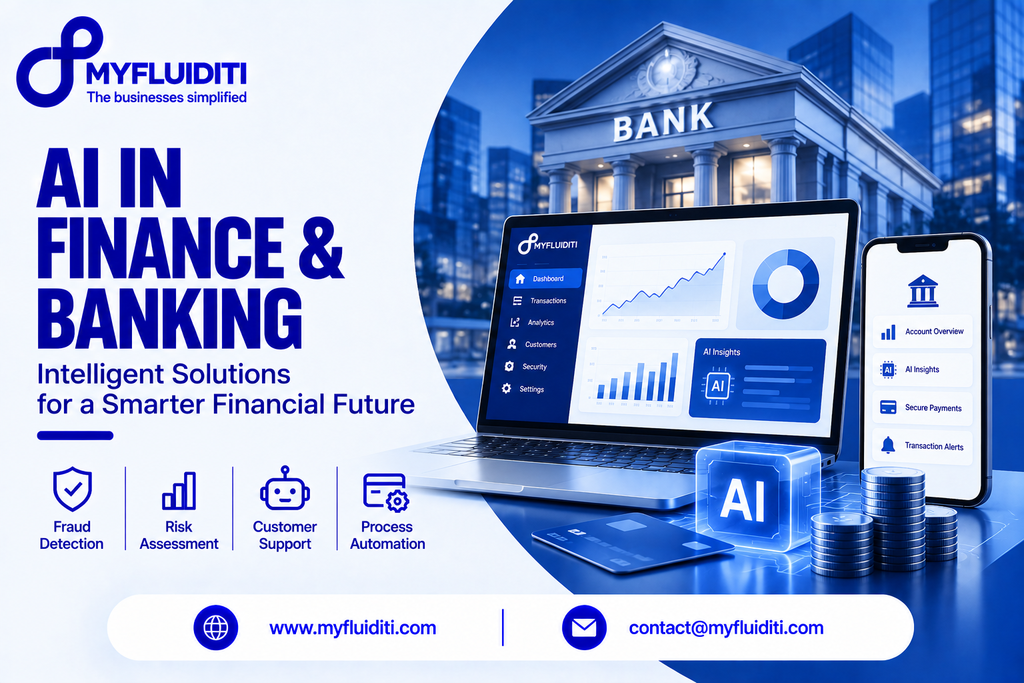
Introduction to AI in Finance and Banking The financial services industry is rapidly evolving as banks, fintech companies, insurance providers, lending platforms, payment companies, and investment businesses adopt intelligent technologies to improve efficiency, security, customer experience, and decision-making. AI in Finance and Banking is transforming how financial institutions analyze data, detect fraud, assess risk, automate operations, personalize services, and interact with customers. Artificial intelligence can support areas such as fraud detection, credit assessment, customer service, financial analysis, risk management, compliance, and back-office automation. As financial organizations manage increasingly large volumes of transactional, customer, market, and operational data, traditional systems alone may not be sufficient to identify complex patterns and deliver timely insights. AI-powered financial solutions combine machine learning, predictive analytics, natural language processing, automation, and generative AI to help businesses turn financial data into actionable intelligence. At MyFluiditi, we help organizations explore and implement customized AI solutions that align technology with financial business objectives. What Is AI in Finance and Banking? AI in Finance and Banking refers to the use of artificial intelligence technologies to improve financial processes, banking operations, customer interactions, risk management, analytics, and decision-making. AI systems can process large datasets, identify patterns, recognize unusual behavior, generate insights, automate repetitive activities, and support employees in complex financial workflows. AI for Banking can be integrated into mobile banking applications, internet banking platforms, payment systems, lending platforms, investment applications, insurance systems, financial dashboards, customer support platforms, and enterprise banking software. The objective is not simply to add AI functionality but to build intelligent financial systems that can operate securely, scale with transaction volumes, and support better business decisions. Why Businesses Need AI in Finance and Banking Financial organizations operate in an environment where accuracy, speed, security, and customer trust are critical. Customers expect faster digital services, financial institutions need stronger fraud prevention, and businesses require better ways to understand financial data. AI development for financial services can help organizations automate manual processes, identify transaction anomalies, improve forecasting, and deliver more personalized digital experiences. The use of AI in financial services is also expanding into credit assessment, customer support, claims processing, compliance monitoring, market surveillance, and risk management. The Bank for International Settlements has highlighted applications including credit risk assessment, fraud detection, customer support, claims handling, market surveillance, and anti-money-laundering activities. AI-Powered Banking Solutions AI-powered banking solutions can connect intelligent models with existing banking applications and enterprise systems to create smarter financial workflows. These solutions can support customer onboarding, transaction monitoring, financial analysis, personalized recommendations, automated support, document processing, and internal operations. MyFluiditi focuses on designing AI capabilities around the actual business process rather than treating artificial intelligence as an isolated feature. Our approach can combine AI development, machine learning, APIs, cloud infrastructure, data engineering, automation, and application development to create financial technology solutions that are scalable and integration-ready. AI-Based Fraud Detection and Prevention Fraud detection is one of the important applications of artificial intelligence in financial services. Traditional rule-based systems can identify predefined conditions, while AI fraud detection systems can analyze transaction patterns and behavioral signals to identify unusual activity. Machine learning fraud detection can evaluate transaction history, customer behavior, device information, payment patterns, location signals, and other relevant data to generate risk indicators. AI can also support real-time transaction monitoring, anomaly detection, suspicious activity identification, and automated alerts. MyFluiditi develops intelligent fraud detection approaches that can integrate with existing financial platforms to help organizations strengthen transaction security and respond to emerging fraud patterns. AI for Credit Risk Assessment and Loan Processing Credit assessment requires organizations to evaluate financial information, customer history, transaction behavior, repayment patterns, and other relevant factors. AI-powered credit risk assessment can help financial institutions analyze large datasets and identify patterns that support lending decisions. AI can also contribute to automated loan processing, document analysis, borrower profiling, credit scoring support, and risk prediction. Generative AI and advanced data analysis can further assist with processing unstructured financial documents and extracting relevant information for underwriting workflows. MyFluiditi can help businesses integrate AI models with lending platforms, customer databases, document-processing systems, and financial applications to build more efficient and data-driven lending workflows. AI for Banking Customer Experience Customer expectations in banking have changed significantly with the growth of digital financial services. Customers want quick answers, personalized recommendations, convenient transactions, and responsive support across web and mobile channels. AI-powered banking chatbots and virtual assistants can help automate customer interactions, answer frequently asked questions, assist with account-related requests, and guide users through financial services. Generative AI can extend these capabilities by supporting more natural conversations and handling complex information requests when properly governed. At MyFluiditi, we can integrate AI chatbots, conversational AI, NLP, LLMs, and business APIs into financial applications to create intelligent customer experiences while maintaining appropriate security and control mechanisms. AI for Financial Data Analytics Financial institutions generate large volumes of structured and unstructured data from transactions, customer interactions, applications, payments, accounts, markets, and enterprise systems. AI financial analytics can help transform this information into useful business intelligence. Machine learning and predictive analytics can identify trends, forecast business outcomes, detect unusual behavior, segment customers, and support financial planning. MyFluiditi combines AI, data engineering, machine learning, and business intelligence capabilities to help organizations build analytics platforms that convert complex financial data into actionable insights. AI-Powered Financial Forecasting Accurate forecasting is essential for financial planning, investment analysis, revenue management, cash-flow planning, and risk management. AI-powered financial forecasting uses historical and current data to identify patterns and generate predictive insights. Machine learning models can support revenue forecasting, cash-flow prediction, demand forecasting, customer behavior analysis, and financial trend analysis. By integrating predictive models with dashboards and reporting systems, businesses can create more intelligent financial decision-support platforms. AI for Risk Management Financial institutions continuously manage credit risk, market risk, operational risk, fraud risk, cybersecurity risk, and other business risks. AI-powered risk management can analyze large volumes of information and identify risk indicators that may require further investigation. AI can support risk scoring, anomaly detection, predictive risk analysis, transaction monitoring, and automated alerts. However, financial
AngularJS Development: Building Scalable, Dynamic, and High-Performance Web Applications
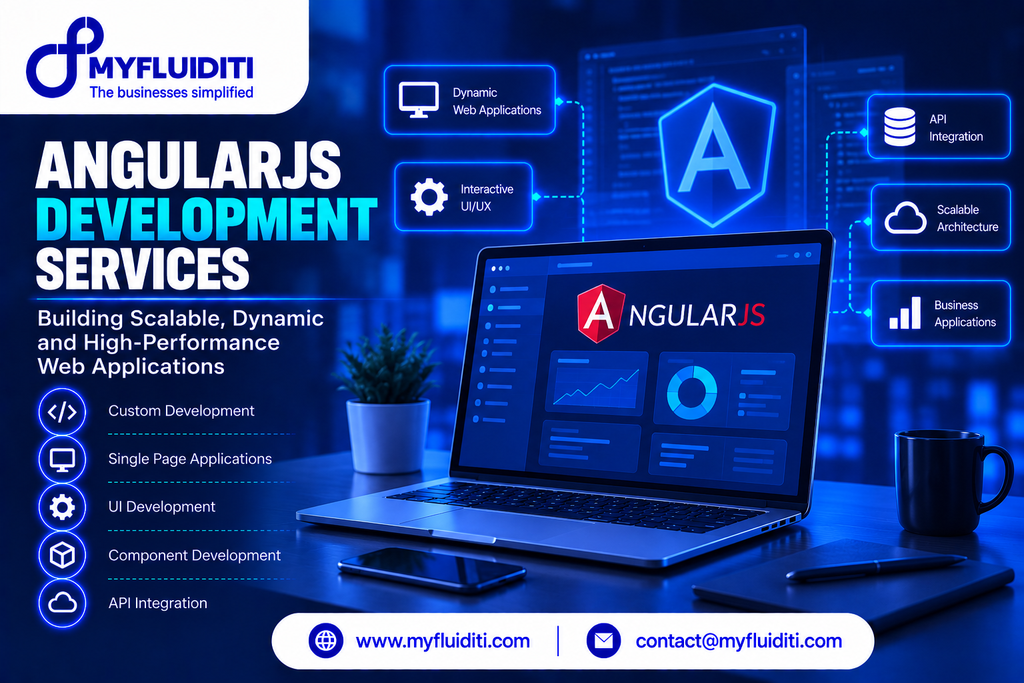
Introduction to AngularJS Development Modern businesses need web applications that are interactive, responsive, scalable, and capable of handling complex business workflows. AngularJS Development provides a structured JavaScript-based approach for building dynamic web applications, single-page applications, enterprise dashboards, customer portals, and business platforms. AngularJS supports component-based application structures, data binding, dependency injection, routing, and reusable application components, making it suitable for maintaining complex web application codebases. Businesses looking for AngularJS Development Services can use the technology to create customized web applications that connect frontend interfaces with backend APIs, databases, authentication systems, cloud platforms, and third-party services. MyFluiditi focuses on developing business-oriented web applications that combine AngularJS, API Integration, Database Development, Cloud Computing, Security, and Scalable Architecture to support long-term digital growth. What Is AngularJS Development? AngularJS Development is the process of designing and developing dynamic web applications using AngularJS, an open-source JavaScript framework originally designed for building structured and interactive web experiences. AngularJS applications can use modules, controllers, services, directives, components, routing, templates, dependency injection, and data binding to organize application functionality. The framework’s component capabilities provide a more structured approach to application development and can make existing AngularJS applications easier to organize and potentially migrate toward newer Angular architectures. Why Businesses Need AngularJS Development Services Businesses often require more than a basic informational website. Enterprise portals, customer management systems, dashboards, SaaS platforms, eCommerce applications, internal tools, and business automation systems require interactive interfaces and strong connections between frontend and backend systems. AngularJS Development Services can help businesses build structured Single Page Applications, Dynamic Web Applications, Enterprise Portals, Business Dashboards, Customer Portals, and SaaS Applications. A well-architected application can also connect with REST APIs, databases, cloud infrastructure, authentication systems, and external services. Custom AngularJS Development Every organization has different workflows, users, data requirements, and integration needs. Custom AngularJS Development allows businesses to build web applications around their specific business processes rather than modifying their workflows to fit generic software. At MyFluiditi, we analyze the application’s functional requirements, technical architecture, integrations, performance expectations, and future scalability before developing the solution. Our Custom Web Application Development approach combines AngularJS frontend engineering with backend development, APIs, databases, cloud infrastructure, and security. AngularJS Web Application Development AngularJS Web Application Development can be used to create interactive applications where users work with changing data and dynamic interfaces. Applications can include dashboards, portals, management systems, booking platforms, customer applications, internal business tools, and data-driven web applications. MyFluiditi develops AngularJS Web Applications with reusable components, structured frontend architecture, API connectivity, responsive interfaces, authentication, and backend integration to create business-ready digital platforms. AngularJS Single Page Application Development AngularJS Single Page Application Development allows businesses to create web experiences where application content can dynamically update without requiring a complete browser page refresh for every interaction. This approach can be useful for applications such as dashboards, customer portals, admin panels, SaaS platforms, CRM interfaces, ERP modules, and real-time business applications. MyFluiditi can develop AngularJS SPA Solutions that connect dynamic frontend experiences with secure backend APIs and data services. AngularJS UI Development A strong user interface is important for business applications because employees and customers may interact with complex workflows on a daily basis. AngularJS UI Development focuses on creating structured interfaces that make application functionality easier to access and manage. Our team can develop reusable UI components, forms, navigation systems, dashboards, data tables, search interfaces, filters, modals, notifications, and interactive application elements using AngularJS, HTML, CSS, JavaScript, and modern frontend development practices. AngularJS Component Development Components help organize application functionality into reusable units. AngularJS provides component functionality that supports a more structured component-based application architecture. AngularJS Component Development allows businesses to create reusable application elements such as navigation bars, user profiles, search modules, dashboards, forms, product sections, and data interfaces. At MyFluiditi, we use modular development practices to improve code organization, maintainability, and application scalability. AngularJS Module Development AngularJS Modules help organize application functionality into logical sections. Large applications can contain different modules for authentication, users, products, payments, reports, administration, customer management, and other business functions. Our AngularJS Application Development approach focuses on maintaining clear application structures so that individual modules can be developed, tested, maintained, and enhanced as business requirements evolve. AngularJS Dependency Injection AngularJS Dependency Injection helps applications manage dependencies between different services, controllers, components, and application modules. This approach can support modular development and make application components easier to manage. MyFluiditi uses structured application architecture to help create maintainable AngularJS Web Applications where frontend services, APIs, business logic, and supporting components can work together effectively. AngularJS Data Binding AngularJS Data Binding allows application interfaces to work dynamically with underlying application data. This is particularly useful for applications where information changes based on user actions, API responses, forms, filters, or business workflows. Dynamic data handling can make AngularJS Applications suitable for dashboards, customer portals, management systems, data-entry applications, and interactive business platforms. AngularJS REST API Integration Modern web applications rarely operate independently. They typically communicate with backend systems through APIs. AngularJS REST API Integration allows frontend applications to exchange data with backend services, databases, authentication systems, and third-party platforms. MyFluiditi can integrate AngularJS applications with REST APIs, JSON APIs, Node.js, Python, Java, .NET, PHP, Cloud Services, Databases, Payment Gateways, CRM Systems, ERP Platforms, and SaaS Applications. AngularJS Backend Integration The frontend is only one part of a complete business application. AngularJS Backend Integration connects the user interface with backend services responsible for authentication, business logic, databases, payments, reporting, file management, and other application operations. Our full-stack development capabilities allow us to connect AngularJS applications with backend technologies such as Node.js, Python, Java, Spring Boot, .NET, PHP, MySQL, PostgreSQL, MongoDB, and REST APIs according to project requirements. AngularJS Database Integration Data-driven applications require reliable database architecture. AngularJS Database Integration allows frontend applications to retrieve and update information through backend APIs and application services. MyFluiditi can integrate AngularJS applications with MySQL, PostgreSQL, MongoDB, SQL databases, NoSQL databases, cloud databases, and enterprise data systems. The objective is to create a secure architecture where frontend applications interact with business data through controlled
AR/VR App Development: Building Immersive, Interactive, and Next-Generation Digital Experiences
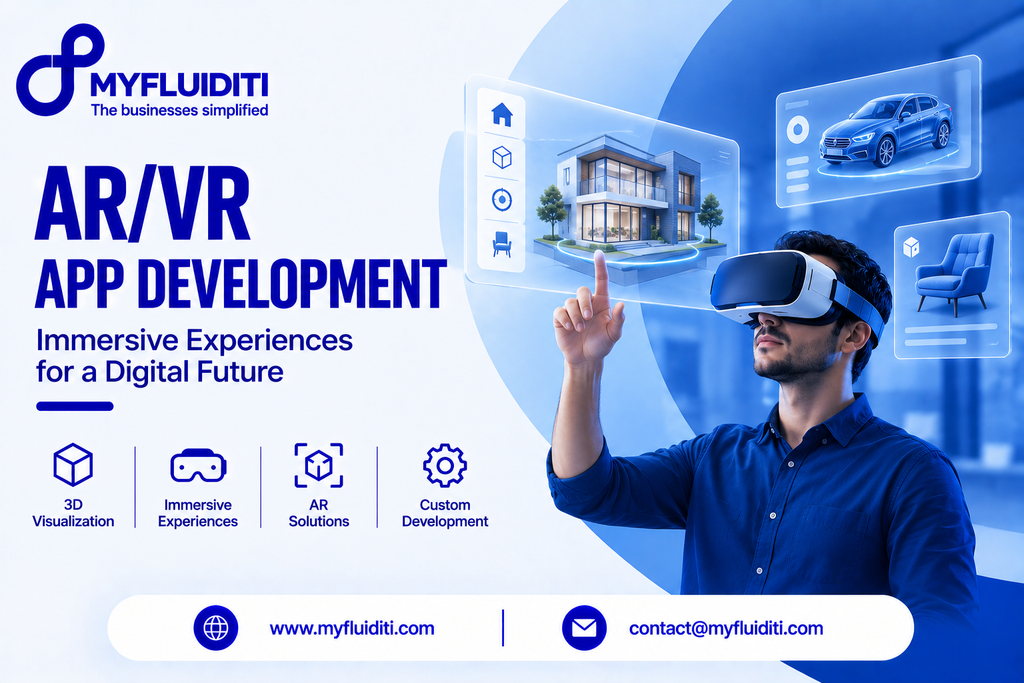
Introduction to AR/VR App Development Augmented Reality and Virtual Reality are transforming how businesses create digital experiences, interact with customers, train employees, visualize products, and deliver immersive applications. AR/VR App Development combines mobile applications, 3D content, computer vision, spatial understanding, real-time rendering, interactive design, and immersive technologies to create experiences that connect digital content with physical or virtual environments. Modern Augmented Reality App Development can place digital objects, information, animations, and interactive content into the user’s physical environment, while Virtual Reality App Development can create fully immersive digital environments. These technologies are being applied across retail, healthcare, education, real estate, manufacturing, automotive, gaming, entertainment, tourism, training, and enterprise applications. Unity supports AR development across platforms such as ARCore, ARKit, OpenXR, and other supported XR environments, while ARCore provides capabilities including motion tracking, anchors, environmental understanding, depth, and light estimation. What Is AR/VR App Development? AR/VR App Development is the process of designing and building applications that use augmented reality, virtual reality, mixed reality, and extended reality technologies to deliver interactive digital experiences. An AR Application overlays digital content onto the real world, while a VR Application places users inside an immersive virtual environment. A complete AR/VR Application Development project can include 3D models, animations, spatial interactions, gesture recognition, image tracking, object detection, face tracking, voice interaction, virtual environments, real-time rendering, mobile applications, wearable-device integration, and cloud-based services. Why Businesses Need AR/VR Applications Businesses are increasingly exploring AR/VR Solutions to create more engaging customer experiences, improve visualization, support employee training, simplify complex concepts, and introduce new digital products and services. Instead of presenting information only through conventional websites or applications, immersive technologies can allow users to interact with digital content in a more visual and experiential way. For example, retailers can use AR Shopping Experiences to allow customers to visualize products, real estate companies can create virtual property tours, manufacturers can visualize equipment in 3D, and organizations can develop VR Training Solutions for practical learning environments. Custom AR/VR App Development Every business has different requirements for immersive technology. Custom AR/VR App Development enables organizations to create applications around their specific products, users, workflows, devices, and business objectives. At MyFluiditi, we approach AR/VR Development Services as a combination of immersive technology, application engineering, 3D content, backend integration, and user experience. Our objective is to create AR and VR applications that are not only visually engaging but also connected to practical business workflows. Augmented Reality App Development Augmented Reality App Development creates experiences where digital information and 3D objects interact with the user’s physical environment. AR applications can recognize surfaces, track movement, detect images or objects, position virtual content, and allow users to interact with digital elements. Modern AR frameworks can support capabilities such as plane detection, image tracking, face tracking, anchors, raycasting, depth understanding, and environmental understanding. AR Foundation provides a cross-platform development approach in Unity, while platform-specific technologies such as Google ARCore and Apple ARKit provide native AR capabilities. Virtual Reality App Development Virtual Reality App Development creates immersive digital environments where users can interact with virtual objects, spaces, simulations, and experiences. VR applications can be developed for entertainment, education, employee training, product demonstrations, healthcare, architecture, engineering, and enterprise use cases. A Custom VR Application can include interactive 3D environments, virtual objects, spatial audio, controller interactions, hand tracking, navigation systems, simulations, and real-time visualization depending on the target device and business requirements. Mixed Reality App Development Mixed Reality Development combines digital content with the physical environment while enabling users to interact with virtual and real-world elements. Mixed reality can support advanced visualization, training, remote assistance, product demonstrations, industrial workflows, and interactive enterprise applications. MyFluiditi can help businesses explore AR, VR, MR, and XR Development according to their target devices, application requirements, and intended user experience. Extended Reality Development Extended Reality (XR) is a broader term covering augmented reality, virtual reality, and mixed reality experiences. XR App Development enables businesses to design immersive applications that can operate across mobile devices, headsets, wearable devices, and other supported platforms. A scalable XR Development Strategy considers the target hardware, interaction model, 3D content, application performance, connectivity, user environment, and platform requirements from the beginning of the project. AR/VR Mobile App Development Mobile devices provide an accessible platform for AR Mobile App Development because modern smartphones can support AR experiences through their cameras, sensors, processing capabilities, and supported AR frameworks. Mobile AR Applications can support product visualization, interactive marketing, navigation, education, retail experiences, virtual try-ons, games, and location-based experiences. AR Foundation can provide a common development layer for supported Android and iOS AR experiences while using platform-specific AR capabilities underneath. 3D Application Development High-quality 3D Application Development is an important part of many AR and VR projects. 3D models, environments, animations, textures, lighting, materials, and interactive objects must be optimized for the target platform. Our approach can combine 3D Modeling, 3D Visualization, Real-Time Rendering, Animation, Interactive Design, and AR/VR Development to create immersive digital experiences that balance visual quality with application performance. 3D Product Visualization 3D Product Visualization allows customers and businesses to explore products digitally from different perspectives. In an AR environment, users can potentially place a digital representation of a product within their surroundings and interact with it. Retail, furniture, automotive, consumer products, architecture, and manufacturing businesses can use AR Product Visualization to provide more interactive product experiences and help users understand products before making decisions. AR Virtual Try-On Applications AR Virtual Try-On Development allows users to visualize products or accessories in a digital representation of their environment or appearance. Fashion, eyewear, beauty, jewelry, footwear, and retail businesses can explore virtual try-on experiences to create interactive shopping journeys. MyFluiditi can develop customized AR Shopping Applications that combine mobile technology, camera-based experiences, 3D assets, product catalogs, APIs, and eCommerce systems. AR for Retail and E-Commerce AR E-Commerce Solutions can make online shopping more interactive by allowing customers to visualize products before purchasing. Furniture businesses can use AR to visualize products inside rooms, while fashion and beauty companies can explore virtual try-on experiences. AR functionality
Car Rental: Building Scalable On-Demand Car Rental and Vehicle Booking Solutions
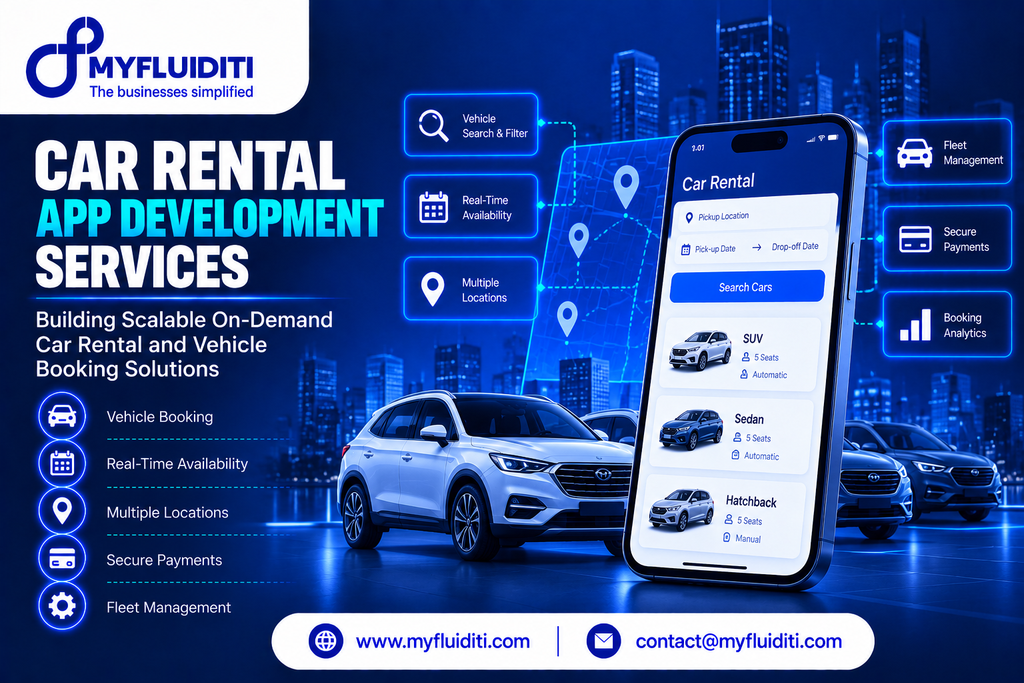
Introduction to Car Rental App Development The car rental industry is rapidly moving toward digital-first booking, automated fleet operations, real-time vehicle availability, and convenient mobile experiences. Customers increasingly expect to search for vehicles, compare rental options, select pickup and drop-off locations, make secure payments, and manage their bookings through digital platforms. A modern Car Rental App Development solution brings these capabilities together through mobile applications, web platforms, cloud infrastructure, APIs, payment gateways, GPS services, and centralized fleet management. For rental companies, startups, travel businesses, fleet operators, and mobility platforms, Car Rental Software Development provides an opportunity to streamline vehicle reservations, improve fleet visibility, manage customer information, automate rental workflows, and create scalable digital rental experiences. Modern car rental platforms can combine real-time availability, booking management, digital documentation, payment processing, GPS tracking, vehicle management, and analytics into a connected ecosystem. What Is Car Rental App Development? Car Rental App Development is the process of building mobile and web-based applications that allow customers to search, reserve, pay for, and manage rental vehicles while enabling rental businesses to manage vehicles, bookings, customers, payments, locations, and daily operations. A complete Car Rental Application can include a customer application, fleet management system, booking engine, admin dashboard, payment integration, GPS tracking, vehicle availability management, digital agreements, notifications, analytics, and backend APIs. This creates a centralized Car Rental Management System that connects customers, vehicles, fleet operators, administrators, and business processes. Why Businesses Need Car Rental Software Traditional rental operations can involve manual reservations, spreadsheets, phone calls, disconnected fleet information, and separate payment processes. These workflows can make it difficult to maintain accurate vehicle availability, manage multiple locations, track fleet performance, and provide customers with immediate booking information. A customized Car Rental Software Solution can centralize vehicle inventory, reservations, customer information, pricing, payments, fleet operations, and reporting. Businesses can use this centralized system to manage rental operations while customers receive a faster and more convenient Online Car Rental Booking experience. Custom Car Rental App Development Every car rental business has different requirements depending on its fleet size, rental model, target customers, locations, pricing structure, and operating processes. Custom Car Rental App Development allows businesses to create applications around their specific business model instead of adapting their operations to a generic platform. MyFluiditi develops customized Car Rental Solutions that can connect customer-facing applications with fleet management, backend services, payment systems, APIs, analytics, and administrative platforms. Our approach focuses on building a connected rental ecosystem that can evolve as the business expands. Online Car Rental Booking An effective Online Car Rental Booking System allows customers to search for available vehicles, choose rental dates, select locations, compare vehicle options, review pricing, and complete reservations through a digital platform. A well-designed booking engine can manage reservation availability and help prevent conflicting bookings across vehicles and locations. Real-time availability and instant booking confirmation are important components of modern car rental platforms. Real-Time Vehicle Availability Real-Time Vehicle Availability helps customers understand which vehicles are available for their selected dates, locations, and rental requirements. The booking platform can synchronize reservations with fleet inventory so that vehicle status changes are reflected across the system. MyFluiditi can develop Real-Time Car Availability functionality that connects the booking engine with fleet management and backend APIs, helping rental businesses maintain a centralized view of available, reserved, rented, unavailable, and maintenance vehicles. Vehicle Search and Filtering A modern Car Rental Booking App should make it easy for customers to find the right vehicle. Vehicle search can be organized around pickup location, rental dates, vehicle category, seating capacity, transmission type, fuel type, pricing, and other business-specific criteria. Advanced Car Rental Search and Filter functionality can improve the customer booking journey by helping users quickly compare vehicles and select an option that matches their requirements. Car Rental Fleet Management Fleet Management is one of the most important components of a successful car rental platform. Rental businesses need to manage vehicle information, availability, maintenance schedules, mileage, fuel status, insurance details, registration information, location, and rental history. A centralized Car Rental Fleet Management System provides operators with a consolidated view of their vehicles and operational status. Fleet dashboards can also connect utilization, maintenance, booking, and revenue information for better operational visibility. Car Rental Vehicle Management Vehicle Management Software allows administrators to maintain detailed records for every vehicle in the fleet. Information can include vehicle model, category, registration, insurance, mileage, fuel status, maintenance history, availability, rental pricing, and location. MyFluiditi can build customized Vehicle Management Modules that allow rental companies to add, update, monitor, and manage vehicles from a centralized administration system. Car Rental Booking Management Car Rental Booking Management connects customers, vehicles, rental dates, pricing, payments, pickup locations, and booking status. Administrators can manage upcoming reservations, active rentals, completed bookings, cancellations, modifications, and other operational workflows. A centralized Rental Booking Management System can also integrate with notifications, payment systems, fleet allocation, customer profiles, and reporting modules to create a complete rental workflow. Car Rental Pricing and Rate Management Rental businesses may offer hourly, daily, weekly, or monthly rental plans depending on their business model. A flexible Car Rental Pricing System allows administrators to configure rental rates, seasonal pricing, additional charges, security deposits, mileage policies, late fees, and optional services. Advanced platforms can also support Dynamic Pricing based on factors such as demand, vehicle category, location, season, and availability. This enables rental businesses to create more flexible pricing strategies as their operations grow. Secure Online Payment Integration A modern Car Rental Payment System should allow customers to complete transactions conveniently through secure online payment gateways. Payment functionality can support booking payments, security deposits, refunds, additional charges, and other rental-related transactions. MyFluiditi can integrate Payment Gateway Solutions and payment APIs into car rental applications to create a smooth checkout experience while maintaining appropriate security and transaction controls. GPS Tracking for Rental Vehicles GPS Tracking can provide rental businesses with greater visibility into vehicle locations and fleet operations. Depending on the business model and device integration, GPS functionality can support live location monitoring, route visibility, geofencing, asset
IoT Development: Building Scalable, Connected, and Intelligent IoT Solutions
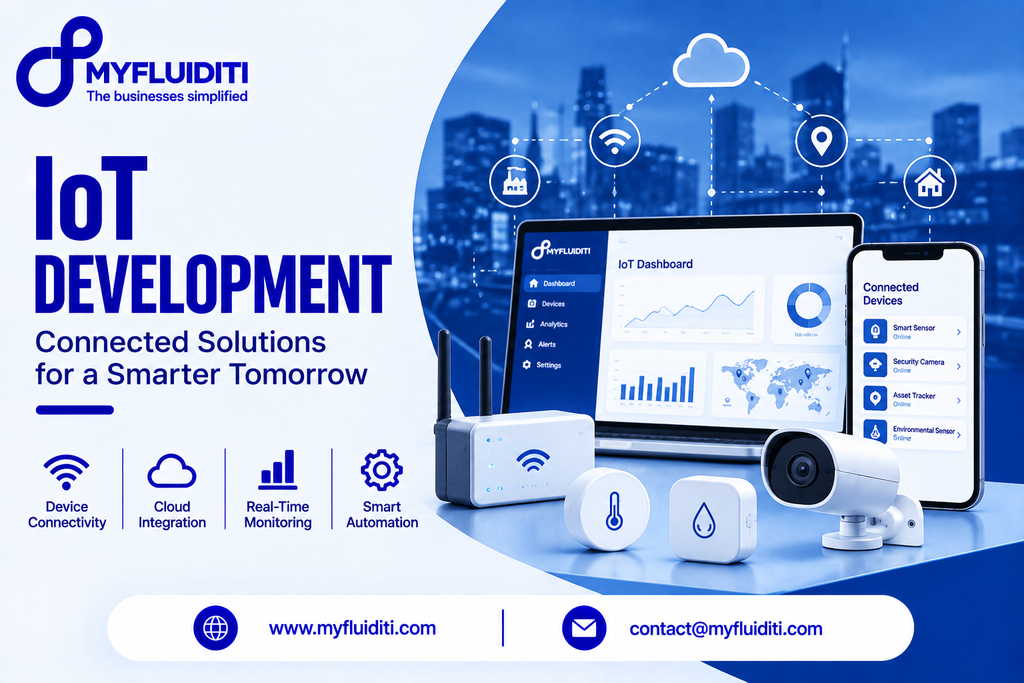
Introduction to IoT Development The Internet of Things (IoT) is transforming the way businesses connect physical devices, collect real-time information, automate processes, and make data-driven decisions. From smart healthcare devices and connected vehicles to industrial machinery, smart homes, logistics systems, agriculture, and enterprise infrastructure, IoT Development enables physical devices to communicate with software applications and digital platforms. Modern IoT Development Services combine connected devices, sensors, embedded software, communication protocols, cloud platforms, APIs, databases, analytics, mobile applications, and web dashboards to create complete IoT Solutions for modern businesses. Businesses today are moving beyond basic device connectivity and adopting Custom IoT Solutions for real-time monitoring, remote device management, predictive maintenance, asset tracking, operational automation, intelligent analytics, and improved business visibility. A properly designed IoT Architecture can connect devices, gateways, edge computing systems, cloud platforms, applications, and enterprise software into a scalable technology ecosystem. What Is IoT Development? IoT Development is the process of designing, developing, integrating, and managing connected devices and software systems that collect, exchange, process, and act on data. An IoT ecosystem can connect sensors, machines, vehicles, wearable devices, industrial equipment, appliances, and other connected assets with IoT Applications, cloud platforms, databases, and business systems. Unlike traditional software development, IoT Software Development involves both physical and digital environments. Device capabilities, firmware, connectivity, power consumption, communication protocols, data processing, cloud infrastructure, application development, security, and remote device management must work together to create a reliable IoT Platform. Why Businesses Need IoT Development Services Organizations are increasingly investing in IoT Development Services to improve operational visibility, automate processes, monitor connected assets, and make better use of real-time data. IoT can help businesses monitor equipment, track assets, identify abnormal conditions, automate repetitive activities, and provide employees and customers with real-time information. With Custom IoT Development, businesses can create connected applications specifically designed around their operational requirements instead of relying completely on generic platforms. When combined with Artificial Intelligence, Machine Learning, Cloud Computing, and Data Analytics, IoT can support intelligent automation, predictive insights, and advanced decision-making. Custom IoT Development Services Custom IoT Development brings together hardware connectivity, embedded software, cloud applications, APIs, databases, analytics, dashboards, and mobile applications according to a specific business use case. A complete IoT project can include IoT Consulting, IoT Architecture Design, IoT Application Development, IoT Integration, IoT Testing, IoT Deployment, and IoT Maintenance. At MyFluiditi, we approach IoT Software Development as a complete connected ecosystem. We focus on connecting the device layer with cloud infrastructure, business applications, APIs, analytics, and automation so organizations can transform connected-device data into useful business information. IoT Device and Sensor Integration Sensors are a fundamental component of most IoT Solutions because they collect information from physical environments. Depending on the application, IoT Sensors can capture temperature, humidity, pressure, vibration, movement, location, energy consumption, machine status, and other operational data. IoT Sensor Integration connects these physical data sources with embedded systems, gateways, communication networks, and software applications. Our approach considers how sensor data should be collected, validated, transmitted, processed, stored, analyzed, and displayed so businesses can convert raw sensor information into actionable insights. IoT Device Development IoT Device Development focuses on creating connected hardware and software systems that can collect and transmit data. Connected devices can include industrial equipment, smart appliances, wearable devices, tracking systems, healthcare devices, automotive systems, and smart-building equipment. IoT devices require reliable firmware, communication capabilities, power management, security, and integration with cloud or edge platforms. MyFluiditi can support the software and integration layers required to connect IoT Devices with business applications and centralized management platforms. IoT Firmware and Embedded Software Development Connected devices require reliable IoT Firmware Development and embedded software to communicate with sensors, process device data, control hardware, manage connectivity, and interact with cloud platforms. Firmware becomes particularly important when IoT devices operate with limited memory, processing capacity, bandwidth, or battery power. Our Embedded IoT Development approach focuses on creating reliable communication between hardware and software. By connecting embedded systems with cloud applications, APIs, databases, and dashboards, businesses can build an integrated End-to-End IoT Solution. IoT Connectivity and Communication Reliable connectivity is essential for every IoT Application. Depending on the environment and requirements, connected devices may use Wi-Fi, Bluetooth, cellular networks, Ethernet, LoRaWAN, or other communication technologies. Protocols such as MQTT, HTTP, CoAP, AMQP, and WebSocket can be used for different IoT communication requirements. The right IoT Connectivity Solution depends on device capabilities, network availability, latency, bandwidth, power consumption, geographic coverage, security, and data volume. IoT Gateway Development An IoT Gateway can operate as an intermediary between connected devices and cloud or enterprise systems. IoT gateways can aggregate device information, translate communication protocols, filter data, perform local processing, and provide a connection between device networks and cloud platforms. For industrial and enterprise environments, IoT Gateway Development can be especially valuable when multiple devices use different protocols or when certain operations need to continue locally even when cloud connectivity is temporarily unavailable. Edge Computing for IoT Edge Computing processes data closer to connected devices rather than sending every piece of information to a centralized cloud platform. This approach can support applications that require low latency, local processing, bandwidth optimization, or continuous operation during temporary connectivity issues. An Edge IoT Solution can process sensor information locally, identify important events, filter telemetry, execute lightweight analytics, and send relevant information to cloud platforms. MyFluiditi can incorporate Edge Computing for IoT when applications require faster response and efficient device-to-cloud communication. IoT Cloud Development Cloud infrastructure provides the scalability required for modern Cloud IoT Solutions. A cloud-based IoT platform can provide device connectivity, data ingestion, storage, APIs, analytics, application services, monitoring, and centralized device management. Our IoT Cloud Development approach can integrate connected devices with platforms such as AWS, Microsoft Azure, and other cloud environments according to project requirements. Cloud IoT architecture can also connect databases, data pipelines, AI services, dashboards, enterprise applications, and third-party systems. IoT Platform Development An IoT Platform provides the software foundation for managing connected devices, processing telemetry, storing data, monitoring device health, and connecting IoT information with applications. IoT